

مقدمة
Few things steal the joy of climbing faster than a sharp, stabbing pain in your heel with every step. One morning you lace up your boots for a long‑anticipated alpine approach, and by midday, every foot placement feels like punishment. For mountaineers and trail runners, this isn’t just discomfort — it is a threat to the sport you love. Heel spur and plantar fasciitis share that classic “first step out of bed” agony. Extracorporeal shockwave therapy offers a non‑invasive, drug‑free path to help manage the pain, reduce tissue inflammation, and get you back on the mountain. This article explains how shockwave therapy works for heel pain and how to build a recovery plan that respects your climbing goals.
1. Why Heel Spurs and Plantar Fasciitis Target Adventurous Feet
The plantar fascia is a thick band of tissue running along the sole of the foot, connecting the heel to the toes. When this band becomes overstretched or overloaded, micro‑tears and inflammation develop at its attachment point on the heel bone. Over time, calcium deposits may form a bony protrusion called a heel spur. It is not the spur itself that causes the sharp morning pain, but the inflamed, irritated fascia.
1.1 What a Heel Spur Really Is
A heel spur is a small, bony outgrowth on the underside of the heel bone. It develops gradually as the body tries to reinforce a chronically stressed attachment site. Contrary to common belief, the spur is usually not the direct source of pain. Instead, the surrounding plantar fascia, which has become thickened and inflamed, triggers that familiar stabbing sensation. Many people with heel spurs have no pain at all, while others suffer severe discomfort even without a visible spur.
1.2 Why Mountaineers and Climbers Are at High Risk
Long approaches, steep ascents, and descents place tremendous, repetitive strain on the plantar fascia. Carrying a heavy pack multiplies the load on each heel strike. Diverse terrain — rocks, roots, loose scree — forces the foot into unnatural positions and repeatedly overstretches the fascia. Finally, many climbers wear stiff, aggressive boots that offer excellent support but can exacerbate tension in the arch when used for hours on end.
1.3 How Heel Pain Disrupts an Active Lifestyle
A climber who enjoys fifteen‑mile days may suddenly find themselves limping after just a few miles. The loss of propulsion from the affected foot changes gait mechanics, leading to secondary knee or hip pain. Beyond physical limitation, the worry that every step might make the injury worse can steal the freedom and joy that drew you to the mountains. This constant mental load is as exhausting as the climb itself. Finding a durable, non‑invasive solution matters greatly for staying active.
2. How Shockwave Therapy Works for Heel Pain
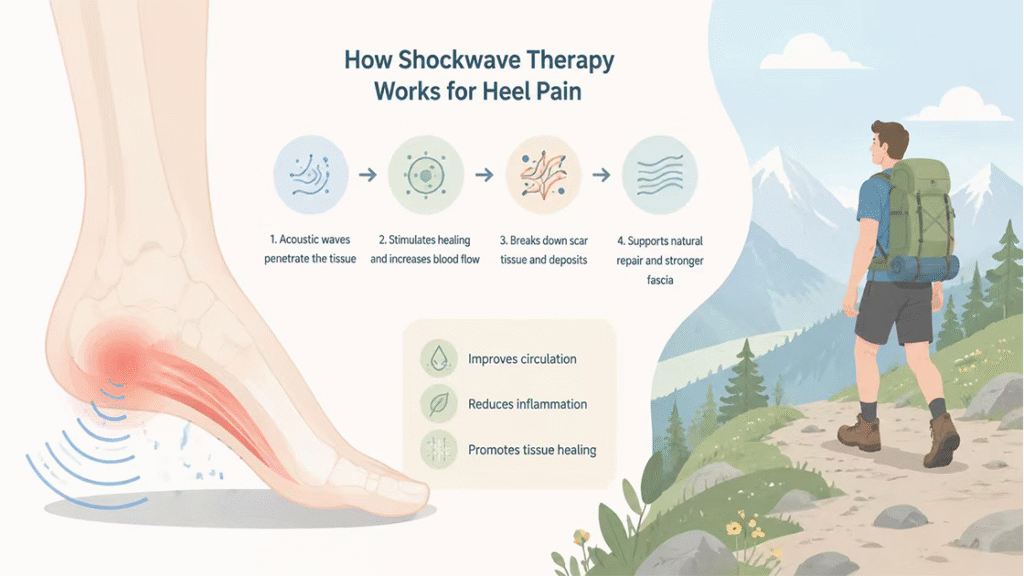
Extracorporeal shockwave therapy (ESWT) delivers high‑energy acoustic waves through the skin to the injured tissue. These mechanical pulses create a controlled microtrauma that triggers the body‘s natural repair processes. Research indicates that ESWT is an effective non‑surgical treatment for chronic plantar fasciitis, with significant reduction in plantar fascia thickness after intervention.
2.1 What Happens When Acoustic Waves Reach the Heel
The shockwave handpiece is placed directly against the skin over the painful heel. The device generates rapid, high‑pressure sound waves that travel deep into the tissue. When these waves reach the plantar fascia attachment, they create small, controlled mechanical forces. This stimulation wakes up dormant healing cells, increases local blood flow, and promotes the breakdown of scar tissue and calcific deposits. Over several weeks, the body clears away damaged tissue and builds healthier fascia fibers.
2.2 Why Three to Five Sessions Often Make a Lasting Difference
A typical shockwave protocol for heel pain involves three to five sessions spaced about one week apart. Each session lasts only a few minutes. Many patients notice a gradual reduction in morning pain after the second or third session. The therapy does not offer instant relief, but the cumulative effect of repeated mechanical stimulation helps the plantar fascia heal from within. For mountaineers who have struggled with heel pain for months, a short course of shockwave therapy can break the cycle of chronic irritation.
2.3 What Patients Commonly Experience During Treatment
During a shockwave session, you will feel a tapping or thumping sensation on your heel. The intensity is adjusted to remain tolerable, though some discomfort is normal. After the session, the treated area may feel slightly sore or warm for a day or two, similar to the feeling after a deep workout. This is a sign that the body‘s healing response has been activated. You can walk normally immediately after treatment and return to climbing‑friendly exercises as your symptoms allow. No downtime is required.
3. How Shockwave Therapy Compares to Other Conservative Approaches
Many climbers try heel cups, stretching, ice massage, or over‑the‑counter inserts before considering shockwave therapy. Each of these methods has a role, but they have limitations that shockwave therapy helps overcome.
3.1 Why Stretching and Ice Massage May Not Be Enough for Chronic Cases
Stretching the calf and plantar fascia is helpful for mild, early‑stage heel pain. It maintains flexibility and reduces tension. However, in chronic cases where the fascia has thickened and developed fibrous changes, stretching alone rarely resolves the problem. Ice massage temporarily numbs the area and reduces surface inflammation, but it does not stimulate deep tissue repair. These methods work best as complementary habits alongside a more active intervention like shockwave therapy.
3.2 How Heel Cups and Orthotics Play a Supportive Role
Gel heel cups and custom orthotics cushion the heel and improve foot mechanics. They reduce the shock of each step and offload the painful attachment site. For many mountaineers, good footwear and supportive insoles are essential for preventing flare‑ups. However, they do not actively heal the damaged fascia. Shockwave therapy goes a step further — it triggers a biological repair process while you continue to use supportive insoles during daily activities.
3.3 Why Shockwave Therapy Is Especially Suitable for Active Individuals
Unlike treatments that require weeks of immobilization, shockwave therapy allows you to stay on your feet. You do not need to stop hiking or climbing entirely; you simply modify your intensity during the treatment course. The brief sessions fit easily into a busy schedule. For someone who draws mental and physical strength from time spent outdoors, this compatibility with an active lifestyle is a major advantage. The goal is not to sideline you, but to help your heel heal while you keep moving.
4. Integrating Shockwave Therapy into a Climber‘s Recovery Plan
A successful recovery plan for heel pain combines shockwave therapy with sensible daily habits. The therapy does the heavy lifting of tissue repair, and supportive habits protect the heel from re‑injury.
4.1 Timing Your Sessions Around Climbing Days
Most climbers schedule shockwave sessions on rest days or lighter training days. The mild soreness that follows a session rarely interferes with low‑intensity activities like walking or easy scrambling, but you may want to avoid very long, heavy‑pack days immediately after treatment. A common pattern is to receive a session on a rest day, take the next day with gentle movement, and then return to normal climbing activities. Over a few weeks, you will likely notice that morning pain becomes less sharp and your heel tolerates longer approaches.
4.2 Complementary Habits That Protect the Heel
Wear supportive shoes with good arch support, even when not climbing. Avoid walking barefoot on hard floors, especially in the morning before the fascia has warmed up. Stretch the calf muscles gently, but avoid aggressive stretching that pulls on the irritated attachment. Roll the arch of your foot on a frozen water bottle for a few minutes after long hikes. These habits do not replace shockwave therapy, but they extend its benefits and reduce the risk of recurrence.
4.3 When to Expect a Return to Full Mountain Days
Recovery timelines vary depending on how long the heel pain has been present and how consistently you follow the treatment plan. Some climbers feel a noticeable improvement in morning pain after the second shockwave session. By the end of a full course of three to five sessions, many are able to resume moderate‑distance hikes with much less discomfort. Full return to heavy, multi‑day mountaineering typically takes four to eight weeks after completing the sessions. Gradual progression — short hikes first, then longer ones — helps the newly healed tissue adapt to load.
5. Long‑Term Management of Heel Health for Mountaineers
Once shockwave therapy has helped your heel feel better, the work is not over. Good maintenance habits keep the plantar fascia resilient for years of mountain adventures.
5.1 Recognizing That One Treatment Course May Not Be a Lifetime Fix
Shockwave therapy effectively manages active heel pain and helps the fascia heal. However, the biomechanical factors that contributed to the problem — foot arch mechanics, calf tightness, boot stiffness — may still be present. Some mountaineers find that their heel stays comfortable for years after a single course of shockwave therapy. Others benefit from a maintenance session once or twice a year, especially before long trekking seasons or high‑mileage trips. Listen to your foot and act early if you notice the familiar morning ache returning.
5.2 Choosing Footwear Wisely for Long‑Term Comfort
Your boots are your most important piece of gear for foot health. Look for models with adequate arch support and a cushioned heel. Avoid boots that are overly stiff or that force your foot into an unnatural position. Replace worn‑out boots regularly; lost cushioning increases impact forces on the heel. For approach hikes and shorter training days, consider trail runners with good shock absorption. Having a rotation of footwear for different activities reduces repetitive strain on the plantar fascia.
5.3 Staying Active Without Letting Heel Pain Return
Continue the habits that helped you heal: gentle calf stretches, supportive shoes, and avoiding barefoot walking on hard floors. When you finish a long day on the trail, take a few minutes to ice or gently massage the arch. If you feel a twinge in your heel, back off high‑intensity activities for a day or two and apply preventive strategies. The goal is not to live in fear of heel pain, but to build a simple routine that keeps your feet healthy so you can focus on the summit, not on your heel.
FAQ
Q1: Does shockwave therapy for heel spurs hurt during the procedure?
Most people describe the sensation as strong tapping or deep thumping. The intensity can be adjusted to remain manageable.
Q2: How soon will I notice less morning pain after starting shockwave therapy?
Many mountaineers notice a reduction in sharp morning pain after the second or third session. Full improvement often takes several weeks.
Q3: Can I continue climbing while receiving shockwave therapy?
Yes. The therapy requires no downtime. You may need to reduce intensity on treatment days, but you do not need to stop climbing entirely.
Q4: How many shockwave sessions will I need for chronic heel pain?
Most people benefit from three to five sessions spaced about one week apart. Some may need a second course after several months.
Q5: Will the heel pain come back after shockwave therapy?
With good footwear and sensible daily habits, the improvement can last for years. Occasional maintenance sessions can help prevent recurrence.
الخاتمة
The heel pain that makes every morning step feel like a rock in your boot does not have to end your mountaineering days. Extracorporeal shockwave therapy offers a non‑invasive, drug‑free way to help the plantar fascia heal from within. By triggering the body‘s natural repair processes, it reduces inflammation, breaks down fibrous tissue, and restores comfort. You can continue training, keep exploring, and chase the summits that call to you — all while treating the heel that carries you there. Your mountains are waiting.
المراجع
Bondi Podiatry. Shockwave Therapy for Heel Pain.
Shockwave Machines. Indications – Plantar Fasciitis.
https://www.shockwavemachines.com/indications
Advanced Foot & Ankle of Michigan. Shockwave Therapy for Heel Spurs: A Non‑Surgical Solution.
https://www.advancedfootmi.com
Meliora Health. Heel Spur and Shockwave Therapy. https://meliora.health/blogs
Ortho Sport Spine. How Shockwave Therapy Can Help Heel Spurs.