

مقدمة
Shockwave therapy has become an option in rehabilitation programs for selected chronic musculoskeletal conditions, but uncertainty about discomfort can make some patients hesitant to begin treatment. Questions such as “Does shockwave therapy hurt?”, “What does the treatment feel like?”, and “Will I experience soreness afterward?” are common concerns that clinicians need to address clearly. Although extracorporeal shockwave therapy (ESWT) does not require surgery or an incision, patients may experience pressure, tapping sensations, or localized discomfort during a session. Their responses can vary according to the treatment area, underlying condition, tissue sensitivity, and treatment parameters. By explaining what patients may experience, identifying factors that influence tolerance, and establishing clear communication throughout each session, healthcare professionals can support informed decisions without promising a completely painless experience or a guaranteed outcome.
1. Understanding Discomfort During Shockwave Therapy
Before discussing patient comfort, it is important to understand how shockwave therapy works and why the treatment sensation differs from one person to another.
1.1 What Is Extracorporeal Shockwave Therapy?
Extracorporeal shockwave therapy delivers acoustic energy through the skin to a selected treatment area. Clinicians may use focused shockwave therapy or radial pressure wave therapy, depending on the clinical objective and available equipment. These modalities differ in their physical characteristics and energy distribution, so clinicians should not treat them as interchangeable.
The treatment may form part of a rehabilitation plan for selected tendon and other musculoskeletal conditions. However, its potential benefits depend on the diagnosis, treatment protocol, and available clinical evidence. Shockwave therapy does not eliminate the need for an appropriate assessment or other rehabilitation measures.
1.2 Why Can Shockwave Therapy Feel Uncomfortable?
During treatment, acoustic pulses interact with tissues and stimulate the targeted region. Patients may describe the sensation as repetitive tapping, pressure, vibration, or brief sharp discomfort. Some areas may feel more sensitive than others, particularly when the underlying condition already causes localized tenderness.
However, discomfort does not automatically indicate that treatment is working, and severe pain should never serve as a treatment goal. Clinicians need to consider the patient’s response alongside the intended clinical objective, the treatment location, and the selected parameters.
1.3 Is Discomfort the Same for Every Patient?
No. Individual tolerance varies considerably. A patient with localized tendon tenderness may respond differently from someone with widespread sensitivity, heightened pain expectations, or discomfort caused by another underlying condition. Previous treatment experiences and anxiety can also influence how a person interprets physical sensations.
Therefore, clinicians should avoid assuming that one treatment setting will suit everyone. An individualized approach allows the provider to consider both clinical requirements and the patient’s ability to tolerate the session.
2. Factors That Influence Patient Comfort
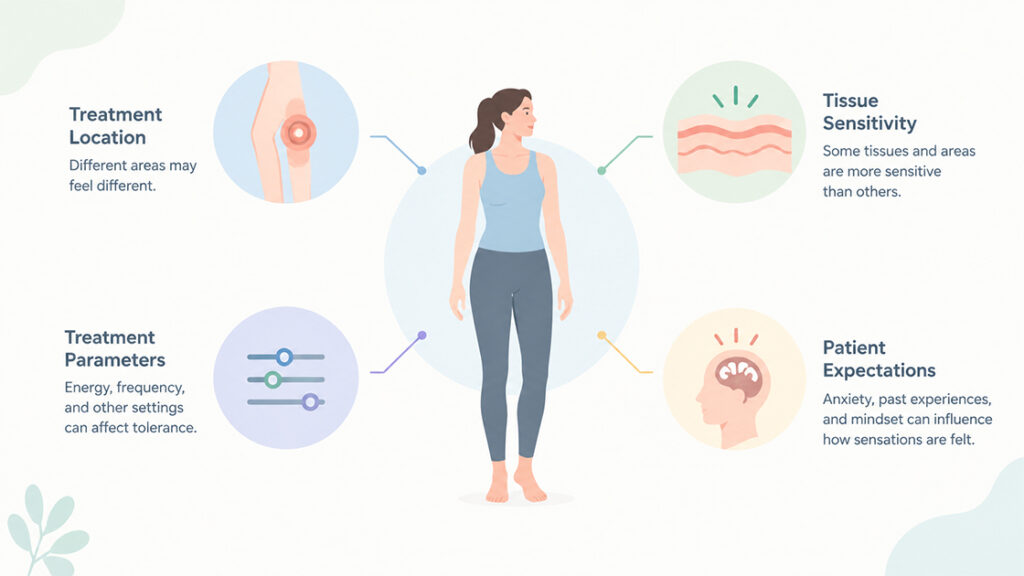
Once patients understand the basic sensation, clinicians can explain why their experience may differ from that of other people. Several factors influence treatment tolerance, and no single factor explains every response.
2.1 Treatment Location and Tissue Sensitivity
The anatomical location can influence how a patient experiences shockwave therapy. A sensitive superficial area may feel different from a deeper treatment target, while pressure over a particularly tender region may produce a stronger response. The surrounding anatomy also matters because nerves, blood vessels, bone, and other structures can affect treatment planning.
Clinicians should assess the treatment area carefully rather than assuming that a patient’s discomfort comes only from the condition being addressed. If the pain pattern does not match the expected clinical presentation, further assessment may be necessary before proceeding.
2.2 Treatment Parameters and Individual Tolerance
Treatment parameters may include energy or pressure settings, pulse frequency, the number of pulses, and the duration of application. The meaning of these settings depends on the device and its treatment modality. For example, radial pressure wave equipment may express pressure in bars, while focused systems may use energy flux density measurements.
A higher setting does not automatically produce a better clinical result. Clinicians should select parameters according to the device instructions, the condition being treated, the patient’s clinical presentation, and the intended treatment objective. They should also reassess tolerance throughout the session instead of increasing intensity simply because the patient can endure more discomfort.
2.3 Anxiety, Expectations, and Communication
Expectations can shape the way patients interpret unfamiliar sensations. Someone who expects severe pain may become tense before treatment begins, while someone who receives an overly reassuring explanation may feel unprepared if discomfort occurs.
Clear communication helps establish realistic expectations. Clinicians can explain that sensations vary, that temporary discomfort may occur, and that patients should report any unexpected or excessive pain. This approach supports shared decision-making without suggesting that discomfort proves the treatment is effective.
3. How Clinicians Can Support Treatment Tolerance
Effective communication and careful observation help clinicians respond to patient concerns while maintaining appropriate clinical standards. The objective is not to eliminate every sensation but to ensure that treatment remains appropriate, understandable, and tolerable.
3.1 Explain the Session Before Treatment Begins
A brief explanation can reduce uncertainty. Clinicians should describe the purpose of the session, the general sensation the patient may notice, and the possibility of temporary soreness or skin redness. They should also explain how the patient can communicate discomfort and request a pause.
This conversation should include the limitations of treatment. Shockwave therapy may help selected patients, but outcomes vary, and the procedure cannot guarantee pain relief or functional improvement. Honest expectations are more useful than promises of a painless experience.
3.2 Establish a Clear Feedback Process
Patients should know that they can report discomfort at any point during treatment. Clinicians can agree on a simple verbal signal before beginning, particularly when the patient may find it difficult to describe the sensation while the equipment is operating.
During the session, providers should observe verbal and nonverbal responses and ask focused questions when necessary. If discomfort becomes excessive, unexpected, or progressively worse, they should pause and reassess rather than continue automatically. Depending on the findings, they may need to modify the approach, discontinue the session, or arrange further clinical evaluation.
3.3 Avoid Treating Pain as a Measure of Success
A common misconception is that more discomfort means a stronger therapeutic effect. However, treatment intensity and clinical effectiveness are not interchangeable, and the relationship depends on the condition and protocol.
Clinicians should evaluate progress using appropriate outcomes, such as changes in pain during relevant activities, functional capacity, range of motion when applicable, and the patient’s overall response over time. A single session’s sensation cannot establish whether the treatment has produced a meaningful benefit.
4. What Patients May Notice During and After a Session
Explaining possible short-term reactions helps patients distinguish expected responses from symptoms that require additional attention. Clinicians should provide guidance that reflects the treatment performed and the patient’s individual circumstances.
4.1 Common Short-Term Responses
Some patients experience temporary tenderness, mild redness, localized swelling, or bruising after shockwave therapy. The duration and intensity of these responses vary, and not every patient experiences them. Some may notice increased soreness for a period after treatment, while others report little change in how the area feels.
Patients should follow the aftercare instructions provided by their clinician. They should also avoid assuming that the absence of soreness means the treatment has failed or that temporary soreness confirms a successful response.
4.2 When Should a Patient Contact a Clinician?
Patients should contact their healthcare provider if pain becomes severe, continues to worsen, or persists beyond the expected recovery period. New numbness, unusual weakness, substantial swelling, or other unexpected symptoms also warrant assessment. Sudden severe symptoms may require urgent medical attention.
Clinicians should explain these warning signs before treatment rather than waiting for a problem to arise. They should also consider the patient’s medical history, medication use, and other relevant risk factors during the initial assessment.
4.3 Why Activity Management Still Matters
Temporary pain reduction does not necessarily mean that the treated tissue can immediately tolerate more physical load. Some patients may feel better shortly after a session, but that response alone does not establish tissue recovery.
For this reason, clinicians should integrate shockwave therapy with an appropriate rehabilitation plan when indicated. Activity modification, progressive exercise, and functional reassessment may help guide recovery. The exact approach depends on the condition, the patient’s presentation, and the recommendations of the treating professional.
5. Building a Patient-Centered Approach to Shockwave Therapy
Beyond the treatment itself, a consistent communication process can help clinicians understand patient concerns, document responses, and make informed decisions about subsequent sessions.
5.1 Use Consistent Measures to Track Progress
Clinicians can document baseline symptoms, relevant functional limitations, treatment parameters, patient tolerance, and any adverse reactions. Follow-up assessments should use comparable measures whenever possible, making it easier to identify changes over time.
Pain ratings can provide useful information, but they should not stand alone. Depending on the condition, clinicians may also assess activity tolerance, movement quality, strength, or condition-specific functional measures. This broader view helps distinguish a temporary change in symptoms from meaningful functional improvement.
5.2 Personalize Communication Without Overpromising
Patient education should reflect the individual’s diagnosis, concerns, and treatment goals. A person worried about discomfort may need a more detailed explanation of the procedure, while another may want to understand the evidence supporting its use. In both cases, clinicians should explain uncertainties and avoid guaranteeing a specific outcome.
A patient-centered approach also means acknowledging when shockwave therapy may not be appropriate. The provider should consider contraindications, alternative explanations for symptoms, and other treatment options before recommending a session.
5.3 Keep Treatment Decisions Grounded in Clinical Evidence
Shockwave therapy has different levels of evidence across musculoskeletal conditions. Findings from one diagnosis cannot automatically be applied to another, and treatment outcomes may vary with the protocol and patient population. Professional guidance, current research, device-specific instructions, and clinical assessment should inform treatment decisions.
For rehabilitation providers, this approach supports responsible use of the technology. It also helps patients understand that shockwave therapy is one potential component of care rather than a universal solution for pain.
FAQ
Does shockwave therapy hurt?
Some patients experience pressure, tapping, or temporary discomfort during treatment. The sensation varies by treatment area, condition, and individual tolerance.
Is pain during treatment a sign that it is working?
No. Discomfort does not prove that treatment is effective. Clinicians should evaluate appropriate clinical and functional outcomes.
Can soreness occur after shockwave therapy?
Yes. Temporary soreness, redness, or bruising may occur. Severe or worsening symptoms should prompt clinical reassessment.
Can clinicians adjust treatment if a patient feels too much discomfort?
The clinician may pause treatment and reassess the approach. Any adjustment should reflect the patient’s condition, clinical needs, and device instructions.
Should patients expect immediate pain relief?
Not necessarily. Some patients notice a short-term change, while others experience little immediate difference. Outcomes vary by condition and treatment protocol.
Can patients resume normal activity immediately afterward?
Not always. Activity recommendations depend on the condition, treatment response, and rehabilitation plan. Patients should follow their clinician’s guidance rather than using immediate pain relief as the only indicator.
الخاتمة
Shockwave therapy can cause temporary discomfort, but patient experiences vary according to the treatment area, clinical condition, treatment parameters, and individual sensitivity. Clear explanations, ongoing communication, appropriate patient selection, and careful monitoring can help clinicians manage concerns without treating pain as evidence of effectiveness. Providers should also explain potential short-term reactions, identify symptoms that require reassessment, and evaluate progress using meaningful clinical and functional measures. By combining realistic expectations with evidence-informed decision-making, healthcare professionals can make shockwave therapy discussions more transparent and support a patient-centered rehabilitation process.
المراجع
Best Practices for Extracorporeal Shockwave Therapy in Musculoskeletal Medicine: Clinical Application and Training Consideration
https://pmc.ncbi.nlm.nih.gov/articles/PMC9321712
Recommendations for Use of Extracorporeal Shockwave Therapy in Sports Medicine: An International Modified Delphi Study
https://bjsm.bmj.com/content/59/3/145
ISMST Recommendations: Consensus Statement on ESWT Indications and Contraindications
https://shockwavetherapy.org/ismst-recommendations/
Shockwave Therapy for Heel Pain — Royal Orthopaedic Hospital
https://roh.nhs.uk/services-information/foot-and-ankle/shockwave-therapy-for-heel-pain
Shockwave Treatment: A New Wave for Musculoskeletal Care — Mayo Clinic