

مقدمة
Few foot conditions cause as much misery as plantar fasciitis, especially that agonizing first step onto the floor each morning. The sharp, stabbing pain under the heel makes getting out of bed a dreaded moment, and the discomfort often returns after periods of sitting or standing for long hours. For runners, retail workers, teachers, and anyone who spends significant time on their feet, this condition can turn daily activities into a painful chore. Many individuals try stretching, ice, orthotics, and rest, yet the pain persists for months. Extracorporeal shockwave therapy has emerged as a non-invasive option that may help address chronic plantar fasciitis when other approaches have not provided lasting relief.
1. Understanding Plantar Fasciitis and Its Impact
Plantar fasciitis refers to irritation and degeneration of the thick band of connective tissue running from the heel to the toes along the bottom of the foot. This plantar fascia supports the arch and absorbs shock during walking, running, and standing. When overloaded repeatedly, the fascia develops microtears and structural changes at its attachment to the heel bone.
1.1 Who Suffers Most from Heel Pain
Certain groups experience plantar fasciitis at much higher rates than the general population. Runners top the list, especially those who suddenly increase their mileage or add hill workouts to their routine. People who stand for most of their workday—such as teachers, factory workers, and retail associates—also face elevated risk. Obesity or sudden weight gain adds mechanical stress to the fascia. Additionally, individuals with high arches or flat feet may develop the condition due to altered foot mechanics.
1.2 Why Morning Pain Is So Characteristic
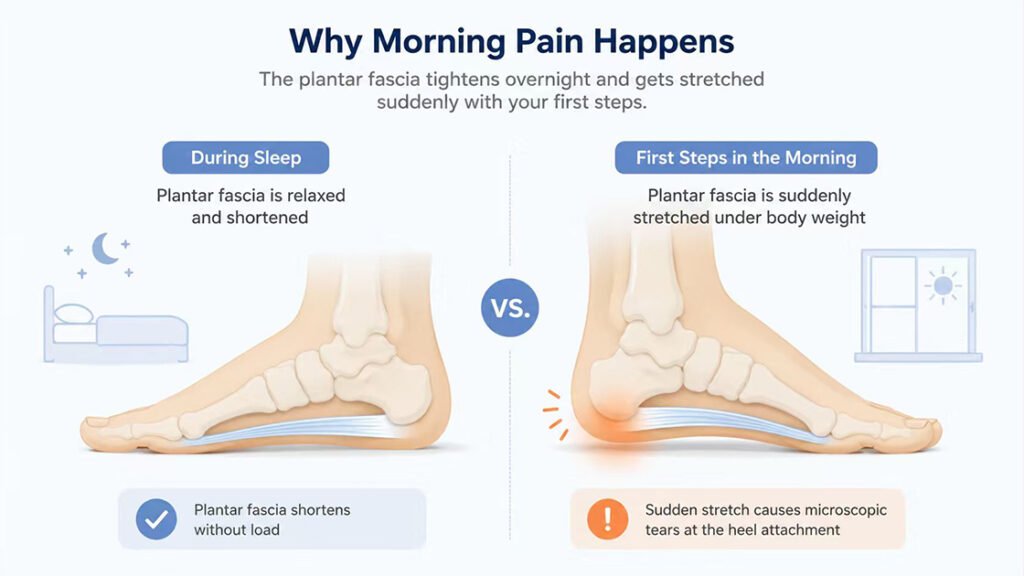
The intense pain with the first few steps after waking has a specific mechanical explanation. During sleep, the plantar fascia remains in a shortened, relaxed position without weight‑bearing. When the person first stands up, the fascia stretches abruptly under full body weight. Microscopic tears at the heel attachment pull apart, generating sharp pain. After a few minutes of walking, the fascia gradually accommodates, and the pain often subsides temporarily. However, prolonged sitting followed by standing restarts the same cycle.
2. Why Conventional Treatments Sometimes Fall Short
Many people with plantar fasciitis try conservative measures first. Rest, ice massage, over‑the‑counter pain relievers, stretching exercises, and heel cups or orthotic inserts provide relief for some. However, a substantial number of individuals continue to experience symptoms for six months or longer despite consistent adherence to these approaches.
2.1 The Chronic Degenerative Nature
Research has shifted the understanding of plantar fasciitis from an inflammatory condition (hence “-itis”) to a degenerative one. The affected tissue shows fibrosis, disorganized collagen, and cell death rather than classic inflammation. This explains why anti‑inflammatory medications and corticosteroid injections often produce only temporary or incomplete relief. The problem is not primarily inflammation but rather a failed healing response within the fascia itself.
2.2 The Need for Tissue Remodeling
Because the plantar fascia undergoes repetitive loading with every step, any healing attempt must produce tissue that can withstand those forces. Scar tissue alone does not provide adequate mechanical strength. What the fascia needs is organized collagen realignment and improved blood flow to the relatively avascular heel attachment. Shockwave therapy aims to stimulate exactly these processes—remodeling the existing tissue rather than simply masking pain.
3. How Shockwave Therapy Works for Plantar Fasciitis
Extracorporeal shockwave therapy delivers high‑energy acoustic pulses through the skin to the injured fascia. The energy passes through fat and muscle layers and focuses on the heel bone attachment site. This mechanical input triggers a biological response that supports healing.
3.1 Mechanisms at the Tissue Level
The acoustic waves create controlled microtrauma within the degenerated fascia. This microtrauma stimulates the body‘s natural repair mechanisms. Local blood flow improves as new blood vessels form—a process called neovascularization. The shockwaves also break down calcific deposits that sometimes form at the heel attachment. Additionally, the mechanical energy influences pain receptors, providing analgesic effects that allow patients to move more comfortably during the healing period.
3.2 Focused vs. Radial Shockwave for Heel Pain
Two main types of shockwave devices exist for plantar fasciitis. Focused shockwave concentrates energy at a precise depth, making it suitable for reaching the deep heel attachment. Radial shockwave spreads energy more superficially and broadly. Clinical experience suggests that focused shockwave may offer better outcomes for chronic plantar fasciitis, though both types have shown benefits. The choice depends on the device available and the practitioner‘s preference.
4. Clinical Considerations for Shockwave Therapy
When considering shockwave therapy for plantar fasciitis, several factors help determine whether this approach fits an individual‘s situation. Understanding who may benefit most and what to expect from the healing timeline supports realistic planning.
4.1 Who May Be a Good Candidate
Shockwave therapy typically works best for people with chronic plantar fasciitis lasting more than six months who have tried standard conservative treatments without satisfactory relief. Individuals with acute heel pain or those who have had recent corticosteroid injections in the same area may need to wait before starting shockwave therapy. Some conditions rule out the use of shockwave, including pregnancy, bleeding disorders, or the presence of tumors in the treatment zone. A thorough evaluation helps ensure safety and appropriateness.
4.2 Time Frame for Noticing Improvement
The healing response after shockwave therapy does not happen overnight. Most people do not feel immediate relief; instead, the body gradually mounts a repair process that takes weeks to unfold. Some individuals notice reduced pain starting around two to four weeks after the first session. The full effect often becomes apparent by six to eight weeks. This delayed response reflects the biological reality that tissue remodeling requires time. Patience and adherence to complementary foot care strategies maximize the chances of a good outcome.
5. Integrating Shockwave into a Complete Foot Care Plan
Shockwave therapy works best when patients also address factors that contributed to the condition in the first place. It is not a magic solution but rather a powerful stimulus that works alongside sensible self‑care.
5.1 Supportive Footwear and Activity Modification
Wearing shoes with adequate cushioning and arch support reduces the repetitive stress on the plantar fascia. Many patients benefit from replacing worn‑out athletic shoes or adding over‑the‑counter arch supports. Temporarily reducing high‑impact activities gives the healing fascia a chance to remodel without constant re‑injury. Low‑impact alternatives such as swimming or cycling maintain fitness without pounding the heel.
5.2 Stretching and Strengthening Exercises
Gentle calf and plantar fascia stretching complements the effects of shockwave therapy. A simple morning routine of stretching the foot before standing up can reduce that first‑step pain dramatically. Towel curls, marble pick‑ups, and eccentric loading exercises strengthen the small intrinsic muscles of the foot. These exercises create a more resilient foot that tolerates daily demands better than before. Patients should perform these exercises consistently for best results.
FAQ
Q1: Is shockwave therapy painful for plantar fasciitis?
Most people describe a strong tapping or pinching sensation that is uncomfortable but brief. The session length is short, and the discomfort stops as soon as the probe lifts.
Q2: How soon after shockwave therapy will I feel less heel pain?
Some individuals notice improvement within a few days, but the full benefit often takes four to six weeks to appear as the tissue heals and remodels.
Q3: Can I walk normally after a shockwave session?
Yes. You may resume normal walking immediately. However, doctors typically advise avoiding running, jumping, or prolonged standing for a short period after each session.
Q4: How many sessions do I need?
A typical protocol involves three sessions spaced about one week apart. Some people with milder symptoms respond well to two sessions, while others with chronic or severe cases may need additional treatments.
الخاتمة
Plantar fasciitis can rob people of the simple joy of walking without pain. That brutal first step out of bed each morning serves as a daily reminder of how stubborn this condition can be. For those who have tried stretching, icing, orthotics, and rest without lasting relief, extracorporeal shockwave therapy offers a non‑invasive, drug‑free option that addresses the underlying degenerative tissue rather than just masking symptoms. By stimulating neovascularization, collagen remodeling, and local pain modulation, shockwave therapy supports the body‘s own healing mechanisms. When combined with appropriate footwear, activity modification, and targeted exercises, it can help many individuals finally step out of bed with confidence.
المراجع
Rompe, J.D. et al. – Shockwave Therapy for Chronic Plantar Fasciitis
https://pubmed.ncbi.nlm.nih.gov/18568917
Gollwitzer, H. et al. – Extracorporeal shockwave therapy for chronic plantar fasciitis
https://www.researchgate.net/publication/257293524
Ogden, J.A. et al. – Principles of shock wave therapy
https://pubmed.ncbi.nlm.nih.gov/11593643
Gerdesmeyer, L. et al. – Radial extracorporeal shock wave therapy for plantar fasciitis
https://pubmed.ncbi.nlm.nih.gov/18441317
Theodorou, D.J. et al. – Plantar fasciitis: imaging and treatment