

مقدمة
Pressure injuries are a common concern in long-term care settings, particularly among older adults and individuals with limited mobility. Prolonged pressure, reduced circulation, friction, and underlying health conditions can contribute to skin and tissue damage, making wound management challenging. Extracorporeal Shockwave Therapy (ESWT) has attracted research interest as a potential supportive approach to chronic wound care. This article explores how pressure injuries develop, examines current evidence on shockwave therapy, and explains how professional treatment technology may fit into a broader wound management plan.
1. Understanding Pressure Injuries in Long-Term Care
1.1 What Are Pressure Injuries?
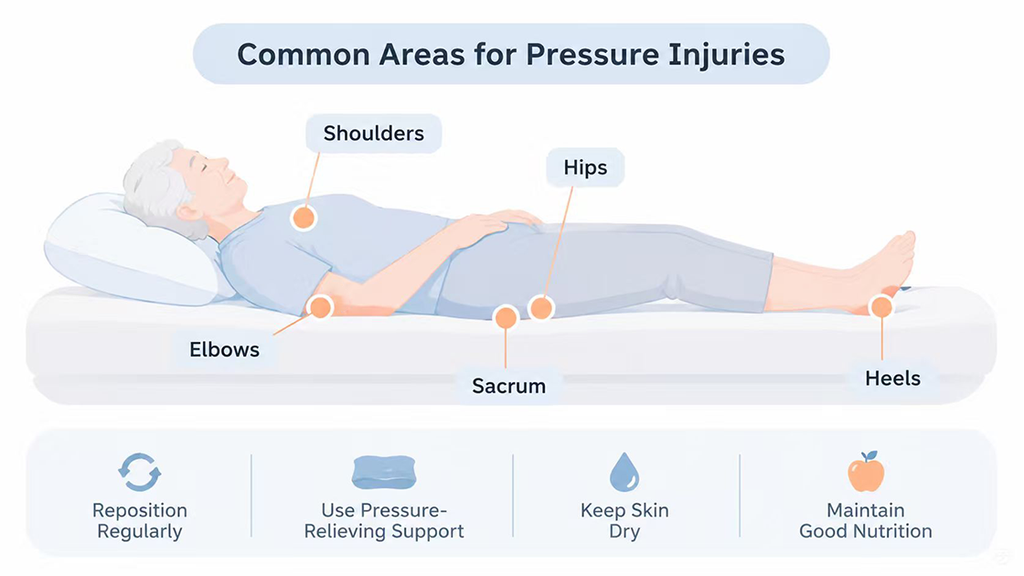
Pressure injuries are localized areas of damage to the skin and underlying tissue, usually occurring over bony areas such as the heels, hips, sacrum, and elbows. They develop when sustained pressure or pressure combined with shear restricts blood flow to vulnerable tissue. Depending on the severity, an injury may appear as persistent skin discoloration, an open wound, or deeper tissue damage.
1.2 Why Long-Term Care Patients Face Higher Risks
Older adults and individuals with limited mobility may remain in the same position for extended periods, increasing pressure on specific body areas. Additional factors, including reduced sensation, moisture exposure, poor nutritional intake, and chronic health conditions, can further increase vulnerability. Regular repositioning, skin assessments, and appropriate pressure-relieving equipment are therefore important parts of preventive care.
1.3 Challenges in Managing Chronic Pressure Injuries
Pressure injuries can take considerable time to heal, particularly when patients have impaired circulation, infection, or other underlying conditions. Wound management requires consistent monitoring of wound size, tissue condition, drainage, and surrounding skin. A structured care plan is essential because treating the visible wound alone does not address the underlying causes of tissue damage.
2. How Shockwave Therapy May Support Wound Care
2.1 Understanding Extracorporeal Shockwave Therapy
Extracorporeal Shockwave Therapy uses acoustic pressure waves delivered from outside the body. In musculoskeletal care, it is commonly used to address selected soft tissue conditions. Researchers have also investigated its potential role in chronic wound management, including pressure injuries, with particular interest in local tissue responses and wound healing processes.
2.2 Potential Effects on Tissue Repair
Research suggests that shockwave stimulation may influence biological processes associated with tissue repair, including local circulation, cellular activity, and the body’s wound-healing response. However, these effects should not be interpreted as guaranteed clinical outcomes. The available evidence for pressure injuries remains limited, and treatment decisions should be based on wound characteristics and professional assessment.
2.3 What Clinical Research Says About Pressure Injuries
A preliminary randomized controlled trial involving 40 patients investigated radial shockwave therapy alongside standard wound care. The researchers reported improvements in wound measurements and clinical assessment scores after treatment. However, the study evaluated immediate outcomes following a single session, so it does not establish long-term effectiveness. Further research is needed to determine appropriate treatment protocols and patient selection.
3. Shockwave Technology and Professional Treatment Considerations
3.1 Adjustable Energy and Treatment Control
Professional shockwave equipment may offer adjustable energy settings to accommodate different treatment requirements. The SWAVE-200 product information describes an energy range of 30–210 mJ and an intelligent touchscreen interface for operation. These features provide treatment flexibility, but they do not establish that the device is suitable for every wound type or that its standard settings are appropriate for pressure injuries.
3.2 Understanding Different Treatment Heads
The device is supplied with seven interchangeable treatment heads, including 8 mm, 15 mm, 20 mm, single-point, flat, and 36 mm options. These attachments are designed for different contact areas and musculoskeletal treatment applications. Their presence does not mean that every attachment is appropriate for open wounds. Wound-specific use requires a validated protocol and professional guidance.
3.3 Why Treatment Protocols Matter
Shockwave treatment parameters can vary according to energy level, frequency, number of impulses, application area, and treatment schedule. Clinical studies involving pressure injuries have used specific radial shockwave protocols alongside standard wound care. These research protocols should not automatically be transferred to another device, particularly when its energy delivery characteristics and intended applications differ.
4. Building a Comprehensive Pressure Injury Care Plan
4.1 Assess the Wound Before Considering Additional Treatment
A qualified healthcare professional should assess the wound’s location, depth, tissue condition, stage, and possible signs of infection. The patient’s circulation, sensation, nutritional status, and underlying medical conditions should also be considered. This information helps determine whether additional treatment options are appropriate.
4.2 Combine Wound Care With Pressure Relief
Pressure redistribution remains essential for preventing further tissue damage. Repositioning schedules, appropriate support surfaces, heel protection, and pressure-relieving cushions can help reduce sustained loading. Shockwave therapy, if considered by a qualified specialist, should only be an adjunct to established wound care rather than a replacement for pressure relief.
4.3 Monitor Healing and Patient Safety
Regular wound assessments help healthcare teams identify changes in wound area, tissue appearance, drainage, and surrounding skin. Patients should also be monitored for signs of infection or worsening tissue damage. Any additional therapy should be reviewed according to clinical response, patient tolerance, and the overall care plan.
5. Safety and Practical Considerations in Long-Term Care
5.1 Identify Contraindications and Potential Risks
Shockwave therapy is not appropriate for every patient or wound. Active infection, exposed or vulnerable structures, impaired sensation, bleeding risks, and certain underlying medical conditions may require particular caution or make treatment unsuitable. A healthcare professional must review the patient’s medical history and the specific wound before considering treatment.
5.2 Protect Fragile Skin and Surrounding Tissue
Older adults may have thinner, more fragile skin and reduced protective sensation. Treatment planning should account for the condition of the surrounding tissue, patient comfort, and the possibility of additional trauma. Equipment should only be used according to its validated indications and professional safety instructions.
5.3 Maintain Consistent Long-Term Care Practices
Pressure injury management requires ongoing attention from nurses, wound care specialists, physicians, and caregivers. Consistent repositioning, nutrition support, moisture management, and documentation all contribute to a coordinated care approach. Technology may offer additional options, but reliable daily care remains central to protecting vulnerable tissue.
FAQ
1. Can shockwave therapy help with pressure injuries?
Early research suggests that shockwave therapy may support certain wound-healing processes. However, evidence specifically for pressure injuries is still limited, and it should only be considered as an adjunct under professional supervision.
2. Which pressure injury areas may be affected?
Pressure injuries commonly occur around the sacrum, heels, hips, and elbows. Treatment suitability depends on the wound’s location, depth, tissue condition, and the patient’s overall health.
3. Can shockwave therapy replace standard wound care?
No. It cannot replace pressure relief, wound cleansing, appropriate dressings, infection management, or nutritional support. Standard wound care remains essential.
4. Is shockwave therapy suitable for every older adult?
No. Medical conditions, skin fragility, wound severity, circulation, and sensation must be assessed before treatment is considered.
5. How is progress monitored?
Healthcare professionals monitor wound dimensions, tissue appearance, drainage, surrounding skin, and signs of infection. Regular assessments help determine whether the care plan needs adjustment.
الخاتمة
Pressure injuries present ongoing challenges for long-term care patients, especially those with limited mobility and additional health concerns. Shockwave therapy is an emerging area of research that may offer supportive potential in selected wound management settings, but its clinical role is not yet fully established. Professional assessment, appropriate pressure relief, consistent wound care, and careful monitoring remain essential. When used within validated clinical protocols, advanced treatment technologies may contribute to a broader approach to tissue recovery and patient care.
المراجع
1. SWAVE-200 جهاز العلاج بالموجات الصدمية – Product Features and Technical Information
https://www.shockwavemachines.com/
2. The Immediate Clinical Effects Following a Single Radial Shock Wave Therapy in Pressure Ulcers: A Preliminary Randomized Controlled Trial of The SHOWN Project
https://pubmed.ncbi.nlm.nih.gov/35996355
3. Randomized Control of Extracorporeal Shock Wave Therapy Versus Placebo for Chronic Decubitus Ulceration
https://pubmed.ncbi.nlm.nih.gov/20156981
4. Is Shock Wave Application Effective on Various Chronic Wounds in the Geriatric Population? Preliminary Clinical Study
https://pubmed.ncbi.nlm.nih.gov/38706636
5. WHS Guidelines for the Treatment of Pressure Ulcers – 2023 Update