

مقدمة
In modern fitness culture, strength training and high-intensity workouts are widely practiced, but stretching is often overlooked in daily routines. Over time, insufficient flexibility work combined with repetitive loading may contribute to tendon stiffness, reduced movement efficiency, and higher mechanical stress during exercise. As fitness intensity increases, many individuals focus heavily on performance while ignoring mobility balance. Within contemporary musculoskeletal care discussions, Shockwave Therapy is commonly referenced as a non-invasive modality associated with supporting tendon-related conditions and deep tissue recovery concepts, especially in chronic overuse patterns.
1. Tendon Stiffness in Fitness Training
1.1 How Training Without Stretching Affects Soft Tissue
When individuals skip stretching before or after training, tendons and surrounding connective tissues gradually lose elasticity. As a result, muscles and tendons begin to work under tighter mechanical conditions. Over time, this reduced flexibility can change normal movement patterns and increase localized stress during repetitive exercise. In many cases, people only notice these changes when stiffness begins to limit performance or comfort during workouts. Therefore, flexibility training plays a much more important role than many athletes initially assume.
1.2 Repetitive Load and Microstrain Accumulation
Strength training naturally involves repeated mechanical loading, which supports muscle development. However, without proper recovery and mobility balance, microstrain can accumulate at tendon attachment points. In addition, this repeated stress may gradually affect tissue responsiveness and create persistent tightness after exercise. Over time, the body may struggle to fully recover between sessions, especially when training frequency remains high without mobility support.
1.3 Reduced Movement Efficiency
Tendon stiffness does not only affect comfort—it also reduces movement efficiency. When range of motion becomes limited, the body often compensates by adjusting posture or altering movement patterns. However, these compensations can place additional stress on surrounding muscles and joints. As a result, training quality may decline even if strength levels remain unchanged. This imbalance highlights the importance of maintaining both strength and flexibility together.
2. Injury Risk in Fitness Enthusiasts
2.1 Overuse Patterns in Training
Many fitness enthusiasts focus on intensity and repetition, but they often overlook recovery balance. Over time, repetitive loading of the same tendon structures can create overuse patterns. In addition, without stretching or mobility work, certain areas remain under constant tension. This continuous stress increases the likelihood of irritation in tendons, especially in high-frequency training programs.
2.2 Recovery Limitations
When soft tissues remain tight for long periods, the body cannot recover efficiently between workouts. As a result, athletes may feel persistent stiffness even after rest days. In addition, reduced tissue relaxation can influence how well muscles respond to future training sessions. Over time, this may lead to a cycle where discomfort builds gradually without a clear injury event.
2.3 Early Indicators of Tendon Stress
Tendon stress usually develops slowly rather than suddenly. Early signs often include mild tightness, reduced flexibility, or discomfort during specific movements. However, many individuals ignore these signals and continue training at the same intensity. As a result, the condition may progress into more noticeable stiffness that affects performance and daily movement.
3. Shockwave Therapy in Tendon Recovery Concepts
3.1 Non-Invasive Musculoskeletal Support
Shockwave Therapy is widely discussed in musculoskeletal care environments as a non-invasive approach related to tendon and soft tissue conditions. It often appears in discussions involving chronic overuse injuries and localized discomfort. In modern recovery frameworks, practitioners and wellness specialists consider it as part of broader tendon support strategies rather than a standalone solution.
3.2 Deep Tissue Mechanical Stimulation Concept
One key concept behind Shockwave Therapy involves mechanical stimulation of deep tissue structures. In particular, tendons that experience repetitive loading may benefit from targeted stimulation concepts discussed in rehabilitation models. In addition, this approach is often combined with mobility work to support overall movement quality and tissue responsiveness.
3.3 Integration with Mobility-Based Approaches
Modern musculoskeletal care rarely relies on a single method. Instead, Shockwave Therapy is often integrated with stretching routines and mobility training programs. For example, individuals may combine recovery sessions with controlled movement exercises. As a result, this integrated approach supports both structural recovery concepts and functional movement improvements.
4. Preventive Strategies for Tendon Health
4.1 Structured Stretching Practices
Consistent stretching helps maintain tendon flexibility and supports balanced movement patterns. In addition, it prepares the body for repetitive loading during training sessions. When individuals incorporate stretching regularly, they often notice smoother movement and reduced stiffness over time.
4.2 Balanced Training Load
A well-structured fitness program should include strength training, recovery periods, and mobility work. However, many people focus only on intensity and ignore rest cycles. As a result, connective tissues may not adapt properly to mechanical stress. Over time, balanced programming helps reduce unnecessary strain on tendons.
4.3 Movement Awareness
Movement quality plays a key role in tendon health. When individuals perform exercises with control and full range of motion, they reduce compensatory stress patterns. In addition, better awareness of posture and alignment improves overall training efficiency and reduces long-term strain risk.
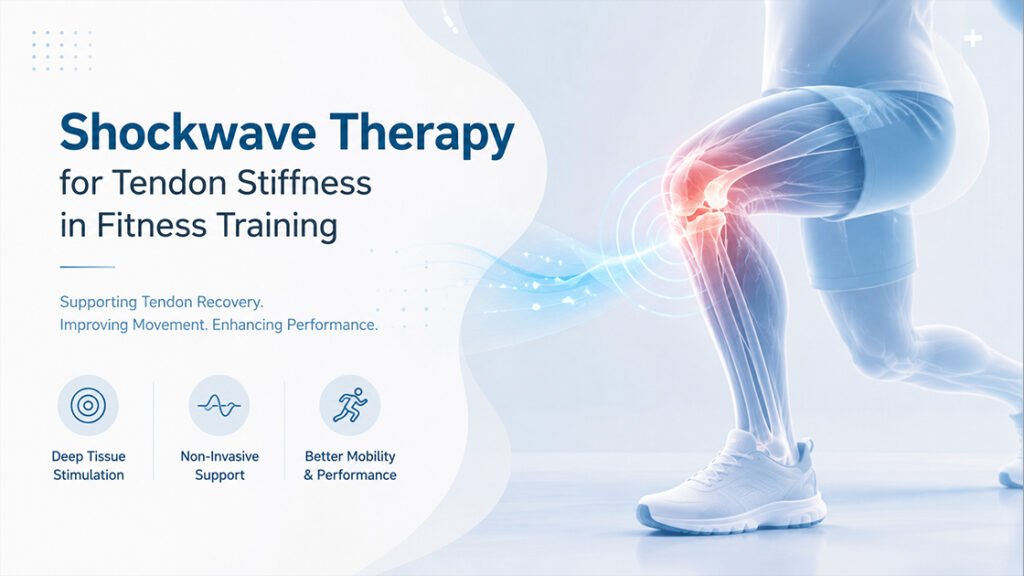
5. Managing Tendon Stiffness in Active Individuals
5.1 Early Recognition of Tightness
Early detection of stiffness allows individuals to adjust training before discomfort becomes persistent. For example, reducing intensity or increasing mobility work can help restore balance. In addition, paying attention to early signals helps prevent long-term overuse patterns.
5.2 Integrated Recovery Approaches
Modern musculoskeletal care uses a combination of strategies rather than a single method. Stretching, load management, and non-invasive modalities such as Shockwave Therapy often work together in recovery-focused programs. As a result, this multi-layered approach supports both symptom management and long-term tissue function.
5.3 Long-Term Functional Optimization
Long-term fitness success depends on maintaining both strength and flexibility. When individuals consistently balance training and recovery, they improve movement efficiency and reduce injury risk. In addition, structured recovery habits support sustainable performance over time.
FAQ
Why does lack of stretching increase tendon stiffness?
Because reduced flexibility limits tissue elasticity and increases mechanical stress during movement.
Can strength training alone cause tendon issues?
Yes. Without mobility balance, repetitive loading may gradually increase tendon strain.
What is Shockwave Therapy used for in this context?
It is commonly discussed as a non-invasive approach associated with tendon and soft tissue recovery concepts.
How can athletes reduce tendon stiffness?
They can combine stretching, recovery periods, and balanced training routines.
Is tendon stiffness reversible?
In many cases, structured movement and recovery strategies may help improve flexibility over time.
الخاتمة
Tendon stiffness and injury risk in fitness training develop gradually through insufficient stretching and repetitive mechanical loading patterns. Over time, these factors affect movement efficiency, recovery balance, and overall musculoskeletal comfort. Shockwave Therapy is often referenced in modern musculoskeletal discussions as a non-invasive modality associated with tendon-related support concepts within broader recovery strategies. When combined with structured stretching, controlled training loads, and mobility-focused routines, it contributes to a more balanced and sustainable approach to long-term physical performance and tissue health.
المراجع
Smart Shockwave Machines – Indications Overview
https://www.shockwavemachines.com/indications
Cleveland Clinic – Tendinitis and Overuse Injuries
https://my.clevelandclinic.org/health/diseases/10921-tendinitis
National Library of Medicine – Tendon Overuse and Musculoskeletal Adaptation
https://pubmed.ncbi.nlm.nih.gov
American Academy of Orthopaedic Surgeons – Tendon Injury Information
Mayo Clinic – Repetitive Strain and Soft Tissue Conditions