

مقدمة
Warehouse workers face some of the most physically demanding routines in modern labor environments. Repetitive lifting, constant bending, and prolonged manual handling of goods place continuous stress on muscles, tendons, and joints. Over time, this workload often leads to chronic discomfort in the lower back, shoulders, and major muscle groups, especially when recovery time is limited. As occupational musculoskeletal issues become more common in logistics and distribution industries, non-invasive technologies like shockwave therapy—highlighted in clinical indications on platforms such as ShockwaveMachines—are increasingly recognized for their role in supporting soft tissue function and managing overuse-related discomfort in physically active workers.
1. Physical Demands of Warehouse Work and Musculoskeletal Stress
1.1 Repetitive Lifting and Cumulative Tissue Load
Warehouse environments require workers to perform repetitive lifting, carrying, and stacking tasks throughout long shifts. Each movement places incremental stress on muscles and connective tissues, especially in the lower back and shoulders. Over time, this repetitive loading contributes to microtrauma in soft tissues, which may develop into chronic discomfort if recovery cycles remain insufficient. Many workers also experience stiffness that reduces mobility and affects daily performance. These biomechanical stresses highlight the importance of supportive musculoskeletal care strategies in physically demanding industries.
1.2 Whole-Body Fatigue and Occupational Strain Patterns
Unlike isolated injuries, warehouse-related strain often affects multiple body regions simultaneously. Continuous bending, twisting, and lifting create a pattern of cumulative fatigue that impacts the lumbar spine, hips, and upper extremities. This type of occupational strain does not result from a single event but rather from repeated mechanical overload. As a result, workers frequently report generalized muscle soreness alongside localized pain points. Understanding these strain patterns helps explain why targeted energy-based therapies are increasingly considered in occupational health support.
2. Why Musculoskeletal Overuse Injuries Are Difficult to Manage
2.1 Continuous Work Cycles and Limited Recovery Time
Warehouse operations often run on tight schedules that leave limited time for physical recovery between shifts. This continuous workload reduces the body’s ability to fully repair microdamage in soft tissues. Without adequate rest, minor discomfort can gradually progress into persistent musculoskeletal conditions. Many workers adapt by continuing their tasks despite discomfort, which may further prolong recovery cycles. This ongoing strain creates a need for supportive approaches that align with active work routines.
2.2 Complex Nature of Soft Tissue Irritation
Overuse injuries involve multiple tissue layers, including muscles, tendons, and fascia. These structures respond differently to mechanical stress, making recovery more complex than simple fatigue. Chronic irritation may also affect local circulation and tissue elasticity, contributing to stiffness and reduced flexibility. Because of this complexity, modern musculoskeletal care often focuses on multi-layered approaches that address both superficial and deeper tissue responses rather than isolated symptoms.
3. Role of Shockwave Therapy in Occupational Musculoskeletal Support
3.1 Acoustic Energy and Soft Tissue Response
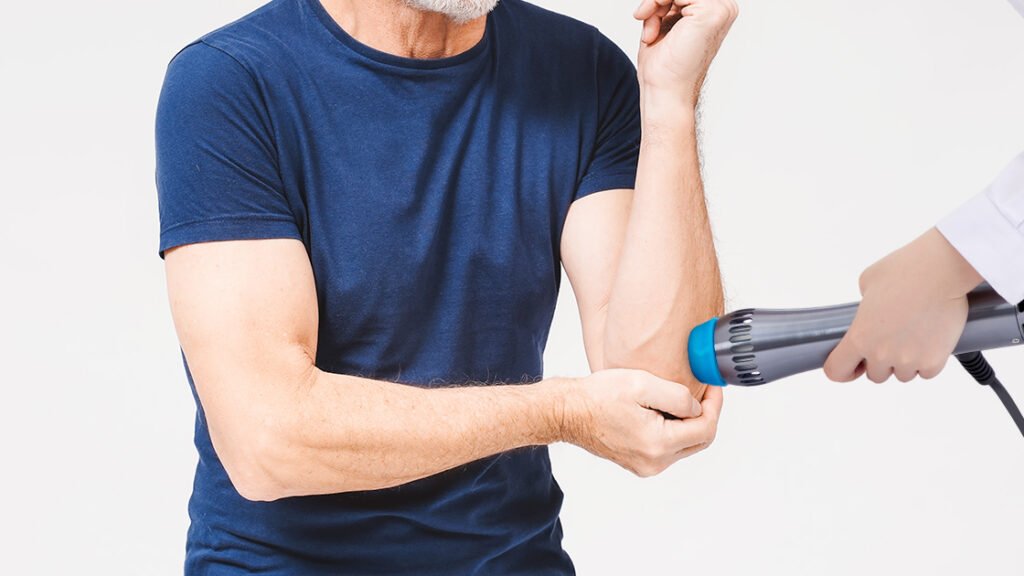
Shockwave therapy uses acoustic pressure waves to interact with musculoskeletal structures. These waves create controlled mechanical stimulation within targeted tissues, encouraging localized biological responses. In occupational applications, such as those referenced in shockwave indication platforms like ShockwaveMachines, this technology is commonly associated with musculoskeletal discomfort related to repetitive strain and overuse. The energy delivery focuses on areas affected by chronic tension and mechanical overload, making it relevant for physically active professions.
3.2 Support for Tendon and Muscle Recovery Processes
Repetitive strain often affects tendons and muscle attachment points, especially in the lower back and shoulder regions. Shockwave therapy introduces mechanical stimulation that interacts with these structures at a cellular level. This interaction may support natural tissue responsiveness and help improve local circulation patterns. In occupational settings, this approach is particularly relevant for workers who experience persistent discomfort due to repeated physical load rather than acute injury.
3.3 Application in Multi-Area Musculoskeletal Discomfort
Warehouse workers rarely experience isolated pain; instead, multiple body regions are often affected simultaneously. Shockwave therapy allows practitioners to address different anatomical areas within a structured framework. Lower back stiffness, shoulder tightness, and localized muscle fatigue can all be considered within a single musculoskeletal support strategy. This multi-area adaptability makes it suitable for labor-intensive environments where strain distribution is widespread.
4. Integration of Shockwave Therapy in Occupational Health Environments
4.1 Alignment with Physically Demanding Work Schedules
One of the key advantages of shockwave-based musculoskeletal support is its compatibility with active work lifestyles. Warehouse employees often cannot afford extended downtime, so approaches that integrate into existing routines are particularly valuable. Shockwave therapy fits within this context by offering a structured, non-invasive option that does not require major disruption to daily responsibilities.
4.2 Focus on Functional Mobility and Work Performance
In physically demanding jobs, maintaining mobility is essential for safe and efficient performance. Musculoskeletal stiffness can reduce lifting efficiency and increase the risk of further strain. Shockwave therapy is often considered in occupational settings because it focuses on supporting tissue responsiveness and functional movement. This emphasis on mobility aligns with the needs of workers who rely on physical capability as part of their daily responsibilities.
5. Long-Term Musculoskeletal Health in Manual Labor Industries
5.1 Preventing Cumulative Strain Progression
Repeated physical workload without adequate musculoskeletal support may lead to progressive strain accumulation. Over time, this can impact job performance and overall physical resilience. Addressing early signs of overuse discomfort is essential for maintaining long-term musculoskeletal balance. Occupational health strategies increasingly focus on reducing cumulative stress rather than responding only to advanced discomfort stages.
5.2 Supporting Workforce Sustainability Through Modern Therapies
As logistics and warehousing continue to expand globally, maintaining workforce health has become increasingly important. Musculoskeletal support systems, including shockwave-based technologies, contribute to sustaining physical capability in demanding environments. By addressing repetitive strain patterns, these approaches help workers maintain functional strength and reduce the impact of long-term occupational stress on the body.
FAQ
Q1: Why are warehouse workers prone to musculoskeletal injuries?
Because their work involves repeated lifting, bending, and carrying, which places continuous stress on muscles and joints.
Q2: What areas are most commonly affected by overuse injuries?
Lower back, shoulders, hips, and forearm muscles are typically the most affected regions.
Q3: How does shockwave therapy relate to occupational strain?
It uses acoustic energy to support musculoskeletal structures affected by repetitive mechanical load.
Q4: Is this approach used for single injuries or general discomfort?
It is often considered for both localized pain points and broader overuse-related discomfort patterns.
Q5: Why is recovery difficult in warehouse environments?
Because continuous work cycles often limit rest time needed for full musculoskeletal recovery.
الخاتمة
Warehouse workers face persistent musculoskeletal challenges due to repetitive lifting, full-body strain, and limited recovery opportunities. Over time, these conditions contribute to chronic discomfort across multiple muscle groups and joints. Shockwave therapy, as referenced in clinical indication frameworks like those associated with ShockwaveMachines, represents a modern non-invasive approach that supports musculoskeletal function in physically demanding occupations. By addressing overuse-related strain patterns, this technology aligns with the needs of labor-intensive industries seeking to maintain workforce mobility and long-term physical resilience.
المراجع
Shockwave Machines – Clinical Indications Overview
https://www.shockwavemachines.com/indications
American Academy of Orthopaedic Surgeons – Musculoskeletal Injuries Overview
https://orthoinfo.aaos.org/en/diseases–conditions/muscle-strain
Cleveland Clinic – Repetitive Strain Injury (RSI)
https://my.clevelandclinic.org/health/diseases/17424-repetitive-strain-injury
Healthline – What Is Shockwave Therapy
https://www.healthline.com/health/shockwave-therapy
WebMD – Muscle and Tendon Injuries
https://www.webmd.com/fitness-exercise/what-is-a-muscle-strain