

Introducción
Watching a once‑active dog struggle to rise from a lying position or hesitate before climbing a familiar set of stairs is heartbreaking for any pet owner. The slow, deliberate movements, the reluctance to jump onto the sofa, and the occasional yelp when touched near the lower back—these signs often point to lumbosacral pain, a common but frequently overlooked condition in dogs, particularly in large breeds and working dogs. For years, treatment options for canine back pain have been largely limited to oral medications or invasive injections directly into the spinal area. A newer, non‑invasive approach is gaining attention in veterinary medicine: extracorporeal shockwave therapy (ESWT). Originally developed for human musculoskeletal conditions, shockwave therapy is now being studied and applied to help dogs suffering from chronic lower back pain, offering hope for improved comfort and quality of life.
1. Understanding Lumbosacral Pain in Dogs
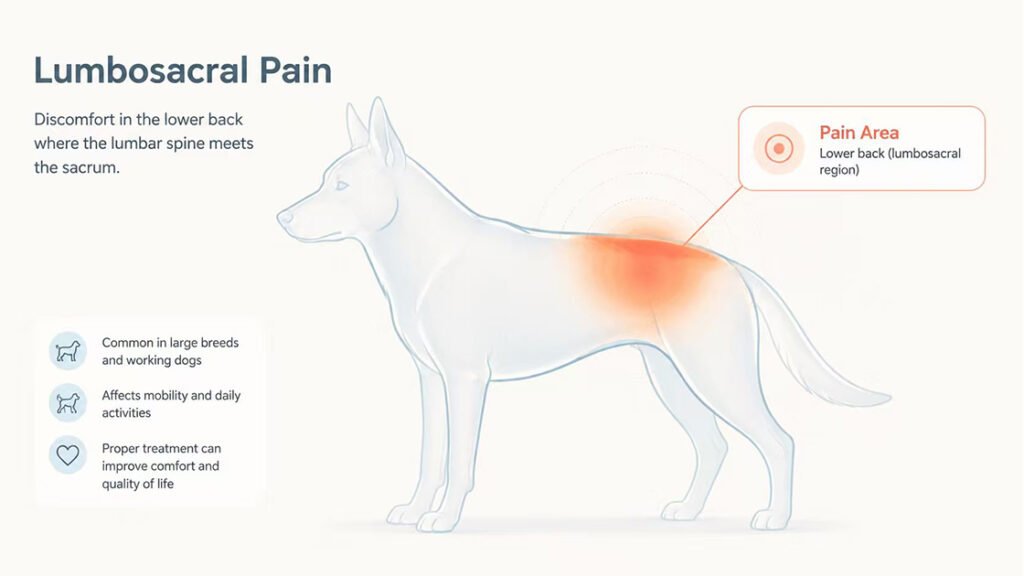
Lumbosacral pain refers to discomfort originating from the lower portion of the spine, where the lumbar vertebrae meet the sacrum. This region bears significant mechanical load during movement, and when problems develop—whether from degenerative joint disease, intervertebral disc issues, or instability of the lumbosacral junction—dogs experience pain that can severely limit their mobility and enjoyment of daily life.
1.1 Which Dogs Are Most at Risk
Lumbosacral disease affects a wide range of dogs, but certain groups face higher risk. Large breeds, particularly German Shepherds, are especially prone to lumbosacral conditions. Working dogs—those serving in military, police, or search‑and‑rescue roles—often develop back pain due to the physical demands of their jobs, and lumbosacral pain is a leading cause of early retirement in these animals. Labrador Retrievers and other large breeds also commonly experience these issues, even in non‑working households. The condition typically affects middle‑aged dogs, with an average age of around seven years in affected patients.
1.2 Recognizing the Signs
Owners may notice their dog moving more slowly than usual, particularly when getting up after lying down for a while. A dog with lumbosacral pain might hesitate to jump into the car, struggle to climb stairs, or show reluctance to run or play. Some dogs cry out or flinch when touched near the lower back or the base of the tail. Others may display changes in posture—holding the back in a slightly arched position or carrying the tail unusually. In more advanced cases, weakness or unsteadiness in the hind limbs can develop. These signs, while sometimes subtle, indicate that the dog is experiencing significant discomfort that deserves attention.
1.3 The Limitations of Traditional Treatment
Historically, veterinarians have relied on oral pain medications, anti‑inflammatory drugs, or steroid injections administered directly into the lumbosacral area to manage this condition. While these approaches can provide relief for some dogs, they come with limitations. Oral medications may have side effects with long‑term use, and injections require sedation or anesthesia and carry risks of their own. A notable number of canine patients do not improve with standard medical or surgical treatments, or they experience a recurrence of symptoms. This gap in effective, sustainable options has driven interest in alternative therapies.
2. How Terapia de ondas de choque Works for Canine Back Pain
Extracorporeal shockwave therapy delivers high‑energy acoustic pulses through the skin to the deeper tissues of the lumbosacral region. The mechanical energy from these pulses interacts with cells and tissues, triggering biological responses that support healing and pain relief.
2.1 Mechanical Stimulation and Cellular Response
When shockwaves reach the affected tissues, the mechanical pressure stretches and compresses cells in ways that activate natural repair pathways. Cells within the muscles, ligaments, and bones respond by increasing their activity. This stimulation encourages the release of growth factors and signaling molecules that play essential roles in tissue maintenance and repair. The mechanical input also helps break down small adhesions or scar tissue that may have formed in the area, allowing for better movement and less restriction.
2.2 Improved Blood Flow to the Injured Area
One of the challenges in treating lumbosacral pain is that the affected tissues often have reduced blood supply. Poor circulation limits the delivery of oxygen and nutrients that tissues need to heal. Shockwave therapy stimulates the formation of new capillary networks around the treated area, a process that gradually improves local blood flow. Better circulation brings healing factors to the damaged tissues while carrying away waste products that can accumulate and contribute to discomfort.
2.3 Pain Modulation and Muscle Relaxation
Shockwave therapy also influences how pain signals travel along nerve pathways. The acoustic pulses can alter the transmission of pain impulses, providing a period of reduced sensitivity in the treated area. At the same time, the mechanical energy helps relax tight muscles that often accompany chronic back pain. When muscles relax, they place less pressure on the spine and surrounding nerves, which can further support the dog‘s overall comfort.
3. What a Pet Owner Can Expect from Shockwave Therapy
For pet owners considering shockwave therapy for their dog‘s back pain, understanding what the treatment involves helps in making an informed decision.
3.1 The Treatment Session
A typical session lasts between five and twenty minutes, depending on the size of the dog and the area being treated. The dog is positioned comfortably, often lying on a padded table. Sedation is not always necessary, as the treatment itself does not cause sharp pain, although some dogs may benefit from mild calming measures if they are anxious or sensitive. The veterinarian moves the applicator over the lumbosacral region, applying acoustic pulses to the affected tissues. Most dogs tolerate the procedure well and show no signs of distress during the session.
3.2 Number of Sessions and Timeline
A course of treatment often involves several sessions spaced about one week apart. The exact number depends on the severity of the condition and how the dog responds to the initial sessions. Some dogs show noticeable improvement after two or three visits, while others may benefit from a longer series. The full effect of the therapy typically becomes apparent over several weeks, as tissue remodeling and healing take time.
3.3 What Owners May Notice After Treatment
In the days following a session, some dogs may show mild soreness or temporary stiffness in the treated area, similar to the feeling after a deep massage. This response is normal and usually subsides within a day or two. Owners often observe that their dog moves more comfortably, rises more easily from rest, and shows renewed interest in activities like walking, playing, or jumping. The improvement may be gradual, building with each session, rather than immediate.
4. Integrating Shockwave Therapy into a Comprehensive Care Plan
Shockwave therapy works best when combined with other aspects of a well‑rounded approach to managing canine lumbosacral pain.
4.1 Weight Management
Maintaining a healthy weight reduces the mechanical load on the lower back. Excess body weight places additional strain on the lumbosacral region, which can worsen pain and slow recovery. A balanced diet and appropriate exercise help keep the dog‘s weight within a healthy range, creating a more favorable environment for the tissues to respond to therapy.
4.2 Controlled Exercise and Physical Activity
Regular, controlled movement supports joint and muscle health. Gentle walks on soft surfaces, swimming, and other low‑impact activities maintain mobility without subjecting the spine to excessive stress. Avoiding high‑impact activities—such as jumping, sudden turns, or rough play—during the treatment period allows the tissues to heal without being overloaded. As the dog‘s condition improves, the veterinarian may recommend a gradual increase in activity.
4.3 Complementary Treatments
Some dogs benefit from additional supportive measures. Physical therapy, massage, and acupuncture are sometimes used alongside shockwave therapy to enhance relaxation and mobility. A well‑designed rehabilitation plan, tailored to the individual dog‘s needs, provides the best chance for sustained improvement.
FAQ
Q1: Is shockwave therapy painful for the dog?
Most dogs tolerate the treatment well. The acoustic pulses may feel like tapping or mild pressure, and sedation is usually not needed. Some dogs show mild soreness for a day or two after the session.
Q2: How many sessions does a dog typically need?
The number varies. Some dogs respond well to two or three sessions, while others need a longer series. The veterinarian will adjust the plan based on the dog‘s progress.
Q3: Can my dog resume normal activities immediately after treatment?
It is generally advisable to limit high‑impact activities for a short period after each session. Gentle walking is usually fine, but jumping, running, and rough play should be avoided for a few days.
Q4: Is shockwave therapy suitable for all dogs with back pain?
Not every case is the same. The veterinarian will evaluate the dog‘s overall health and the specific cause of the pain to determine if shockwave therapy is an appropriate option.
Q5: How soon will I see improvement in my dog?
Some owners notice changes within a few days, while others see gradual improvement over several weeks. The response time depends on the severity of the condition and how well the dog responds to therapy.
Conclusión
Canine lumbosacral pain can turn a lively, happy dog into one that hesitates at every step and avoids the activities it once loved. For pet owners who have watched their dog struggle with chronic lower back discomfort, finding an effective, non‑invasive solution is a priority. Extracorporeal shockwave therapy offers a promising option that works through mechanical stimulation, improved blood flow, and pain modulation. It supports the body‘s natural healing processes without the need for surgery or ongoing medication. When combined with weight management, controlled exercise, and other supportive care, shockwave therapy may help restore comfort and mobility to dogs suffering from lumbosacral pain, allowing them to enjoy their golden years with less discomfort and more vitality.
Referencias
Small Animal Veterinary Association – Canine Lumbosacral Pain: Diagnosis and Management
https://www.sava.org.uk/canine-lumbosacral-pain
Extracorporeal Shockwave Therapy in Veterinary Medicine – An Overview
https://www.veterinarypractice.com/shockwave-therapy
Managing Chronic Pain in Dogs: Non‑Invasive Options
https://www.pethealthnetwork.com/chronic-pain-dogs
Shockwave Therapy for Musculoskeletal Conditions in Companion Animals
https://www.vetspecialists.com/shockwave-therapy
Understanding and Treating Canine Back Pain