

Introducción
For violinists and cellists, forearm pain can turn daily practice into a challenge. Repetitive bowing, precise finger movements, sustained wrist positions, and long rehearsals place continuous demands on the muscles and tendons of the upper extremities. When discomfort persists, musicians may struggle with endurance, coordination, and performance quality. Shockwave therapy, also known as extracorporeal shockwave therapy (ESWT), may be considered for selected chronic tendon conditions as part of a broader rehabilitation plan. However, forearm pain does not always originate from a tendon problem, and treatment decisions should begin with an accurate assessment. Understanding the source of discomfort, managing repetitive loading, and restoring functional movement can help musicians work toward a more sustainable return to playing.
1. Why String Musicians Develop Persistent Forearm Pain
To understand when shockwave therapy may be appropriate, it helps to examine the physical demands of playing string instruments and the different conditions that can cause persistent forearm discomfort.
1.1 Repetitive Movements and Sustained Muscle Loading
Violinists and cellists perform thousands of small, coordinated movements during practice and rehearsals. The bowing arm repeatedly controls wrist and forearm motion, while the fingering hand maintains precise finger positions and adjusts pressure along the fingerboard. These tasks require both dynamic muscle activity and sustained contractions that stabilize the wrist and elbow. When playing time increases rapidly or recovery periods become insufficient, the cumulative workload may exceed the tissues’ capacity to adapt. As a result, musicians may develop muscle fatigue, tendon irritation, or persistent discomfort that becomes more noticeable during extended practice sessions.
1.2 Common Causes of Forearm Tendon Pain
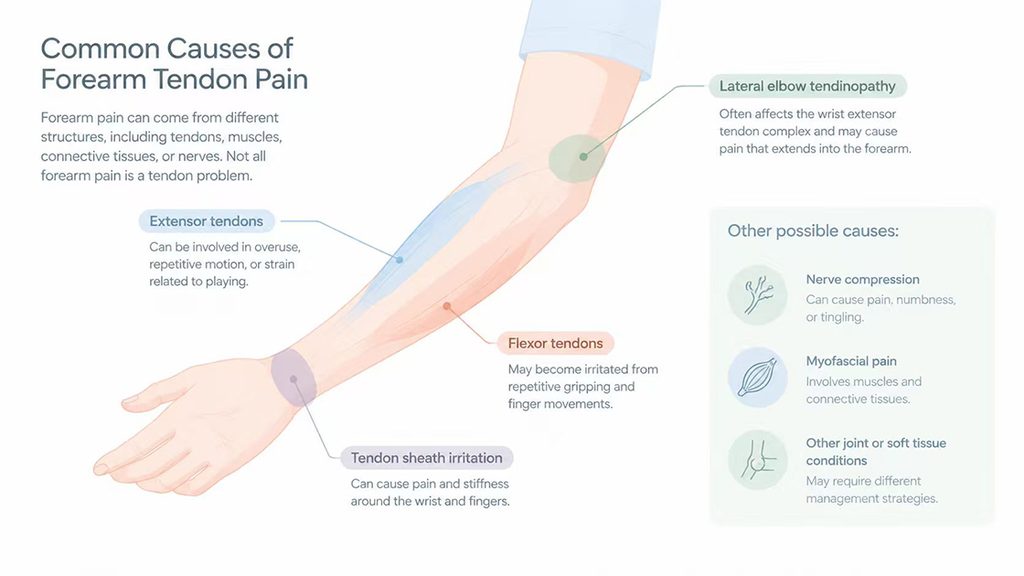
Forearm pain can involve the wrist flexor or extensor tendons, the tendons around the elbow, or the surrounding muscles and connective tissues. Lateral elbow tendinopathy, often associated with pain near the outer elbow, can affect the wrist extensor tendon complex and may produce discomfort that extends into the forearm. Other conditions, including tendon sheath irritation, nerve compression, and myofascial pain, can create similar symptoms. Because these conditions require different management strategies, musicians should not assume that every episode of forearm pain represents tendinopathy. A qualified healthcare professional can evaluate the pain location, movement patterns, strength, sensation, and symptom history to help determine the underlying cause.
1.3 How Pain Can Affect Musical Performance
Persistent forearm discomfort can interfere with more than physical comfort. A violinist may find it difficult to maintain consistent bow pressure, while a cellist may struggle with sustained bowing or precise finger placement. Some musicians unconsciously grip the bow more tightly, stiffen the wrist, or alter their arm position to avoid pain. These compensations can increase muscular effort and place additional stress on other parts of the upper extremity. Recognizing these changes early allows musicians and clinicians to address both the painful tissue and the playing habits that may contribute to ongoing symptoms.
2. Understanding Shockwave Therapy for Forearm Tendon Conditions
Once a clinician identifies a likely tendon-related condition, the next step is to consider which treatments may support recovery. Shockwave therapy is one possible option for selected musculoskeletal problems, but its suitability depends on the specific diagnosis and the available evidence.
2.1 What Is Extracorporeal Shockwave Therapy?
Extracorporeal shockwave therapy delivers acoustic energy through an applicator placed against the skin. Clinicians generally distinguish between focused shockwave therapy, which concentrates energy at a selected depth, and radial pressure wave therapy, which distributes pressure more broadly near the treatment surface. Both approaches are used in musculoskeletal care, although their physical characteristics and treatment parameters differ. Depending on the condition and protocol, shockwave therapy may influence pain signaling and tissue responses. It should not be described as a guaranteed method for repairing damaged tendons, and its effects can vary among patients and conditions.
2.2 When Might Shockwave Therapy Be Considered?
A clinician may consider shockwave therapy when persistent symptoms are consistent with a suitable tendon disorder and an individualized assessment supports its use. For a musician with chronic forearm discomfort, this could involve a diagnosed tendon condition near the wrist or elbow rather than undifferentiated muscle soreness. Evidence for shockwave therapy varies across diagnoses, and findings from one tendon condition cannot automatically be applied to another. In particular, research on lateral elbow tendinopathy reports mixed results, so treatment decisions should account for uncertainty and alternative options. Shockwave therapy is best viewed as a potential adjunct to appropriate rehabilitation rather than a stand-alone solution.
2.3 Choosing the Treatment Approach Carefully
The treatment approach should reflect the location and nature of the affected tissue, symptom duration, functional limitations, and the musician’s overall health. A clinician must also consider whether symptoms may come from nerve involvement, an acute injury, or another condition that requires different care. Focused shockwave and radial pressure wave treatments are not interchangeable in every situation, and no single energy setting or session schedule suits all patients. The clinician should explain the expected benefits, limitations, possible discomfort, and alternatives before treatment begins. This individualized approach is particularly important for musicians, whose work depends on fine motor control and reliable upper-extremity function.
3. How Shockwave Therapy Fits into a Musician’s Recovery Plan
For musicians, successful rehabilitation means more than reducing pain during everyday activities. It also means rebuilding the strength, endurance, and movement control needed for repeated practice. Therefore, shockwave therapy should fit into a recovery plan that addresses both symptoms and the physical demands of playing.
3.1 Combining Shockwave Therapy with Therapeutic Exercise
When clinically appropriate, shockwave therapy may complement a structured exercise program. Depending on the diagnosis, rehabilitation may include gradual wrist flexion and extension exercises, forearm strengthening, grip control, and exercises that improve coordination between the wrist, elbow, and shoulder. The clinician can adjust the intensity and volume according to the musician’s symptoms and functional capacity. Rather than attempting to eliminate every sensation of discomfort immediately, the goal is to improve the affected tissue’s tolerance to progressively increasing loads. Exercise remains an important part of rebuilding the physical capacity required for sustained musical performance.
3.2 Managing Practice Time and Repetitive Loading
Even when treatment reduces discomfort, returning immediately to the previous practice schedule may place excessive demands on recovering tissues. Musicians should review their rehearsal duration, practice intensity, and opportunities for recovery with their clinician or rehabilitation professional. Breaking long sessions into shorter blocks, alternating demanding passages with lighter technical work, and avoiding sudden increases in total playing time can help manage cumulative loading. A useful recovery plan considers the total workload from individual practice, ensemble rehearsals, performances, and other daily activities rather than treating each session as an isolated event.
3.3 Improving Instrument Setup and Playing Technique
Playing technique and instrument setup can influence how much effort musicians use to control their movements. Excessive bow grip, unnecessary wrist tension, or poorly coordinated shoulder and forearm movement may increase physical demand during practice. Violinists and cellists can work with an experienced music instructor or performing arts health professional to identify avoidable tension and improve movement efficiency. Instrument adjustments may also help when the musician needs to maintain awkward positions to reach the fingerboard or control the bow. These changes do not replace medical assessment, but they can help address contributing factors that symptom-focused treatment alone may not resolve.
4. Monitoring Treatment Progress and Returning to Practice
Once a treatment plan begins, musicians and clinicians need a practical way to determine whether recovery is progressing. Pain intensity matters, but it should not be the only measure of improvement.
4.1 Tracking Pain and Functional Changes
Musicians can record when pain occurs, which movements trigger it, and how long symptoms last after practice. Clinicians may also assess wrist and elbow movement, grip strength, tenderness, and tolerance for relevant functional tasks. For example, a violinist may track whether discomfort appears during bowing or finger placement, while a cellist may monitor symptoms during longer passages requiring sustained arm movement. Using the same measures over time makes it easier to identify meaningful trends. If symptoms worsen or new weakness, numbness, or loss of coordination develops, the musician should seek reassessment rather than simply continuing the existing plan.
4.2 Returning to Playing Gradually
A return-to-playing plan should reflect the musician’s current capacity instead of relying on a fixed recovery deadline. Early stages may involve shorter practice sessions and less demanding passages, followed by gradual increases in duration and technical complexity when symptoms remain manageable. Musicians should also monitor how the forearm feels later that day and the following morning, because an activity may appear tolerable initially but produce a delayed response. The clinician can help determine when to increase workload and when to modify the plan. This gradual approach helps balance the need to maintain musical skills with the importance of allowing irritated tissues to recover.
4.3 Recognizing When the Plan Needs Reassessment
Progress may not follow a straight line. Some fluctuations in symptoms can occur as activity levels change, but persistent deterioration deserves attention. If the musician sees no meaningful improvement, the clinician may need to revisit the diagnosis, reassess the exercise program, or consider other contributing factors such as nerve irritation, cervical symptoms, or movement-related problems. Shockwave therapy should not continue automatically simply because a course of treatment has started. Decisions should reflect the musician’s response, clinical findings, and the balance between potential benefits and discomfort or other adverse effects.
5. Supporting Long-Term Forearm Health in String Musicians
Treatment addresses the current problem, while long-term management aims to reduce repeated overload and help musicians maintain the physical capacity their work requires. Sustainable playing habits are especially important for people who rehearse frequently or perform under demanding schedules.
5.1 Building a Sustainable Practice Routine
A sustainable practice routine balances technical development with physical recovery. Musicians can plan breaks before fatigue significantly affects their control, alternate demanding passages with lighter tasks, and increase practice volume gradually when preparing for performances. General conditioning and appropriate upper-extremity exercises may also help support strength and endurance. However, the right approach depends on the individual musician’s condition and training demands. Musicians with persistent pain should seek professional guidance rather than relying solely on stretching, self-massage, or changes to their practice schedule.
5.2 Taking a Multidisciplinary Approach
Forearm pain in musicians often requires attention to more than one factor. Depending on the presentation, care may involve a physician, physical therapist, occupational therapist, or performing arts health specialist, with input from a music instructor when technique or instrument setup contributes to symptoms. Shockwave therapy may form one part of the plan when the diagnosed condition and clinical evidence support its use. Exercise, workload modification, movement retraining, and appropriate medical management remain important considerations. A coordinated approach can help musicians work toward better function without assuming that any single intervention will resolve every source of pain.
Preguntas más frecuentes (FAQ)
1. Can shockwave therapy help violinists and cellists with forearm tendon pain?
It may help selected tendon conditions, but evidence varies by diagnosis. A clinician should first identify the cause of the pain and determine whether shockwave therapy is appropriate.
2. How do musicians know whether their pain comes from a tendon?
Tendon pain may worsen with specific movements or resisted muscle contractions, but these symptoms are not diagnostic on their own. A professional assessment helps distinguish tendinopathy from nerve and muscle conditions.
3. Can musicians continue practicing during shockwave therapy?
Often, activity can continue with appropriate modifications. Practice duration and intensity should reflect symptoms, the diagnosis, and guidance from the treating clinician.
4. How many shockwave therapy sessions are needed?
The number and spacing of sessions depend on the condition, treatment method, and individual response. There is no universal schedule for every forearm tendon problem.
5. Does shockwave therapy replace physical therapy?
No. When indicated, it is generally considered an adjunct to rehabilitation, which may include progressive strengthening, movement retraining, and workload management.
6. When should a musician seek medical assessment?
Persistent or recurring pain warrants assessment, especially when it interferes with playing. Sudden severe pain, marked weakness, numbness, or loss of coordination requires prompt medical evaluation.
Conclusión
Persistent forearm tendon pain can affect a string musician’s technique, endurance, and ability to perform comfortably. Shockwave therapy may be an option for selected chronic tendon conditions, but its role depends on an accurate diagnosis and an individualized assessment of the evidence. Combining appropriate treatment with progressive exercise, practice-load management, and technique adjustments provides a more comprehensive approach than focusing on pain relief alone. For violinists and cellists, the long-term goal is to restore functional capacity, support a sustainable return to playing, and reduce the risk of repeated overload.
Referencias
1. A Musician-Centered Approach to Management of Performance-Related Upper Musculoskeletal Injuries
https://pubmed.ncbi.nlm.nih.gov/34158229
2. Musculoskeletal Disorders in Professional Violinists and Violists: A Systematic Review
https://pmc.ncbi.nlm.nih.gov/articles/PMC3718408
3. Musicians’ Medicine: Musculoskeletal Problems in String Players
https://pmc.ncbi.nlm.nih.gov/articles/PMC3758983
4. Clinical Effectiveness of Shockwave Therapy in Lateral Elbow Tendinopathy: Systematic Review and Meta-Analysis
https://pubmed.ncbi.nlm.nih.gov/33813913
5. Recommendations for Use of Extracorporeal Shockwave Therapy in Sports Medicine: An International Modified Delphi Study
https://bjsm.bmj.com/content/early/2025/02/26/bjsports-2024-109082