

Introducción
Thumb carpometacarpal (CMC) osteoarthritis is a common condition that can make everyday hand movements increasingly uncomfortable, particularly as people get older. The joint at the base of the thumb plays an important role in gripping, pinching, and handling objects, so changes in this area can affect activities such as opening jars, buttoning clothes, preparing meals, and using a phone. Although splints, exercises, and activity adjustments remain important parts of conservative care, researchers are also exploring other approaches to symptom management. Shockwave therapy is one option being studied for its potential to reduce discomfort and support hand function. Understanding how this treatment works, what current research suggests, and how it may fit into a broader care plan can help older adults make informed decisions about managing thumb CMC osteoarthritis.
1. Understanding Thumb CMC Osteoarthritis
1.1 What Is Thumb CMC Osteoarthritis?
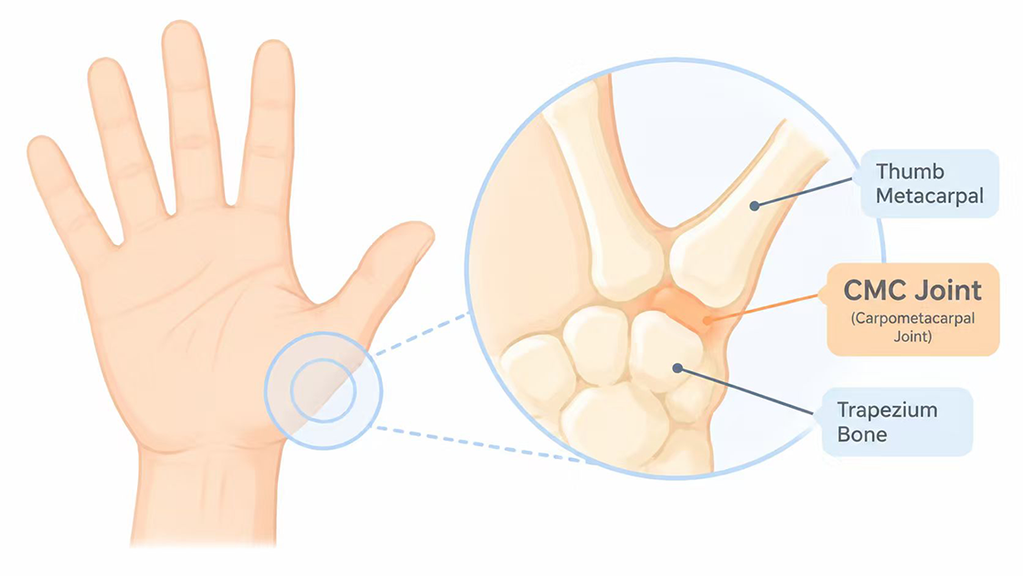
Thumb CMC osteoarthritis affects the carpometacarpal joint, where the base of the thumb meets the trapezium bone in the wrist. This joint allows the thumb to move across the palm and work with the fingers during gripping and pinching. Over time, cartilage changes and other joint-related changes can contribute to pain, stiffness, and reduced movement. The condition is also known as thumb base osteoarthritis or basal joint artritis. Symptoms may develop gradually and can affect one or both hands.
1.2 Common Symptoms and Daily Challenges
People with thumb CMC osteoarthritis often experience pain or tenderness at the base of the thumb, especially when gripping, twisting, or pinching. Some notice stiffness after periods of rest, swelling around the joint, or reduced pinch strength. As symptoms progress, ordinary tasks may become more difficult. Turning a key, opening a container, holding a book, fastening buttons, and carrying shopping bags can place repeated stress on the affected joint. These limitations may reduce independence and make routine activities more frustrating.
1.3 Why the Condition Becomes More Common With Age
Age-related changes in joint structures can increase the likelihood of developing thumb CMC osteoarthritis. Previous joint injuries, repetitive hand use, joint shape, and individual differences in joint stability may also contribute. The condition is particularly common among older adults and occurs more frequently in women. However, age alone does not determine how severe symptoms will become. Some people have visible joint changes on imaging but experience relatively mild discomfort, while others notice substantial difficulty with everyday hand activities.
2. How Thumb CMC Osteoarthritis Affects Hand Function
2.1 Reduced Grip and Pinch Strength
The thumb works with the fingers to create the grip and pinch movements needed for many daily tasks. When the CMC joint becomes painful or stiff, people may avoid applying pressure through the thumb. This can make it harder to hold a cup securely, turn a doorknob, use kitchen utensils, or pick up small objects. Over time, reduced hand use may also affect strength and coordination. Maintaining comfortable movement and practical hand function is therefore an important part of long-term symptom management.
2.2 Discomfort During Repetitive Activities
Activities that involve repeated pinching, twisting, or forceful gripping can aggravate thumb base symptoms. Gardening, cooking, knitting, handwriting, and household cleaning may become uncomfortable when the joint is sensitive. Even tasks that require relatively little force can cause irritation when repeated for long periods without rest. Identifying specific movements that trigger symptoms can help people adjust how they perform daily activities and avoid unnecessary strain.
2.3 The Impact on Independence and Quality of Life
Hand function plays a major role in maintaining independence, especially for older adults who want to continue managing daily routines without assistance. Persistent thumb pain may lead people to avoid hobbies, household responsibilities, or social activities that require manual skills. It can also make simple tasks take longer and require more effort. A practical treatment plan should therefore focus not only on pain levels but also on meaningful functional goals, such as opening containers more comfortably or handling personal care items.
3. What Is Shockwave Therapy?
3.1 Understanding Extracorporeal Shockwave Therapy
Extracorporeal shockwave therapy (ESWT) is a non-invasive treatment that delivers acoustic pressure waves through the skin to a targeted area. Clinicians use different types of shockwave technology, including focused shockwave therapy and radial pressure wave therapy. These technologies differ in how they generate and distribute energy, so they should not be treated as interchangeable. Research involving thumb CMC osteoarthritis has specifically examined focused ESWT. Treatment selection should therefore consider the technology used, the available evidence, and the patient’s individual condition.
3.2 How Shockwave Therapy May Support Symptom Management
Researchers are studying how shockwave treatment may influence pain-related processes and local tissue responses. In musculoskeletal conditions, ESWT may help modulate pain and support improvements in physical function. However, its precise effects on thumb CMC osteoarthritis are still being investigated. It is important not to interpret symptom improvement as proof that shockwave therapy reverses cartilage loss or restores a joint to its original condition. The goal of exploring this approach is to determine whether it may offer additional support for people experiencing persistent symptoms.
3.3 Why the Treatment Requires Individual Assessment
The thumb CMC joint is relatively small and has an important role in hand movement. Its location, the degree of joint changes, symptom sensitivity, and nearby structures all matter when considering treatment. A qualified clinician should assess the source of pain and determine whether shockwave therapy is appropriate. The clinician should also identify the specific device and treatment method being considered. A protocol used for a larger tendon or muscle cannot automatically be applied to a small joint in the hand.
4. What Does Research Say About Shockwave Therapy for Thumb CMC Osteoarthritis?
4.1 Findings From Clinical Research
Clinical research has begun to examine focused ESWT as an option for thumb CMC osteoarthritis. A 2018 study compared ESWT with hyaluronic acid injections in people with first CMC joint osteoarthritis. The researchers reported improvements in pain, hand disability, and pinch performance in the ESWT group during follow-up. A later prospective study published in 2024 compared shockwave treatment with therapeutic exercises, with both groups also using a thumb brace. Both approaches showed improvements, while the shockwave group reported greater perceived improvement at several follow-up points. These findings are encouraging, but they do not establish shockwave therapy as a universal treatment for this condition.
4.2 Understanding the Current Evidence Limitations
Although these studies provide useful early evidence, more high-quality research is needed. Differences in treatment protocols, patient characteristics, outcome measurements, and follow-up periods make it difficult to determine the most effective approach. Research also needs to clarify which patients are most likely to benefit and how shockwave therapy compares with established conservative treatments over longer periods. For now, ESWT should be viewed as a treatment under investigation rather than a proven way to reverse thumb joint degeneration.
4.3 Why Results May Differ Between Individuals
Treatment response can vary according to symptom duration, joint changes, activity levels, general health, and the presence of other hand conditions. People with advanced joint changes may have different needs from those with earlier symptoms. Some may respond well to exercise, splinting, and activity modification alone, while others may need additional clinical options. A personalized assessment helps determine whether shockwave therapy is worth discussing as part of a broader management plan.
5. Combining Shockwave Therapy With Practical Hand Care
5.1 Thumb Splints and Joint Support
A thumb orthosis or splint can help support the CMC joint during activities that cause discomfort. Depending on the design, it may limit painful movement while allowing enough function for daily tasks. Some people use a splint during activities, while others may benefit from wearing one at specific times recommended by a hand therapist. The fit and level of support matter because an unsuitable splint may restrict useful movement or create additional pressure.
5.2 Gentle Exercises and Hand Therapy
A hand therapist can recommend exercises that support thumb mobility, muscle control, and joint stability. Programs may include gentle thumb movements, controlled abduction, and exercises that help maintain a comfortable space between the thumb and index finger. Exercise intensity should match the person’s symptoms and functional ability. The aim is to maintain useful movement and support everyday tasks without repeatedly provoking joint pain.
5.3 Activity Modification and Joint Protection
Small changes in daily habits can reduce unnecessary stress on the thumb base. Using larger handles, choosing tools that require less pinching force, opening containers with both hands, and taking short breaks during repetitive activities may help. People can also avoid holding heavy objects with the thumb and index finger alone. These adjustments do not eliminate osteoarthritis, but they may make daily activities more manageable.
6. Who May Consider Shockwave Therapy?
6.1 Older Adults With Persistent Thumb Base Discomfort
Older adults who continue to experience thumb base pain despite appropriate conservative care may wish to discuss additional treatment options with a qualified clinician. Shockwave therapy may be considered in selected situations, depending on the individual’s symptoms, joint condition, medical history, and the clinician’s assessment. It should not replace a recommended splinting, exercise, or joint-protection program.
6.2 People Who Want to Maintain Everyday Hand Activities
People who find it difficult to perform routine gripping and pinching tasks may be interested in approaches that support comfortable hand use. Before considering ESWT, they should identify their main functional limitations and discuss realistic treatment goals. A clinician can help determine whether the treatment is appropriate and how to monitor changes in pain, grip strength, and daily function.
6.3 When Further Medical Evaluation Is Important
Not all pain at the base of the thumb comes from CMC osteoarthritis. Tendon conditions, nerve problems, inflammatory arthritis, and previous injuries can produce similar symptoms. A healthcare professional may use a physical examination and imaging when appropriate to clarify the diagnosis. Sudden severe pain, marked swelling, redness, warmth, numbness, or a recent injury should prompt medical evaluation rather than self-directed treatment.
7. What to Expect From a Shockwave Therapy Consultation
7.1 Assessment Before Treatment
A consultation generally begins with a review of symptoms, medical history, and activities that aggravate the thumb. The clinician may examine joint movement, tenderness, grip strength, and pinch function. Existing imaging may also help clarify the extent of joint changes. This assessment helps determine whether the symptoms are consistent with thumb CMC osteoarthritis and whether shockwave therapy is a reasonable option.
7.2 Treatment Planning and Comfort
If a clinician considers focused ESWT appropriate, the treatment plan should reflect the patient’s symptoms and tolerance. The clinician should explain the device, the intended treatment area, the expected sensations, and any precautions. People may experience temporary discomfort or local sensitivity during or after treatment. They should communicate unusual or excessive pain during a session so the clinician can reassess the approach.
7.3 Monitoring Progress Over Time
Progress should be evaluated through more than a general impression of pain relief. Useful measures may include pinch strength, grip strength, thumb movement, and the ability to complete specific daily activities. A clinician may also use a hand-function questionnaire to track changes. If symptoms worsen or meaningful improvement does not occur, the treatment plan should be reviewed rather than continuing automatically.
FAQ
1. Can shockwave therapy help thumb CMC osteoarthritis?
Early clinical studies suggest that focused shockwave therapy may help reduce pain and improve some aspects of hand function. However, the evidence remains limited, and results may vary. It is best considered a potential adjunct to established conservative care.
2. Does shockwave therapy reverse thumb joint damage?
No. Current evidence does not show that shockwave therapy reverses cartilage loss or restores a damaged CMC joint. Its potential role is related to symptom management and functional improvement, not reversing osteoarthritis.
3. Is focused shockwave therapy the same as radial pressure wave therapy?
No. Focused shockwave therapy and radial pressure wave therapy deliver acoustic energy differently. The clinical studies specifically examining thumb CMC osteoarthritis have used focused ESWT, so the treatment technology should be clearly identified.
4. What other treatments can help manage thumb CMC osteoarthritis?
Common conservative approaches include thumb splints, hand therapy, strengthening and mobility exercises, activity modification, and joint-protection techniques. A healthcare professional can help select options based on symptom severity and daily needs.
5. How can older adults protect their thumb joints during daily activities?
Using supportive tools, avoiding excessive pinch force, taking breaks during repetitive tasks, and distributing loads across both hands may reduce stress on the thumb base. A hand therapist can provide practical recommendations for individual activities.
6. Who should assess whether shockwave therapy is appropriate?
A qualified healthcare professional with experience in musculoskeletal or hand conditions should evaluate the joint and confirm the likely source of symptoms. They can review medical history, assess joint function, and discuss whether ESWT fits the overall care plan.
Conclusión
Thumb CMC osteoarthritis can affect much more than the joint at the base of the thumb. Pain, stiffness, and reduced pinch strength may interfere with everyday activities and make it harder for older adults to maintain comfortable hand function. Focused shockwave therapy is an emerging option supported by early clinical research, but further studies are needed to establish its long-term benefits and best treatment protocols. For now, it should be considered only as a potential addition to a comprehensive care plan that includes appropriate assessment, splinting, hand exercises, and joint-protection strategies. Working with a qualified clinician can help individuals choose an approach that supports their functional goals and long-term hand health.
Referencias
- Covelli I, et al. Extracorporeal Shock Wave Therapy (ESWT) vs. Exercise in Thumb Osteoarthritis (SWEX-TO): Prospective Clinical Trial at 6 Months. Life. 2024.
https://pmc.ncbi.nlm.nih.gov/articles/PMC11595870/ - Ioppolo F, et al. Comparison Between Extracorporeal Shock Wave Therapy and Intra-articular Hyaluronic Acid Injections in the Treatment of First Carpometacarpal Joint Osteoarthritis. Annals of Rehabilitation Medicine. 2018.
https://pmc.ncbi.nlm.nih.gov/articles/PMC5852235/ - American Academy of Orthopaedic Surgeons. Arthritis of the Thumb.
https://orthoinfo.aaos.org/en/diseases–conditions/arthritis-of-the-thumb/ - Gangopadhyay S, et al. Guideline on Managing Thumb Base Osteoarthritis: The British Society for Surgery of the Hand Evidence for Surgical Treatment (BEST) Findings and Recommendations. Journal of Hand Surgery (European Volume). 2025.
https://pubmed.ncbi.nlm.nih.gov/39852312/ - Assessment and Treatment of Nonsurgical Thumb Carpometacarpal Joint Osteoarthritis: A Modified Delphi-Based Consensus Paper of the American Society of Hand Therapists.
https://pubmed.ncbi.nlm.nih.gov/37798185/