

Introduction
Navicular disease, also known as navicular syndrome, is a common concern in equine health that may affect a horse’s movement, comfort, and athletic performance. Because the condition involves complex structures within the hoof and surrounding tissues, equine professionals often consider multiple supportive approaches as part of a broader management plan. Shockwave Therapy, also known as Extracorporeal Shock Wave Therapy (ESWT), has gained attention in veterinary care due to its ability to deliver controlled acoustic energy to targeted areas. For horse owners, trainers, and equine veterinarians, understanding how Shockwave Therapy fits into modern hoof care and rehabilitation programs can provide valuable insight into available supportive options.
1. Understanding Navicular Disease and Equine Foot Health
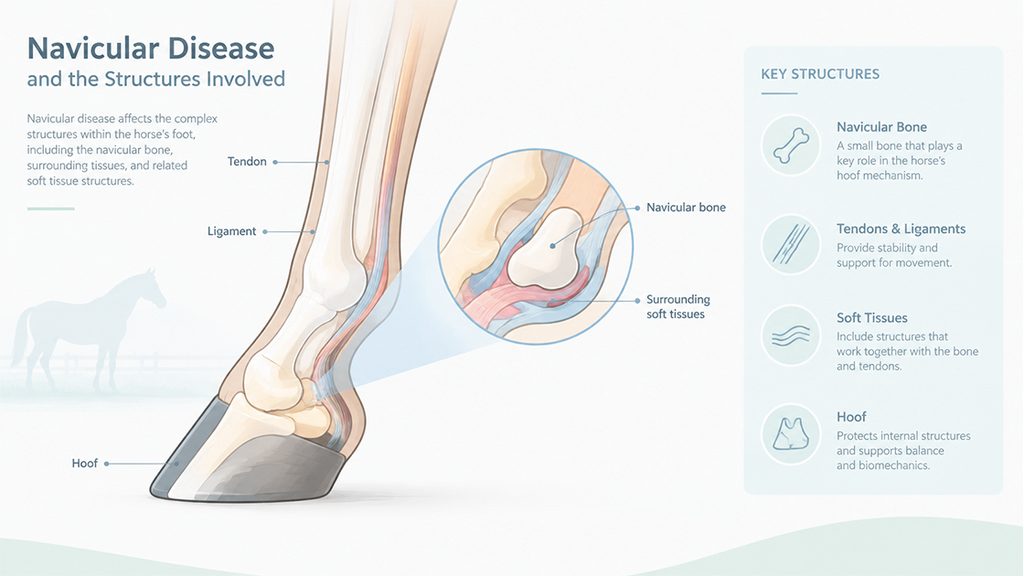
Navicular disease is a complex condition involving structures within the horse’s foot, including the navicular bone, surrounding tissues, and related soft tissue structures. Maintaining proper hoof health and movement quality plays an important role in supporting equine performance and daily activity.
1.1 The Impact of Navicular Disease on Horse Movement
Navicular syndrome may influence how a horse distributes weight and moves during activities such as walking, training, or competition. Since the hoof plays a major role in balance and biomechanics, changes in this area can affect overall movement patterns.
Equine professionals often evaluate factors such as gait, hoof condition, activity level, and physical demands when considering a horse’s overall wellness. A complete approach focuses on supporting comfort and maintaining appropriate movement rather than addressing only one specific area.
1.2 Why Equine Foot Care Requires a Comprehensive Approach
The horse’s hoof is a complex structure where bones, tendons, ligaments, and soft tissues work together. Because multiple factors may influence hoof-related concerns, professional care often involves different management strategies.
Modern equine care combines veterinary evaluation, hoof management, rehabilitation concepts, and supportive technologies. Shockwave Therapy is one technology that may be considered within this broader approach to equine wellness.
1.3 The Role of Technology in Modern Equine Rehabilitation
Advancements in veterinary technology have expanded the options available for supporting equine health. Professionals now use various tools that complement traditional methods and help create more personalized care plans.
Shockwave Therapy has become a recognized technology in equine rehabilitation because it uses mechanical acoustic waves to deliver energy to selected areas. Its application depends on professional assessment and the individual needs of each horse.
2. How Shockwave Therapy Supports Equine Care Programs
Shockwave Therapy uses acoustic energy to interact with targeted tissues. In equine medicine, professionals may incorporate this technology into rehabilitation programs designed around specific physical conditions and performance requirements.
2.1 Understanding the Principles of Shockwave Therapy
Shockwave Therapy works by generating high-energy acoustic waves that travel into targeted tissues. These mechanical signals can influence local biological responses and are commonly studied in musculoskeletal applications.
For equine professionals, understanding the technology helps determine how it may complement existing care strategies. The purpose is not to replace veterinary evaluation but to provide an additional supportive option within a structured management plan.
2.2 Supporting Soft Tissue and Musculoskeletal Management
Navicular-related concerns often involve more than the navicular bone itself. Surrounding soft tissues, including tendons and supportive structures, may also be considered during professional evaluation.
Shockwave Therapy is frequently discussed in relation to musculoskeletal applications, including tendon, ligament, and hoof-related conditions. When included in an equine care program, it may support broader efforts focused on maintaining movement quality and physical comfort.
2.3 The Connection Between Shockwave Technology and Equine Performance
Performance horses experience significant physical demands from regular training and competition. Their movement patterns require careful attention to hoof balance, muscle condition, and overall physical management.
For trainers and veterinary professionals, supportive technologies such as Shockwave Therapy provide another consideration when developing performance maintenance strategies. The application depends on factors such as the horse’s condition, training schedule, and professional recommendations.
3. Applications of Shockwave Therapy in Equine Veterinary Settings
Equine veterinarians and rehabilitation professionals consider Shockwave Therapy as part of a wider approach to managing different musculoskeletal concerns. Its use requires professional knowledge of equine anatomy and appropriate application methods.
3.1 Supporting Horses With Hoof-Related Mobility Concerns
Hoof-related concerns can influence a horse’s movement and daily activity. Since the hoof connects directly with the horse’s overall biomechanics, maintaining balanced movement is an important aspect of equine care.
Shockwave Therapy may be incorporated into professional rehabilitation plans that focus on supporting mobility and physical comfort. The specific approach varies depending on the horse’s individual situation and overall management program.
3.2 The Importance of Professional Evaluation Before Using Shockwave Therapy
Every horse has different physical characteristics, training demands, and health considerations. Before including Shockwave Therapy in a care plan, professionals evaluate the horse’s condition and determine whether the technology fits the overall strategy.
Veterinarians and equine rehabilitation specialists consider multiple factors, including movement patterns, hoof condition, and rehabilitation goals. This personalized approach helps ensure that technology works together with other aspects of equine care.
3.3 Combining Technology With Traditional Equine Care Practices
Modern equine care often combines advanced technologies with established management methods. Hoof care, activity adjustments, veterinary monitoring, and rehabilitation planning all contribute to maintaining horse wellness.
Shockwave Therapy functions as one component of this comprehensive approach. By combining different methods, professionals can develop care plans that better match the needs of individual horses.
4. The Future of Shockwave Therapy in Equine Medicine
As veterinary technology continues to develop, equine professionals are exploring new ways to support horse health and performance. Shockwave Therapy remains an area of interest because of its applications in musculoskeletal care.
4.1 Growing Interest in Non-Invasive Supportive Technologies
Many equine professionals are looking for supportive technologies that can fit into modern rehabilitation programs. Non-invasive approaches are often considered because they can be integrated with other care methods.
Shockwave Therapy represents one example of how technology continues to expand options within equine veterinary environments. Its role depends on professional guidance and appropriate application.
4.2 Supporting Long-Term Equine Wellness Management
Maintaining a horse’s physical condition requires ongoing attention to movement, training, nutrition, and professional care. Long-term wellness programs focus on prevention, monitoring, and adapting care strategies when needed.
Technology-based approaches such as Shockwave Therapy may become part of these broader wellness plans by supporting professional efforts to manage musculoskeletal concerns.
4.3 The Importance of Evidence-Based Veterinary Decisions
Modern equine care increasingly emphasizes informed decision-making. Veterinary professionals consider available knowledge, clinical experience, and individual horse factors when selecting supportive approaches.
Shockwave Therapy should always be evaluated as part of a complete veterinary strategy rather than an independent solution. Professional assessment remains essential for creating suitable care plans.
5. Choosing a Balanced Approach for Horses With Navicular Concerns
Managing navicular disease requires attention to many aspects of equine health. A balanced approach considers the horse’s lifestyle, physical condition, and long-term goals.
5.1 Considering Individual Horse Needs
Each horse has unique characteristics, including age, activity level, hoof structure, and performance requirements. These differences influence how professionals develop supportive care plans.
Shockwave Therapy may be considered alongside other management methods when professionals evaluate the overall needs of the horse.
5.2 Building a Comprehensive Equine Care Strategy
A complete equine wellness strategy involves cooperation between horse owners, trainers, farriers, and veterinarians. Each professional contributes knowledge that helps support the horse’s overall condition.
By combining professional expertise with appropriate technologies, equine care programs can become more personalized and adaptable.
Questions fréquemment posées
What is Shockwave Therapy for horses?
Shockwave Therapy is a technology that uses acoustic waves to provide targeted energy applications within veterinary care programs.
Can Shockwave Therapy treat navicular disease completely?
No. Shockwave Therapy is considered a supportive approach that may be included in broader equine management plans.
Why is Shockwave Therapy used in equine care?
Professionals may use it as part of musculoskeletal and rehabilitation programs designed around individual horse needs.
Is Shockwave Therapy suitable for every horse?
Not necessarily. A veterinarian or qualified professional should evaluate whether it fits a horse’s specific condition.
What other factors are important for horses with navicular concerns?
Professional monitoring, hoof care, activity management, and overall wellness planning are important parts of equine care.
Conclusion
Shockwave Therapy has become a valuable technology within modern equine veterinary care, particularly in discussions surrounding musculoskeletal and hoof-related concerns such as navicular syndrome. By using controlled acoustic energy, this approach provides veterinary professionals with another supportive option when developing personalized care strategies. While Shockwave Therapy is not a replacement for comprehensive veterinary management, it can complement broader approaches that include hoof care, rehabilitation planning, and long-term wellness management. As equine medicine continues to evolve, technology-supported solutions will continue to contribute to more individualized approaches for maintaining horse mobility and performance.
Références
Equine Shock Wave Therapy – Where Are We Now?
https://beva.onlinelibrary.wiley.com/doi/10.1111/evj.13890
Extracorporeal Shock Wave Therapy for Equine Musculoskeletal Disorders: From Biological Mechanisms to Clinical Applications
https://www.frontiersin.org/journals/veterinary-science/articles/10.3389/fvets.2025.1719123/full
Revue systématique de la médecine vétérinaire complémentaire et alternative chez les animaux de sport et de compagnie : Thérapie extracorporelle par ondes de choc
https://pmc.ncbi.nlm.nih.gov/articles/PMC9686741
Navicular Disease: A Review of What’s New
https://beva.onlinelibrary.wiley.com/doi/pdf/10.2746/042516406775374216
Investigation of the Immediate Analgesic Effects of Extracorporeal Shock Wave Therapy for Treatment of Navicular Disease in Horses