

Introduction
Gardening offers a deeply rewarding connection to nature, but the physical demands of tending to soil and plants can take a toll on the lower extremities. Frequent kneeling, bending, and rising place continuous mechanical stress on the knee complex, often resulting in persistent patellar tendon strain and joint stiffness. Integrating targeted shockwave therapy into a proactive self-care routine allows horticulture enthusiasts to keep tending their flower beds smoothly without letting physical discomfort compromise their joy of gardening.
1 Understanding Knee Mechanics in Gardening
1.1 Repetitive Kneeling and Joint Pressure
Gardening requires constant kneeling and shifting on hard ground, placing immense compressive forces directly onto the patellar region. Every time a gardener lowers down to plant or harvests crops, the knee joints absorb significant pressure that challenges local tissue resilience.
1.2 Patellar Tendon Strain and Micro-Trauma
Frequent bending and squatting introduce microscopic tension into the patellar tendon over prolonged periods. Each repetitive movement tests the structural integrity of the soft tissues, necessitating efficient internal maintenance mechanisms to preserve daily flexibility and joint stability.
1.3 Managing Cumulative Lower Extremity Fatigue
Recognizing how micro-stresses accumulate over time helps gardeners adopt effective maintenance habits before minor joint stiffness impacts their mobility. Addressing these subtle signs of fatigue early prevents them from evolving into chronic restrictions that could disrupt an otherwise peaceful day outdoors.
2 The Scientific Principles of Shockwave Therapy
2.1 The Biological Mechanism of Acoustic Waves
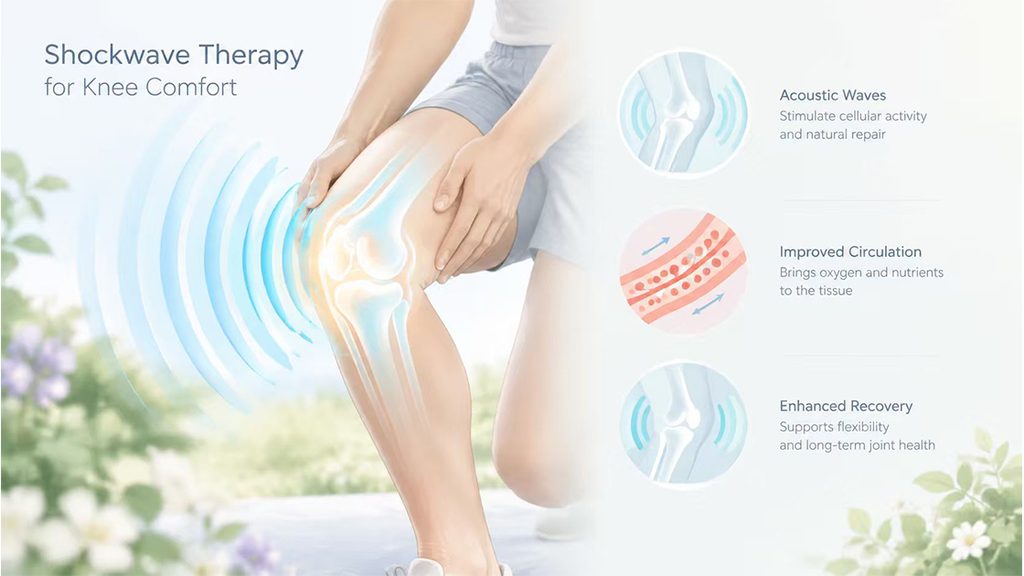
Shockwave therapy delivers high-energy acoustic pulses deep into affected soft tissues, encouraging optimal cellular activity and natural biological repair. By directing focused mechanical waves straight to the target area, this advanced modality stimulates intracellular processes that revitalize fatigued structures.
2.2 Enhancing Local Microcirculation Dynamics
Advanced acoustic delivery stimulates local vascular expansion, promoting efficient nutrient exchange and metabolic clearance in targeted areas. As the local microvessels respond to the mechanical stimulation, fresh oxygen and vital nutrients flow more freely into the recovering tissues.
3 Physiological Responses to Deep Acoustic Energy
3.1 Modulating Localized Tissue Stress
Controlled acoustic energy helps soothe local discomfort and maintains a balanced tissue environment following demanding physical exertion. This gentle internal stimulation counteracts the natural tightness that often settles into connective tissues after hours of kneeling and repetitive movement.
3.2 Supporting Range of Motion and Flexibility
Relieving tension around the joint capsule encourages smoother articulation and restores natural fluidity to everyday knee movements. When the surrounding muscles and tendons remain relaxed, the joint can cycle through its full mechanical range without encountering restrictive tightness.
4 Advanced Recovery Strategies for Active Gardeners
4.1 Tailoring Recovery Protocols to Horticultural Demands
Modern active lifestyles require streamlined, efficient maintenance routines that fit seamlessly into busy gardening schedules. Incorporating targeted physical care sessions allows hobbyists to address specific high-stress zones quickly without dedicating hours of their day to passive downtime.
4.2 Synergy with Complementary Physical Care
Combining targeted acoustic applications with dynamic mobility work creates a comprehensive framework for long-term tissue vitality. This multi-faceted approach ensures that the body receives both external mechanical support and the foundational movement required for healthy joints.
5 Integrating Acoustic Care into Regular Physical Routines
5.1 Establishing Consistent Maintenance Habits
Incorporating regular, short sessions into a weekly schedule ensures that accumulated tension receives continuous, proactive attention. Building this reliable rhythm transforms occasional upkeep into a sustainable lifestyle practice that protects long-term joint health.
5.2 Embracing Long-Term Physical Longevity
Prioritizing non-invasive wellness tools empowers enthusiasts to pursue their passion for horticulture with enduring physical confidence. Maintaining proactive self-care habits guarantees that the body remains resilient and ready for future outdoor planting seasons.
Questions fréquemment posées
What makes shockwave therapy different from standard cold packs?
Shockwave therapy delivers focused acoustic energy deep into soft tissues to stimulate cellular activity, whereas cold packs only manage surface temperatures.
How long does a typical targeted session last?
Most sessions require only a few minutes per treatment area, making them exceptionally efficient for busy daily schedules.
Can this therapy be applied immediately after a session?
Applying the protocol shortly after physical activity helps address acute warmth and tension before stiffness fully sets in.
Does the application cause any skin irritation?
The advanced energy transfer creates a comfortable sensation without surface irritation when administered correctly.
How many sessions are typically needed to notice a difference?
Many individuals experience noticeable comfort and improved mobility after just a few consistent sessions integrated into their routine.
Conclusion
Sustaining peak knee mobility and managing repetitive impact strain are essential elements for anyone dedicated to gardening. By integrating advanced non-invasive acoustic therapies into regular self-care routines, enthusiasts can effectively support their tissue health and enhance daily comfort. Ultimately, embracing these modern wellness approaches paves the way for sustained agility, greater physical confidence, and long-term enjoyment of outdoor pursuits.
Références
Extracorporeal Shock Wave Therapy in Musculoskeletal Disorders
https://www.ncbi.nlm.nih.gov/pmc/articles/PMC3956409
Mechanisms of Acoustic Wave Action on Soft Tissue Repair
https://www.ncbi.nlm.nih.gov/pmc/articles/PMC4049052
Evaluating Non-Invasive Acoustic Modalities in Tendon Recovery
https://pubmed.ncbi.nlm.nih.gov/25201157
Tissue Metabolism Following Deep Shockwave Applications
https://www.ncbi.nlm.nih.gov/pmc/articles/PMC5118491
The Role of Advanced Acoustic Devices in Managing Soft Tissue Fatigue