

Introduction
You shoot for a takedown, and the moment your knee hits the mat, a sharp pain stops you cold. Pushing off your back leg to drive through an opponent sends a jolt through your kneecap. For wrestlers, judokas, and mixed martial artists, knee pain isn’t just an inconvenience. It keeps you from training at full intensity, makes you hesitate during matches, and chips away at your confidence. What many combat athletes don’t realize is that their knee pain often stems from patellar tendinopathy, commonly known as jumper’s knee. Shockwave therapy offers a non-invasive approach to help this stubborn condition heal without needles or long time away from the mat.
1. Understanding Jumper’s Knee in Combat Sports
Jumper’s knee gets its name from basketball and volleyball, where repeated jumping strains the patellar tendon. But combat athletes face similar forces through very different movements. Every time you drop to your knees for a takedown, sprawl to defend a shot, or pivot from a kneeling position, you load the patellar tendon in ways it wasn’t designed to handle.
1.1 What Happens to the Patellar Tendon
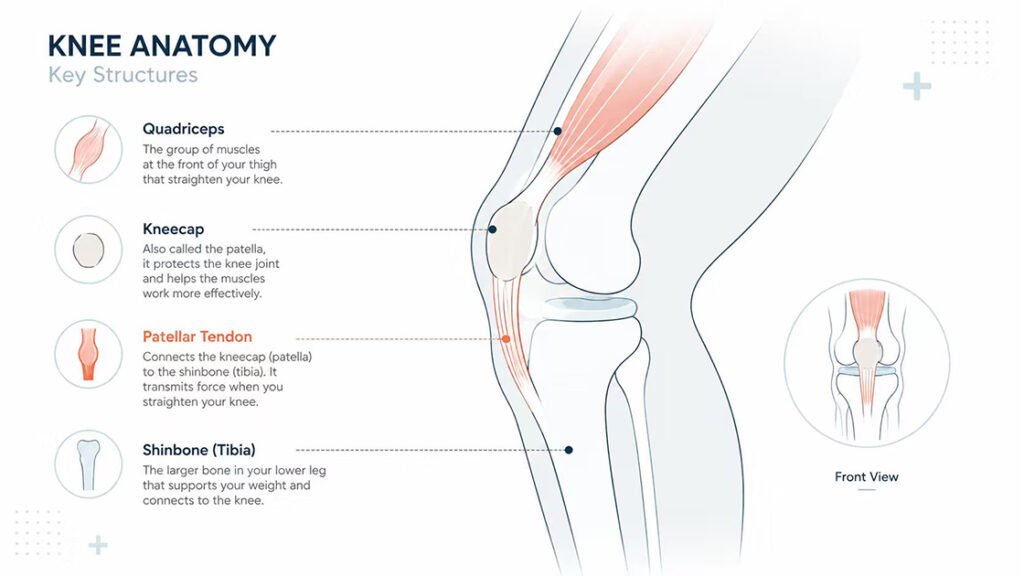
The patellar tendon connects your kneecap to your shinbone. It transmits force from your quadriceps to your lower leg every time you straighten your knee. In combat sports, this tendon gets stressed during kneeling, quick direction changes, and explosive movements from low positions. Over time, microscopic tears develop within the tendon tissue. Unlike muscle, tendons receive very little blood flow. Without adequate blood supply, these tiny tears do not heal properly and accumulate into a chronic condition.
1.2 Why Combat Athletes Are at Higher Risk
Wrestlers and grapplers place unique demands on their knees. Repeated impact with the mat, prolonged kneeling during groundwork, and explosive movements from all fours create constant stress on the patellar tendon. Judo players who execute hip throws land on their knees repeatedly throughout training. MMA fighters who practice ground and pound spend hours on their knees each week. This combination of impact, friction, and loading makes combat athletes particularly susceptible to patellar tendinopathy.
1.3 The Frustrating Cycle of Chronic Knee Pain
Once patellar tendinopathy develops, it tends to stick around. You rest for a few days, feel better, return to training, and the pain comes right back. Ice and anti-inflammatory medications provide temporary relief but do nothing to heal the underlying tendon damage. Cortisone injections may reduce pain briefly, but they can actually weaken tendon tissue over time. Many combat athletes find themselves trapped in a cycle of pain, rest, re-injury, and frustration, unsure of how to break free.
2. What Makes Patellar Tendinopathy So Stubborn
Tendon healing differs fundamentally from muscle healing. Understanding why jumper’s knee resists treatment helps explain why shockwave therapy works where other approaches fall short.
2.1 The Blood Supply Problem
Muscles are packed with blood vessels. When you strain a muscle, blood delivers oxygen, nutrients, and healing cells to the injury site within hours. Tendons have far fewer blood vessels, especially in their middle portions. The patellar tendon’s mid-substance receives minimal blood flow under normal conditions. When micro-tears develop in this area, your body simply cannot mount an effective healing response. The damaged tissue stays damaged, and inflammation persists without resolution.
2.2 Disorganized Collagen Fibers
Healthy tendons contain collagen fibers lined up in parallel rows, like perfectly arranged straws. This organization gives tendons their strength and flexibility. In chronic patellar tendinopathy, the collagen fibers become disorganized, twisting and crossing over each other like a pile of straws dropped on the floor. Disorganized collagen cannot transmit force effectively, which is why your knee feels weak even when the pain is manageable. Rest alone does not reorganize these fibers. The tendon needs active remodeling.
2.3 Why Rest and Ice Aren’t Enough
Taking a week off training may reduce inflammation, but it does not fix the underlying tendon pathology. The disorganized collagen remains disorganized. The poor blood supply remains poor. Ice numbs pain by constricting blood vessels, but this constriction further reduces blood flow to an already poorly vascularized tendon. Anti-inflammatory medications block the body’s inflammatory response, but some inflammation is necessary for healing. Chronic tendinopathy requires a treatment that stimulates healing, not just masks symptoms.
3. How Shockwave Therapy Works for Jumper’s Knee
Shockwave therapy delivers acoustic waves into the tendon tissue. These waves create mechanical forces that trigger biological responses, jumpstarting the healing process that your body could not complete on its own.
3.1 Mechanical Stimulation of Tendon Cells
When shockwaves pass through the patellar tendon, they physically agitate the cells inside. This mechanical stimulation activates mechanoreceptors on the cell surface, setting off a cascade of biological signals. The tendon cells respond by releasing growth factors that promote healing, including vascular endothelial growth factor, platelet-derived growth factor, and transforming growth factor-beta. These growth factors attract healing cells to the area and instruct them to start repairing tissue.
3.2 Breaking Up Disorganized Collagen
Shockwaves create controlled microtrauma within the tendon. This sounds counterintuitive, but a small amount of precisely targeted injury can trigger a robust healing response. The microtrauma breaks down the disorganized, weak collagen fibers that have accumulated in the damaged tendon. Your body then clears away this debris and replaces it with new, properly organized collagen. Over several weeks, the tendon gradually returns to a healthier structure better able to handle the demands of combat sports.
3.3 Stimulating New Blood Vessel Formation
One of shockwave therapy’s most valuable effects is its ability to stimulate angiogenesis, the growth of new blood vessels. By upregulating vascular endothelial growth factor, shockwaves encourage the formation of additional capillaries within the tendon. More blood vessels mean more oxygen and nutrients reaching the previously starved tissue. This improved blood supply supports ongoing healing and helps prevent future recurrences of the same injury.
3.4 Calming Chronic Inflammation
Chronic tendinopathy involves a specific type of inflammation that does not resolve on its own. Shockwave therapy helps shift the tendon from a chronic inflammatory state back to an acute healing state. The mechanical forces reduce levels of inflammatory mediators that have accumulated in the tissue. Patients often notice that their morning stiffness decreases and that their knee tolerates training better after completing a course of shockwave treatments.
4. What a Shockwave Session Looks Like for Combat Athletes
The treatment process is straightforward and designed to fit into an athlete’s training schedule. Most combat athletes can continue light training while receiving shockwave therapy.
4.1 Before Your First Session
Your provider will examine your knee, press on specific areas to locate the exact spot of tendon tenderness, and confirm that shockwave therapy is appropriate for your condition. You will lie on a treatment table with your knee slightly bent. A water-based gel is applied to your skin to help the shockwaves transmit efficiently into the tendon. No needles, no incisions, and no special preparation are required before your first session.
4.2 The Treatment Experience
The provider positions a handheld device against your skin over the patellar tendon and activates the shockwave. You will feel a tapping or pulsing sensation at the treatment site. Some areas may feel more intense than others, especially where the tendon damage is greatest. The sensation is not pleasant, but it is brief. Each session typically lasts between five and ten minutes. Most athletes describe the experience as tolerable, especially knowing that each pulse is stimulating their tendon to heal.
4.3 What You Feel Afterward
Your knee may feel sore for a few hours after treatment, similar to the soreness after a hard practice. This post-treatment soreness is a normal sign that your body is responding to the shockwaves. Some athletes notice immediate improvement in their knee mobility. Others feel little change until after the second or third session. Avoid taking anti-inflammatory medications immediately after treatment because they can interfere with the healing response you are trying to stimulate.
4.4 How Many Sessions You Will Need
A typical course of shockwave therapy for patellar tendinopathy includes three to five sessions spaced about one week apart. Some athletes respond after just two sessions, while others need the full five sessions to achieve optimal results. Your provider will track your symptoms between sessions and adjust the treatment plan based on your response. Many combat athletes return for occasional maintenance sessions every few months to prevent symptom recurrence.
5. How Shockwave Compares to Other Knee Pain Treatments
Understanding your options helps you make an informed decision about your care. Each approach has advantages and limitations, but shockwave occupies a unique place in the treatment spectrum.
5.1 Shockwave vs. Cortisone Injections
Cortisone injections deliver powerful anti-inflammatory medication directly to the painful area. They provide rapid pain relief, sometimes within days. However, cortisone does not heal tendon tissue. It suppresses inflammation, which can actually weaken the tendon over time. Repeated cortisone injections increase the risk of tendon rupture. Shockwave therapy stimulates healing rather than suppressing inflammation. It addresses the underlying tendon pathology rather than just masking the pain.
5.2 Shockwave vs. Physical Therapy
Physical therapy strengthens the muscles around the knee, corrects movement patterns, and gradually loads the tendon to promote healing. It is an essential component of recovery for most athletes. However, physical therapy alone may not resolve chronic patellar tendinopathy, especially when the tendon has already developed disorganized collagen and poor blood supply. Shockwave therapy complements physical therapy by jumpstarting the biological healing process. Many providers recommend combining both approaches for the best results.
5.3 Shockwave vs. Surgery
Surgery for patellar tendinopathy involves removing damaged tissue from the tendon. It carries risks of infection, nerve damage, and failed healing. Recovery takes months, and many athletes never return to their previous level of function. Shockwave therapy carries minimal risk. There are no incisions, no anesthesia, and no time away from training beyond the day of treatment. For combat athletes who want to avoid surgery or who are not candidates due to other factors, shockwave therapy offers a reasonable non-invasive option to try first.
6. Getting Back to Training After Shockwave Therapy
Returning to combat sports after treatment requires patience and a gradual approach. Rushing back too quickly can undo the healing you have achieved.
6.1 The First Two Weeks After Treatment
During the initial weeks after your shockwave course, your tendon is actively remodeling. Avoid kneeling directly on hard mats. Use knee pads if needed during drilling. Stay away from explosive movements like shooting for takedowns or driving off your back leg. Focus on light conditioning work that does not load the patellar tendon heavily, such as swimming or upper body strength training. Listen to your knee. If an activity causes sharp pain, stop and try something else.
6.2 Gradual Return to Mat Work
Around two to four weeks after completing your shockwave sessions, you can begin reintroducing mat work. Start with positional drilling that keeps your knees off the mat. Move to light sparring with trusted partners who understand you are returning from injury. Pay attention to how your knee feels the morning after training. Some soreness is normal, but pain that lasts for days suggests you are progressing too quickly. Back off and give your tendon more time to adapt.
6.3 Exercises That Support Tendon Healing
Eccentric exercises, where your muscle lengthens under tension, are particularly helpful for patellar tendinopathy. Stand on a slight decline and slowly lower yourself onto your affected leg, using your other leg to help you come back up. Isometric holds, where you contract your quadriceps without moving your knee, provide pain relief without stressing the tendon. Your physical therapist or athletic trainer can prescribe a specific program tailored to your sport and injury severity.
6.4 Preventing Future Flare-Ups
Once your knee feels better, maintain the improvements with ongoing preventive work. Keep your quadriceps and hamstrings strong. Address any movement compensations you developed while injured. Consider using knee pads consistently during training. Warm up thoroughly before practice, and ice after hard sessions if your knee feels irritated. Many combat athletes find that periodic maintenance shockwave sessions every few months help keep their patellar tendons healthy.
FAQ
Q: Does shockwave therapy hurt?
A: Most athletes describe the sensation as intense tapping or pulsing at the treatment site. It is uncomfortable but brief. Each session lasts only five to ten minutes.
Q: How many sessions will I need for jumper’s knee?
A: Typical treatment courses include three to five sessions spaced about one week apart. Your provider will track your response and adjust as needed.
Q: Can I train while receiving shockwave therapy?
A: Light training is usually allowed, but avoid activities that cause sharp knee pain. Many athletes continue drilling and conditioning while limiting explosive movements.
Q: Are there any side effects?
A: Side effects are generally mild and temporary. Some athletes experience temporary soreness, bruising, or mild swelling at the treatment site that resolves within a day or two.
Q: How soon can I return to full sparring after treatment?
A: Most combat athletes return to full training within four to six weeks after completing their shockwave course. Your provider will guide you based on your specific response.
Q: Can shockwave therapy replace surgery for patellar tendinopathy?
A: For many athletes, shockwave therapy resolves symptoms and allows return to sport without surgery. Severe cases with large tendon tears may still require surgical evaluation.
Q: How long do the results last?
A: Many athletes remain symptom-free for months or years after a single course of shockwave therapy. Some return for occasional maintenance sessions to prevent recurrence.
Conclusion
Jumper’s knee does not have to end your wrestling or grappling career. The frustrating cycle of pain, rest, and re-injury can be broken. Shockwave therapy offers a non-invasive approach that stimulates your patellar tendon to heal itself by promoting new blood vessel formation, reorganizing damaged collagen, and calming chronic inflammation without needles, medications, or surgery. For combat athletes who have tried rest, ice, and anti-inflammatory drugs without lasting relief, shockwave therapy represents a reasonable next step toward returning to the mat with confidence.
Références
- Comparison of Extracorporeal Shockwave Therapy and Corticosteroid Injection in the Treatment of Plantar Fasciitis. National Center for Biotechnology Information. https://www.ncbi.nlm.nih.gov/pmc/articles/PMC11540462/
- High-Energy Extracorporeal Shockwave Therapy for Nonspecific Chronic Low Back Pain. National Center for Biotechnology Information. https://pubmed.ncbi.nlm.nih.gov/39126309/
- Comparison of ESWT plus physical therapy with infrared plus physical therapy for myofascial low back pain. National Center for Biotechnology Information. https://pubmed.ncbi.nlm.nih.gov/40095028/