

Introduction
Pilates has become a widely recognized movement-based training method that focuses on posture, controlled movements, flexibility, core stability, and body awareness. While Pilates exercises are designed to promote balanced movement patterns, instructors and clients often pay close attention to muscle tension, mobility limitations, and soft tissue conditions that may affect movement quality. Shockwave Therapy is gaining attention as an advanced supportive technology in rehabilitation and wellness environments because it uses acoustic wave energy to interact with targeted tissue areas. When incorporated into professional movement and recovery programs, this technology can support soft tissue management, muscle balance strategies, and mobility-focused approaches. For Pilates instructors and movement professionals, understanding how Shockwave Therapy works and how it may complement modern recovery programs can help create more comprehensive approaches to body conditioning.
1. Understanding the Connection Between Pilates Training and Soft Tissue Management
Pilates emphasizes precise movement control, proper alignment, and efficient muscle activation. However, maintaining optimal movement patterns often requires attention to the condition of muscles, fascia, and connective tissues.
1.1 Why Muscle Balance Matters in Pilates Practice
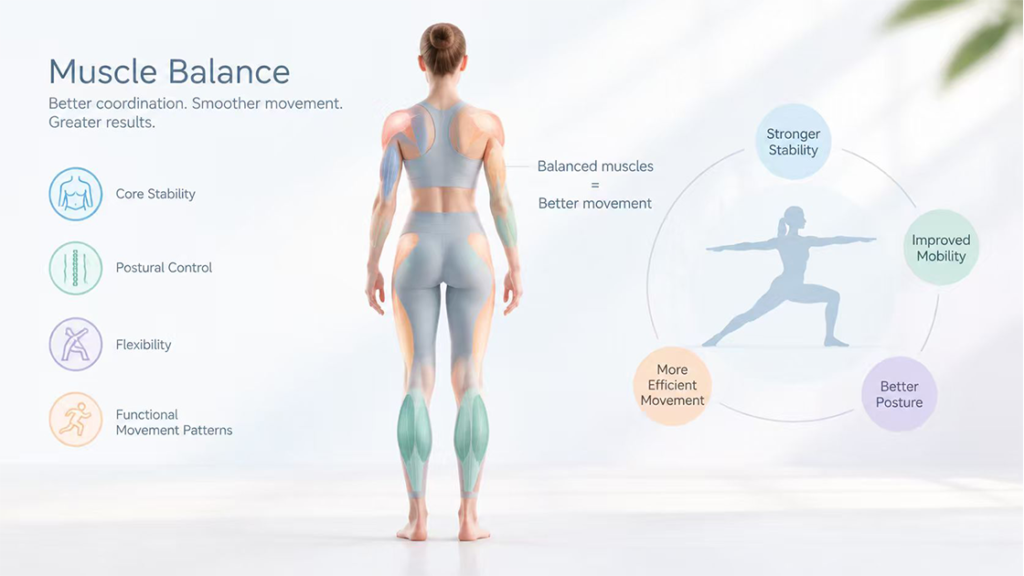
Muscle balance plays an important role in movement efficiency because the human body relies on coordinated interaction between different muscle groups.
Pilates exercises commonly focus on improving:
- core stability
- postural control
- flexibility
- functional movement patterns
When certain muscles become overactive while others become less engaged, movement quality may be affected. Factors such as repetitive activities, training intensity, daily posture habits, and limited mobility can influence how muscles work together.
For Pilates instructors, understanding muscle balance helps create more personalized movement programs. Supporting healthy muscle function involves considering not only exercise techniques but also the condition of soft tissues that contribute to movement.
Shockwave Therapy provides another supportive option that movement professionals may consider when working alongside rehabilitation specialists. Through controlled acoustic wave energy, it can be integrated into broader strategies designed to support soft tissue condition and movement preparation.
1.2 The Role of Fascia and Soft Tissue in Movement Quality
Fascia is a connective tissue network that surrounds muscles, organs, and other structures throughout the body. It plays an important role in maintaining structural support and allowing coordinated movement.
During Pilates training, fascia and soft tissue flexibility can influence:
- range of motion
- movement control
- body awareness
- exercise performance
When soft tissues experience stiffness or reduced mobility, individuals may notice changes in movement patterns.
Modern recovery approaches increasingly consider fascia and soft tissue quality as important components of overall mobility management.
Shockwave Therapy uses mechanical acoustic waves that deliver targeted stimulation to selected areas. In professional settings, this technology may be combined with movement-based approaches to support soft tissue preparation and mobility programs.
1.3 How Movement Professionals Are Exploring New Recovery Technologies
The fitness and rehabilitation industries continue to develop new approaches that combine exercise science with advanced technology.
Traditional Pilates instruction focuses on movement education, breathing techniques, and controlled strengthening. However, many professionals now recognize the value of integrating supportive recovery methods into broader wellness strategies.
Technologies such as Shockwave Therapy are being explored in professional environments because they provide targeted energy application and can complement existing rehabilitation and movement programs.
For Pilates instructors, understanding these technologies does not replace movement expertise. Instead, it provides additional knowledge about how modern recovery systems may work together to support clients with different physical needs.
2. Exploring Shockwave Therapy Applications in Pilates and Movement Programs
As Pilates continues expanding from fitness studios into rehabilitation and wellness environments, professionals are paying greater attention to technologies that support mobility and tissue management.
2.1 How Shockwave Therapy Works With Movement-Based Approaches
Shockwave Therapy, also known as Extracorporeal Shock Wave Therapy (ESWT), uses acoustic wave energy delivered to specific body areas.
Unlike traditional exercise methods that create movement through muscular contraction, Shockwave Therapy focuses on mechanical stimulation of targeted tissues.
The technology may be used in professional environments to support:
- soft tissue conditioning
- mobility preparation
- recovery-focused programs
- movement quality strategies
For Pilates professionals, the connection between Shockwave Therapy and movement training lies in their shared focus on improving functional movement patterns.
While Pilates develops strength, stability, and coordination, Shockwave Therapy can serve as a supportive technology within a wider approach to soft tissue management.
2.2 Supporting Mobility Programs for Pilates Clients
Mobility is one of the foundations of Pilates practice. Many Pilates movements require controlled flexibility combined with strength and stability.
Common mobility-focused areas include:
- hips
- shoulders
- spine
- lower limbs
Maintaining mobility involves more than stretching alone. It also requires understanding muscle condition, tissue flexibility, and movement habits.
Shockwave Therapy may be incorporated into professional recovery settings where specialists evaluate individual needs and develop supportive plans.
When combined with appropriate movement training, this technology may help create a more complete approach to mobility-focused programs.
2.3 The Relationship Between Shockwave Therapy and Muscle Recovery Strategies
Muscle recovery involves multiple factors, including physical activity levels, movement patterns, tissue condition, and overall wellness habits.
Pilates instructors often focus on controlled exercise progression and proper technique. Recovery specialists may use additional technologies to support soft tissue preparation.
Shockwave Therapy provides a non-invasive technology option that uses acoustic energy to interact with targeted areas.
Within professional settings, it can be considered as part of a comprehensive recovery strategy rather than a replacement for exercise, rehabilitation, or professional assessment.
3. Integrating Shockwave Therapy Into Pilates and Wellness Environments
As movement-based training continues developing, Pilates studios, rehabilitation facilities, and wellness centers are exploring ways to combine exercise methods with supportive technologies. The goal is to create more comprehensive approaches that consider strength, flexibility, mobility, and soft tissue conditions together.
3.1 Supporting Pilates-Based Recovery Programs With Advanced Technology
Pilates-based recovery programs often focus on restoring movement confidence, improving body awareness, and developing better coordination between different muscle groups.
For individuals participating in regular Pilates training, physical demands may vary depending on exercise intensity, movement patterns, and lifestyle factors.
Professional recovery programs may include different approaches that focus on:
- movement quality
- flexibility management
- muscle coordination
- soft tissue support
Shockwave Therapy can be considered as one of the supportive technologies used within professional environments. By delivering controlled acoustic wave energy to specific areas, it provides an additional method that specialists may integrate into broader recovery strategies.
The combination of movement training and technology-based support allows professionals to address different aspects of physical performance and mobility management.
3.2 Supporting Common Movement Challenges in Pilates Practice
Pilates exercises involve controlled movements that require coordination between multiple body regions. Certain movement patterns may place repeated demands on specific muscles and connective tissues.
Areas commonly considered during movement assessments include:
- hip mobility
- shoulder flexibility
- spinal movement
- lower limb function
When movement limitations occur, professionals usually evaluate multiple factors rather than focusing on one single area.
Shockwave Therapy may support professional approaches that focus on soft tissue condition and movement preparation. When combined with appropriate exercise planning, it can become part of a broader strategy designed around individual movement goals.
For Pilates instructors, understanding these supportive technologies can improve communication with rehabilitation professionals and help create more coordinated wellness programs.
3.3 The Importance of Collaboration Between Pilates Instructors and Healthcare Professionals
Pilates instructors play an important role in movement education, but advanced recovery technologies require specialized knowledge and professional application.
Collaboration between Pilates professionals and healthcare providers can help create structured programs that consider:
- individual physical conditions
- movement limitations
- exercise goals
- recovery requirements
Shockwave Therapy is generally applied by trained professionals in clinical or specialized wellness settings.
By working together, Pilates instructors and healthcare specialists can combine movement expertise with technology-based support approaches to provide more comprehensive client experiences.
4. Understanding the Benefits of Shockwave Therapy Technology in Modern Movement Care
The development of rehabilitation technology has expanded the options available for supporting mobility and physical performance. Shockwave Therapy represents one of the technologies being explored in modern movement and recovery environments.
4.1 Acoustic Wave Technology and Targeted Tissue Stimulation
Shockwave Therapy uses acoustic waves that transmit mechanical energy into selected tissue areas.
This technology is designed around controlled energy delivery, allowing professionals to adjust application methods according to different program requirements.
The interaction between acoustic waves and tissue environments is an important area of interest because it relates to:
- cellular activity support
- circulation-related responses
- soft tissue condition management
In Pilates and movement settings, targeted technology applications may complement exercise programs that focus on strength, flexibility, and coordination.
The purpose is not to replace movement training but to provide another supportive tool within a broader wellness and rehabilitation framework.
4.2 Supporting Personalized Movement and Recovery Plans
Every individual has different movement patterns, physical backgrounds, and training goals.
A personalized approach considers factors such as:
- activity level
- flexibility
- strength balance
- mobility requirements
Modern wellness programs increasingly emphasize customized strategies rather than one general approach for all individuals.
Shockwave Therapy can be incorporated into personalized recovery plans when evaluated and applied by qualified professionals.
For Pilates-related programs, combining movement analysis with supportive technologies may help professionals develop more complete approaches that address both exercise performance and recovery needs.
4.3 The Growing Role of Technology in Fitness and Rehabilitation
The relationship between fitness and rehabilitation continues to evolve. Many wellness professionals now focus not only on exercise performance but also on long-term movement quality.
Technology-based approaches are becoming increasingly integrated into professional environments because they provide additional options for supporting physical maintenance.
Shockwave Therapy reflects this trend by offering a non-invasive technology that can be used alongside exercise-based programs.
As movement science continues advancing, collaboration between fitness professionals, rehabilitation specialists, and technology providers may become increasingly important.
5. Future Trends of Shockwave Therapy in Pilates and Movement Optimization
The future of movement care is moving toward more integrated approaches that combine exercise science, rehabilitation knowledge, and advanced technology. Shockwave Therapy may continue developing as part of this broader trend.
5.1 The Increasing Demand for Integrated Recovery Solutions
Modern clients often look for wellness programs that address multiple aspects of physical health, including movement ability, flexibility, strength, and recovery.
This demand has encouraged wellness centers and rehabilitation facilities to explore technologies that complement traditional exercise methods.
Integrated recovery solutions may combine:
- movement training
- professional assessment
- recovery technology
- personalized exercise planning
Shockwave Therapy fits within this development by providing a technology-based option that can support soft tissue-focused programs.
For Pilates professionals, understanding these developments can help them better connect movement practices with modern recovery concepts.
5.2 How Shockwave Therapy May Support the Future of Movement Professionals
As Pilates continues expanding into rehabilitation and wellness fields, instructors may increasingly collaborate with other healthcare and recovery specialists.
Future movement programs may focus more on:
- personalized training strategies
- functional movement improvement
- technology-supported recovery
- multidisciplinary cooperation
Shockwave Therapy may continue being explored as a complementary technology within these evolving systems.
The future application of this technology will depend on professional knowledge, appropriate protocols, and continued development of movement-based care models.
FAQ
What is Shockwave Therapy in Pilates-related recovery programs?
Shockwave Therapy is a technology that uses acoustic wave energy to provide targeted stimulation to specific tissue areas and may support professional recovery strategies.
Can Pilates instructors perform Shockwave Therapy?
Shockwave Therapy is typically applied by trained healthcare or rehabilitation professionals. Pilates instructors may collaborate with qualified providers.
How can Shockwave Therapy complement Pilates training?
It can be used as a supportive technology alongside movement programs that focus on mobility, strength, and muscle balance.
Is Shockwave Therapy a replacement for Pilates exercises?
No. It is a complementary technology and does not replace movement training or professional exercise instruction.
What areas may be considered for Shockwave Therapy applications?
Professionals may evaluate different soft tissue areas depending on individual movement needs and recovery goals.
Why are wellness centers exploring Shockwave Therapy?
Many wellness facilities are interested in technology that can complement personalized movement and recovery programs.
Conclusion
Shockwave Therapy represents an emerging supportive technology that can complement modern Pilates and movement-based wellness programs. By using acoustic wave energy to provide targeted tissue stimulation, it offers another option for professionals focused on mobility, soft tissue management, and movement quality. Pilates instructors can benefit from understanding how advanced recovery technologies fit into broader wellness systems and how collaboration with qualified professionals can create more comprehensive approaches. As the connection between fitness, rehabilitation, and technology continues to grow, Shockwave Therapy may remain an important part of future movement optimization strategies.
Références
“Extracorporeal Shock Wave Therapy: Current Evidence and Applications in Musculoskeletal Disorders”
https://pubmed.ncbi.nlm.nih.gov/32010414
“Shockwave Therapy in Rehabilitation: Mechanisms and Clinical Applications”
https://www.ncbi.nlm.nih.gov/pmc/articles/PMC7464549
“Extracorporeal Shock Wave Therapy and Its Role in Tissue Regeneration”
https://pubmed.ncbi.nlm.nih.gov/23339818
“Physical Activity, Pilates Exercise, and Functional Movement Improvement”
https://pubmed.ncbi.nlm.nih.gov/22086092
“Current Concepts in Myofascial and Soft Tissue Rehabilitation”