

はじめに
IT Band Syndrome (Iliotibial Band Syndrome, or ITBS) is one of the most common overuse injuries among runners. Whether preparing for a marathon, training for a personal best, or simply maintaining a regular running routine, many athletes experience discomfort along the outer side of the knee or thigh at some point. Because recurring symptoms can interfere with training consistency, runners often look for non-invasive options that may support recovery and help them return to activity. Among the therapies gaining attention in sports medicine and rehabilitation clinics, shockwave therapy has emerged as a potential tool for managing soft tissue discomfort associated with repetitive running stress.
1. Understanding IT Band Syndrome in Runners
IT Band Syndrome is a repetitive strain condition that commonly affects distance runners and endurance athletes.
1.1 What Is the Iliotibial Band?
The iliotibial band is a thick band of connective tissue that runs from the hip down the outside of the thigh and attaches near the knee. During running, it helps stabilize the lower extremity and contributes to efficient movement patterns. Because the IT band experiences repeated loading during each stride, excessive training volume or biomechanical imbalances may increase stress on surrounding tissues.
1.2 Why Is IT Band Syndrome Common in Running?
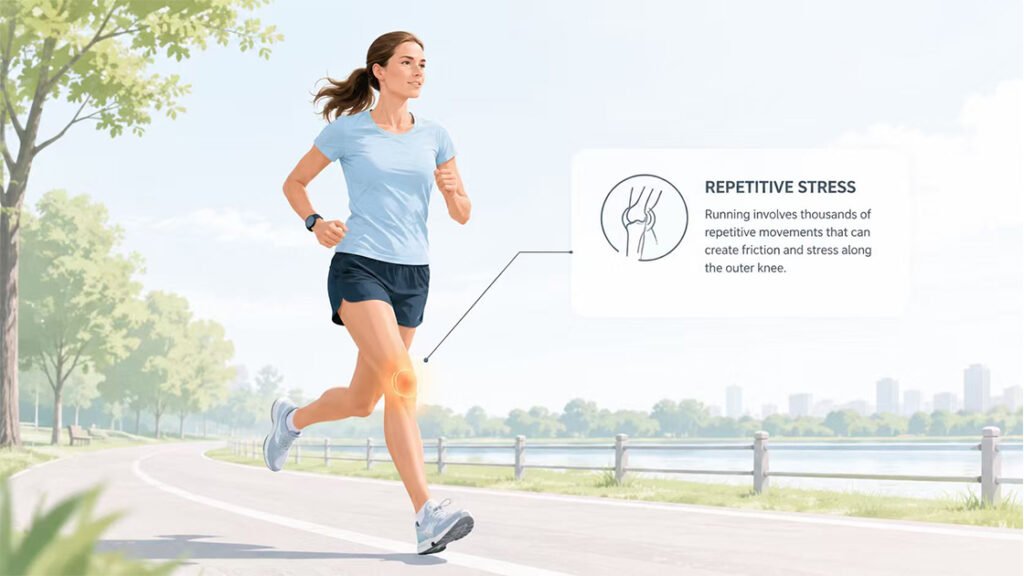
Running involves thousands of repetitive movements during a single training session. Factors that may contribute to IT Band Syndrome include:
- Sudden increases in mileage
- Downhill running
- Inadequate recovery between workouts
- Hip muscle weakness
- Poor running mechanics
- Limited mobility around the hip and thigh
Many runners first notice symptoms as a sharp or burning sensation on the outside of the knee that becomes more noticeable during longer runs.
2. How IT Band Syndrome Can Affect Running Performance
While symptoms vary among individuals, persistent discomfort can influence both performance and training consistency.
2.1 Impact on Training Volume
Many runners with IT Band Syndrome find that pain develops after a specific distance or duration. Over time, this may limit weekly mileage and interfere with race preparation. Some athletes also reduce speed work or hill training because these activities place additional stress on the affected area.
2.2 Effects on Movement Efficiency
When discomfort develops, runners may unconsciously adjust their gait to avoid aggravating symptoms. These compensations can alter biomechanics and potentially increase stress on other structures, including the hips, calves, and lower back.
3. What Is Shockwave Therapy?
Shockwave therapy is a non-invasive treatment modality commonly used in sports medicine, rehabilitation, and musculoskeletal care.
3.1 Understanding Shockwave Technology
Shockwave therapy uses acoustic waves that are delivered to targeted tissues through a handheld applicator. Professional systems may utilize radial shockwave technology or focused shockwave technology, depending on treatment objectives and anatomical considerations.
Unlike surgical procedures, shockwave therapy does not require incisions, injections, or lengthy recovery periods. Sessions are typically performed in clinical settings as part of a broader rehabilitation strategy.
3.2 Why Sports Medicine Professionals Use Shockwave Therapy
Shockwave therapy is frequently incorporated into treatment programs for conditions involving tendons, fascia, and soft tissue structures. Sports medicine practitioners often combine shockwave therapy with:
- Strength training
- Mobility exercises
- Running form assessments
- Recovery protocols
- Progressive return-to-running plans
The goal is not to provide an instant solution but to support a comprehensive approach to musculoskeletal health.
4. How Shockwave Therapy May Support Runners with IT Band Syndrome
Shockwave therapy is increasingly discussed within running and rehabilitation communities because of its non-invasive nature.
4.1 Supporting Soft Tissue Recovery
The tissues surrounding the iliotibial band may experience repetitive mechanical stress during running. Shockwave therapy is often used to deliver controlled acoustic energy to affected regions, which may support local tissue responses and complement rehabilitation efforts.
For runners who struggle with recurring symptoms despite modifying training loads, shockwave therapy may be considered as part of a broader management strategy.
4.2 Addressing Long-Term Running Discomfort
Chronic discomfort can be frustrating for runners who want to maintain training consistency. In clinical practice, shockwave therapy is sometimes integrated into treatment plans for individuals who have experienced symptoms for extended periods and are seeking additional non-invasive options alongside exercise-based rehabilitation.
5. Common Treatment Areas for Runners with IT Band Syndrome
Shockwave therapy sessions are typically customized according to individual symptoms and movement assessments.
5.1 Lateral Knee Region
The outer side of the knee is often the primary area of concern for runners with IT Band Syndrome. Practitioners may apply shockwave therapy to surrounding soft tissues while evaluating factors that contribute to repetitive strain.
5.2 Hip and Gluteal Muscles
Weakness or dysfunction in the hip region can influence running mechanics. Because of this connection, treatment plans may also include attention to the gluteal muscles and lateral hip structures. Combining shockwave therapy with strengthening exercises may help address multiple contributing factors simultaneously.
6. A Typical Runner’s Experience with Shockwave Therapy
Treatment experiences vary depending on symptom history, training goals, and clinical recommendations.
6.1 Integrating Therapy into a Training Plan
A recreational runner preparing for a half marathon may seek shockwave therapy after noticing persistent discomfort along the outside of the knee. Instead of completely stopping activity, the runner may work with a clinician who combines shockwave sessions with adjustments to mileage, strength exercises, and mobility work.
This integrated approach allows the athlete to continue progressing while focusing on long-term movement quality.
6.2 Recovery and Follow-Up
Many clinics monitor progress through regular assessments of symptoms, training tolerance, and functional movement. Follow-up care may include gait analysis, hip strengthening programs, and gradual increases in running volume to support sustainable participation in the sport.
7. The Role of Professional Shockwave Therapy Devices
Advancements in shockwave technology have expanded treatment options available to rehabilitation professionals.
7.1 Radial Shockwave Systems
Radial shockwave devices are commonly used for broader treatment areas and superficial soft tissue applications. They are frequently incorporated into musculoskeletal rehabilitation programs involving overuse injuries and sports-related discomfort.
7.2 Focused Shockwave Systems
Focused shockwave devices deliver energy to more specific tissue depths and are often selected based on treatment goals and practitioner assessment. In sports medicine environments, focused and radial technologies may be used independently or as part of a comprehensive treatment strategy.
FAQ
What causes IT Band Syndrome in runners?
Common contributing factors include training errors, muscle imbalances, limited mobility, and repetitive stress from running.
Is shockwave therapy invasive?
No. Shockwave therapy is a non-invasive treatment that does not require surgery or injections.
Can runners continue training during shockwave therapy?
Training recommendations vary depending on symptom severity and clinical guidance. Many runners modify rather than completely stop activity.
How long does a shockwave therapy session take?
Session length depends on the treatment area and clinical protocol, but appointments are generally relatively short.
Is shockwave therapy used only for IT Band Syndrome?
No. It is commonly used in sports medicine and rehabilitation settings for a variety of musculoskeletal conditions affecting soft tissues and tendons.
結論
IT Band Syndrome remains one of the most common challenges faced by runners, particularly those involved in long-distance training and repetitive mileage accumulation. While managing the condition often requires a combination of load management, strength development, mobility work, and movement assessment, shockwave therapy has become an increasingly popular non-invasive option within modern sports medicine. By incorporating radial or focused shockwave technology into a broader rehabilitation strategy, clinicians may help runners address persistent discomfort and support their long-term participation in the sport. For athletes seeking alternatives to more invasive interventions, shockwave therapy represents a treatment approach that can be integrated into comprehensive running recovery programs.
参考文献
Iliotibial Band Syndrome in Runners: Innovations in Treatment
https://pmc.ncbi.nlm.nih.gov/articles/PMC4590904
Running Injuries and Overuse Conditions in Endurance Athletes
https://www.ncbi.nlm.nih.gov/books/NBK470255
Extracorporeal Shock Wave Therapy in Musculoskeletal Disorders
https://pmc.ncbi.nlm.nih.gov/articles/PMC6029898
Sports Medicine Applications of Shockwave Therapy
https://pmc.ncbi.nlm.nih.gov/articles/PMC7734353
Professional Shockwave Therapy Systems and Rehabilitation Applications