

Introdução
Marching band members face unique physical demands that extend beyond playing an instrument. Long rehearsals, repeated marching drills, hard performance surfaces, and sudden increases in practice time can place considerable stress on the lower legs. Over time, these demands may contribute to shin pain and overuse injuries, including medial tibial stress syndrome (MTSS), commonly known as shin splints. Shockwave therapy is one treatment option being explored for certain cases of persistent shin pain. This article explains why marching band members may develop lower-leg symptoms, how shockwave therapy works, and how it may fit into a broader recovery plan that includes workload management, rehabilitation, and appropriate medical assessment.
1. Understanding Shin Pain in Marching Band Members
1.1 Why Marching Can Stress the Lower Legs
Marching requires repeated foot strikes, controlled steps, and sustained lower-body activity. Members may rehearse for extended periods on asphalt, concrete, artificial turf, or other firm surfaces.
When training volume increases too quickly, the muscles, tendons, and bones of the lower leg may struggle to adapt to the repeated loading. This can contribute to exercise-related shin pain, particularly during intensive rehearsal periods or before competitions.
1.2 Common Symptoms of Shin Splints
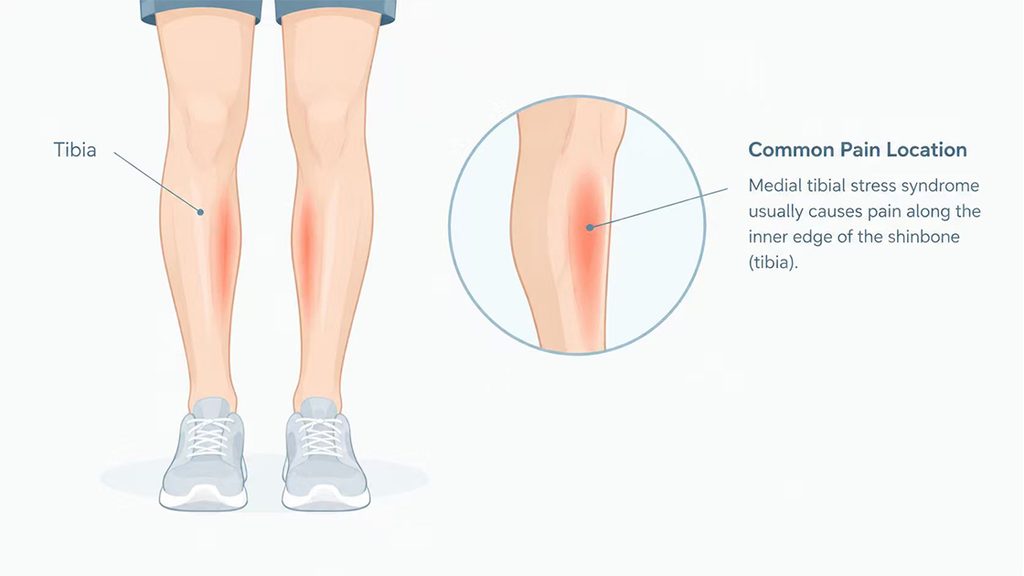
Medial tibial stress syndrome typically causes exercise-related pain along the inner edge of the shinbone. Discomfort may begin during rehearsal, become more noticeable as activity continues, or linger after practice.
Symptoms can vary from mild tenderness to pain that interferes with marching. However, not every case of shin pain is shin splints. Stress fractures and other lower-leg conditions can produce similar symptoms and require different management.
1.3 Factors That May Increase Injury Risk
Several factors may contribute to shin pain in marching band members, including sudden increases in rehearsal duration, repeated marching on hard surfaces, insufficient recovery, and footwear that does not suit the individual’s needs.
Returning to intensive practice too quickly after a break may also increase lower-leg stress. Identifying these factors helps clinicians and band members develop a more appropriate recovery and prevention strategy.
2. How Shockwave Therapy Works for Shin Pain
2.1 Understanding Extracorporeal Shockwave Therapy
Extracorporeal shockwave therapy (ESWT) delivers acoustic energy through an applicator placed against the skin. It is used in selected musculoskeletal conditions and has been investigated as a treatment option for persistent medial tibial stress syndrome.
Researchers are studying how acoustic stimulation may influence pain-related processes and tissue responses. However, the exact mechanisms and clinical benefits can vary by condition and treatment protocol.
Shockwave therapy should therefore be considered an adjunct to appropriate care rather than a guaranteed solution for every case of shin pain.
2.2 Focused and Radial Shockwave Technology
Shockwave systems may use focused shockwaves or radial pressure waves. These technologies differ in how they deliver acoustic energy to tissue.
Focused systems concentrate energy at a selected depth, while radial systems distribute pressure waves outward from the applicator. The choice depends on the diagnosis, treatment target, and clinical objectives.
Some professional systems offer adjustable energy settings and treatment frequencies. These features allow trained practitioners to tailor treatment parameters to the individual rather than relying on one fixed setting.
2.3 Why Treatment Parameters Matter
More energy does not automatically mean better results. The appropriate treatment depends on the condition being addressed, the device’s characteristics, the patient’s tolerance, and the clinician’s assessment.
For marching band members, treatment should focus on the diagnosed cause of shin pain. Applying shockwaves without first distinguishing shin splints from a possible stress fracture may delay appropriate care.
3. Potential Benefits and the Current Research
3.1 Supporting Pain Management
Shockwave therapy may be considered for selected cases of persistent medial tibial stress syndrome when a clinician determines that it is appropriate.
The goal may be to help manage symptoms and support a broader rehabilitation program. However, individual responses vary, and treatment should not be presented as a way to guarantee faster recovery or immediate return to marching.
3.2 What Does the Research Show?
Research on shockwave therapy for medial tibial stress syndrome has produced mixed findings. A randomized, sham-controlled pilot trial did not find significant overall improvements in pain or running distance compared with sham treatment.
A later systematic review reported promising findings but also highlighted the limited number of studies. More high-quality research is needed to determine which patients may benefit and which treatment protocols are most appropriate.
These findings are important when considering shockwave therapy for marching band members because much of the available research comes from athletic populations rather than marching band participants specifically.
3.3 Why Rehabilitation Remains Essential
Even when symptoms improve, the lower leg still needs to tolerate the physical demands of repeated marching. Shockwave therapy cannot replace appropriate activity modification, progressive conditioning, and recovery.
A comprehensive plan may include temporary changes to rehearsal intensity, calf and lower-leg strengthening, gradual exposure to marching drills, and assessment of footwear and training surfaces. These measures address the demands that may have contributed to the symptoms in the first place.
4. Integrating Shockwave Therapy Into a Recovery Plan
4.1 Begin With an Accurate Assessment
Persistent or worsening shin pain should be assessed by a qualified healthcare professional. Diffuse tenderness along the inner shin may be consistent with medial tibial stress syndrome, while localized bone tenderness can raise concern for a stress injury.
Pain during walking, pain at rest, significant swelling, or difficulty bearing weight warrants prompt evaluation. Imaging may be needed when a stress fracture or another significant condition is suspected.
4.2 Adjust Rehearsal and Training Loads
During recovery, marching band members may need to reduce the duration or intensity of rehearsals that aggravate symptoms. Depending on the diagnosis, low-impact activities may help maintain general conditioning without adding excessive lower-leg stress.
The return to full practice should be gradual. Increasing marching time, speed, and drill complexity in stages can help the lower legs adapt to renewed demands.
4.3 Combine Treatment With Progressive Strengthening
Rehabilitation may include calf strengthening, ankle control exercises, and gradual conditioning appropriate to the individual’s symptoms and diagnosis.
If shockwave therapy is included, it should complement these measures rather than replace them. Progress should be evaluated through symptoms, walking tolerance, functional capacity, and the ability to complete increasingly demanding activities.
4.4 Follow Professional Treatment and Safety Guidelines
Shockwave therapy should be administered by a trained professional using appropriate equipment and treatment parameters. The clinician should review relevant medical history, screen for contraindications, and explain possible temporary discomfort or other adverse effects.
Treatment settings should follow the device instructions and clinical guidance. Suspected bone stress injuries require particular care because treatment decisions depend on the exact diagnosis and injury severity.
5. Preventing Shin Pain During Marching Season
5.1 Increase Practice Time Gradually
Sudden increases in rehearsal volume can overload tissues that have not adapted to the new demands. Band directors and members should plan gradual increases in marching duration and intensity, especially after a break.
Recovery time should also be considered when scheduling rehearsals, performances, and additional conditioning sessions.
5.2 Review Footwear and Marching Surfaces
Appropriate footwear and a suitable fit can support comfort during prolonged marching. Members should also pay attention to changes in footwear, training surfaces, and rehearsal conditions that coincide with new symptoms.
No single shoe or insert works for everyone. Persistent symptoms may warrant an individualized assessment of footwear and lower-limb mechanics.
5.3 Recognize Symptoms Early
Ignoring shin pain and continuing intensive rehearsals may allow an overuse problem to worsen. Members should report recurring symptoms early rather than relying on pain relief alone.
A gradual return to marching, appropriate strength training, and attention to recovery can help reduce repeated overload. Any decision to resume full rehearsals should reflect the underlying diagnosis and the individual’s functional progress.
Perguntas frequentes (FAQ)
1. Can shockwave therapy help marching band members with shin splints?
It may be considered for selected cases of persistent medial tibial stress syndrome. However, research remains limited, and treatment should be guided by a professional assessment.
2. How many shockwave therapy sessions are needed?
There is no universal treatment schedule for shin pain. The number and spacing of sessions depend on the diagnosis, device, treatment protocol, and individual response.
3. Can shockwave therapy treat a tibial stress fracture?
A suspected stress fracture requires medical evaluation before treatment decisions are made. Shockwave therapy is not a substitute for diagnosing the injury and following an appropriate bone-stress management plan.
4. Should marching band members stop rehearsing when shin pain develops?
They should modify activities that aggravate symptoms and seek assessment if pain persists or worsens. Severe pain, focal bone tenderness, or difficulty bearing weight warrants prompt medical attention.
5. Can shockwave therapy prevent shin splints from returning?
It has not been established as a reliable stand-alone prevention method. Gradual training progression, adequate recovery, appropriate footwear, and lower-leg conditioning remain important preventive measures.
Conclusão
Shin pain can disrupt marching band rehearsals and performances, particularly when repeated marching and hard surfaces place sustained stress on the lower legs. Shockwave therapy may have a role in selected cases of persistent medial tibial stress syndrome, but current evidence remains limited and does not support guaranteed results. Accurate diagnosis, appropriate workload adjustments, progressive rehabilitation, and early attention to symptoms are essential parts of recovery. By combining clinically guided treatment with practical training modifications, marching band members can work toward a safer return to rehearsals and help reduce the risk of recurring overuse injuries.
Referências
- Newman P, Waddington G, Adams R. Shockwave Treatment for Medial Tibial Stress Syndrome: A Randomized Double-Blind Sham-Controlled Pilot Trial. Journal of Science and Medicine in Sport, 2017.
https://pubmed.ncbi.nlm.nih.gov/27640922
- Forogh B, et al. Effect of Extracorporeal Shockwave Therapy on Medial Tibial Stress Syndrome: A Systematic Review. Current Orthopaedic Practice, 2022.
https://doi.org/10.1097/BCO.0000000000001127
- Winters M. The Diagnosis and Management of Medial Tibial Stress Syndrome: An Evidence Update. Unfallchirurg, 2020.
https://pubmed.ncbi.nlm.nih.gov/31098646
- International Society for Medical Shockwave Treatment (ISMST). Guidelines for Extracorporeal Shock Wave Therapy: Tibial Stress Syndrome.
5.ShockwaveMachines. Radial vs. Focused Shockwave Therapy: What’s the Difference
https://www.shockwavemachines.com/radial-vs-focused-shockwave-therapy-whats-the-difference.html
6.ShockwaveMachines. SWAVE-200 Electromagnetic Shockwave Therapy Machine: Product Specifications.