

Introdução
The wellness industry is evolving as more people look for advanced recovery solutions that support active lifestyles, physical comfort, and long-term body maintenance. Recovery centers are moving beyond traditional relaxation services by introducing technology-based options that focus on mobility, soft tissue support, and personalized wellness programs. Shockwave Therapy, also known as extracorporeal shockwave therapy (ESWT), uses acoustic wave technology to deliver mechanical energy to targeted areas of the body. This non-invasive approach has become an important technology in rehabilitation and recovery environments because it can be integrated into programs designed around muscle, tendon, and connective tissue support.
1. Understanding the Role of Shockwave Therapy in Modern Recovery Centers
As recovery-focused wellness continues to grow, many facilities are exploring technologies that complement traditional recovery methods. Shockwave Therapy provides a science-based approach that uses acoustic energy to support the body’s natural recovery processes.
1.1 What Is Shockwave Therapy and How Does It Work?
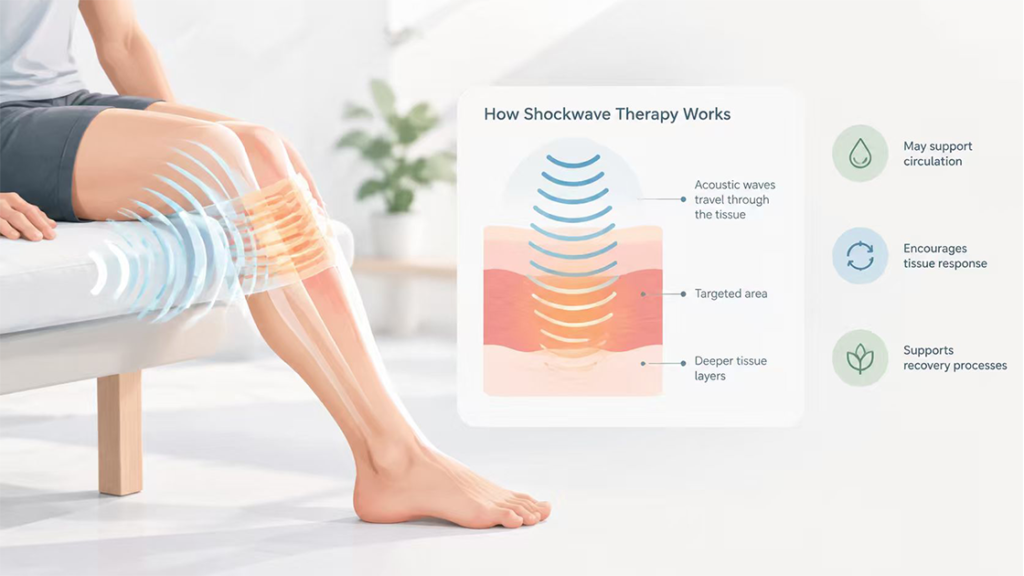
Shockwave Therapy uses high-energy acoustic waves that travel through soft tissues to create mechanical stimulation. These pressure waves interact with targeted areas and may support circulation, tissue response, and overall recovery processes.
Unlike traditional massage or manual techniques that mainly focus on surface structures, shockwave technology delivers controlled acoustic energy that can reach deeper tissue areas. Depending on the system type, recovery centers may use radial shockwave technology for broader applications or focused shockwave technology for more precise energy delivery.
This makes Shockwave Therapy a flexible option for facilities that want to provide technology-supported recovery programs.
1.2 Why Recovery Centers Are Exploring Acoustic Wave Technology
Modern consumers increasingly focus on maintaining an active lifestyle and improving their recovery routines. Fitness activities, demanding work schedules, and daily physical stress have increased interest in services that support body maintenance.
Recovery centers are responding by adding non-invasive technologies that fit into wellness-focused environments. Shockwave Therapy provides another option for individuals who want structured recovery support without relying only on traditional methods.
By combining professional guidance with advanced technology, recovery centers can create more comprehensive wellness experiences.
1.3 The Difference Between Shockwave Therapy and Traditional Recovery Methods
Traditional recovery methods often include stretching, massage, exercise programs, and mobility training. While these approaches remain valuable, technology-based solutions can provide additional support.
Shockwave Therapy introduces acoustic energy into recovery programs, creating a different approach compared with manual techniques. The technology focuses on targeted application areas and adjustable energy settings, allowing professionals to customize programs according to individual needs.
This combination of technology and professional expertise helps recovery centers develop more personalized service models.
2. Applications of Shockwave Therapy in Recovery-Focused Wellness Programs
Recovery centers serve a wide range of individuals, from active fitness users to people looking for general body maintenance. It can be incorporated into different wellness programs based on specific recovery goals.
2.1 Supporting Active Lifestyle Recovery
People who regularly participate in fitness activities often include recovery practices as part of their routine. Exercise, sports, and physically demanding hobbies can place repeated stress on muscles, tendons, and connective tissues.
Shockwave Therapy can support recovery-focused programs by applying acoustic waves to selected areas. Many facilities use this technology alongside mobility exercises, stretching routines, and other wellness services.
The goal is to help individuals maintain their preferred activities while supporting overall physical comfort.
2.2 Supporting Soft Tissue and Mobility Programs
Soft tissues, including tendons, fascia, and muscles, play an important role in movement and physical performance.
Shockwave Therapy is commonly discussed in relation to soft tissue applications because acoustic waves can provide mechanical stimulation to targeted areas. This makes it a potential addition to recovery programs focused on mobility and movement support.
Recovery centers can incorporate this technology into broader wellness plans that focus on maintaining comfortable movement patterns.
2.3 Supporting Personalized Recovery Experiences
Every individual has different lifestyle habits, activity levels, and recovery goals. Personalized wellness has become an important trend because people expect services that match their specific needs.
Shockwave systems often allow professionals to adjust intensity, application methods, and treatment areas. These options help recovery centers create more customized experiences instead of applying the same approach to every person.
Personalization also improves the connection between technology and professional assessment.
3. How Shockwave Therapy Fits Into Different Recovery Center Settings
The flexibility of Shockwave Therapy allows it to be used in different professional environments. From sports recovery facilities to wellness centers, the technology can support various service models.
3.1 Recovery Lounges and Performance Centers
Recovery lounges are becoming increasingly popular among people who prioritize physical maintenance and wellness routines.
These facilities often focus on recovery after workouts, travel, recreational activities, or physically demanding lifestyles. Adding Shockwave Therapy provides another technology-based option for individuals seeking structured recovery experiences.
The combination of professional services and advanced equipment allows these centers to create a more complete recovery environment.
3.2 Wellness Centers Expanding Beyond Relaxation Services
Many wellness centers are moving beyond traditional relaxation-focused services and introducing more functional recovery options.
Shockwave Therapy aligns with this shift because it combines modern technology with a focus on physical wellness. It can complement services such as stretching programs, mobility sessions, and recovery consultations.
This expansion allows wellness facilities to meet changing consumer expectations for technology-supported health experiences.
3.3 Rehabilitation-Focused Facilities
Rehabilitation centers have traditionally used various methods to support mobility and physical recovery.
Shockwave Therapy can become part of a broader rehabilitation strategy where professionals combine technology with exercise programs and other supportive approaches.
Its ability to provide targeted acoustic energy makes it a useful option for facilities looking to expand their recovery technology solutions.
4. The Technology Behind Shockwave Therapy
Understanding the science behind Shockwave Therapy helps explain why acoustic wave technology has gained attention in rehabilitation and wellness fields.
4.1 Acoustic Wave Technology and Tissue Stimulation
Shockwave Therapy uses acoustic waves generated by specialized equipment. These waves create controlled mechanical stimulation when they reach targeted tissues.
The interaction between acoustic energy and biological tissues is an important part of the technology. It may influence local circulation, tissue responses, and recovery-related processes.
Because of this mechanism, Shockwave Therapy is often included in programs focused on tendon, muscle, and connective tissue support.
4.2 Radial Shockwave and Focused Shockwave Therapy
There are different types of shockwave technology designed for different application approaches.
Radial shockwave systems distribute energy over a broader area and are often used for larger surface regions. Focused shockwave systems concentrate acoustic energy at specific depths, allowing more targeted applications.
Understanding these differences helps recovery professionals select appropriate technology based on program goals and application areas.
4.3 The Importance of Professional Application
Technology alone is not the only factor in recovery programs. Professional knowledge, assessment, and proper application techniques are equally important.
Recovery professionals consider factors such as target area, energy level, and individual needs when creating a suitable approach.
This combination of advanced equipment and professional expertise helps ensure that Shockwave Therapy is integrated effectively into wellness programs.
5. The Future of Shockwave Therapy in Wellness and Recovery
As the wellness industry continues developing, technology-based recovery solutions are expected to become more common in specialized facilities.
5.1 The Growth of Non-Invasive Recovery Technology
Many consumers are interested in recovery options that fit easily into modern lifestyles.
Non-invasive technologies like this herapy provide additional choices for people who want to include structured recovery practices in their wellness routines.
Recovery centers are increasingly exploring these technologies as part of broader programs focused on movement, comfort, and physical maintenance.
5.2 Creating More Comprehensive Recovery Programs
Future recovery centers may continue combining multiple approaches, including technology, exercise, mobility training, and wellness education.
Shockwave Therapy can serve as one component within a larger recovery framework.
By combining different services, facilities can create more complete programs designed around individual goals and lifestyle needs.
5.3 Expanding Opportunities for Wellness Professionals
As demand for recovery-focused services increases, wellness professionals have opportunities to develop more specialized offerings.
Shockwave Therapy provides another technology option for recovery centers that want to expand their service range.
Through professional training and appropriate application, acoustic wave technology can become part of modern recovery environments.
FAQ
O que é a terapia por ondas de choque?
It uses acoustic waves to provide mechanical stimulation to targeted areas of the body.
Is Shockwave Therapy only used in sports recovery?
No. It can be used in different recovery and rehabilitation settings for various wellness goals.
What is the difference between radial and focused shockwave?
Radial shockwave spreads energy over a wider area, while focused shockwave delivers energy at a more specific depth.
Can recovery centers use Shockwave Therapy?
Yes. Many recovery-focused facilities integrate shockwave technology into wellness and rehabilitation programs.
How long does a Shockwave Therapy session usually take?
Session length depends on the application area and program design, but many sessions are relatively short.
Conclusão
Shockwave Therapy represents an important development in technology-based recovery and wellness management. By using acoustic wave technology, recovery centers can provide another option for individuals seeking personalized support for mobility, physical comfort, and active lifestyles. As wellness continues shifting toward proactive recovery strategies, this herapy offers a modern approach that combines advanced technology with professional guidance. Its flexibility, non-invasive nature, and ability to integrate with different wellness programs make it a valuable technology direction for future recovery environments.
Referências
Acoustic Wave Therapy: Purpose, Procedure & Results
https://my.clevelandclinic.org/health/treatments/acoustic-wave-therapy
Extracorporeal Shockwave Therapy in Musculoskeletal Disorders
https://pubmed.ncbi.nlm.nih.gov/22896283
Current Concepts of Shockwave Therapy in Orthopedics and Rehabilitation
https://pubmed.ncbi.nlm.nih.gov/27537852
Radial Extracorporeal Shock Wave Therapy: Clinical Applications and Mechanisms
https://pubmed.ncbi.nlm.nih.gov/26374672
Shockwave Therapy for Tendinopathy and Soft Tissue Conditions