

Introdução
Shockwave Therapy has become a widely used non-invasive modality in modern musculoskeletal care, especially within physical therapy and rehabilitation environments. It is often chosen by individuals dealing with chronic tendon, fascia, or soft tissue discomfort who want to avoid surgical procedures. However, despite its increasing use, some individuals report limited or inconsistent improvement. These differences do not necessarily reflect inefficacy of the modality itself, but rather highlight the complexity of musculoskeletal conditions and individual biological variability. Understanding how tissue condition, chronicity, and physiological response influence outcomes provides a more balanced perspective on why results may differ.
1. Understanding Shockwave Therapy in Clinical Practice
1.1 What Shockwave Therapy Is Designed to Address
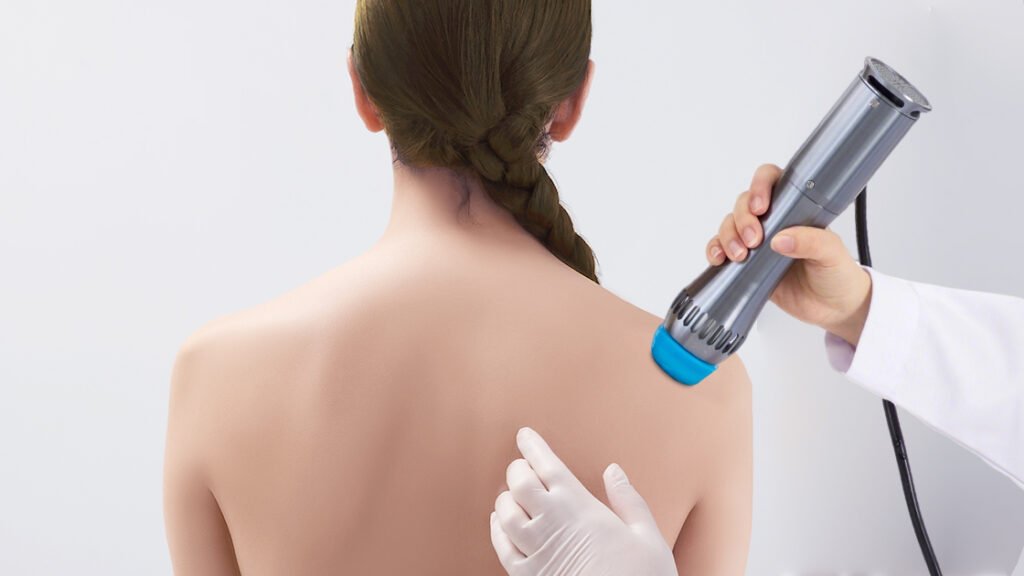
Shockwave Therapy uses acoustic pressure waves that interact with musculoskeletal tissues such as tendons, ligaments, and fascia. Clinically, it is often applied in chronic conditions involving persistent irritation or reduced tissue responsiveness. The mechanical stimulation influences local biological activity and supports tissue signaling processes. In rehabilitation settings, Shockwave Therapy is generally used as a supportive modality that contributes to symptom management and functional improvement over time rather than producing immediate structural changes.
1.2 How Shockwave Therapy Interacts With Tissue
The mechanical energy delivered during Shockwave Therapy creates controlled micro-stimulation within targeted tissue areas. This process influences circulation, cellular communication, and mechanotransduction pathways. However, tissue response varies depending on structural condition, chronic changes, and overall physiological state. Some individuals may experience gradual shifts in discomfort patterns, while others may notice more subtle or delayed responses. These variations are considered part of normal musculoskeletal adaptation processes.
1.3 Position of Shockwave Therapy in Modern Rehabilitation
In modern rehabilitation environments, Shockwave Therapy is often integrated into broader care plans rather than used as a standalone approach. Clinicians may combine it with other non-invasive modalities to support musculoskeletal function. In some cases, light-based therapies such as Cold Laser Therapy may be included as an adjunct to support cellular-level activity. However, Shockwave Therapy typically remains the primary mechanical stimulation tool within these structured programs.
2. Why Shockwave Therapy May Not Produce Expected Results
2.1 Chronic Condition Complexity and Tissue Adaptation
Musculoskeletal conditions often develop over long periods, leading to structural and functional changes within soft tissues. Chronic tendon or fascia issues may involve reduced elasticity, altered collagen organization, and decreased responsiveness to mechanical stimulation. Because of these adaptations, tissues may not respond uniformly. Individuals with long-standing conditions may experience slower or less noticeable changes compared to those with earlier-stage irritation.
2.2 Individual Biological Variability
Each person’s biological system responds differently to mechanical stimulation. Factors such as metabolic activity, cellular responsiveness, and tissue vascularity all influence outcomes. Shockwave Therapy interacts with these systems, but the speed and magnitude of response vary significantly. Some individuals may notice gradual improvements in comfort, while others may require more time before subtle changes become noticeable. This variability reflects natural differences in human physiology.
2.3 Expectations vs. Gradual Physiological Response
A common reason for perceived limited effectiveness is the gap between expectations and actual biological response timelines. Many individuals expect rapid changes, while musculoskeletal adaptation typically follows a gradual process. When progress does not match expectations, results may feel less significant. In clinical practice, Shockwave Therapy is generally viewed as a process-oriented modality that supports long-term tissue adaptation rather than immediate resolution.
2.4 Influence of Multimodal Supportive Care
Shockwave Therapy is often used within multimodal rehabilitation programs. Other non-invasive approaches, including Cold Laser Therapy, may be included to support tissue comfort and cellular activity. While these modalities do not replace Shockwave Therapy, they contribute to a broader supportive environment. The combination of mechanical and cellular-level stimulation reflects a comprehensive approach to musculoskeletal care.
3. Role of Adjunctive Modalities in Supporting Outcomes
3.1 Cellular-Level Support in Rehabilitation
Cold Laser Therapy is sometimes used alongside Shockwave Therapy in rehabilitation settings. It focuses on photobiomodulation processes that influence cellular metabolism and tissue activity. While Shockwave Therapy primarily delivers mechanical stimulation, light-based modalities interact more gently at the cellular level. This difference allows clinicians to address musculoskeletal conditions from multiple physiological perspectives within a supportive care framework.
3.2 Differences in Sensory Experience and Tolerance
Shockwave Therapy is typically associated with a noticeable mechanical sensation due to acoustic energy delivery. In contrast, light-based therapies are generally perceived as more subtle. These differences can influence patient comfort and tolerance during sessions. Comfort levels may affect consistency of participation, which can indirectly influence how individuals perceive overall progress during rehabilitation.
3.3 Integration Within Clinical Rehabilitation Programs
In many clinical environments, Shockwave Therapy is incorporated into structured rehabilitation programs that may also include movement-based therapy and other supportive modalities. Rather than functioning independently, it is part of a broader strategy designed to support musculoskeletal function. Within this framework, this therapy provides mechanical stimulation while other approaches address complementary aspects of tissue health.
4. Factors Influencing Perceived Effectiveness of Shockwave Therapy
4.1 Severity and Duration of Musculoskeletal Conditions
The severity and duration of a condition significantly influence tissue response. Long-term musculoskeletal issues often involve structural adaptations that require extended periods of supportive care. In such cases, changes may occur gradually and may not align with initial expectations. Tissue complexity plays a key role in how individuals perceive improvement over time.
4.2 Variability in Clinical Application
Differences in clinical protocols, including treatment parameters and overall rehabilitation strategies, can influence individual experiences. Shockwave Therapy is often adjusted based on tissue response and tolerance. These variations contribute to differences in perceived outcomes across different care settings, even when similar modalities are used.
4.3 Daily Mechanical Load and Lifestyle Factors
Daily physical activity and mechanical stress placed on tissues play an important role in musculoskeletal recovery patterns. Repetitive movement, posture habits, and occupational demands can influence how tissues respond to supportive therapies. Ongoing mechanical load may affect how changes are perceived, even when structured rehabilitation is in place.
4.4 Importance of Multimodal Perspective
Modern musculoskeletal care often emphasizes a multimodal perspective rather than reliance on a single intervention. Shockwave Therapy is one component within a broader rehabilitation framework. When combined with other supportive approaches, including cellular-level therapies, it contributes to a more comprehensive understanding of tissue recovery and functional support.
FAQ
Q1: Why does Shockwave Therapy not produce the same results for everyone?
Responses vary due to differences in tissue condition, chronicity, and biological variability.
Q2: Is it normal for improvement to take time?
Yes, musculoskeletal adaptation generally occurs gradually rather than immediately.
Q3: Can Shockwave Therapy be combined with other modalities?
Yes, it is often integrated with other supportive rehabilitation approaches.
Q4: Does limited early improvement mean it is not effective?
Not necessarily, as response timelines vary widely among individuals.
Q5: What factors influence overall experience most?
Condition severity, lifestyle load, and biological variability are key influences.
Conclusão
Shockwave Therapy is widely used in musculoskeletal rehabilitation to support tissue function and manage chronic discomfort patterns. However, individual responses vary due to differences in tissue condition, biological variability, and expectations regarding recovery timelines. In clinical practice, it is often integrated into multimodal rehabilitation strategies that may include other supportive modalities such as Cold Laser Therapy. Understanding these factors provides a more realistic perspective on outcome variability and highlights the importance of individualized, supportive care approaches.
Referências
Mayo Clinic – Shock Wave Therapy Overview
https://www.mayoclinic.org/tests-procedures
Cleveland Clinic – Extracorporeal Shock Wave Therapy
https://my.clevelandclinic.org/health/treatments/21098-shock-wave-therapy
National Center for Biotechnology Information – Shockwave Therapy Overview
https://www.ncbi.nlm.nih.gov/pmc/articles/PMC4959902/
American Physical Therapy Association – Physical Therapy Modalities
Journal of Orthopaedic Research – Shockwave Therapy Applications