

Введение
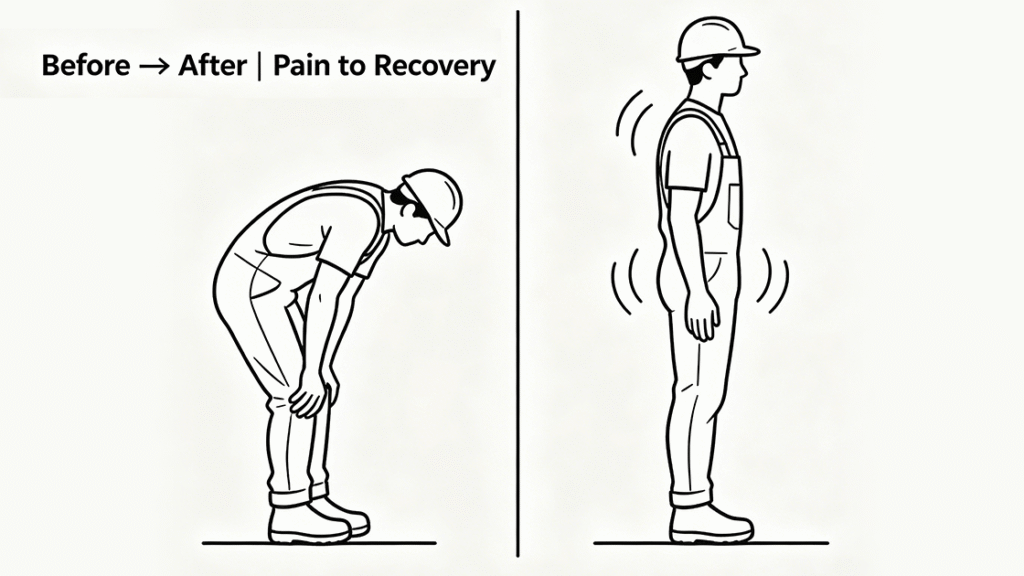
Construction workers face daily physical challenges. They lift heavy materials, kneel on concrete, climb scaffolding, and operate vibrating tools. Over time, these repetitive tasks cause chronic pain in the heels, elbows, shoulders, and lower back. Many workers rely on painkillers or simply push through the pain. But drugs only mask symptoms, and ignoring injuries leads to long-term disability. Shockwave therapy offers a different approach. This non-invasive treatment uses high-energy sound waves to stimulate healing in damaged tendons and soft tissues. For construction workers, it means less downtime, no surgery, and a faster return to the job site.
1. The Occupational Hazards That Wear Down Construction Workers
1.1 Why Repetitive Strain and Heavy Lifting Cause Chronic Tendon Damage
Construction work involves thousands of repetitive motions every day. Hammering, lifting, carrying, and kneeling put stress on the same tendons and joints repeatedly. Unlike acute injuries from a single accident, these micro-traumas accumulate over years. The body tries to repair the damage, but constant re-injury prevents full healing. Tendons become thickened, painful, and weak. This condition is called tendinopathy. Common sites include the Achilles tendon, patellar tendon, elbow extensors (tennis elbow), and rotator cuff. Workers often ignore early warning signs like morning stiffness or mild soreness. By the time they seek help, the damage has become chronic.
1.1.1 How Shockwave Therapy Targets Deep Tissue Without Drugs or Surgery
Shockwave therapy delivers high-energy acoustic pulses through the skin. These pulses penetrate deep into the affected tendon or muscle. The mechanical energy triggers a biological response. It increases blood flow, breaks down scar tissue, and stimulates the body’s own repair cells. Unlike painkillers that only block nerve signals, shockwave therapy addresses the root cause. The treatment takes about 15 to 20 minutes per session. Most workers need three to five sessions, spaced one week apart. They feel immediate relief after the first session, though full healing takes a few weeks. The procedure requires no anesthesia, no incisions, and no downtime. Workers can return to light duty the same day.
2. Common Construction-Related Injuries That Respond Well to Shockwave
2.1 Plantar Fasciitis: The Heel Pain That Starts Each Morning
Many construction workers spend eight to ten hours standing on hard concrete. This constant pressure strains the plantar fascia, a thick band of tissue along the bottom of the foot. Over time, micro-tears develop at the heel attachment. Workers feel sharp pain with the first few steps in the morning or after sitting for a break. The pain often eases after walking around but returns after more standing. Traditional treatments include stretching, ice, orthotics, and anti-inflammatory drugs. But these only provide temporary relief. Chronic cases can last for months or years.
2.1.1 Shockwave Breaks Down Scar Tissue and Stimulates Healing
Shockwave therapy works well for chronic plantar fasciitis. The acoustic pulses target the calcaneal insertion point. They break down fibrotic scar tissue that has formed from repeated micro-tears. The mechanical stimulation also increases local blood flow and recruits stem cells to the area. Studies show that shockwave improves plantar fasciitis pain by 60 to 80 percent. Most workers notice a difference after three sessions. They can walk without limping and climb ladders with less discomfort. The best part is that the results last. Unlike steroid injections that wear off after a few weeks, shockwave promotes actual tissue repair.
2.2 Lateral Epicondylitis (Tennis Elbow) From Repetitive Gripping
Construction workers use tools that require constant gripping and wrist extension. Jackhammers, screwdrivers, and heavy wrenches all stress the forearm extensor tendons. These tendons attach to the lateral epicondyle of the elbow. Overuse causes microscopic tearing and degeneration. The pain radiates from the outer elbow down to the wrist. Simple tasks like holding a coffee cup or turning a doorknob become painful. Workers often lose grip strength, which makes their job dangerous.
2.2.1 Shockwave Restores Grip Strength Without Cortisone
Shockwave therapy for tennis elbow has strong clinical evidence. The focused pulses reach the tendon attachment site at the bone. They stimulate tenocyte activity and collagen production. Many workers try cortisone injections first. Cortisone reduces pain quickly, but it weakens the tendon over time and does not heal the degeneration. Shockwave provides a better long-term solution. After three to four weekly sessions, most workers regain full grip strength. They can return to using tools without pain. The treatment also reduces the risk of re-injury because the tendon actually heals rather than just numbing the pain.
2.3 Achilles Tendinopathy From Constant Climbing and Walking
Construction workers climb stairs, ladders, and scaffolding dozens of times per shift. They also walk on uneven surfaces carrying heavy loads. This constant loading stresses the Achilles tendon, which connects the calf muscles to the heel bone. Over time, the tendon thickens and becomes painful, especially during push-off movements. Workers feel pain at the back of the heel or slightly higher up the tendon. Morning stiffness and pain after rest are common. If left untreated, the tendon can rupture, requiring surgery and months of recovery.
2.3.1 Shockwave Improves Tendon Structure and Reduces Pain
Shockwave therapy treats both insertional and non-insertional Achilles tendinopathy. The acoustic pulses break down calcific deposits and neovascularization that often accompany chronic tendon pain. They also stimulate the production of growth factors. Clinical studies show significant pain reduction and improved tendon structure after shockwave. Workers report being able to climb ladders and walk long distances without the burning ache they had before. The treatment requires no needles or drugs. Most protocols use three to four sessions. After the full course, the tendon becomes more resilient and less prone to future injury.
3. Why Construction Workers Need a Non-Surgical, Fast-Healing Option
3.1 Surgery Means Months Off Work and Lost Wages
A construction worker who undergoes surgery for chronic tendinopathy faces a long recovery. Plantar fascia release surgery requires four to six weeks of non-weight-bearing. Achilles tendon surgery takes three to six months before returning to full duty. Elbow surgery means no lifting for at least six weeks. During this time, the worker cannot earn a paycheck. Many construction workers live paycheck to paycheck. They simply cannot afford to take months off. As a result, they avoid surgery and continue working in pain. This leads to worse injuries and eventually forced retirement.
3.1.1 Shockwave Gets Workers Back on the Job Within Days
Shockwave therapy has almost no downtime. A worker can receive a session during a lunch break or after work. The treatment causes some soreness for 24 to 48 hours, but this is manageable with ice and over-the-counter pain relievers. The worker can return to light duty the next day. Full healing takes a few weeks, but the worker does not need to stop working completely. For a construction worker, this is a game-changer. They keep earning their wage while their body heals. The total cost of shockwave therapy is also much lower than surgery. No hospital fees, no anesthesia, no physical therapy for months. This makes shockwave an attractive option for both workers and their employers.
4. What Construction Workers Should Know Before Starting Shockwave
4.1 Who Is a Good Candidate for Shockwave Therapy
Not every worker is a candidate for shockwave. The best candidates have chronic tendinopathy symptoms lasting more than three months. They have already tried conservative treatments like rest, ice, stretching, and anti-inflammatories without success. Shockwave works best for conditions like plantar fasciitis, tennis elbow, Achilles tendinopathy, and patellar tendinopathy. Workers with acute injuries, infections, tumors, or blood clotting disorders should not receive shockwave. Pregnant women should also avoid it. A proper diagnosis from a healthcare provider is essential before starting treatment.
4.1.1 How to Prepare for the First Session
Before the first session, the worker should stop taking anti-inflammatory drugs for at least one week. These drugs can interfere with the healing response that shockwave triggers. The worker should wear loose, comfortable clothing that allows access to the painful area. The provider will apply gel to the skin to help the shockwave waves conduct properly. The worker will feel strong pulses during the treatment. It is uncomfortable but not unbearable. The entire session lasts 15 to 20 minutes. Afterward, the worker may feel soreness similar to a deep bruise. This is a normal sign that the body’s healing process has started.
FAQ
Q1: How many shockwave sessions does a construction worker need?
A: Most workers need three to five sessions, spaced one week apart. Some conditions require up to six sessions.
Q2: Does shockwave therapy hurt?
A: The treatment causes strong pulses that feel uncomfortable. But each session lasts only 15 to 20 minutes, and the discomfort is temporary.
Q3: Can a worker return to the job site the same day?
A: Yes. There is no downtime. The worker may feel soreness, but light duty is possible the next day.
Q4: Will insurance cover shockwave therapy for work-related injuries?
A: Many workers’ compensation plans cover shockwave for chronic tendinopathy. Workers should check with their provider and employer.
Q5: How soon will the pain go away?
A: Many workers feel relief after the first session. Full improvement usually takes two to four weeks after completing all sessions.
Заключение
Construction workers put their bodies through extreme stress every day. Chronic tendon pain from plantar fasciitis, tennis elbow, and Achilles tendinopathy does not have to end their careers. Shockwave therapy offers a non-invasive, drug-free, and surgery-free solution. It stimulates the body’s own healing mechanisms. Workers can return to the job site within days, not months. The treatment costs less than surgery and keeps workers earning a paycheck. For the hard-working men and women in construction, shockwave therapy is a practical path back to pain-free work.
Ссылки
American College of Foot and Ankle Surgeons – Plantar fasciitis treatment guidelines
https://www.acfas.org/plantar-fasciitis
National Institutes of Health (PMC) – Extracorporeal shockwave therapy for chronic tendinopathies
https://www.ncbi.nlm.nih.gov/pmc/articles/PMC7151232
Journal of Orthopaedic & Sports Physical Therapy – Shockwave for lateral epicondylitis
https://www.jospt.org/doi/10.2519/jospt.2022.11032
Mayo Clinic – Shockwave therapy for plantar fasciitis
https://www.mayoclinic.org/tests-procedures/shock-wave-therapy/about/pac-20393313
Shockwave Machines – Indications for shockwave therapy
https://www.shockwavemachines.com/indications
Workers‘ Compensation Research Institute – Non-surgical treatment for occupational injuries