

Введение
Osteoarthritis affects millions of dogs, quietly reducing their quality of life long before many owners notice the subtle signs. The condition develops gradually—a slight hesitation before jumping into the car, a slower pace on daily walks, stiffness after lying down for a nap. By the time these changes become obvious, the joint damage has often been progressing for years. Research suggests that about 20 percent of dogs over one year of age show clinical signs of артрит, and this number climbs to up to 80 percent of dogs older than eight years. For senior dogs living with chronic joint discomfort, finding effective, non-invasive ways to support comfort and mobility becomes essential. This article explores how shockwave therapy works, what the evidence suggests about its role in canine osteoarthritis, and how it can fit into a broader plan for helping older dogs stay active and comfortable.
1. Understanding Canine Osteoarthritis
Osteoarthritis is far more than simple wear and tear on aging joints. It represents a complex, progressive condition that affects cartilage, bone, and the surrounding soft tissues in ways that significantly impact a dog‘s daily life.
1.1 What Happens Inside an Arthritic Joint
In a healthy joint, smooth cartilage covers the ends of bones, allowing them to glide against each other with minimal friction. In osteoarthritis, this cartilage gradually breaks down. The body’s attempt to repair the damage leads to inflammation, bone remodeling, and the formation of osteophytes—bony growths that further impede movement. The joint capsule may thicken, and surrounding muscles may weaken from reduced use. This cascade of changes does not happen overnight. It develops over months or years, which is why early signs can be so subtle.
1.2 How Common Is Osteoarthritis in Dogs
Osteoarthritis is one of the most frequently diagnosed conditions in veterinary medicine. A 2024 study examining a clinic population of dogs older than eight years found that the prevalence of OA varied by joint, with 57.4 percent of elbows affected, 39.2 percent of shoulders, 36.4 percent of stifles, and 35.9 percent of hips. In dogs older than one year, clinical signs of arthritis affect approximately one in five, and this proportion rises dramatically with age. These numbers make osteoarthritis a leading health concern for dog owners.
1.3 Recognizing the Signs in Your Dog
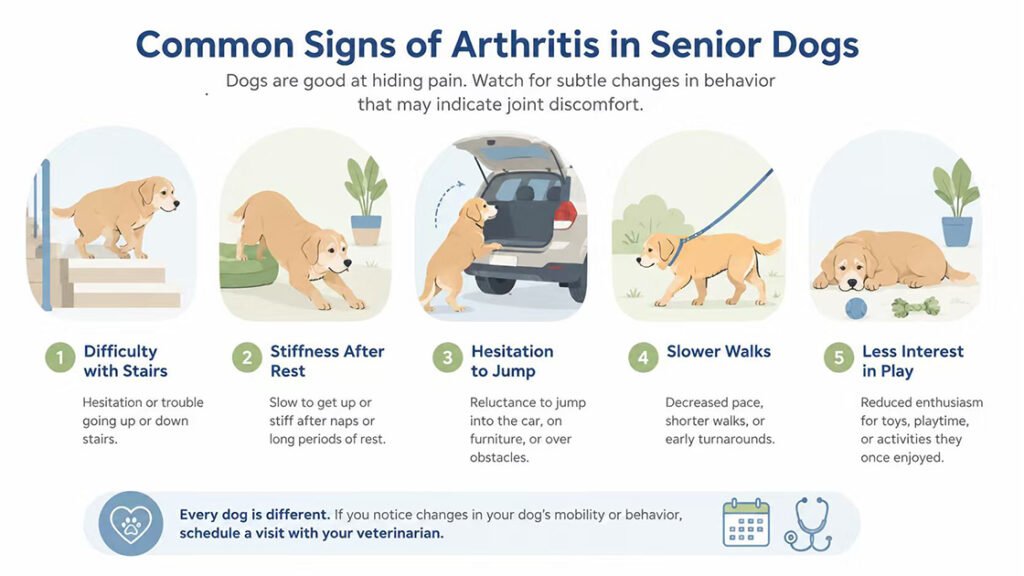
Dogs cannot tell us when their joints hurt, so owners must watch for behavioral changes. Common signs include stiffness after rest that improves with movement, hesitation before jumping onto furniture or into vehicles, slower walks or early turnarounds on daily routes, difficulty getting up from lying down, limping after exercise, avoiding stairs, and reduced interest in play. Dogs with arthritis may also show subtle personality changes—becoming more irritable or withdrawn—because chronic pain wears on their overall well-being.
2. How Shockwave Therapy Works
Shockwave therapy, also known as extracorporeal shockwave therapy (ESWT), uses high-energy acoustic waves to stimulate healing in targeted tissues. This technology has moved from treating kidney stones in humans to addressing chronic musculoskeletal conditions in veterinary patients.
2.1 The Science Behind the Sound Waves
Contrary to its name, shockwave therapy is not a form of electrical shock treatment. It uses sound waves that travel through the skin and into deeper tissues. When appropriately used, ESWT can result in decreased pain, decreased inflammation, and improved healing of both bone and soft tissue. As the waves pass through layers of tissue—skin, subcutaneous tissue, fascia, muscle—they release energy that stimulates changes at the cellular level. The sound waves are high-velocity and high-pressure but do not generate significant heat, distinguishing this therapy from therapeutic ultrasound.
2.2 Cellular Mechanisms of Action
Shockwave therapy works through several biological pathways. The mechanical energy triggers mechanotransduction, where cells convert physical forces into biochemical signals. This process promotes the release of anti-inflammatory cytokines and growth factors into the treated tissues. Additionally, shockwaves stimulate angiogenesis—the formation of new blood vessels—which improves local circulation and brings oxygen and nutrients to damaged areas. This therapy may also reduce the degradation of cartilage and encourage the rebuilding of subchondral bone within joints. Some studies suggest that ESWT decreases inflammation and regenerates tissue with improved quality of healing.
2.3 Pain Relief Without Medications
One of the valuable aspects of shockwave therapy is its ability to influence pain signaling directly. The mechanical effects of the sound waves can interfere with pain signal transmission and promote the release of endorphins, the body‘s natural pain-relieving compounds. This provides a non-pharmaceutical option for managing chronic discomfort, which matters for older dogs that may not tolerate long-term medication use. The therapy also reduces the release of inflammatory mediators, helping address the underlying inflammation that contributes to ongoing joint discomfort.
3. What the Evidence Says
Clinical research on shockwave therapy in veterinary medicine continues to grow, with studies examining its effects on various musculoskeletal conditions, including osteoarthritis.
3.1 Evidence from Clinical Studies
A pilot study investigating the use of ESWT in dogs with lumbosacral pain found significant improvement based on owner questionnaire assessments. The average pain scores declined over the study period, with lower scores at follow-up evaluations compared to baseline. A 2025 blinded, randomized, sham-controlled clinical trial following TPLO surgery demonstrated that dogs receiving ESWT treatments bore significantly more weight at a trot at four weeks post-operatively compared to dogs in the sham treatment group. Importantly, no adverse events associated with ESWT use were observed or reported in this study. These findings suggest that shockwave therapy may support functional recovery in dogs with orthopedic conditions.
3.2 Effects on Cartilage and Bone Health
In vitro and laboratory animal studies have demonstrated potential benefits to articular cartilage from ESWT. Research suggests that shockwave therapy may reduce the degradation of cartilage and encourage the rebuilding of subchondral bone within joints. Additional evidence indicates that ESWT can be useful for treating tendon and ligament injuries, osteoarthritis, and nonunion fractures. While some evidence remains inconsistent, the overall body of research supports shockwave therapy as an accessible and useful modality for managing chronic musculoskeletal conditions in dogs.
3.3 A Supportive Tool in Multimodal Care
Shockwave therapy rarely works as a standalone solution. It performs best when integrated into a broader management plan that addresses the many factors contributing to osteoarthritis. The therapy can be used alongside other treatments, and it works synergistically with approaches such as platelet-rich plasma and stem cell therapies, leading to an improved tissue healing response. For dogs that cannot tolerate surgery or heavy sedation, shockwave therapy offers a non-invasive option that supports comfort and mobility.
4. Integrating Shockwave Therapy into a Comprehensive Plan
Managing canine osteoarthritis requires more than any single treatment. A thoughtful combination of supportive therapies, lifestyle adjustments, and professional guidance tends to produce the best outcomes for aging dogs.
4.1 What to Expect During Treatment
A typical shockwave therapy session lasts between five and fifteen minutes, depending on the size of the area being treated and the specific protocol. The practitioner applies coupling gel to the skin over the affected joint and then uses a handheld device to deliver the sound waves. Some dogs remain completely relaxed during treatment, especially with modern devices that run quietly. Newer piezoelectric devices are lightweight and quiet, and treatment can often be completed without sedation. Most dogs tolerate the therapy well, and there is no recovery time afterward—only the recovery from the injury or condition itself.
4.2 Frequency and Duration of Treatment
Shockwave therapy is generally given as a series of treatments rather than a single session. A typical course involves three sessions spaced several weeks apart. Positive results may not be seen immediately; the biological effects accumulate over time, and improvement often becomes noticeable after several weeks. For chronic conditions like osteoarthritis, maintenance sessions may be recommended periodically to sustain the benefits. The number and frequency of treatments vary depending on the device used, the condition being treated, and the individual dog‘s response.
4.3 Safety and Considerations
When used appropriately, shockwave therapy is considered safe for dogs. Adverse events are rare and generally limited to mild bruising or temporary tingling at the treatment site. However, ESWT should not be used in certain situations, including on dogs with immune-mediated joint disease, infected joints, discospondylitis, or growing animals. Additionally, the use of anti-inflammatory medications and cryotherapy around shock wave treatment times should generally be avoided, as these can interfere with the therapy‘s mechanisms of action. Because shockwave therapy has potent analgesic effects, rest is recommended after treatment to prevent any further damage to the tissues.
5. Practical Advice for Dog Owners
Supporting a senior dog with osteoarthritis involves daily attention, consistent habits, and good communication with your veterinarian.
5.1 Maintaining Healthy Body Weight
Excess weight places additional stress on vulnerable joints with every step a dog takes. Studies show significantly higher prevalence of OA in heavier dogs when grouped for weight. Weight management is one of the most effective interventions for dogs with osteoarthritis. Even modest weight reduction can noticeably improve comfort and mobility. Working with your veterinarian to develop a safe weight management plan, including controlled portions and appropriate exercise, provides a strong foundation for joint health.
5.2 Appropriate Exercise and Activity
While it may seem counterintuitive, keeping an arthritic dog moving is essential—as long as the activity is appropriate for their condition. Gentle, low-impact exercises such as leash walking on soft surfaces, swimming, and controlled trotting help maintain muscle strength and joint mobility without causing excessive stress. Avoid high-impact activities like jumping, hard running, or rough play with other dogs. Consistency matters more than intensity; regular short walks generally serve arthritic dogs better than occasional long outings.
5.3 Working with Your Veterinarian
A veterinarian familiar with your dog‘s medical history can help design an individualized management plan. This plan may include weight management, appropriate exercise, joint supplements, and supportive therapies such as shockwave therapy. Regular check-ups allow your veterinarian to assess your dog‘s progress and adjust the plan as needed. Open communication about changes you observe at home helps your veterinarian make informed decisions about your dog‘s care.
5.4 Creating a Joint-Friendly Home Environment
Small adjustments around the home can make daily life easier for a dog with osteoarthritis. Ramps for getting into vehicles or onto beds, orthopedic beds that cushion achy joints, nonslip flooring to prevent falls, and elevated food and water bowls that reduce neck strain all contribute to a more comfortable environment. Keeping your dog warm with a cozy blanket, especially in colder weather, may also help ease morning stiffness.
Часто задаваемые вопросы
Q1: How can I tell if my senior dog has arthritis?
Watch for stiffness after rest, slower walks, hesitation before jumping or using stairs, limping after exercise, and reduced interest in play. A veterinarian can confirm the diagnosis.
Q2: Does shockwave therapy hurt my dog?
Most dogs tolerate shockwave therapy well. Modern, quieter devices often allow treatment without sedation, and many dogs remain relaxed during the session.
Q3: How many sessions will my dog need?
A typical course involves three sessions spaced several weeks apart. Maintenance sessions may be recommended depending on your dog‘s response and condition.
Q4: Can shockwave therapy replace my dog‘s pain medication?
Not necessarily. Shockwave therapy works best as part of a comprehensive plan. Always discuss medication changes with your veterinarian.
Q5: Will my dog need sedation for treatment?
Many dogs do not require sedation with newer piezoelectric devices, which are quieter and more comfortable. Your veterinarian will determine what your dog needs.
Q6: How soon will I see improvement in my dog?
Improvement may not be immediate. Positive results often become noticeable after several weeks as the biological effects accumulate over time.
Заключение
Canine osteoarthritis affects a large portion of aging dogs, with up to 80 percent of dogs older than eight years showing radiographic evidence and clinical signs of arthritis. For owners watching their senior companions struggle with daily activities, finding effective, non-invasive ways to support joint health becomes a priority. Shockwave therapy offers a drug-free approach that may help manage the discomfort associated with osteoarthritis through mechanotransduction, improved circulation, and modulation of inflammation. It does not reverse existing joint changes, but it may help dogs feel more comfortable during daily activities, supporting the mobility they need to maintain muscle strength and quality of life. When combined with weight management, appropriate exercise, and guidance from a veterinarian, shockwave therapy can serve as a valuable part of a comprehensive care plan for senior dogs living with osteoarthritis.
Ссылки
Roitner, M., et al. (2024). Prevalence of osteoarthritis in the shoulder, elbow, hip and stifle joints of dogs older than 8 years. The Veterinary Journal.
https://www.ncbi.nlm.nih.gov/m/pubmed.16418439/38761958
Veterinary Practice News. (2024). Looking at options to manage OA pain.
https://www.veterinarypracticenews.com/oa-management-options/
VCA Animal Hospitals. Extracorporeal Shockwave Therapy.
https://vcahospitals.com/know-your-pet/extracorporeal-shockwave-therapy
Frontiers in Veterinary Science. (2025). Blinded, randomized, sham-controlled clinical trial assessing the efficacy of a novel piezoelectric extracorporeal shockwave device following TPLO.
https://www.frontiersin.org/journals/veterinary-science/articles/10.3389/fvets.2025.1600116/full
Thieme. (2025). The Effect of Extracorporeal Shockwave Therapy on Lumbosacral Pain in 10 Dogs: A Pilot Study.
https://www.thieme-connect.com/products/ejournals/abstract/10.1055/s-0045-1810297
Veterinary Rehabilitation Services of Virginia. Extracorporeal Shockwave Therapy.
https://www.rehab.vet/blog/extracorporeal-shockwave-therapy
Astiland. (2024). Shockwave Therapy in Veterinary Medicine: Applications, Mechanisms, and Considerations.
PulseVet. Senior Dog Arthritis: 6 Non-Invasive Pain Relief Solutions for Veterinarians.
https://pulsevet.zomedica.com/senior-dog-arthritis-non-invasive-pain-relief-solutions/