

Введение
A dull, deep ache worsens with every minute spent in a chair. The instinct to shift weight constantly, to lean to one side, or to avoid sitting altogether becomes overwhelming. For those with chronic tailbone pain, known medically as coccydynia, the simple act of sitting turns into a daily source of discomfort that affects work, travel, and social life. Many individuals try cushions, pain relievers, and posture adjustments, yet the pain persists for weeks or months. For those who have not found lasting relief through these conventional measures, extracorporeal shockwave therapy offers a non-invasive, drug-free option that may help address the underlying tissue dysfunction and restore comfort during sitting.
1. Understanding Coccydynia and Its Impact
Coccydynia refers to pain localized at the coccyx, the small triangular bone at the very base of the spine. This structure consists of three to five fused vertebrae and serves as an attachment point for muscles, tendons, and ligaments that support the pelvic floor. When the coccyx or the surrounding soft tissues become irritated, sitting and even transitions between sitting and standing can provoke significant pain.
1.1 Common Causes and Risk Factors
Several factors can lead to coccydynia. A fall onto the tailbone or a direct blow to the lower back represents the most common cause of acute coccydynia. Prolonged sitting on hard surfaces, especially with poor posture, places sustained pressure on the coccyx and can gradually irritate the surrounding tissues. Childbirth, particularly vaginal delivery, can strain or injure the coccyx and its ligamentous attachments. Degenerative changes in the joints of the coccyx can also contribute to chronic pain, as can repetitive activities such as cycling or rowing that place prolonged pressure on the area. In many cases, the exact cause remains unclear, but the functional impact is consistent and significant.
1.2 How the Pain Presents
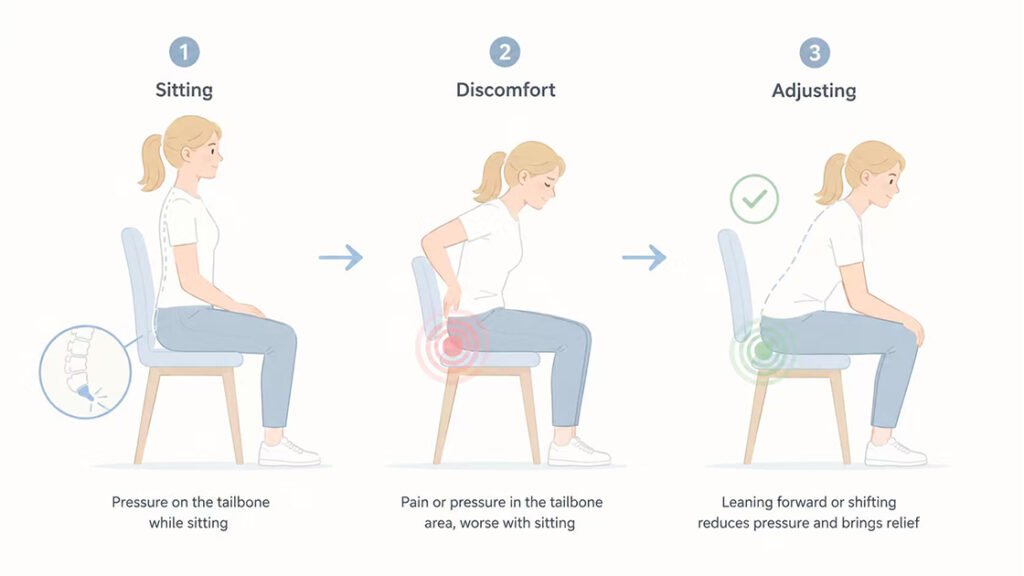
The hallmark symptom of coccydynia is pain in the tailbone area that worsens with sitting, especially on hard surfaces. Many people describe the pain as a dull, deep ache, while others experience a sharp or stabbing sensation when transitioning from sitting to standing. Leaning back while sitting often increases pressure on the coccyx and intensifies the discomfort. Some individuals find relief by leaning forward, sitting on one buttock, or using a cushion with a cutout that reduces direct pressure on the tailbone. Over time, the persistent discomfort can lead to guarded sitting postures, which may strain other parts of the lower back and pelvis. The pain can interfere with work productivity, limit travel, and reduce participation in social or recreational activities.
2. The Challenge of Managing Chronic Coccydynia
Conservative treatments for coccydynia typically begin with pressure-relieving cushions, heat or cold therapy, and over-the-counter pain relievers. For some, these measures provide sufficient relief. However, many individuals continue to experience symptoms despite consistent use of these approaches.
2.1 Why Standard Measures Often Fall Short
Pressure-relieving cushions can reduce the mechanical load on the coccyx, but they do not address the underlying tissue irritation or promote healing. Anti-inflammatory medications may temporarily reduce pain, but long-term use carries risks and does not correct the underlying dysfunction. Rest and posture modification, while helpful, rarely resolve chronic coccydynia on their own. For those with persistent symptoms, the next step has traditionally been more invasive interventions, including corticosteroid injections into the coccygeal joint or the ganglion impar nerve block. While these procedures can provide significant relief for some, they carry risks and may not offer lasting improvement. Surgery, or coccygectomy, is reserved for severe, refractory cases and involves removing part or all of the coccyx. The invasive nature of these options leaves many individuals searching for alternative approaches.
2.2 The Emerging Role of Shockwave Therapy
In recent years, extracorporeal shockwave therapy has emerged as a promising non-invasive option for managing chronic coccydynia. Conservative treatments, including physiotherapy and shockwave therapy, have shown promise in pain management for this condition. Unlike injections or surgery, shockwave therapy works through mechanical energy delivered from outside the body, supporting the body’s natural healing processes without introducing any foreign substance or requiring incisions.
3. How Shockwave Therapy Works for Coccydynia
Extracorporeal shockwave therapy delivers high-energy acoustic pulses through the skin to the deeper tissues surrounding the coccyx. This mechanical energy interacts with cells and tissues, triggering biological responses that support healing and pain relief.
3.1 Mechanical Stimulation and Tissue Response
When shockwaves reach the target area around the coccyx, the mechanical pressure stretches and compresses cells in ways that activate natural repair pathways. The acoustic pulses stimulate the release of growth factors and signaling molecules that play essential roles in tissue maintenance and repair. This activation supports the resolution of chronic inflammation and encourages the remodeling of any fibrotic or scarred tissue that may have developed around the coccyx. The mechanical input also helps break down small adhesions, allowing for better movement and less restriction in the surrounding muscles and ligaments.
3.2 Improving Blood Flow and Supporting Healing
Chronic pain conditions often involve reduced blood flow to the affected tissues, which limits the delivery of oxygen and nutrients needed for healing. Shockwave therapy stimulates the formation of new capillary networks around the treated area, gradually improving local circulation. Better blood flow brings healing factors to the irritated tissues while carrying away metabolic waste products that accumulate and contribute to discomfort. This improved perfusion creates an environment more favorable for tissue repair and may help address the underlying causes of chronic coccydynia.
3.3 Modulating Pain Signals
Shockwave therapy also influences how pain signals travel along nerve pathways. The acoustic pulses can alter the transmission of pain impulses, providing a period of reduced sensitivity in the treated area. At the same time, the mechanical energy helps relax the muscles surrounding the coccyx, particularly the levator ani, coccygeus, and piriformis muscles, which can become tense and contribute to pain. When these muscles relax, they place less pressure on the coccyx, further supporting overall comfort.
4. What Patients Can Expect from Treatment
For individuals considering shockwave therapy for chronic coccydynia, understanding the typical course of treatment helps set realistic expectations.
4.1 The Treatment Session
A typical shockwave session for coccydynia lasts between five and fifteen minutes, depending on the specific protocol used. The patient lies comfortably, often on the side or stomach, with the area over the coccyx exposed. The practitioner applies a coupling gel to the skin and positions the applicator over the painful area. The device then delivers acoustic pulses through the skin to the underlying tissues. Most individuals describe the sensation as a series of firm taps or a deep percussion, uncomfortable for some but generally tolerable for the brief duration. The session requires no anesthesia, and patients can return to their normal activities immediately afterward.
4.2 Number of Sessions and Timeline
A course of treatment often involves several sessions spaced about one week apart. Some individuals notice improvement after two or three sessions, while others benefit from a longer series. The full effect of the therapy typically becomes apparent over several weeks, as tissue remodeling and healing take time.
4.3 What Patients May Notice After Treatment
In the days following a session, some individuals may experience mild soreness or temporary discomfort in the treated area, a normal response similar to the feeling after a deep massage. This sensation usually subsides within a day or two. Many patients report that the most noticeable improvement occurs gradually, with each session building on the previous one. The effects are not immediate, but consistent use of the therapy can lead to sustained improvement.
5. Integrating Shockwave Therapy with Self-Care
Shockwave therapy works most effectively when patients also address the factors that contributed to their coccydynia in the first place. The treatment supports tissue healing, but maintaining that improvement requires attention to sitting habits, posture, and daily routines.
5.1 Using Supportive Cushions
Sitting on a cushion with a cutout or wedge shape reduces direct pressure on the coccyx. These cushions allow the tailbone to float in the open space, relieving pressure during prolonged sitting. While not a cure, they complement the tissue-level effects of shockwave therapy by reducing mechanical stress during the healing period.
5.2 Adjusting Sitting Posture
Leaning forward slightly while sitting shifts weight from the coccyx to the thighs, reducing pressure on the tailbone. Sitting with the back straight and the feet flat on the floor helps maintain a neutral pelvic position. Taking frequent breaks to stand and walk, even for a minute or two every thirty minutes, interrupts prolonged pressure and allows tissues to recover.
5.3 Gentle Movement and Stretching
Gentle stretching of the pelvic floor and hip muscles can help relieve tension that contributes to coccydynia. Exercises that encourage a neutral spine and dynamic sitting strategies may reduce guarded postures that develop in response to pain. Patients should avoid any movement that provokes sharp pain and should progress slowly with any new exercise routine.
FAQ
Q1: Is shockwave therapy painful for coccydynia?
Most patients describe a tapping or deep percussion sensation that is uncomfortable but brief. The session is short, and any discomfort stops when the applicator lifts.
Q2: How many sessions does a patient typically need?
A common approach involves several sessions spaced about one week apart. Some patients notice improvement after two or three sessions, while others benefit from a longer series.
Q3: Can I use shockwave therapy while continuing other treatments?
Yes. Shockwave therapy can be used alongside cushions, gentle stretching, and other conservative measures. It does not interfere with medications or other therapies.
Q4: How soon after treatment will I feel less tailbone pain?
Some patients notice a change within a few sessions. The most noticeable improvement often takes several weeks to appear as the tissue remodels.
Q5: Is shockwave therapy suitable for all types of coccydynia?
Shockwave therapy is typically used for chronic coccydynia that has not responded well to conservative measures. A thorough evaluation helps determine if it is an appropriate option.
Заключение
Chronic tailbone pain can turn the simple act of sitting into a daily struggle. For those who have tried cushions, medications, and posture adjustments without lasting relief, the search for an effective, non-invasive solution can feel endless. Extracorporeal shockwave therapy offers a promising option that works through mechanical stimulation, improved blood flow, and modulation of pain signals. It supports the body’s natural healing processes without the need for injections or surgery. When combined with sensible self-care strategies, including supportive cushions, postural awareness, and gentle movement, shockwave therapy may help patients manage their coccydynia and restore comfort during sitting, allowing them to return to the activities they enjoy.
Ссылки
Management of coccygodynia: talking points from a systematic review of recent clinical trials
https://pmc.ncbi.nlm.nih.gov/articles/PMC11789718
Radial Extracorporeal Shockwave Therapy for the Treatment of Chronic Refractory Coccygodynia
Является ли ударно-волновая терапия решением проблемы постоянной боли в хвостовой кости?
https://www.shockwavemachines.com
Shockwave Therapy: A Modern Solution for Tailbone Pain
https://www.ncbi.nlm.nih.gov/pmc/articles/PMC6835993/
Physiotherapy approaches for coccydynia: evaluating effectiveness and clinical outcomes