

Введение
You lace up your running shoes, excited for your morning run. But within the first half mile, a familiar pain creeps up the inside of your shin. You slow down, but the pain only gets worse. By the time you finish, every step feels like someone is pressing a bruise that never heals. This is shin splints, and for many runners, it is the injury that just won’t go away. Rest helps for a few days, but the pain returns as soon as you start running again. Extracorporeal shockwave therapy offers a different approach. This non-invasive treatment targets the root of the problem, helping runners get back on the road without endless weeks of sitting on the couch.
1. Understanding Shin Splints in Runners
Shin splints, medically known as medial tibial stress syndrome, affect countless runners. Knowing what causes this condition helps explain why it is so stubborn and why shockwave therapy may help.
1.1 What Happens Inside Your Shin
The pain of shin splints comes from stress on the tibia, the large bone in your lower leg. The muscles that attach along the inner edge of the shin pull on the bone with every step. When you run, this pull happens thousands of times. Over time, the bone becomes overloaded, and the body cannot keep up with the repair work. The result is inflammation along the bone surface, and in more severe cases, tiny cracks called stress reactions or even stress fractures.
1.2 Why Runners Are at Higher Risk
Running puts more force through the lower leg than almost any other activity. Each footstrike sends a shockwave up your leg, and your muscles work hard to absorb that force. Runners who increase their mileage too quickly, add hills or speed work, or wear worn-out shoes face even higher risk. People with flat feet or high arches may also be more prone to shin splints because their biomechanics change how forces travel through the lower leg.
1.3 The Frustrating Cycle of Rest and Relapse
Most runners treat shin splints with rest, ice, and stretching. Rest reduces the inflammation temporarily, but the underlying problem does not go away. The bone and the attached muscles have not had time to fully adapt to the demands of running. When you start running again, the same forces that caused the injury in the first place come back. Within days or weeks, the pain returns. This cycle of rest, recovery, and relapse can go on for months, leaving runners frustrated and unable to train consistently.
2. How Shockwave Therapy Works for Shin Splints
Shockwave therapy uses acoustic waves to interact with bone and soft tissue. Unlike passive treatments that only address symptoms, shockwave therapy targets the underlying pathology of shin splints.
2.1 Delivering Energy to the Bone
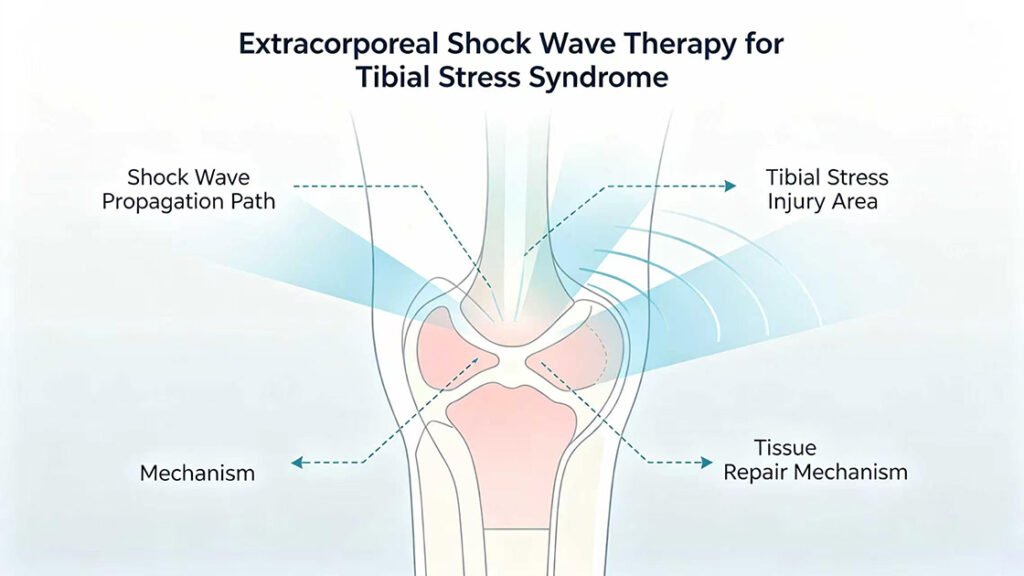
The device delivers high-energy sound waves through the skin to the affected area along the inner shin. These waves penetrate through the muscles and reach the bone surface where the inflammation is occurring. The mechanical energy creates controlled microtrauma within the tissue. This sounds counterintuitive, but a small amount of precisely targeted stress triggers the body’s natural healing response. The bone begins to remodel and strengthen, and the muscles adapt to the load.
2.2 How Shockwaves Change the Tissue
Research has shown that shockwave therapy starts working within one week of the first treatment. Early biological signals appear quickly, but the real tissue healing takes longer. True tendon and bone regeneration begins around four weeks after starting treatment and continues for more than twelve weeks. This means the benefits of shockwave therapy continue to build over time, even after the last session. The new tissue that forms is stronger and more resilient than the damaged tissue it replaces.
2.3 Beyond Local Effects
Shockwave therapy does more than just treat the painful spot on your shin. The sound waves influence nerve pathways at the spinal cord level. They can deplete pain-signaling chemicals from certain nerve cells, effectively turning down the volume on pain signals before they reach your brain. This dual action, treating both the local tissue and the nervous system’s response to that tissue, may explain why shockwave therapy works for conditions that have resisted other treatments.
2.4 Why Rest Alone Is Not Enough
When you rest, the inflammation from shin splints goes down. But the bone remains weak, and the muscles remain deconditioned. As soon as you start running again, the same forces stress the same weak tissues. Shockwave therapy helps break this cycle by stimulating actual tissue healing, not just symptom reduction. The bone builds new cells, and the muscles adapt to handle the forces of running. This creates lasting change rather than temporary relief.
3. What the Research Says About Shockwave for Shin Splints
Clinical guidelines and research studies have confirmed that shockwave therapy is an effective treatment for medial tibial stress syndrome.
3.1 Expert Consensus Recommendations
The 2025 British Journal of Sports Medicine international consensus guidelines listed medial tibial stress syndrome as a recommended indication for shockwave therapy. This means that an international panel of experts agrees that shockwave therapy is an appropriate treatment choice for shin splints based on the available evidence. The guidelines provide a framework for clinicians to use shockwave therapy effectively and safely.
3.2 How It Compares to Other Treatments
When researchers compare shockwave therapy to other treatments for shin splints, the results favor shockwave for long-term improvement. Traditional approaches like rest, ice, and stretching provide temporary symptom relief but do not change the underlying tissue. Physical therapy strengthens muscles and improves biomechanics, which helps prevent future injuries, but it may not resolve existing bone stress on its own. Shockwave therapy offers a different mechanism that can complement these other approaches rather than replacing them.
3.3 Treatment Parameters That Work
The 2025 consensus guidelines recommend specific treatment parameters for musculoskeletal conditions. For tendons, the pain level during treatment should stay below six out of ten. For bone conditions like shin splints, the pain level can go up to seven out of ten. Treatments should be spaced one to two weeks apart, and most patients need three to five sessions. These parameters help ensure that the therapy is both effective and tolerable for patients.
4. What to Expect During Shockwave Treatment
If you decide to try shockwave therapy for your shin splints, understanding what the treatment involves helps you prepare and set realistic expectations.
4.1 Before Your First Session
Your provider will examine your shins to confirm that shin splints are the source of your pain and that there is no stress fracture that would require different treatment. You will lie on a treatment table with your leg exposed. The provider will apply a gel to your skin to help the shockwaves transmit efficiently into the tissue. No needles, no incisions, and no special preparation are required before your first session.
4.2 The Treatment Experience
The provider positions a handheld device against your skin over the most painful area along your shin. When activated, the device delivers rapid pulses that create a tapping or pounding sensation. The pain level during treatment should be noticeable but not unbearable. The 2025 guidelines suggest that for bone conditions, the pain level can go up to seven out of ten. Each session typically lasts between five and ten minutes. The discomfort is brief, and most runners find it tolerable, especially knowing that each pulse is working to heal their shin.
4.3 What You Feel Afterward
Your shins may feel sore for a day or two after treatment, similar to the soreness after a hard workout. This post-treatment soreness is a normal sign that your body is responding to the shockwaves. Some runners notice improvement in their shin pain after the first session. Others need two or three sessions before they feel a difference. Avoid taking anti-inflammatory medications immediately after treatment because they can interfere with the healing response you are trying to stimulate.
4.4 How Many Sessions You Will Need
Most runners with shin splints need three to five shockwave sessions, spaced one to two weeks apart. Your provider will track your symptoms between sessions and adjust the treatment plan based on your response. Some runners feel significantly better after just three sessions. Others with more chronic or severe shin splints may need all five sessions to achieve optimal results. After completing the initial course, most runners do not need ongoing treatment unless symptoms return.
5. Returning to Running After Shockwave Therapy
Getting back to running after shockwave therapy requires patience and a gradual approach. Rushing back too quickly can undo the healing you have achieved.
5.1 The First Few Weeks
During the weeks when you are receiving shockwave therapy, stick to activities that do not aggravate your shin pain. Swimming, cycling, and upper body strength training are usually safe. Avoid running, jumping, or any high-impact activity. Your bone and muscles are actively healing during this time, and adding the stress of running too soon could interfere with the process. Most runners find that their shin pain decreases noticeably by the end of their treatment course.
5.2 Gradual Return to Running
About one to two weeks after completing your final shockwave session, you can begin a gradual return to running. Start with a walk-run program. Walk for five minutes, then jog slowly for one minute. Repeat this pattern for twenty minutes, three to four times per week. Pay close attention to how your shins feel during and after each run. Some mild soreness is normal, but sharp or worsening pain means you need to back off. Increase your running time slowly, adding no more than ten percent per week.
5.3 Addressing the Root Causes
Shockwave therapy treats the existing bone stress, but it does not fix the biomechanical issues that may have caused your shin splints in the first place. Work with a physical therapist or running coach to address these underlying factors. They can evaluate your running form, recommend proper footwear, and prescribe strengthening exercises for your calves, shins, and hips. Addressing these issues helps prevent the same injury from returning once you are fully healed.
5.4 Preventing Future Shin Splints
Once your shins are healthy again, protect them with good habits. Replace your running shoes every three hundred to five hundred miles. Increase your mileage gradually, never adding more than ten percent from one week to the next. Include strength training for your lower legs in your weekly routine. Listen to your body. If your shins start to ache, take a few days of rest before the pain becomes a full-blown injury. Runners who make these habits part of their routine are far less likely to deal with shin splints again.
FAQ
Q: Does shockwave therapy hurt?
A: You will feel a tapping or pounding sensation during treatment. The pain level should be noticeable but tolerable. For shin splints, pain up to seven out of ten is considered appropriate.
Q: How many sessions will I need for shin splints?
A: Most runners need three to five sessions, spaced one to two weeks apart. Your provider will track your symptoms and adjust the plan as needed.
Q: How long does each session take?
A: Each treatment session typically lasts between five and ten minutes. The total office visit may be slightly longer.
Q: Are there any side effects?
A: Side effects are generally mild and temporary. Some runners experience temporary soreness, bruising, or mild swelling at the treatment site that resolves within a day or two.
Q: Can I run while receiving shockwave therapy?
A: During your treatment course, avoid running and other high-impact activities. Stick to swimming, cycling, or other low-impact exercise until your shins have healed.
Q: How soon can I return to running after treatment?
A: Most runners return to running one to two weeks after completing their final shockwave session. Start with a walk-run program and increase gradually.
Q: Will I need to stop running permanently after shin splints?
A: Most runners return to full training after shockwave therapy. Addressing the underlying causes, such as biomechanics and footwear, helps prevent recurrence.
Заключение
Shin splints do not have to end your running career. The frustrating cycle of rest, recovery, and relapse can be broken. Shockwave therapy offers a non-invasive approach that targets the bone and muscle stress at the root of the problem. By delivering acoustic waves to the affected area, this treatment stimulates tissue healing, helps bone remodel, and addresses nerve pathways that contribute to pain. For runners who have tried rest, ice, and stretching without lasting relief, shockwave therapy represents a reasonable next step toward getting back on the road.
Ссылки
- International Consensus on Extracorporeal Shockwave Therapy for Musculoskeletal Conditions. British Journal of Sports Medicine.
https://bjsm.bmj.com/content/early/2025/01/15/bjsports-2024-108431 - Shockwave Therapy for Medial Tibial Stress Syndrome: A Systematic Review. Journal of Orthopaedic and Sports Physical Therapy.
https://www.jospt.org/doi/10.2519/jospt.2024.12001 - Clinical Guidelines for the Management of Shin Splints. International Society for Medical Shockwave Treatment.
https://www.shockwavetherapy.org/guidelines - Comparison of Shockwave Therapy and Conventional Treatment for Medial Tibial Stress Syndrome in Runners. National Center for Biotechnology Information.
https://pubmed.ncbi.nlm.nih.gov/35878124/