

Введение
Wildlife and zoo animals require specialized health management because their biological structures, behaviors, and physical demands differ greatly from domestic animals. Large mammals, exotic species, and aging animals may experience challenges related to mobility, musculoskeletal condition, and overall physical function throughout their lives. As veterinary rehabilitation continues to develop, Shockwave Therapy has gained attention as a supportive technology that uses controlled acoustic waves to interact with biological tissues. By incorporating Extracorporeal Shockwave Therapy (ESWT) into comprehensive veterinary wellness programs, professionals can explore additional options for supporting tissue condition, movement quality, and long-term animal care strategies.
1. Understanding the Challenges of Wildlife and Zoo Animal Care
Wildlife medicine involves unique considerations because every species has different anatomical structures, movement patterns, and environmental requirements. Effective wellness management requires a deeper understanding of how animals use their bodies in daily activities.
1.1 The Physical Demands of Zoo and Wildlife Animals
Zoo animals and rescued wildlife often maintain complex movement behaviors that are essential for their physical and mental well-being. Large animals such as elephants, big cats, primates, and other species depend on coordinated muscle function, joint mobility, and stable movement patterns.
Unlike domestic pets, many wildlife species have unique body structures and natural behaviors that influence their physical condition. Climbing, walking long distances, running, digging, or maintaining balance all create different biomechanical demands.
For veterinary professionals, supporting normal movement and maintaining physical wellness are important parts of modern animal care. Rehabilitation strategies continue to expand as specialists explore technologies that complement traditional veterinary approaches.
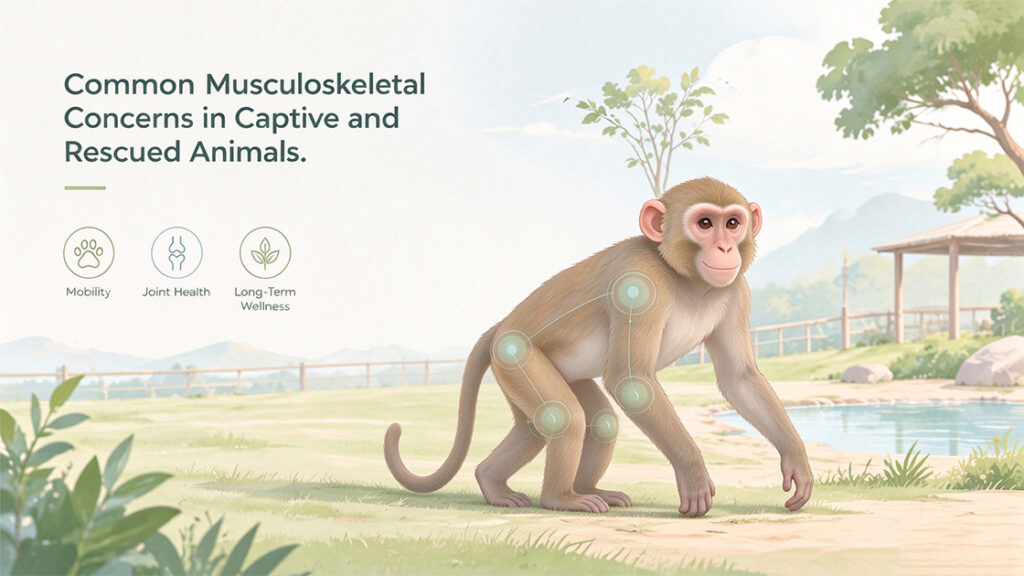
1.2 Common Musculoskeletal Concerns in Captive and Rescued Animals
Animals under professional care may experience physical challenges related to aging, previous injuries, environmental adaptation, or changes in activity levels. Muscles, tendons, ligaments, and joints all contribute to normal movement, making musculoskeletal wellness an important area of veterinary management.
Large animals may require additional attention because their body weight and movement patterns place continuous demands on their supporting structures.
Shockwave Therapy has become one of the technologies discussed in veterinary rehabilitation because acoustic wave energy may support tissue responses and contribute to broader wellness programs focused on mobility and comfort.
1.3 Why Preventive Rehabilitation Matters in Animal Care
Modern zoological medicine increasingly focuses on preventive health management rather than only responding to visible problems. Regular evaluation of movement patterns, physical condition, and behavioral changes helps professionals create more complete care strategies.
A preventive approach considers species characteristics, age, environment, nutrition, and activity patterns. Within this framework, supportive technologies such as Shockwave Therapy can become part of a larger rehabilitation plan.
The goal is not to replace veterinary diagnosis or established care methods, but to provide additional tools for maintaining animal wellness.
2. The Science Behind Shockwave Therapy in Veterinary Rehabilitation
Shockwave Therapy is based on the delivery of acoustic energy into targeted areas of biological tissue. Understanding the technology helps explain why it has attracted interest within veterinary rehabilitation fields.
2.1 How Extracorporeal Shockwave Therapy Works
Extracorporeal Shockwave Therapy (ESWT) uses high-energy acoustic waves that travel through tissue and create mechanical stimulation. These pressure waves may influence cellular responses associated with normal tissue activity.
The interaction between acoustic energy and biological structures has been studied in areas related to musculoskeletal support, tissue response, and rehabilitation management.
In veterinary applications, Shockwave Therapy is generally considered a complementary approach that works alongside professional evaluation and comprehensive animal care.
2.2 The Importance of Tissue Support in Large and Exotic Animals
Different animal species have different anatomical characteristics. An elephant, tiger, or primate has unique muscle distribution, movement patterns, and physical requirements compared with domestic animals.
Because of these differences, veterinary professionals must consider species-specific factors when developing rehabilitation strategies.
Shockwave technology provides a targeted method that allows professionals to focus on specific areas while considering the individual needs of each animal.
2.3 Acoustic Wave Technology and Animal Wellness Management
Acoustic wave technology continues to attract attention because it provides a non-surgical approach for supporting physical rehabilitation programs.
In animal wellness management, Shockwave Therapy may be used as part of a broader strategy that includes exercise planning, environmental enrichment, veterinary monitoring, and other supportive techniques.
This integrated approach allows professionals to focus on maintaining movement quality and supporting long-term animal health.
3. The Role of Shockwave Therapy in Wildlife Rehabilitation Programs
Wildlife rehabilitation requires careful planning because animals often need support while maintaining natural behaviors. Modern veterinary teams increasingly combine different approaches to improve overall wellness management.
3.1 Supporting Mobility in Large Animal Rehabilitation
Mobility plays an important role in the quality of life of many wildlife species. Animals depend on movement for feeding, social interaction, exploration, and normal behaviors.
Changes in mobility may influence daily activity patterns and overall physical condition. Therefore, rehabilitation programs often focus on supporting comfortable movement and maintaining functional ability.
Shockwave Therapy may provide additional support within these programs by applying acoustic energy to areas involved in musculoskeletal function.
3.2 Supporting Physical Condition in Aging Animals
Aging affects animals across different species. Older animals may experience changes in muscle condition, flexibility, and movement ability.
Veterinary rehabilitation programs often emphasize maintaining activity levels and supporting physical function throughout the aging process.
Shockwave Therapy can be considered as part of a multi-method wellness strategy designed around the individual animal’s condition and rehabilitation goals.
3.3 Integrating Shockwave Therapy Into Comprehensive Veterinary Care
Successful animal rehabilitation usually involves multiple elements rather than a single technology. Veterinary assessment, nutrition management, environmental adjustments, and physical rehabilitation all contribute to overall care.
Shockwave Therapy works best when integrated into a structured wellness program developed by qualified professionals.
By combining different approaches, veterinary teams can create more balanced strategies for supporting animal health and mobility.
4. Potential Applications of Shockwave Therapy Across Animal Species
Different species present different rehabilitation challenges. Understanding how Shockwave Therapy fits into various veterinary environments helps highlight its broader role in animal wellness.
4.1 Supporting Rehabilitation Programs for Large Mammals
Large mammals often have significant physical demands because of their body size and movement patterns. Elephants, rhinoceroses, and other large species require strong musculoskeletal systems to maintain normal activity.
Veterinary teams may consider supportive technologies that help manage physical condition and movement quality.
Shockwave Therapy may serve as one option within large animal rehabilitation programs that focus on maintaining mobility and tissue wellness.
4.2 Supporting Exotic Animal Health Management
Exotic animals often require specialized veterinary approaches because of differences in anatomy, behavior, and biological needs.
Rehabilitation professionals must carefully consider stress levels, handling methods, and species-specific requirements when planning care strategies.
Shockwave Therapy offers another supportive technology that may complement existing approaches used in exotic animal wellness management.
4.3 Supporting Conservation and Rescue Animal Care
Rescue and conservation programs often care for animals with complex histories, including environmental stress, physical challenges, or long-term rehabilitation needs.
Maintaining physical condition is an important part of preparing animals for continued care or future management programs.
Within these settings, Shockwave Therapy may contribute to broader rehabilitation plans focused on movement support and tissue wellness.
5. The Future of Shockwave Therapy in Veterinary Medicine
Veterinary rehabilitation continues to expand as professionals explore innovative technologies that support animal health. The future of Shockwave Therapy will likely focus on more personalized applications and improved understanding of species-specific needs.
5.1 Advances in Animal Rehabilitation Technology
Technology continues to influence veterinary medicine by providing additional tools for managing animal wellness.
Shockwave Therapy represents one example of how acoustic energy-based approaches are becoming part of modern rehabilitation discussions.
As veterinary science develops, professionals may continue exploring how these technologies can support different species and rehabilitation environments.
5.2 Personalized Rehabilitation Strategies for Different Species
Every animal has unique physical requirements based on species, age, environment, and lifestyle. A rehabilitation approach suitable for one animal may not be appropriate for another.
Personalized care planning allows veterinary professionals to consider individual differences and create more suitable wellness strategies.
Shockwave Therapy can fit into these customized programs as a supportive option alongside traditional veterinary care.
FAQ
What is Shockwave Therapy for animals?
Shockwave Therapy is a rehabilitation technology that uses acoustic waves to support tissue responses and animal wellness management.
Can Shockwave Therapy be used for zoo animals?
It may be considered as part of veterinary rehabilitation programs for selected animals under professional guidance.
Which animals may benefit from Shockwave Therapy?
Different species, including large mammals and companion animals, may be considered depending on their physical condition and rehabilitation goals.
Does Shockwave Therapy replace veterinary care?
No. It is a supportive rehabilitation technology and does not replace veterinary evaluation or professional care.
Why is mobility important in wildlife rehabilitation?
Mobility supports natural behaviors, daily activity, and overall quality of life for many animal species.
Заключение
Wildlife and zoo animal care continues to evolve as veterinary professionals explore new approaches for supporting long-term health and mobility. Shockwave Therapy provides an additional rehabilitation option through controlled acoustic wave technology, allowing professionals to consider new strategies for tissue support and movement management. When combined with veterinary assessment, environmental care, nutrition planning, and other rehabilitation methods, Shockwave Therapy can become part of a comprehensive approach to supporting the wellness of diverse animal species.
Ссылки
Extracorporeal Shockwave Therapy in Veterinary Rehabilitation
https://pubmed.ncbi.nlm.nih.gov/36964030
Систематический обзор комплементарной и альтернативной ветеринарной медицины в спорте и у животных-компаньонов: Экстракорпоральная ударно-волновая терапия
https://www.mdpi.com/2076-2615/12/22/3124
Shockwave Therapy for Musculoskeletal Disease in Zoo Animals
Zoological Applications of Laser Therapy in Veterinary Medicine
https://onlinelibrary.wiley.com/doi/10.1002/9781394205356.ch28
Physical Rehabilitation in Zoological Medicine
https://stories.sdzwa.org/story-hub/zoonooz/physical-medicine