

Introduction
Athletes with joint hypermobility often have unique physical demands because their joints naturally move through a greater range of motion than average. This characteristic can be beneficial in activities that require flexibility, coordination, and advanced movement control, such as gymnastics, dance, and certain performance sports. However, maintaining soft tissue comfort and joint stability becomes an important part of many athletes’ training and recovery plans. Shockwave Therapy, also known as Extracorporeal Shock Wave Therapy (ESWT), uses mechanical acoustic waves to target specific areas of the body and has become an increasingly recognized technology in sports rehabilitation settings. By supporting soft tissue recovery programs and mobility management, Shockwave Therapy provides another option for professionals working with athletes who require specialized recovery strategies.
1. Understanding Shockwave Therapy for Hypermobile Athletes
Athletes with hypermobility often require careful attention to movement patterns, muscle control, and soft tissue condition. Understanding how Shockwave Therapy fits into sports rehabilitation helps explain why clinicians are exploring this technology in specialized athletic environments.
1.1 Why Joint Hypermobility Creates Unique Recovery Challenges
Joint hypermobility refers to joints that can move beyond the typical range of motion. Many hypermobile athletes develop advanced flexibility and movement abilities, which can be valuable in sports that require extensive mobility.
At the same time, increased joint range of motion may require greater muscular control and soft tissue support. Athletes with hypermobility often focus on maintaining balanced movement patterns because repetitive training can place additional stress on muscles, tendons, and connective tissues.
Sports that commonly involve high flexibility demands include:
- Gymnastics
- Ballet and dance
- Figure skating
- Acrobatics
- Performance-based athletics
For these athletes, recovery programs often focus on maintaining comfortable movement, supporting stability, and managing the physical demands created by repeated training.
1.2 How Shockwave Therapy Supports Soft Tissue Management
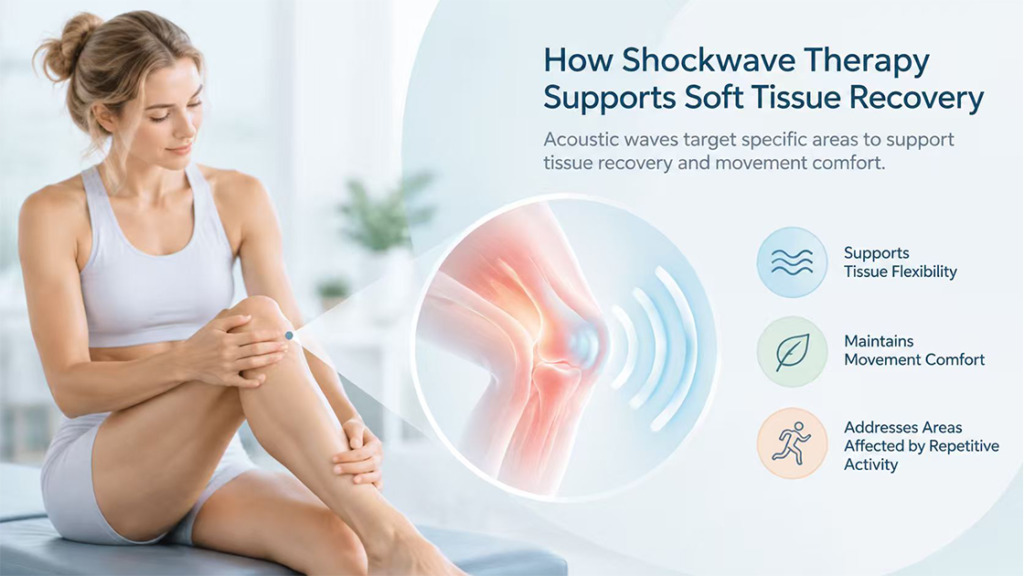
Shockwave Therapy uses acoustic wave technology to deliver controlled mechanical energy to targeted areas. In professional rehabilitation environments, practitioners commonly use this technology as part of programs focused on tendons, muscles, and soft tissue areas.
For hypermobile athletes, soft tissue management is an important consideration because muscles and connective tissues play a key role in supporting joint movement.
Shockwave Therapy may be incorporated into recovery plans that focus on:
- Supporting tissue flexibility
- Maintaining movement comfort
- Addressing areas affected by repetitive athletic activity
The technology works alongside other rehabilitation methods to provide a comprehensive approach to athletic recovery.
1.3 The Connection Between Joint Stability and Athletic Performance
Joint stability is an important factor for athletes who perform complex movements. Although flexibility allows athletes to achieve advanced positions, controlled movement requires coordination between muscles, tendons, and joints.
Sports performance depends on the ability to:
- Maintain proper movement patterns
- Control body position
- Adapt to repeated physical demands
For hypermobile athletes, rehabilitation professionals often consider both mobility and stability when developing recovery strategies. Shockwave Therapy can become one supportive technology within this broader approach.
2. Exploring Shockwave Therapy Applications for Hypermobile Athletes
Hypermobile athletes participate in many different sports, and their recovery needs may vary depending on movement style, training intensity, and physical requirements. Shockwave Therapy applications can be adapted to different athletic environments.
2.1 Supporting Gymnasts With Repetitive Joint Stress
Gymnastics requires exceptional flexibility, strength, and body control. Athletes often perform repeated movements involving extreme joint positions, impact forces, and high-intensity training sessions.
Common areas of focus in gymnastics recovery programs include:
- Shoulders
- Wrists
- Knees
- Ankles
Because gymnasts frequently repeat complex movements, rehabilitation professionals may include Shockwave Therapy as part of a broader strategy designed to support soft tissue condition and movement comfort.
2.2 Supporting Dancers With Flexibility-Related Physical Demands
Dancers often combine flexibility, balance, and repetitive movement patterns. Ballet dancers and contemporary performers especially require significant control over their joints and muscles.
Training demands may place attention on areas such as:
- Feet
- Ankles
- Hips
- Lower legs
Shockwave Therapy can be integrated into professional recovery programs that aim to support dancers in maintaining mobility while managing the physical demands of performance training.
2.3 Supporting Flexible Athletes During Training Recovery
Beyond gymnastics and dance, many athletes have naturally high flexibility or participate in sports requiring extensive mobility.
Examples include:
- Martial arts athletes
- Figure skaters
- Acrobat performers
- Yoga-based athletes
For these individuals, recovery programs often focus on maintaining functional movement and supporting the body’s ability to handle repeated activity.
Shockwave Therapy provides rehabilitation professionals with another tool that they can consider when creating individualized recovery plans.
3. How Rehabilitation Professionals Use Shockwave Therapy Technology
Sports rehabilitation requires a comprehensive understanding of an athlete’s movement patterns, physical demands, and recovery goals. Shockwave Therapy is often used as part of a wider professional approach rather than as a standalone method.
3.1 Integrating Shockwave Therapy Into Personalized Recovery Programs
Every athlete has different movement habits and physical requirements. Rehabilitation professionals typically consider factors such as training frequency, sport type, and specific areas of concern when developing recovery programs.
Shockwave Therapy may be combined with:
- Mobility exercises
- Strength training
- Movement education
- Physical therapy techniques
This combination allows professionals to create more individualized approaches based on athlete needs.
3.2 Targeting Tendons, Muscles, and Connective Tissue Areas
Shockwave Therapy technology can be applied to different areas commonly involved in athletic movement.
Depending on the athlete’s needs, professionals may focus on areas such as:
- Tendons around joints
- Muscle groups under repeated stress
- Soft tissue areas affected by training demands
For hypermobile athletes, supporting healthy interaction between muscles, tendons, and joints is an important part of maintaining athletic performance.
3.3 The Importance of Professional Assessment and Treatment Planning
Professional assessment plays an important role in determining how Shockwave Therapy fits into an athlete’s recovery plan.
Factors that may influence treatment planning include:
- Athletic activity level
- Body area being addressed
- Movement patterns
- Overall recovery goals
A personalized approach helps ensure that Shockwave Therapy is used appropriately within a complete rehabilitation program.
4. Why Shockwave Therapy Is Gaining Attention in Sports Rehabilitation
Advancements in sports rehabilitation have increased interest in technologies that support athletes with different physical requirements. Hypermobile athletes represent one group that may benefit from specialized recovery strategies.
4.1 The Growing Interest in Non-Invasive Recovery Technologies
Many athletes and rehabilitation professionals continue to explore non-invasive technologies that can complement traditional recovery methods.
Shockwave Therapy has gained attention because it provides targeted acoustic wave application and can be incorporated into professional rehabilitation environments.
Sports clinics and recovery centers often look for technologies that support:
- Athlete mobility
- Training consistency
- Soft tissue management
4.2 The Role of Shockwave Therapy in Modern Athletic Care
Modern sports rehabilitation focuses on more than short-term recovery. Many programs now emphasize long-term movement quality, physical preparation, and injury prevention strategies.
For hypermobile athletes, maintaining balance between flexibility and stability is especially important.
Shockwave Therapy represents one technology that can support professional teams and rehabilitation specialists as they develop comprehensive athletic care programs.
5. The Future of Shockwave Therapy for Hypermobile Athletes
As sports science continues to develop, personalized recovery strategies are becoming increasingly important. Athletes with unique movement characteristics require approaches that consider their specific physical demands.
5.1 Moving Toward Individualized Sports Recovery Approaches
Future sports rehabilitation programs are expected to place more focus on individual movement patterns and athlete-specific requirements.
For hypermobile athletes, personalized approaches may consider:
- Flexibility levels
- Training intensity
- Sport-specific movements
- Recovery preferences
Shockwave Therapy may continue to be explored as part of customized rehabilitation solutions.
5.2 Expanding Applications in Rehabilitation and Performance Centers
Sports rehabilitation centers, athletic facilities, and wellness clinics continue to explore advanced technologies that support different athlete populations.
As understanding of movement science grows, Shockwave Therapy applications may expand across various sports and rehabilitation environments, providing professionals with additional options for supporting athletic performance and recovery goals.
FAQ
What is Shockwave Therapy for hypermobile athletes?
Shockwave Therapy is a technology that uses acoustic waves to support soft tissue recovery programs, and practitioners commonly use it in rehabilitation environments.
Are hypermobile athletes suitable for Shockwave Therapy?
Hypermobile athletes may consider Shockwave Therapy as part of a professional recovery plan based on their individual needs and physical condition.
Can Shockwave Therapy improve joint flexibility?
Shockwave Therapy is not designed to increase flexibility. It is generally used as a supportive technology within broader mobility and recovery programs.
Which athletes may benefit from specialized recovery approaches?
Gymnasts, dancers, martial artists, and other athletes with high flexibility demands may require personalized recovery strategies.
Can Shockwave Therapy replace physical therapy exercises?
No. Shockwave Therapy is a supportive technology and is commonly combined with professional rehabilitation methods and movement training.
Conclusion
Hypermobile athletes often require specialized approaches that balance flexibility, stability, and physical performance. Shockwave Therapy provides a modern technology option that can be incorporated into sports rehabilitation programs focused on supporting soft tissue recovery and movement comfort. By combining Shockwave Therapy with professional assessment, exercise strategies, and personalized care plans, rehabilitation specialists can better support athletes with unique mobility demands.
References
Extracorporeal Shock Wave Therapy in Musculoskeletal Disorders: A Review of Current Evidence
https://pubmed.ncbi.nlm.nih.gov/33450889
Clinical Applications of Extracorporeal Shock Wave Therapy in Sports Medicine
https://pubmed.ncbi.nlm.nih.gov/29671527
Extracorporeal Shock Wave Therapy: Current Evidence and Future Perspectives
https://www.ncbi.nlm.nih.gov/pmc/articles/PMC6788858
Shockwave Therapy in Sports Rehabilitation and Tendon Disorders
https://www.sciencedirect.com/science/article/pii/S1877056819301357
Shockwave Therapy Technology for Rehabilitation Applications