

مقدمة
Weightlifting places extraordinary mechanical stress on tendons that stabilize joints during high-load movements such as squats, deadlifts, presses, and Olympic lifts. Over time, repetitive loading without sufficient recovery may lead to tendon stress injuries that interfere with performance and increase the risk of chronic pain. Traditional recovery methods like rest and anti-inflammatory strategies may provide temporary relief but often fail to support deep tissue remodeling. Shockwave therapy has emerged as a scientifically supported, non-invasive approach that stimulates biological repair processes at the cellular level, helping weightlifters maintain training continuity while supporting long-term tendon resilience and musculoskeletal performance.
1. Understanding Tendon Stress Injuries in Weightlifters
1.1 What Are Tendon Stress Injuries?
Tendon stress injuries develop gradually when repetitive mechanical loading exceeds the adaptive capacity of connective tissue. Unlike acute tendon ruptures caused by sudden trauma, these conditions involve microstructural degeneration within collagen fibers over time. Strength athletes frequently experience this type of overload because progressive resistance training repeatedly challenges tendon insertion points around major joints. Symptoms often begin as localized stiffness and mild discomfort but may evolve into persistent functional limitations if not addressed early. Since tendinopathy involves structural remodeling rather than simple inflammation alone, recovery strategies increasingly focus on stimulating regeneration rather than relying exclusively on symptom control.
1.2 Why Weightlifters Are at Higher Risk
Strength training environments expose tendons to high tensile forces during both eccentric and concentric contractions. Compound lifts such as bench presses, squats, and Olympic lifts create rapid transitions between load phases, placing continuous stress on stabilizing connective tissues. High training frequency combined with insufficient recovery intervals further increases vulnerability to tendon irritation. Technique inconsistencies, muscle imbalance, and limited mobility may amplify strain across tendon attachment sites. Over time, these factors contribute to cumulative microdamage that interferes with normal collagen alignment and reduces tissue elasticity during heavy resistance training cycles.
1.3 Early Warning Signs Athletes Should Recognize
Early recognition of tendon stress symptoms plays an important role in preventing long-term dysfunction. Athletes commonly notice morning stiffness, tenderness near tendon insertions, reduced explosive strength, or discomfort during eccentric movement phases. Some lifters also experience subtle instability around joints during heavy lifts or altered movement mechanics that indicate compensation patterns. Identifying these early warning signals allows supportive recovery interventions to begin before structural degeneration progresses into chronic tendinopathy conditions that require extended rehabilitation timelines.
2. Common Tendon Stress Injuries in Strength Training
2.1 Rotator Cuff Tendon Stress
The rotator cuff stabilizes the shoulder joint during overhead presses, snatches, and accessory upper-body movements. Repeated loading across these movement patterns may produce microtears within tendon fibers that reduce shoulder stability and affect lifting performance. As tendon elasticity decreases, athletes may experience discomfort during pressing motions and reduced control during overhead stabilization phases. Supporting tissue regeneration helps restore functional movement efficiency and improves confidence during heavy upper-body training sessions that rely on coordinated shoulder mechanics.
2.2 Patellar Tendon Overload
The patellar tendon plays a critical role in transferring force between the quadriceps and lower leg during squats, lunges, and Olympic lifts. Repetitive eccentric loading combined with deep knee flexion angles increases mechanical stress across this tendon structure. Athletes often notice discomfort during acceleration phases of lifts or when transitioning out of the bottom position of squats. Supporting tendon remodeling improves load tolerance while maintaining knee joint stability throughout demanding lower-body strength training routines.
2.3 Triceps Tendon Strain
During pressing movements such as bench presses and dips, the triceps tendon experiences substantial strain at the elbow insertion site. Excessive volume or inadequate recovery intervals may lead to progressive irritation that limits extension strength and reduces training efficiency. Over time, compromised tendon structure can affect lockout mechanics and increase stress across surrounding joint structures. Supporting tissue repair helps maintain elbow stability and improves performance consistency during repeated pressing cycles.
2.4 Hip Flexor Tendon Stress
Hip flexor tendons contribute to pelvic stability and movement coordination during front squats, cleans, and dynamic compound lifts. Persistent stress across these structures may reduce mobility and alter lifting mechanics, increasing the likelihood of compensatory strain in adjacent muscle groups. Supporting connective tissue recovery helps restore balanced hip function and maintains efficient force transfer during multi-joint strength training movements that require coordinated lower-body engagement.
3. How Shockwave Therapy Supports Tendon Recovery
3.1 Stimulating Cellular Regeneration
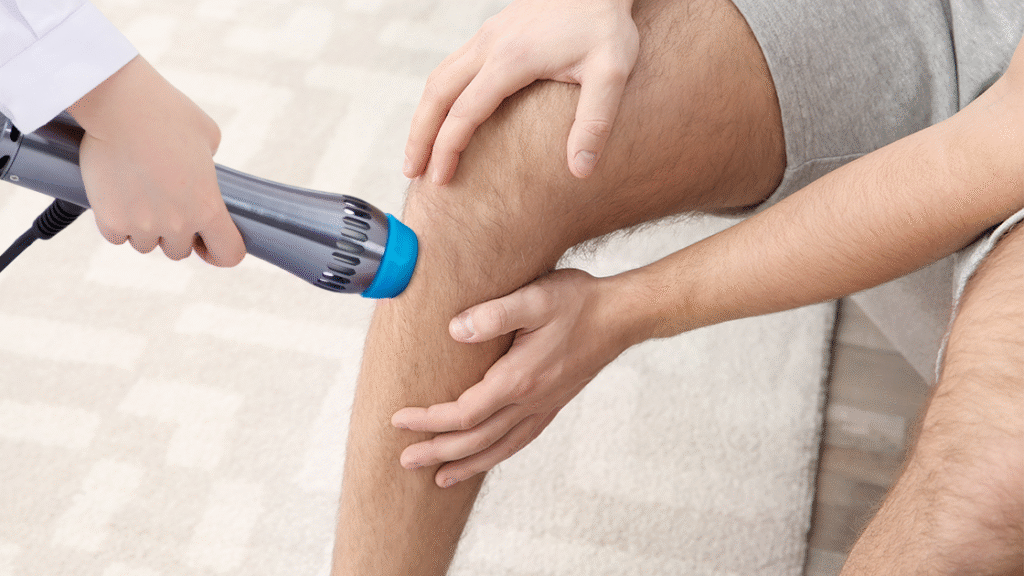
Shockwave therapy delivers acoustic pressure waves that activate biological repair mechanisms inside damaged connective tissues. These mechanical signals stimulate fibroblast activity responsible for collagen synthesis and improve mitochondrial metabolism within tendon cells. Increased cellular energy availability supports structural remodeling rather than temporary symptom relief alone. For strength athletes exposed to repeated loading cycles, enhanced regeneration contributes to improved tendon elasticity and greater tolerance to progressive resistance training demands.
3.2 Improving Blood Circulation in Tendon Tissue
Compared with muscle tissue, tendons typically receive limited blood supply, which slows natural healing processes following repetitive strain injuries. Shockwave therapy promotes angiogenesis, encouraging the development of new microvascular networks that improve oxygen and nutrient delivery to affected structures. Enhanced circulation supports long-term recovery pathways and strengthens tissue resilience during intensive strength training programs that place continuous demands on connective tissue integrity.
3.3 Supporting Collagen Fiber Alignment
Healthy tendon performance depends on organized collagen fiber orientation that allows efficient force transmission between muscles and bones. Mechanical overload may disrupt this alignment, weakening structural integrity and increasing injury risk. Acoustic stimulation encourages collagen remodeling that improves fiber organization and mechanical strength. As tendon architecture becomes more structured, athletes often experience smoother movement execution and improved joint stability during heavy compound lifting exercises.
4. Performance Benefits for Strength Athletes
4.1 Maintaining Training Consistency
Maintaining consistent training schedules plays a critical role in long-term strength development. Persistent tendon discomfort often interrupts progressive overload programs and limits performance adaptation. Supporting tissue recovery helps athletes continue structured training with fewer disruptions while protecting connective tissue from excessive strain accumulation during demanding lifting cycles.
4.2 Supporting Joint Stability Under Heavy Loads
Joint stability depends heavily on tendon integrity because connective tissues transmit force between muscle groups and skeletal structures. Improved tendon resilience enhances neuromuscular coordination and supports efficient load transfer across joints during compound lifts. Strength athletes benefit from smoother movement execution and reduced compensatory stress patterns that could otherwise affect long-term training outcomes.
4.3 Reducing Risk of Chronic Tendinopathy Progression
Untreated tendon stress injuries may gradually evolve into chronic degenerative tendinopathy conditions that require extended recovery timelines. Supporting biological repair mechanisms early helps reduce long-term structural deterioration and improves tissue tolerance to repeated loading exposure. Athletes who prioritize tendon health strategies often experience fewer interruptions during progressive training phases.
4.4 Enhancing Recovery Between Training Cycles
Strength programs frequently alternate between overload phases and recovery periods designed to optimize performance adaptation. Supporting connective tissue repair during these transitions helps athletes tolerate higher workloads more efficiently. Improved recovery capacity contributes to sustainable progress across multiple strength training cycles without compromising tendon integrity.
5. Integrating Shockwave Therapy into Strength Training Recovery Strategies
5.1 Supporting Mobility and Flexibility Programs
Mobility training plays a central role in reducing excessive mechanical stress across tendon insertion sites. Supporting tissue regeneration alongside flexibility work allows joints to move through full functional ranges more efficiently. This coordinated recovery strategy helps maintain balanced biomechanics during demanding resistance training sessions.
5.2 Complementing Strength Conditioning Protocols
Progressive resistance programs depend on gradual load increases that challenge connective tissue adaptation. Supporting tendon recovery enhances tolerance to these structured overload phases and allows athletes to maintain performance continuity across intensive training blocks without unnecessary interruptions.
5.3 Managing Repetitive Load Exposure During Competition Preparation
Athletes preparing for strength competitions often increase training intensity significantly before peak performance events. Supporting connective tissue recovery during these high-demand periods helps reduce accumulated stress and supports structural readiness before competition phases begin.
5.4 Supporting Long-Term Athletic Longevity
Many strength athletes train across multiple competitive seasons and performance cycles. Supporting tendon adaptation throughout extended training careers helps maintain joint health and reduces the risk of long-term degenerative injury patterns associated with repeated heavy resistance exposure. Sustainable connective tissue health plays a key role in preserving long-term performance capacity.
FAQ
Q1: Is shockwave therapy suitable for chronic tendon stress injuries?
Yes. It supports tissue remodeling processes commonly associated with long-term tendinopathy conditions.
Q2: Can strength athletes continue training during therapy?
Many athletes continue modified training programs while supporting tendon recovery.
Q3: Which tendons respond best to treatment?
Commonly addressed areas include the patellar tendon, rotator cuff tendons, triceps tendon, and hip flexor tendons.
Q4: Is the procedure invasive?
No. Shockwave therapy is non-invasive and performed externally.
Q5: Does it support performance as well as recovery?
Improved tissue resilience may contribute to better movement efficiency and training consistency.
الخاتمة
Shockwave therapy provides strength athletes with a scientifically supported, non-invasive strategy for managing tendon stress injuries associated with repetitive heavy lifting. By stimulating cellular repair, improving circulation, and encouraging collagen remodeling, it supports joint stability and movement efficiency throughout demanding training cycles. When integrated into structured recovery planning, this approach helps weightlifters maintain consistent performance progression while promoting long-term connective tissue resilience essential for sustainable strength development.
المراجع
Effectiveness of extracorporeal shockwave therapy in treatment of upper and lower limb tendinopathies: A systematic review and meta-analysis
https://pubmed.ncbi.nlm.nih.gov/37493215
Extracorporeal Shockwave Therapy for Mid-portion and Insertional Achilles Tendinopathy: A Systematic Review of Randomized Controlled Trials
https://pubmed.ncbi.nlm.nih.gov/35552903
تأثير العلاج بالموجات الصدمية خارج الجسم لعلاج اعتلال أوتار الكفة المدورة: مراجعة منهجية وتحليل تلوي
https://bmcmusculoskeletdisord.biomedcentral.com/articles/10.1186/s12891-024-07445-7
فاعلية وسلامة العلاج بالموجات الصدمية خارج الجسم لعلاج التهاب أوتار الأطراف العلوية: مراجعة منهجية وتحليل تلوي لتجارب معشاة مضبوطة
https://www.frontiersin.org/articles/10.3389/fmed.2024.1394268/full
Efficacy of extracorporeal shock wave therapy for lower-limb tendinopathy: A meta-analysis of randomized controlled trials