

Introduction
Athletic performance is closely tied to cardiovascular function, particularly how efficiently the heart responds to and recovers from physical exertion. Heart rate metrics—including resting heart rate, exercise heart rate, and post-exercise heart rate recovery (HRR)—provide critical insight into an athlete’s recovery status and training load management. Non-invasive therapies, such as shockwave therapy and laser therapy, have traditionally targeted musculoskeletal injuries and pain, but emerging evidence suggests they may also indirectly support cardiovascular recovery. By alleviating tissue stress, improving microcirculation, and reducing systemic inflammation, these modalities can influence heart rate patterns post-exercise, ultimately enhancing overall recovery and performance.
1. Why Heart Rate Matters in Athletic Performance
Understanding heart rate behavior is essential for optimizing training and recovery. Both resting heart rate and post-exercise heart rate recovery reflect physiological adaptation, cardiovascular efficiency, and autonomic nervous system balance.
1.1 Resting Heart Rate and Training Load
Resting heart rate is a fundamental indicator of cardiovascular health. Elevated resting heart rate in athletes often signals fatigue, overtraining, or systemic stress. Chronically high resting heart rate may reflect insufficient recovery or ongoing inflammation, compromising performance. By monitoring this metric, coaches and clinicians can adjust training intensity and recovery strategies to avoid overtraining syndrome and maintain optimal performance levels.
1.2 Heart Rate Recovery as a Performance Indicator
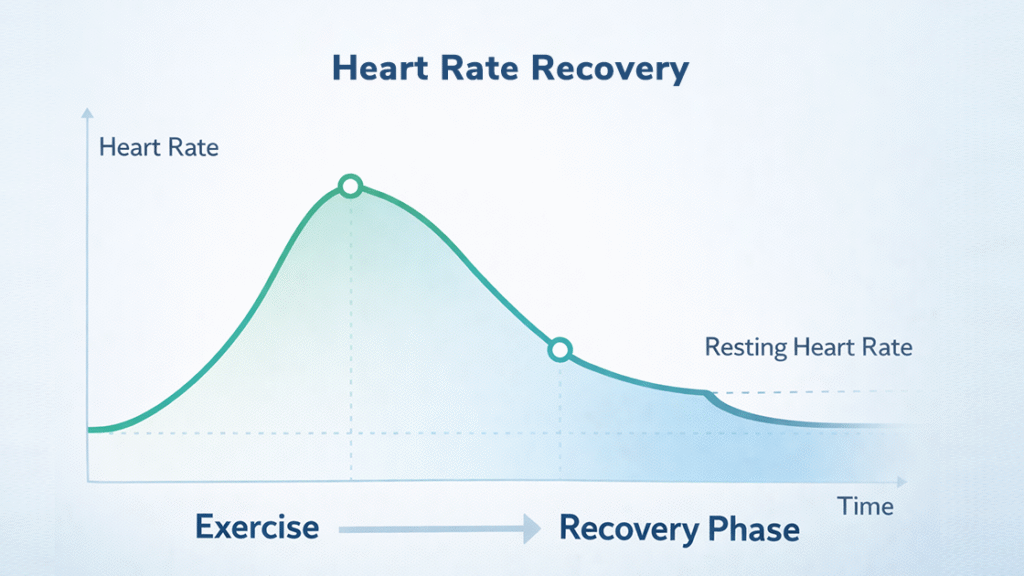
Heart rate recovery (HRR) measures the rate at which the heart returns to baseline after exercise. Faster HRR generally indicates a well-balanced autonomic nervous system, efficient cardiovascular function, and superior recovery capacity. Conversely, delayed HRR may reveal lingering fatigue, sympathetic overactivity, or insufficient tissue repair. HRR has become a key tool in both endurance and strength training, offering objective data to guide personalized recovery protocols.
2. Musculoskeletal Stress and Elevated Heart Rate in Athletes
Muscle and joint stress significantly affect cardiovascular load. Pain and tissue inflammation not only impair movement efficiency but also elevate heart rate during and after exercise.
2.1 Pain, Inflammation, and Cardiovascular Demand
Acute and chronic musculoskeletal injuries trigger localized inflammation, which can stimulate the sympathetic nervous system. Elevated sympathetic activity increases heart rate, blood pressure, and cardiac workload. Pain further exacerbates stress hormone release, including cortisol and catecholamines, which can suppress parasympathetic activity. Consequently, the body may struggle to achieve adequate post-exercise heart rate recovery, hindering both short-term performance and long-term adaptation.
2.2 Injury-Related Heart Rate Changes
Injured athletes often exhibit atypical heart rate responses during exercise and recovery. Even moderate exertion can provoke a higher-than-normal heart rate, while recovery periods are prolonged. This delayed return to baseline can interfere with training cycles, reduce performance gains, and increase susceptibility to secondary injuries. Monitoring these changes provides valuable insight for integrating therapies aimed at both tissue repair and cardiovascular efficiency.
3. How Shockwave Therapy Supports Athletic Recovery
Shockwave therapy has gained traction in sports medicine for its ability to accelerate tissue healing and improve circulatory efficiency.
3.1 Tissue Repair and Circulatory Improvement
Shockwave therapy delivers high-energy acoustic waves to injured tissues, inducing mechanotransduction and stimulating angiogenesis. Enhanced microcirculation improves oxygen delivery and metabolic waste removal, supporting faster tissue recovery. By optimizing vascular perfusion, shockwave therapy not only accelerates local healing but also reduces systemic stress, allowing the heart to operate more efficiently during recovery phases.
3.2 Pain Reduction and Training Stress Relief
Pain reduction achieved through shockwave therapy decreases sympathetic nervous system activation. Lower sympathetic activity translates to reduced heart rate during and after training, facilitating quicker post-exercise heart rate recovery. Athletes experience less cardiovascular strain, allowing them to resume training sooner with lower risk of overtraining or fatigue accumulation.
4. Shockwave Therapy and Heart Rate Recovery (HRR)
By improving tissue function and reducing systemic stress, shockwave therapy can influence HRR, a key metric for athletic performance.
4.1 Faster Recovery After Training Sessions
Enhanced blood flow and reduced nociceptive signaling allow the cardiovascular system to stabilize more quickly post-exercise. Athletes receiving shockwave therapy often report lower perceived exertion and faster HRR trends. While therapy does not directly affect cardiac contractility, its systemic effects—including improved oxygenation and reduced inflammation—support autonomic balance, ultimately facilitating quicker recovery.
4.2 Implications for Endurance and Power Athletes
Endurance athletes benefit from faster HRR by achieving optimal cardiovascular efficiency during repeated training sessions. Power and strength athletes experience lower fatigue accumulation, which allows for higher intensity efforts without compromising recovery. Individualized shockwave therapy protocols can target injury-prone areas while supporting overall cardiovascular stability.
5. Combining Shockwave Therapy with Modern Sports Medicine
Optimal recovery strategies integrate multiple modalities, with shockwave therapy complementing other interventions.
5.1 Integration with Laser Therapy and Recovery Protocols
Laser therapy, or photobiomodulation, enhances cellular energy metabolism and reduces oxidative stress. When combined with shockwave therapy, the synergistic effects improve tissue repair, reduce inflammation, and support systemic recovery. Multi-modal approaches are increasingly adopted in elite sports to accelerate rehabilitation while maintaining cardiovascular and musculoskeletal integrity.
5.2 Monitoring Heart Rate Data During Rehabilitation
Heart rate recovery and cardiovascular response during rehabilitation can be effectively assessed using clinical-grade heart rate monitors, ECG-based systems, or controlled exercise testing in sports physiology labs. These methods provide high-precision data on autonomic function, cardiac load, and recovery trends. Clinicians can analyze heart rate patterns before and after shockwave therapy sessions to evaluate recovery efficiency and cardiovascular adaptation. This approach allows for evidence-based adjustment of therapy intensity, frequency, and complementary interventions, ensuring that both musculoskeletal healing and cardiovascular stability are optimized without relying on consumer-grade wearable devices.
FAQ
Does shockwave therapy directly affect heart function?
No, it primarily acts on tissues, but improved circulation and reduced pain indirectly influence heart rate and recovery.
How quickly can athletes see heart rate improvements?
Noticeable changes in HRR may occur over several sessions, typically within 2–6 weeks, depending on injury severity and training load.
Which athletes benefit most from shockwave therapy?
Both endurance and power athletes can benefit, particularly those managing musculoskeletal injuries or delayed HRR.
Conclusion
Heart rate monitoring is a critical indicator of athletic recovery and performance. Shockwave therapy, especially when integrated with laser therapy, offers a non-invasive means to enhance tissue repair, reduce pain, and improve circulatory efficiency. These systemic effects support faster post-exercise heart rate recovery, enabling athletes to train more effectively and safely. By leveraging data-driven recovery strategies, sports medicine practitioners can optimize both musculoskeletal and cardiovascular outcomes.
References
Shaffer, F., & Ginsberg, J. P. An Overview of Heart Rate Variability Metrics and Norms
https://www.ncbi.nlm.nih.gov/pmc/articles/PMC5624990
Thijs, K. M., et al. Extracorporeal Shockwave Therapy in Musculoskeletal Disorders
https://pubmed.ncbi.nlm.nih.gov/30954468
Hamblin, M. R. Mechanisms and Applications of Photobiomodulation
https://www.ncbi.nlm.nih.gov/pmc/articles/PMC5523874
Hotta, K., et al. Effects of Pain Reduction on Autonomic Nervous System Activity