

Introducción
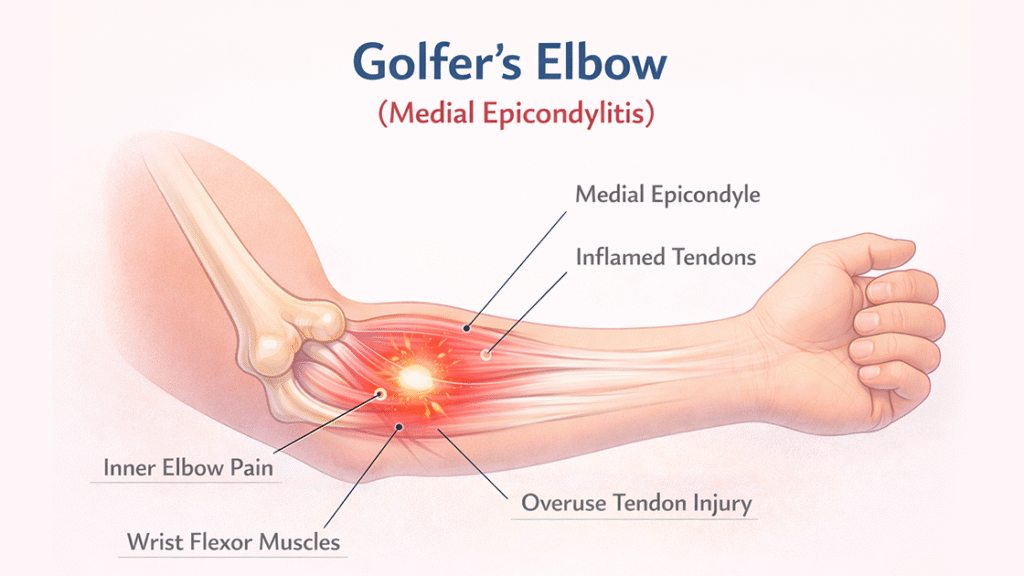
Golfer’s elbow, medically known as medial epicondylitis, is a common overuse injury affecting the inner elbow, particularly among active golf enthusiasts. This condition arises from repetitive stress on the wrist flexors and forearm muscles, leading to tendon inflammation, pain, and weakness. For golfers, these symptoms can significantly compromise swing performance, training frequency, and long-term athletic potential. In recent years, non-invasive physical medicine technologies, such as shockwave therapy for golfer’s elbow, have gained attention for their potential to accelerate tendon healing while minimizing disruption to training routines. This article explores the mechanisms of shockwave therapy, identifies the golfers most likely to benefit, and highlights its clinical significance as a medial epicondylitis treatment alternative.
1. Understanding Golfer’s Elbow in Active Golf Players
1.1 What Is Golfer’s Elbow (Medial Epicondylitis)
Golfer’s elbow, or medial epicondylitis, is a type of overuse tendon injury that affects the tendinous attachments of the forearm muscles to the medial epicondyle of the humerus. Repetitive stress on the wrist flexors and pronator muscles can lead to microscopic tears in the tendon fibers, triggering chronic inflammation and pain. Although frequently associated with professional athletes, medial epicondylitis golfers include many recreational players who practice frequently or play multiple rounds per week. Early recognition of symptoms such as inner elbow discomfort and wrist flexion weakness is crucial to prevent progression. Understanding the pathological basis of golfer’s elbow clarifies why conservative, non-surgical interventions like shockwave therapy are increasingly applied.
1.2 Why Golfers Are Especially at Risk
Golfers are particularly susceptible to medial epicondylitis due to the biomechanical demands of a golf swing. Grip pressure, wrist flexion stress, and repetitive swing mechanics generate cumulative loads on the tendons attaching to the medial elbow. Amateur golfers are often at higher risk because swing mechanics may be inconsistent, warm-up routines insufficient, and equipment poorly fitted. Even slight deviations in grip or wrist angle during repeated swings can result in microtrauma, eventually causing pain and reduced function. Recognizing these risk factors is essential for implementing preventive measures and designing effective rehabilitation strategies.
1.3 Symptoms That Affect Golf Performance
Typical symptoms of golfer’s elbow include localized tenderness along the inner elbow, pain when gripping the club, weakness in wrist flexion, and reduced shot distance. These issues can disrupt swing consistency, diminish confidence, and interfere with training routines. Even mild discomfort may alter biomechanics, potentially causing compensatory movements that stress other joints, such as the shoulder or lower back. Understanding how medial epicondylitis impacts performance underscores the value of early intervention and non-surgical elbow pain therapy for both recreational and competitive players.
2. Why Chronic Tendon Overuse Injuries Are Difficult to Resolve
2.1 Tendon Structure and Limited Blood Supply
Tendons, composed primarily of dense collagen fibers, are inherently slow to heal due to limited vascularization. Blood supply is restricted at the medial epicondyle attachment, slowing the delivery of oxygen and nutrients necessary for tissue repair. This structural limitation contributes to the chronic nature of medial epicondylitis, as inflammation may persist for weeks or months without adequate intervention. Slow tendon healing emphasizes the need for therapies that enhance local circulation and stimulate cellular regeneration, such as shockwave therapy for golfer’s elbow.
2.2 The Role of Micro-Trauma in Repetitive Swing Sports
Chronic elbow injuries in golfers rarely result from a single traumatic event; instead, they arise from cumulative microtrauma. Repeated stress cycles disrupt collagen fibers, induce localized inflammation, and hinder extracellular matrix turnover. Each swing contributes to minor structural damage that may go unnoticed until functional deficits appear. Recognizing the role of microtrauma underscores the importance of treatments targeting tendon regeneration, mitigating inflammation, and supporting long-term joint health.
3. How Shockwave Therapy Supports Tendon Recovery Mechanisms
3.1 Acoustic Wave Stimulation and Tissue Response
Shockwave therapy delivers focused mechanical energy to the injured tendon, triggering biological responses at the cellular level. Mechanotransduction activation stimulates signaling pathways that promote tissue adaptation and repair. Processes such as fibroblast proliferation, growth factor release, and extracellular matrix modulation are enhanced, accelerating the body’s natural healing mechanisms. By targeting the affected region non-invasively, shockwave therapy leverages the body’s regenerative capacity while preserving surrounding structures. Its mechanism-based approach represents a promising non-surgical elbow pain therapy option for golfers with medial epicondylitis.
3.2 Stimulation of Microcirculation Around the Elbow Tendon
A key benefit of shockwave therapy is its ability to improve local microcirculation. Enhanced blood flow delivers oxygen and nutrients essential for tendon repair while removing metabolic waste products that contribute to inflammation. This improved circulation creates an optimal regenerative environment, facilitating collagen synthesis and tissue remodeling. For golfers with limited downtime, shockwave therapy supports tendon recovery while allowing continued training.
3.3 Influence on Collagen Remodeling Processes
Collagen fibers provide tendons with structural strength and resilience, but repetitive strain can lead to disorganized alignment. Shockwave therapy promotes collagen remodeling by stimulating fibroblast activity and enhancing extracellular matrix turnover. Properly aligned collagen fibers restore tendon integrity and improve functional performance, reducing susceptibility to re-injury. For golfers, this translates to more consistent swings, decreased pain, and improved confidence during practice and competition. Collagen regeneration is central to the therapeutic potential of shockwave therapy for golfer’s elbow.
4. Why Shockwave Therapy Is Popular Among Recreational Golfers
4.1 Interest in Non-Surgical Sports Injury Solutions
Recreational golfers increasingly favor conservative, non-surgical approaches to sports injuries. Minimizing downtime while preserving an active lifestyle is a priority, and shockwave therapy aligns with this approach. Players seek interventions that provide meaningful improvements in tendon health without disrupting practice routines. This trend reflects a broader movement in sports medicine toward therapies that are effective yet minimally disruptive.
4.2 Supporting Long-Term Joint Function Without Interrupting Training
Maintaining training continuity and preserving swing rhythm are essential for golfers aiming for long-term performance. Shockwave therapy supports tendon recovery without requiring prolonged activity cessation, reducing deconditioning and performance loss. By minimizing disruption to practice, therapy helps golfers regain confidence and return to play safely, emphasizing the importance of early intervention in preventing chronic elbow injury.
4.3 Growing Use in Sports Medicine Clinics
Shockwave therapy has seen increasing adoption in sports medicine clinics, orthopedic practices, and performance medicine centers, providing non-invasive solutions for chronic tendon injuries. Its application extends beyond medial epicondylitis to various tendinopathies in athletes seeking conservative care. Clinics offering this therapy integrate it into comprehensive rehabilitation programs, combining evidence-based modalities to optimize functional outcomes. Recreational golfers now have greater access to this innovative treatment, reflecting its growing importance in sports medicine.
5. Which Golf Players May Benefit the Most From Shockwave Therapy Research Applications
5.1 Amateur Golfers Playing Multiple Times Per Week
Amateur golfers engaging in high-frequency practice sessions are at elevated risk for medial epicondylitis. Research applications of shockwave therapy focus on these populations, seeking to understand how acoustic wave stimulation can support tendon adaptation and prevent long-term dysfunction.
5.2 Players Experiencing Recurring Elbow Discomfort During Swing Practice
Golfers reporting intermittent inner elbow pain during swing practice may be experiencing cumulative microtrauma. Targeted shockwave therapy interventions can influence collagen remodeling and microcirculation, mitigating the effects of repetitive stress. Early recognition of recurring symptoms allows for timely application of therapy, potentially reducing progression to chronic tendinopathy.
5.3 Golfers Seeking Performance Longevity Rather Than Short-Term Relief
Some players prioritize long-term joint function and performance sustainability over immediate pain relief. Shockwave therapy research emphasizes tendon health preservation, supporting consistent swing mechanics and minimizing the risk of chronic elbow injury. Focusing on regenerative mechanisms aligns with performance longevity, allowing golfers to maintain activity levels over many years.
FAQ
Q1: What causes golfer’s elbow in recreational golf players?
Golfer’s elbow results from repetitive stress on the wrist flexors and pronator muscles during swing practice. Overuse leads to micro-tears in tendon fibers, causing pain and inflammation. Improper swing mechanics, inadequate warm-ups, and frequent practice further exacerbate the condition.
Q2: Is golfer’s elbow different from tennis elbow?
Yes. Golfer’s elbow affects the inner (medial) elbow, while tennis elbow involves the outer (lateral) elbow. Both are overuse injuries, but they differ anatomically in tendon involvement and affected muscle groups.
Q3: Why is tendon recovery slower than muscle recovery?
Tendons have limited blood supply compared to muscles, slowing oxygen and nutrient delivery necessary for repair. This vascular limitation contributes to prolonged inflammation and delayed healing, making therapies that improve circulation, such as shockwave therapy golfer’s elbow recovery, particularly valuable.
Q4: Is shockwave therapy commonly used in sports medicine clinics?
Yes. It is increasingly integrated into sports rehab clinics, orthopedic practices, and performance medicine centers, providing a non-invasive option for chronic tendon injuries and supporting active athletes.
Q5: Can golfer’s elbow affect swing accuracy and distance?
Absolutely. Pain and weakness in the inner elbow compromise grip strength and wrist flexion, altering biomechanics. This can reduce shot distance, affect swing consistency, and increase compensatory stress on other joints.
Conclusión
Golfer’s elbow is a prevalent overuse injury among recreational and professional golfers, characterized by slow-healing medial epicondylitis due to limited tendon vascularization and cumulative microtrauma. Chronic tendon injuries often impair performance and reduce confidence, underscoring the need for non-invasive interventions. Shockwave therapy for golfer’s elbow has demonstrated promising mechanisms, including enhanced circulation, collagen remodeling, and mechanotransduction activation, supporting non-invasive tendon recovery support. Its popularity among recreational golfers reflects a broader emphasis on maintaining long-term performance and an active lifestyle without surgical intervention.
Referencias
American Academy of Orthopaedic Surgeons (AAOS). Medial Epicondylitis (Golfer’s Elbow).
https://orthoinfo.aaos.org/en/diseases–conditions/medial-epicondylitis-golfers-elbow
International Society for Medical Shockwave Treatment (ISMST). Clinical Guidelines for Shockwave Therapy.
https://www.ismst.com/guidelines
National Institutes of Health (NIH). Tendon Healing and Overuse Injuries.
https://www.nih.gov/news-events/nih-research-matters/tendon-healing
Journal of Orthopaedic Research. Shockwave Therapy and Tendon Regeneration.
https://onlinelibrary.wiley.com/journal/1554527x
British Journal of Sports Medicine. Repetitive Strain Injuries in Golf.
https://bjsm.bmj.com/content/early/repetitive-strain-golf
Sports Health: A Multidisciplinary Approach Journal. Non-Surgical Management of Medial Epicondylitis.