

1. Introduction
Kidney stones, medically known as urolithiasis, are a common and often painful condition of the urinary system. They are solid crystalline deposits formed from minerals and salts in the kidneys or urinary tract, which can cause significant discomfort, urinary obstruction, and potential long-term complications. While small stones may pass naturally, many require medical intervention to alleviate persistent pain and protect renal function. Among available treatments, extracorporeal shockwave lithotripsy (ESWL) has emerged as a widely adopted non-invasive approach, using externally generated shockwaves to fragment stones into passable pieces. This article provides a comprehensive review of shockwave therapy for kidney stones, including its principles, clinical application, advantages, limitations, and role in modern urology.
2. Understanding Kidney Stones and Treatment Options
2.1 What Are Kidney Stones
Kidney stones are hard crystalline deposits formed from minerals and salts that precipitate in the kidneys. They develop when urine becomes concentrated, allowing substances like calcium, oxalate, or uric acid to crystallize. Over time, these crystals aggregate into stones of varying sizes and compositions. Depending on their location, kidney stones may remain asymptomatic or cause severe pain when they obstruct urinary flow. Factors contributing to stone formation include hydration, diet, metabolic disorders, and genetics.
2.2 Symptoms of Kidney Stones and Indications for Treatment
Symptoms of kidney stones vary from sharp flank pain and hematuria to nausea and urinary urgency, although some stones remain asymptomatic. Treatment is indicated when stones cause persistent pain, infection, obstruction, or fail to pass naturally. Imaging studies, including ultrasound or CT scans, help determine stone size and location, guiding clinical decisions. Timely intervention is crucial to relieve symptoms and prevent renal impairment.
2.3 Overview of Kidney Stone Treatment Options
Treatment options range from conservative observation to active intervention. Small stones may pass naturally with hydration and medical expulsive therapy, while larger or symptomatic stones may require procedures such as ESWL, ureteroscopy, or percutaneous nephrolithotomy. ESWL holds a unique position as a non-invasive, outpatient procedure capable of fragmenting stones without surgical entry.
3. What Is Shockwave Therapy for Kidney Stones
3.1 Definition of Shockwave Therapy (ESWL)
Extracorporeal shockwave lithotripsy (ESWL) is a non-invasive procedure that uses externally generated acoustic shockwaves to fragment kidney stones into smaller pieces, allowing natural passage through the urinary tract. It avoids incisions or internal instrumentation and is widely recognized for its safety and effectiveness.
3.2 How Shockwave Therapy Works on Kidney Stones
Shockwaves are focused precisely on the stone using imaging guidance. The mechanical energy creates stress within the stone, causing it to fracture into smaller fragments. Repeated pulses progressively break larger stones. Surrounding tissues safely absorb most of the energy due to differences in acoustic impedance, allowing targeted fragmentation without invasive intervention.
3.3 History and Development of ESWL Technology
Introduced in the late 20th century, ESWL technology has undergone significant advancements. Early systems focused on stone fragmentation efficiency, while modern devices emphasize precise targeting, patient comfort, and tissue safety. Integration with advanced imaging and improved shockwave generation has enhanced clinical outcomes and expanded eligibility criteria.
4. Shockwave Therapy Procedure for Kidney Stones
4.1 Patient Evaluation Before Shockwave Therapy
Comprehensive patient evaluation ensures suitability for ESWL. Imaging studies assess stone size, density, and anatomical location. Medical history is reviewed to evaluate bleeding risk, infection, or anatomical anomalies. Proper selection maximizes treatment efficacy and safety.
4.2 Step-by-Step Shockwave Therapy Treatment Process
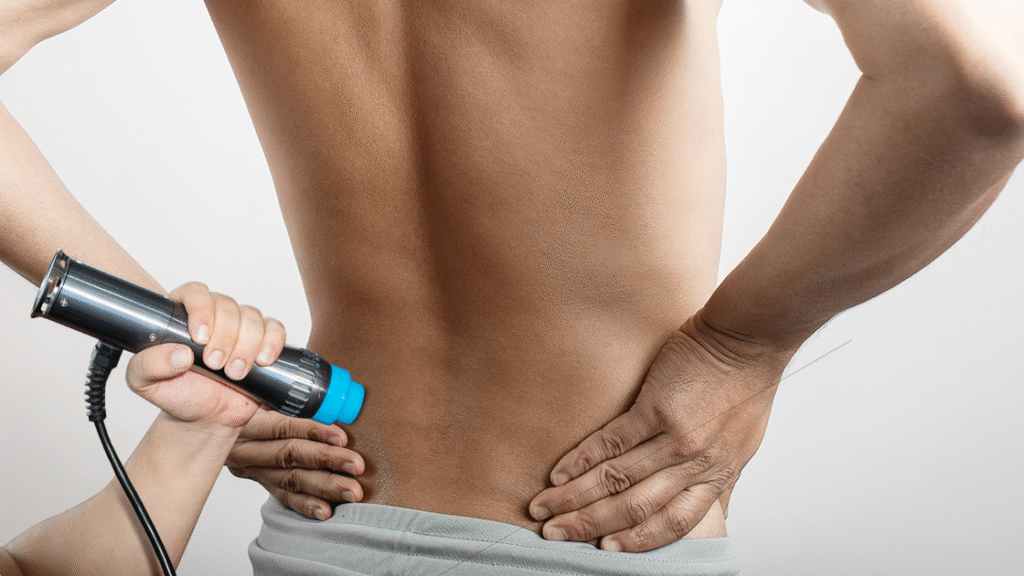
Patients are positioned to align the stone with the shockwave focal point. Imaging guidance ensures precise targeting, and shockwaves are delivered in controlled sequences with adjustable energy levels. The procedure typically lasts less than an hour and does not require surgical incisions.
4.3 Post-Treatment Care and Stone Fragment Passage
Patients are encouraged to maintain hydration and moderate activity to facilitate fragment passage. Mild discomfort or hematuria may occur during stone passage. Follow-up imaging evaluates treatment success and confirms clearance. Most patients can resume normal daily activities shortly after treatment.
5. Benefits of Shockwave Therapy for Kidney Stones
https://www.shockwavemachines.com/
5.1 Non-Invasive Kidney Stone Treatment
ESWL avoids surgical incisions or direct kidney instrumentation, reducing physical trauma and procedural risk. This is particularly appealing for patients seeking effective, minimally invasive treatment.
5.2 Reduced Recovery Time and Patient Comfort
Recovery is rapid, with most patients resuming daily activities soon after treatment. Non-invasive design and outpatient feasibility make ESWL convenient and comfortable.
5.3 Preserving Kidney Function
ESWL protects renal tissue by avoiding direct mechanical intervention. Controlled energy delivery fragments stones while minimizing stress on surrounding tissue, supporting long-term kidney health.
6. Limitations and Considerations
6.1 Factors Affecting Shockwave Therapy Effectiveness
Stone size, density, and anatomical location influence outcomes. Larger or harder stones may be more resistant, and stones in certain locations may be difficult to target effectively.
6.2 Patient Selection for ESWL
Optimal candidates are individuals with small to medium stones and stable renal function. Careful selection enhances safety and increases success rates.
6.3 Safety and Potential Side Effects
Temporary discomfort, hematuria, or mild bruising may occur. These effects are generally self-limited and are monitored during follow-up visits to ensure patient safety.
7. Shockwave Therapy vs Other Kidney Stone Treatments
7.1 ESWL vs Medication-Based Stone Management
Medication-based approaches rely on natural stone passage, suitable for small stones. ESWL actively fragments stones when spontaneous passage is unlikely, offering faster relief.
7.2 ESWL vs Ureteroscopy and Surgical Procedures
Compared to invasive procedures, ESWL avoids anesthesia risks and surgical recovery. However, complex or large stones may still require endoscopic or surgical intervention for complete resolution.
8. Frequently Asked Questions About Shockwave Therapy
8.1 Is Shockwave Therapy Painful?
Most patients report mild discomfort rather than severe pain. Local anesthesia or analgesics can improve comfort.
8.2 How Long Does It Take to Pass Stone Fragments?
Fragment passage varies among patients but typically occurs over several days to weeks.
8.3 Can Shockwave Therapy Be Repeated?
Additional sessions may be considered for residual stone fragments, depending on clinical evaluation.
8.4 Who Should Not Receive Shockwave Therapy?
Patients with certain medical conditions or anatomical limitations may require alternative treatments to ensure safety.
9. Conclusion
Shockwave therapy for kidney stones represents a cornerstone of modern non-invasive urological care. By effectively fragmenting stones while preserving kidney function, ESWL balances efficacy with patient comfort. Proper patient selection, standardized procedural protocols, and follow-up monitoring optimize outcomes. Integrated into contemporary urological practice, ESWL continues to provide a safe, efficient, and widely accepted treatment for patients with kidney stones.
Referencias
National Kidney Foundation – Kidney Stones
https://www.kidney.org/kidney-topics/kidney-stones
Urology Care Foundation – Shock Wave Lithotripsy
https://www.urologyhealth.org/urology-a-z/s/shock-wave-lithotripsy
National Institutes of Health – Kidney Stone Disease
https://www.ncbi.nlm.nih.gov/books/NBK279069
European Association of Urology – Urolithiasis Guidelines
https://uroweb.org/guidelines/urolithiasis
Mayo Clinic – Kidney Stones and Lithotripsy
https://www.mayoclinic.org/diseases-conditions/kidney-stones