

Introducción
Deep glute pain that radiates down the leg can quietly disrupt training consistency for runners and cyclists, often signaling a condition known as piriformis syndrome. Because this small but powerful muscle sits close to the sciatic nerve, irritation can produce symptoms that mimic sciatica, limiting stride mechanics, pedaling efficiency, and recovery quality. Athletes who spend long hours repeating hip-driven movements frequently develop tightness and inflammation in this region. Shockwave therapy has emerged as an advanced non-invasive modality that supports soft-tissue regeneration, improves circulation, and reduces neuromuscular tension in the deep hip region. Understanding how this therapy supports recovery allows endurance athletes to maintain performance continuity while addressing the underlying causes of persistent posterior hip discomfort.
1. Understanding Piriformis Syndrome in Endurance Athletes
Before exploring therapeutic strategies, it is essential to understand why piriformis syndrome frequently affects runners and cyclists and how it differs from other forms of sciatic nerve irritation.
1.1 Anatomy of the Piriformis Muscle and Sciatic Nerve Interaction
The piriformis muscle originates from the anterior sacrum and inserts onto the greater trochanter of the femur, functioning primarily as a hip external rotator and stabilizer during locomotion. Because the sciatic nerve passes either beneath or through this muscle in many individuals, localized inflammation or muscle spasm can compress the nerve and produce radiating symptoms along the posterior thigh.
In endurance athletes, repetitive hip extension and rotational stabilization increase functional demand on this muscle. Over time, micro-trauma accumulates within deep gluteal tissues, leading to reduced elasticity and localized neuromuscular guarding. As compression intensifies, symptoms may resemble lumbar radiculopathy even when spinal structures remain unaffected.
1.2 Why Runners and Cyclists Are Especially Vulnerable
Running and cycling both depend heavily on repetitive hip stabilization patterns. During long-distance training, the piriformis muscle works continuously to control pelvic rotation and maintain stride alignment. Fatigue within surrounding gluteal muscles often shifts compensatory workload toward the piriformis, increasing strain accumulation.
Cyclists experience additional risk due to prolonged seated hip flexion angles that shorten posterior hip structures. Over time, reduced tissue mobility contributes to nerve irritation and deep glute discomfort. When untreated, these biomechanical stressors gradually alter movement efficiency and reduce endurance capacity.
2. Symptoms That Distinguish Piriformis Syndrome from Lumbar Sciatica
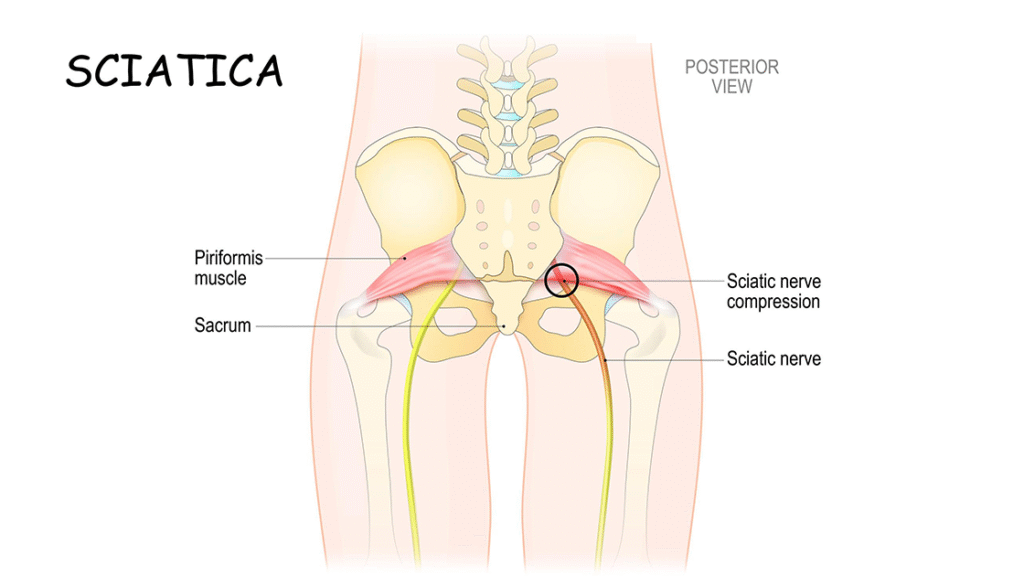
Because piriformis syndrome closely mimics spinal nerve compression, accurate recognition of symptom patterns is critical for targeted management.
2.1 Deep Gluteal Pain with Radiating Leg Discomfort
Athletes commonly describe a dull aching sensation deep within the buttock that intensifies during prolonged sitting, hill running, or high-resistance cycling intervals. Unlike lumbar disc-related sciatica, discomfort often begins locally before spreading along the posterior thigh rather than originating from the lower back.
Localized tenderness near the greater sciatic notch frequently accompanies symptoms. As inflammation progresses, neuromuscular tension increases around the sciatic nerve pathway, producing intermittent tingling or altered sensation during movement transitions.
2.2 Reduced Hip Mobility and Performance Efficiency
Restricted hip rotation is another distinguishing feature. Runners may notice shortened stride length or asymmetrical push-off mechanics, while cyclists may experience reduced pedaling smoothness during sustained climbs.
These biomechanical inefficiencies increase compensatory loading across adjacent structures, including the hamstrings and lumbar extensors. Over time, untreated piriformis syndrome can contribute to secondary overuse injuries that further compromise endurance performance consistency.
3. How Shockwave Therapy Supports Deep Hip Tissue Recovery
Once the underlying mechanics of piriformis syndrome are understood, it becomes easier to appreciate how shockwave therapy interacts with deep muscular structures to support functional restoration.
3.1 Mechanical Stimulation and Tissue Regeneration Effects
Shockwave therapy delivers acoustic pressure waves that penetrate deep soft tissue layers, stimulating cellular responses associated with tissue repair. These mechanical signals promote fibroblast activation, collagen remodeling, and angiogenesis within chronically overloaded muscle fibers.
In the piriformis region, enhanced vascularization improves oxygen delivery to metabolically fatigued tissue. This process helps restore elasticity and reduce persistent neuromuscular guarding that contributes to sciatic nerve compression patterns in endurance athletes.
3.2 Neuromuscular Relaxation and Trigger Point Modulation
Chronic piriformis syndrome often involves myofascial trigger point formation within the deep gluteal compartment. Shockwave therapy interacts with these hyperirritable regions by disrupting abnormal contraction cycles and improving neuromuscular signaling balance.
As muscle tone normalizes, pressure on the sciatic nerve pathway decreases. This reduction in peripheral nerve irritation contributes to improved stride mechanics and smoother pedaling motion during prolonged endurance activity sessions.
4. Benefits of Shockwave Therapy for Running and Cycling Performance
Beyond symptom relief, shockwave therapy offers functional advantages that support long-term athletic performance sustainability.
4.1 Restoring Hip Stability and Movement Symmetry
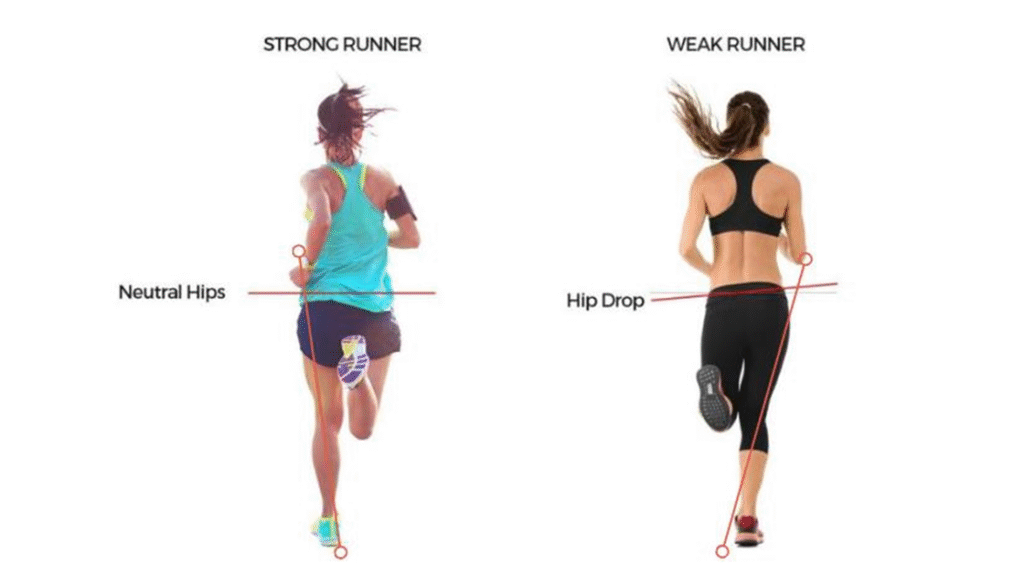
The piriformis muscle plays a critical role in maintaining pelvic stability during single-leg stance phases of running. When this stabilizing system becomes compromised, compensatory patterns develop across the kinetic chain.
By supporting tissue regeneration and improving neuromuscular coordination, shockwave therapy contributes to more balanced hip rotation control. Improved movement symmetry allows athletes to maintain efficient force transfer during repetitive endurance activity cycles.
4.2 Supporting Circulation in Deep Posterior Hip Structures
One of the most significant physiological advantages of acoustic wave stimulation involves enhancement of regional microcirculation. Increased perfusion supports removal of metabolic waste products that accumulate during high-volume training blocks.
Improved vascular exchange within deep gluteal compartments promotes faster recovery between sessions and helps maintain tissue resilience throughout demanding training seasons.
5. Integration into Endurance Training Recovery Strategies
Shockwave therapy becomes even more effective when considered as part of a broader recovery ecosystem supporting neuromuscular health.
5.1 Complementing Mobility and Activation Programs
Endurance athletes frequently incorporate hip mobility routines into their weekly training schedules. Shockwave therapy enhances the effectiveness of these routines by improving tissue responsiveness and restoring flexibility within deep rotator muscles.
Improved neuromuscular readiness allows activation exercises targeting the gluteus medius and gluteus maximus to function more efficiently, reducing compensatory reliance on the piriformis muscle during repetitive motion patterns.
5.2 Supporting Long-Term Injury Prevention in High-Volume Training Cycles
During peak training phases, cumulative loading increases susceptibility to overuse injuries across the posterior kinetic chain. Shockwave therapy helps maintain structural resilience within the deep hip region by encouraging continuous tissue adaptation.
Athletes who prioritize proactive recovery strategies often experience fewer interruptions to their training progression and maintain more consistent performance development across competitive seasons.
6. Safety Profile and Athlete Experience Considerations
Understanding the safety characteristics of shockwave therapy helps athletes confidently integrate this modality into structured recovery planning.
6.1 Non-Invasive Support for Deep Soft Tissue Conditions
Unlike surgical intervention or injection-based approaches, shockwave therapy works externally while reaching deep anatomical targets. This non-invasive nature makes it particularly suitable for endurance athletes seeking recovery support without extended interruption to training routines.
Most individuals tolerate treatment comfortably, and the therapy is widely used across sports medicine environments to address chronic soft-tissue overload conditions.
6.2 Compatibility with Ongoing Training Schedules
Because endurance athletes often train multiple times per week, compatibility with active schedules is essential. Shockwave therapy supports recovery without requiring prolonged activity restriction, making it a practical option during both base conditioning and competition preparation phases.
Maintaining training continuity while supporting tissue repair remains one of the most valuable advantages of acoustic wave therapy for high-volume athletes.
FAQ
What causes piriformis syndrome in runners and cyclists?
Repetitive hip stabilization demands and prolonged seated training posture can overload the piriformis muscle and irritate the sciatic nerve pathway.
Can shockwave therapy reach deep hip muscles like the piriformis?
Yes. Acoustic waves penetrate deep soft tissue layers and support circulation and neuromuscular relaxation within the posterior hip region.
Is shockwave therapy suitable during training season?
It is commonly integrated into active training schedules because it supports recovery without significant interruption.
How quickly can athletes notice improvement?
Many athletes report gradual improvement across several sessions as tissue responsiveness and mobility increase.
Conclusión
Piriformis syndrome represents a hidden but impactful barrier to performance consistency for runners and cyclists, particularly during high-volume training periods. Because the condition involves deep neuromuscular tension near the sciatic nerve pathway, recovery strategies must address both circulation and tissue elasticity within the posterior hip region. Shockwave therapy provides a non-invasive approach that supports collagen remodeling, improves vascular exchange, and promotes neuromuscular relaxation in chronically overloaded structures. When integrated into comprehensive endurance recovery planning, this therapy helps athletes maintain efficient movement mechanics, reduce discomfort recurrence, and sustain long-term training progression.
Referencias
Nakanishi S, Tsutsumi M, Kawanishi K, Wada M.
Effects of Radial Extracorporeal Shockwave Therapy on Piriformis Syndrome: A Single-Case Experimental Design
https://pmc.ncbi.nlm.nih.gov/articles/PMC11228403
Fu Y-S, Shih K-S, Lin Y-T, Hsieh L-F, Liu Y-F, Chen Y-R.
Efficacy of Ultrasound-Guided Piriformis Muscle Corticosteroid Injection versus Extracorporeal Shockwave Therapy in Patients with Piriformis Syndrome: A Randomized Controlled Trial
https://pubmed.ncbi.nlm.nih.gov/40016058
Ahadi T, Yousefi A, Sajadi S, Yousefi N, Babaei-Ghazani A.
Comparing Radial Extracorporeal Shockwave Therapy and Corticosteroid Injection in the Treatment of Piriformis Syndrome: A Randomized Clinical Trial
https://pubmed.ncbi.nlm.nih.gov/36775517
Avendaño-López C, Megía-García Á, Beltran-Alacreu H, Serrano-Muñoz D, Arroyo-Fernández R, Comino-Suárez N, Avendaño-Coy J.
Efficacy of Extracorporeal Shockwave Therapy on Pain and Function in Myofascial Pain Syndrome: A Systematic Review and Meta-analysis of Randomized Clinical Trials