

Introducción
Post-surgical recovery is a critical phase in a patient’s treatment journey. After any surgical intervention, tissues undergo a series of biological processes that aim to restore structure and function. Delays in healing can lead to prolonged pain, reduced mobility, and decreased quality of life. Traditional rehabilitation approaches, including physiotherapy, medication, and gradual mobilization, often form the backbone of post-operative care. However, in recent years, shockwave therapy (SWT) has emerged as a non-invasive adjunct to enhance tissue repair and accelerate recovery. By applying targeted acoustic waves to affected areas, SWT has demonstrated the potential to modulate inflammation, improve blood flow, and stimulate cellular regeneration. The key question clinicians face is whether SWT can effectively reduce healing time after surgery, and if so, under what parameters and timing.
1. Understanding Post-Surgical Healing
1.1 The Phases of Wound Healing
Surgical tissue repair occurs in three overlapping phases: inflammation, proliferation, and remodeling. The inflammatory phase begins immediately after tissue injury, characterized by vascular permeability, immune cell infiltration, and release of cytokines to remove debris and prevent infection. This phase typically lasts 2–5 days depending on the surgical site and individual patient factors. Next, the proliferative phase involves fibroblast activation, angiogenesis, collagen deposition, and epithelialization. This stage builds the structural framework necessary for tissue integrity and usually continues for 1–3 weeks. Finally, the remodeling phase reorganizes collagen fibers, strengthens tissue tensile strength, and restores functional capacity. Understanding these phases is critical because interventions like SWT must complement, rather than disrupt, these biological processes to optimize healing.
1.2 Factors Affecting Surgical Recovery
Post-surgical recovery is influenced by a combination of intrinsic and extrinsic factors. Intrinsic factors include patient age, nutritional status, comorbidities such as diabetes or vascular disease, and genetic predispositions that may affect collagen synthesis and immune function. Extrinsic factors encompass the type and extent of the surgical procedure, perioperative care, rehabilitation protocols, and lifestyle behaviors including physical activity, smoking, and medication adherence. Clinicians must consider these variables when recommending adjunct therapies like SWT, as patient-specific conditions may modify treatment efficacy. Recognizing these determinants allows for personalized post-operative protocols that optimize tissue regeneration while minimizing complications.
1.3 Complications That Can Delay Healing
Several post-operative complications can impede the natural healing process. Infections, even localized, trigger prolonged inflammatory responses and can degrade tissue quality. Hematomas or excessive edema can increase pressure in tissues, compromising perfusion and oxygen delivery. Additionally, scar hypertrophy or keloid formation may impair function and aesthetics. Certain systemic conditions, including immunosuppression or vascular insufficiency, further slow recovery. Understanding these risks is crucial, as adjunct therapies like SWT must be applied with caution in high-risk patients to avoid exacerbating underlying issues. Safe, evidence-based protocols can mitigate these factors while supporting timely recovery.
2. Introduction to Terapia con ondas de choque (ESWT)
2.1 What Is Shockwave Therapy
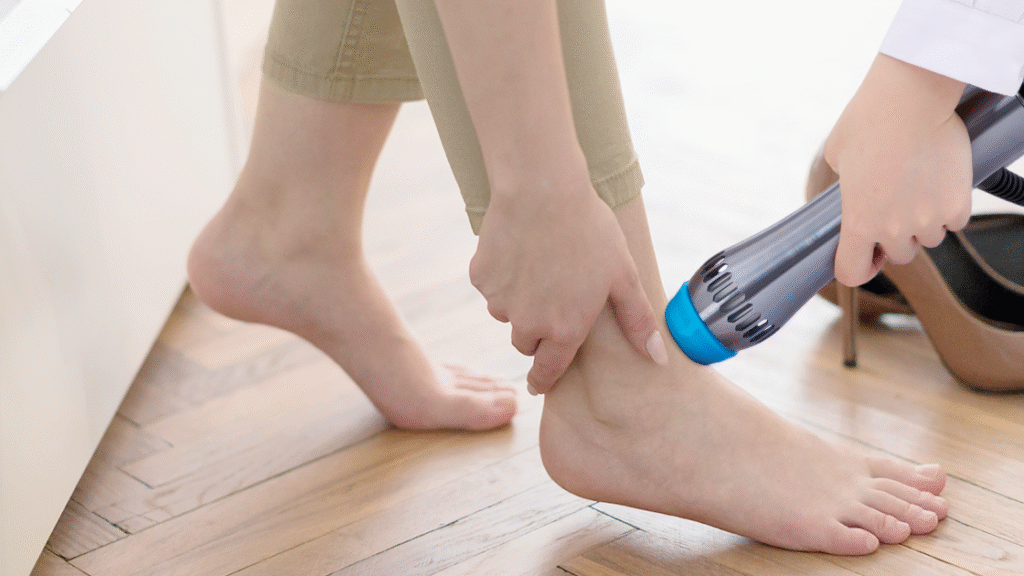
Shockwave therapy involves delivering high-energy acoustic waves to targeted tissues to induce mechanical and biological effects. These waves generate a rapid pressure change that propagates through soft tissues, stimulating cellular processes. There are two primary types of SWT: focused shockwaves, which penetrate deeply to treat structures such as tendons and bones, and radial shockwaves, which distribute energy over a wider area, suitable for superficial tissues. The mechanism is primarily mechanical but triggers complex biological cascades, making it a versatile tool for musculoskeletal recovery. Its non-invasive nature, combined with minimal downtime, makes SWT particularly appealing for post-surgical applications where early mobilization is desirable.
2.2 Biological Mechanisms of Shockwave in Tissue Repair
SWT stimulates tissue repair through several mechanisms. First, it enhances angiogenesis, promoting new capillary formation and improving blood supply to healing tissues. Second, it induces fibroblast proliferation and collagen synthesis, strengthening structural integrity. Third, SWT modulates inflammation by reducing pro-inflammatory cytokines and enhancing anti-inflammatory mediators. Additionally, it can stimulate nerve endings and mechanoreceptors, contributing to analgesic effects. These combined effects facilitate tissue regeneration and functional recovery. By aligning the application of SWT with specific post-surgical healing phases, clinicians can leverage these mechanisms to accelerate recovery while maintaining tissue integrity.
2.3 Safety Profile and Contraindications
While generally safe, SWT must be used with caution in certain contexts. Contraindications include active infection at the treatment site, malignancy, uncontrolled bleeding disorders, and certain pregnancy conditions. Adverse effects are typically mild and transient, including local erythema, bruising, or temporary discomfort. Proper training and adherence to established clinical guidelines are essential for safe application. Selecting appropriate energy levels, treatment intervals, and anatomical targets ensures that post-surgical patients benefit from SWT without compromising tissue healing or overall safety.
3. Evidence of Shockwave Therapy in Post-Surgical Recovery
3.1 Accelerating Soft Tissue Healing
Evidence indicates that SWT can enhance soft tissue repair following surgical interventions. By stimulating fibroblast activity and collagen production, SWT accelerates the formation of structurally sound tissue during the proliferative phase. Improved microcirculation from shockwave application increases oxygen and nutrient delivery, further supporting healing. Research suggests that integrating SWT into post-operative rehabilitation may reduce swelling and pain, enabling patients to resume functional activities earlier. Properly timed and dosed SWT aligns with biological repair processes, providing a scientifically grounded method to optimize soft tissue recovery without additional invasive procedures.
3.2 Bone Healing and Fracture Surgery
SWT has demonstrated beneficial effects on bone regeneration following fractures or orthopedic surgeries. Acoustic waves stimulate osteoblast activity, enhancing bone matrix deposition and mineralization. Additionally, SWT promotes angiogenesis within the bone marrow, improving vascularization essential for repair. Clinical studies show increased bone density and faster consolidation in patients receiving SWT post-operatively. While SWT is not a replacement for standard fixation techniques, it offers a complementary modality that can shorten the time to structural stability, reduce pain, and potentially decrease rehabilitation duration, especially in patients at risk for delayed union or poor bone healing.
3.3 Clinical Trials and Research Summaries
Randomized controlled trials and observational studies have explored SWT in various post-surgical contexts. Evidence consistently demonstrates enhanced tissue repair, reduced pain scores, and improved functional outcomes in musculoskeletal and orthopedic procedures. While results vary depending on treatment parameters and patient characteristics, the overall trend supports SWT as a safe and effective adjunct. These studies emphasize the importance of protocol optimization, including the choice of wave type, energy level, and session frequency, to maximize therapeutic benefit while minimizing potential side effects.
4. Optimizing Shockwave Therapy After Surgery
4.1 Timing of Treatment
The timing of SWT initiation is crucial. Early intervention during the late inflammatory phase can accelerate cellular activation without disrupting essential immune responses. Conversely, starting too early in acute inflammation may exacerbate swelling, whereas too late may miss the window for optimal angiogenesis and fibroblast proliferation. Clinicians often tailor timing based on surgical type, tissue involved, and patient-specific factors. A gradual approach, starting with lower intensity sessions and increasing as tissue tolerance improves, is widely recommended to balance efficacy and safety.
4.2 Treatment Parameters and Protocols
Effective SWT requires careful selection of treatment parameters. Energy density, frequency, number of pulses, and total session duration must be individualized according to tissue depth and surgical site. Focused shockwaves are preferred for deep structures like tendons and bone, while radial shockwaves may be used for superficial soft tissue repair. Typical post-surgical protocols involve 2–3 sessions per week for several weeks, though exact regimens vary. Adjusting these parameters based on patient response ensures maximal therapeutic benefit while avoiding overtreatment or tissue irritation.
4.3 Combining ESWT with Physical Therapy
SWT is most effective when integrated with conventional rehabilitation strategies. Combining shockwave sessions with targeted physical therapy, mobility exercises, and functional training enhances tissue remodeling, strengthens muscles, and improves joint range of motion. Additionally, adjunctive modalities such as cryotherapy or gentle massage may further optimize recovery. This integrated approach allows for early mobilization, reduced pain, and improved overall outcomes, reflecting best practices in contemporary post-surgical rehabilitation.
5. Potential Benefits and Limitations
5.1 Pain Reduction
SWT offers a non-pharmacological approach to post-operative pain control. Acoustic waves modulate pain signaling pathways, reduce inflammation, and stimulate endorphin release. Patients frequently report decreased pain scores following SWT, which facilitates early mobilization and reduces reliance on analgesics. This is particularly valuable in patients sensitive to opioids or with contraindications to NSAIDs.
5.2 Enhanced Functional Recovery
By promoting tissue regeneration and reducing discomfort, SWT enables patients to regain mobility and strength more rapidly. Improved collagen organization and microvascularization enhance joint stability and soft tissue integrity. Integrating SWT into post-surgical protocols supports earlier participation in physical therapy and accelerates return to daily activities or athletic performance.
5.3 Limitations and Research Gaps
Despite promising results, SWT is not universally effective. Variability in patient response, surgical type, and protocol parameters can influence outcomes. Evidence for some surgical procedures remains limited, highlighting the need for more large-scale, randomized controlled trials. Clinicians must carefully assess suitability, adjust treatment plans, and manage expectations regarding recovery timelines.
FAQ
Is ESWT safe immediately after surgery?
Generally yes, when applied in the late inflammatory phase with appropriate parameters. Early application may require caution.
How many sessions are typically required for post-surgical recovery?
Most protocols recommend 2–3 sessions per week over 3–6 weeks, adjusted based on tissue type and patient response.
Can ESWT reduce scar formation?
Evidence suggests improved collagen organization may minimize hypertrophic scarring, but results vary.
Are there any side effects post-surgery?
Mild erythema, bruising, or temporary discomfort may occur, but serious complications are rare.
Which types of surgeries benefit most from ESWT?
Musculoskeletal and orthopedic surgeries, including tendon repairs, fracture fixations, and soft tissue reconstructions.
Conclusión
Shockwave therapy represents a safe, non-invasive adjunct for post-surgical rehabilitation. By stimulating angiogenesis, enhancing collagen synthesis, and modulating inflammation, SWT can accelerate tissue repair, reduce pain, and promote functional recovery. The key to effective application lies in timing, individualized protocols, and integration with conventional physical therapy. While current evidence is promising, further research is needed to establish standardized guidelines and optimize outcomes across diverse surgical contexts.
Referencias
Wang CJ. Extracorporeal shockwave therapy in musculoskeletal disorders.
https://pubmed.ncbi.nlm.nih.gov/15851708
Gerdesmeyer L, et al. Extracorporeal shock wave therapy for the treatment of chronic soft tissue injuries.
https://pubmed.ncbi.nlm.nih.gov/16045800
Rompe JD, et al. Shockwave therapy in orthopedic and post-surgical rehabilitation.
https://pubmed.ncbi.nlm.nih.gov/19720386
Shockwave Machines. Clinical Indications for Shockwave Therapy.
https://www.shockwavemachines.com/indications
Mayo Clinic. Shockwave Treatment for Musculoskeletal Disorders: Evidence and Safety.