

Introduction
Chronic musculoskeletal injuries are among the most common causes of long-term pain and functional limitation worldwide. Conditions such as tendinopathy, plantar heel pain, knee osteoarthritis, and soft tissue stress injuries affect athletes, workers, and older adults alike, significantly impacting quality of life. Traditional treatments often include rest, physical therapy, medications, and, in severe cases, surgery. However, many patients continue to experience persistent discomfort and incomplete functional recovery. In recent years, extracorporeal shockwave therapy (ESWT), commonly known as shockwave therapy, has gained traction as an effective non-invasive modality for pain reduction and tissue healing. When combined with structured rehabilitation exercises, shockwave therapy may offer synergistic benefits that improve healing rates, reduce symptoms, and enhance overall functional outcomes. This article explores the science, clinical rationale, and practical application of integrating shockwave therapy with rehabilitation exercise regimens for musculoskeletal recovery.
1. Understanding Shockwave Therapy in Rehabilitation
1.1 Basic Principles of Shockwave Therapy
Shockwave therapy uses acoustic waves with high-pressure amplitude to stimulate biological responses in tissues. These waves penetrate the skin and underlying structures, initiating mechanical and biochemical changes that can accelerate healing. At the cellular level, shockwaves enhance blood circulation, stimulate angiogenesis (new blood vessel formation), and activate cellular mechanisms associated with tissue remodeling and repair. ESWT has been used historically to break kidney stones and later adopted for musculoskeletal indications due to its pain-modulating and regenerative effects. It is considered non-invasive and can be administered in outpatient settings with minimal risk when performed by trained clinicians. The therapy can be tailored based on energy flux density, frequency, and treatment depth, making it versatile for a wide range of musculoskeletal conditions.
1.2 Clinical Benefits in Musculoskeletal Recovery
Clinically, shockwave therapy has been shown to reduce pain and improve function in various conditions such as patellofemoral pain syndrome, chronic low back pain, and osteoarthritis when combined with rehabilitation programs. For example, patients with patellofemoral pain who received shockwave therapy plus physical therapy demonstrated greater pain reduction and improved joint mobility compared to those receiving physical therapy alone. This suggests an additive effect on functional recovery and symptoms, likely due to enhanced tissue healing and reduced inflammation. Significantly, shockwave therapy appears to complement and reinforce the physiological benefits of active rehabilitation, helping bridge the gap between pain reduction and restored mobility.
2. The Role of Rehabilitation Exercises in Healing
2.1 Therapeutic Exercise and Tissue Adaptation
Rehabilitation exercises are foundational in treating musculoskeletal disorders because they promote tissue strength, flexibility, and neuromuscular control. Therapeutic exercise stimulates adaptive responses in muscles, tendons, and ligaments, enhancing their ability to withstand load and reducing susceptibility to re-injury. For example, strength training increases muscle fiber recruitment and promotes collagen synthesis in tendons, contributing to improved tensile strength and resilience. Stretching and mobility exercises reduce stiffness, improve joint range of motion, and support optimal biomechanics. When integrated into a comprehensive recovery plan, rehabilitation exercises address functional deficits that passive treatments alone cannot correct.
2.2 Limitations of Exercise Alone in Chronic Conditions
Despite the proven benefits of exercise, chronic musculoskeletal conditions often involve persistent inflammation, pain-mediated movement avoidance, and tissue degeneration that limit the effectiveness of exercise alone. High pain levels can reduce a patient’s ability to engage in strengthening or mobility work, leading to a cycle of disuse and chronic weakness. Additionally, in chronic tendinopathy or degenerative joints, structural disruptions may not respond adequately to exercise without additional stimulatory modalities. These limitations underscore the value of combining shockwave therapy with rehabilitative exercise, as shockwave treatment may reduce barriers to exercise by decreasing pain and enhancing local tissue responsiveness.
3. Why Combining Shockwave Therapy and Exercise Works
3.1 Synergistic Effects on Pain and Function
Quand thérapie par ondes de choc is paired with rehabilitation exercises, patients may experience synergistic improvements in pain relief and functional outcomes. Shockwave therapy’s ability to reduce nociceptive signaling and local inflammation can create a more favorable environment for movement and exercise. As pain diminishes, patients can participate more fully in therapeutic exercise, increasing muscle strength, joint stability, and proprioception. Clinical studies have reported that combinations of shockwave therapy and guided physical therapy yield greater improvements in mobility and pain scores than shockwave therapy or exercise alone, suggesting synergistic effects in recovery optimization.
3.2 Enhanced Tissue Remodeling and Circulation
Combining shockwave therapy with rehabilitation exercise also enhances physiological processes such as tissue remodeling and microcirculation. Shockwaves increase blood flow and stimulate cellular activities that support the repair and regeneration of damaged tissues. Concurrently, exercise promotes mechanical loading that encourages collagen alignment and tendon strengthening. This dual approach addresses both cellular healing and functional adaptation. For patients with chronic conditions like tendinopathy or osteoarthritis, this synergistic combination may not only reduce symptoms but can also support structural improvements in tissue integrity over time.
4. Designing an Integrated Treatment Approach
4.1 Timing Shockwave Therapy with Exercise Sessions
To maximize outcomes, clinicians often consider the timing of shockwave therapy relative to exercise. Administering shockwave therapy before exercise sessions may reduce pain and tissue sensitivity, allowing patients to perform strengthening or mobility work with less discomfort. The immediate post-treatment window can also be used for facilitated movements or guided stretching to reinforce functional gains. Treatment frequency is individualized, typically involving several sessions spaced over weeks, while exercise regimens evolve in intensity and complexity based on patient progress.
4.2 Exercise Selection After Shockwave Treatment
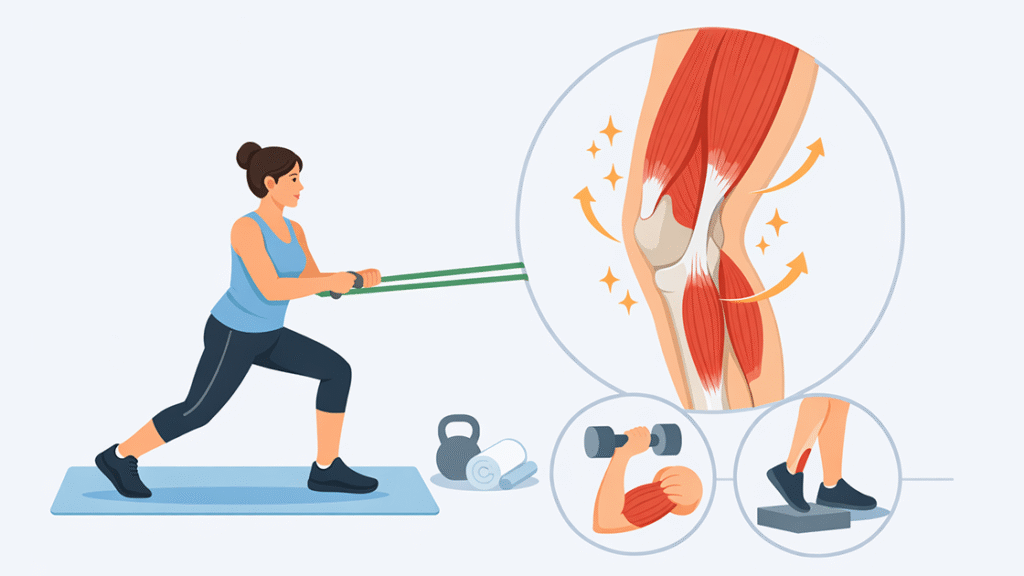
Exercise selection following shockwave therapy should be specific to the patient’s condition and recovery goals. For example, in tendinopathy, eccentric strengthening exercises (lengthening contractions under load) are commonly used to promote tendon adaptation and resilience. Dynamic balance and proprioceptive exercises support joint stability, while targeted stretching improves flexibility. Clinicians adjust exercise intensity to avoid exacerbating symptoms, emphasizing gradual progression as tissue tolerance increases. This tailored approach ensures that rehabilitation exercises complement shockwave therapy’s physiological effects without causing undue stress on healing tissues.
5. Applications Across Common Musculoskeletal Conditions
5.1 Chronic Tendinopathies
Chronic tendinopathies—such as those affecting the Achilles, patellar, or rotator cuff tendons—are hallmark conditions for combined therapy. Shockwave therapy can reduce pain and break down dysfunctional tissue structures, while rehabilitation exercises strengthen associated muscles and correct biomechanical issues. Evidence continues to grow supporting the use of combined strategies for enhancing pain reduction and functional recovery.
5.2 Plantar Fasciitis and Foot Disorders
Plantar heel pain and plantar fasciitis are common sources of chronic discomfort. Combined shockwave therapy and stretching or strengthening routines targeting intrinsic foot muscles, gastrocnemius-soleus complex, and plantar tissues have been shown to yield superior pain relief and functional outcomes compared to monotherapy. Systematic evidence suggests that ESWT plus exercise outperforms traditional treatments alone for plantar heel pain.
5.3 Shoulder, Hip, and Knee Overuse Injuries
Shoulder impingement, hip trochanteric pain syndrome, and knee osteoarthritis are examples of overuse injuries where integrated approaches are beneficial. Shockwave therapy may decrease local inflammation and nociceptive input, enabling patients to better engage in strengthening and mobility exercises that address muscle imbalances and joint instability. Clinical observations support improvements in pain and function when both modalities are combined progressively.
6. Safety Considerations and Clinical Guidelines
6.1 Patient Selection and Contraindications
Although shockwave therapy combined with rehabilitation is generally safe, proper patient selection is essential. Contraindications include local infections, active malignancy near the treatment site, coagulation disorders, or implanted electronic devices. In such cases, clinicians may modify or avoid shockwave application. Rehabilitation exercises should also be tailored to avoid undue strain on inflammatory tissues, with attention to patient pain thresholds and functional limitations.
6.2 Monitoring Progress and Adjusting Programs
Ongoing monitoring using validated outcome measures—such as pain visual analog scales (VAS), range of motion assessments, and function scores—helps clinicians track progression and adjust treatment protocols. Regular evaluations ensure that both shockwave therapy parameters and exercise regimens are optimized for each individual, balancing intensity with safety.
7. Expected Outcomes and Long-Term Management
7.1 Functional Improvement and Pain Reduction
Patients undergoing combined shockwave therapy and rehabilitation exercise often experience significant reductions in pain and improvements in function. Documented clinical results indicate decreased pain scores, enhanced joint mobility, and better quality of life compared to traditional conservative treatments. Specifically, individuals who receive integrated therapy for conditions such as chronic low back pain show greater improvements in disability and quality-of-life metrics.
7.2 Preventing Recurrence Through Maintenance Exercises
Long-term management involves continued engagement in maintenance exercises that preserve strength, flexibility, and biomechanical balance. Home exercise programs focused on key muscle groups, posture awareness, and ergonomic habits help minimize recurrence. Follow-up sessions with clinicians support ongoing progress evaluation and refinement of rehabilitation strategies, ensuring that gains from shockwave therapy and exercise are sustained.
FAQ
Q1: Is combined shockwave therapy and exercise safe for all patients?
Most patients can safely receive this combination, but those with active infections, cancer near the treatment area, or coagulation disorders should be evaluated individually.
Q2: How many combined sessions are typically needed?
Combined therapy usually involves several shockwave sessions over weeks, paired with a structured exercise plan that evolves with progress.
Q3: Can this approach replace surgery?
While it may reduce the need for surgery in many cases, it cannot replace surgical intervention when structural damage is severe.
Q4: Does shockwave therapy hurt?
Some patients report mild discomfort during treatment, but it is generally well tolerated and transient.
Q5: How soon after treatment can I exercise?
Light exercises are often introduced immediately after or shortly following shockwave therapy, under clinician guidance to avoid overloading.
Conclusion
Combining shockwave therapy with structured rehabilitation exercises provides a comprehensive, evidence-informed approach to treating chronic musculoskeletal conditions. This integrated strategy leverages shockwave therapy’s capacity to reduce pain and stimulate tissue repair with the functional benefits of progressive strengthening and mobility exercises. By addressing both biological healing and biomechanical adaptation, patients often experience enhanced recovery, reduced symptoms, and sustained improvements in activity and quality of life. As research continues to evolve, combined treatment protocols are increasingly recognized as an effective, non-invasive alternative within modern rehabilitation medicine.
Références
“Contribution of Shockwave Therapy in the Functional Rehabilitation Program of Patients with Patellofemoral Pain Syndrome.” PubMed.
https://pubmed.ncbi.nlm.nih.gov/39685719/
“Analysis of combined shockwave therapy and aquatic exercise for chronic nonspecific low back pain.” PubMed.
https://pubmed.ncbi.nlm.nih.gov/40660599/
“Effectiveness of Extracorporeal Shockwave Therapy Combined with Resistance Exercise for the Treatment of Tendinopathy: A Systematic Review and Meta-analysis Protocol.” SportRxiv.
https://doi.org/10.51224/SRXIV.105
“Relative Effect of Extracorporeal Shockwave Therapy Alone or in Combination with Noninjective Treatments on Knee Osteoarthritis.” MDPI.
https://www.mdpi.com/2227-9059/10/2/306
“The Effectiveness of Combined Extracorporeal Shockwave Therapy and Exercise for Plantar Heel Pain: A Systematic Review.” Exploratory Research in Hypothesis Medicine.