

Introduction
Chronic pain, particularly in tendons and joints, is a common issue that many people face. Traditionally, cortisone injections have been used to provide short-term relief from pain and inflammation. However, repeated use of cortisone carries significant risks, including tissue damage and the potential for dependency. As a result, patients are increasingly seeking alternative treatments that are both effective and non-invasive. Shockwave therapy has emerged as a promising option for those looking to avoid the side effects of cortisone injections. This non-invasive treatment uses high-energy acoustic waves to stimulate healing and reduce pain in various musculoskeletal conditions. In this blog, we will explore how this therapy works, its benefits, and why it may be the ideal treatment for those seeking a safer, long-term solution.
1. Why Avoid Cortisone Injections?
1.1 Common Concerns About Cortisone Shots
Cortisone injections are commonly used to treat pain and inflammation in joints, tendons, and muscles. While they can provide rapid relief, the effects are often temporary, and the long-term use of cortisone can cause significant health issues. One major concern is that cortisone weakens the tissues around the injection site, potentially leading to tendon rupture, cartilage damage, or weakening of the bones.
Moreover, the repeated use of cortisone injections can result in diminished effectiveness, meaning that patients may need increasingly frequent injections to experience the same level of relief. This dependency on cortisone can lead to a cycle of temporary relief followed by more injections, which may further damage the tissues in the long run.
1.2 Limitations of Cortisone for Chronic Pain
While cortisone injections can offer short-term pain relief, they are not a solution for chronic pain. Chronic conditions such as tendinopathy, arthrite, and other degenerative musculoskeletal diseases require treatments that address the root cause of the pain and promote healing. Cortisone masks the pain temporarily but does not promote the regeneration of damaged tissues. This limitation has led many patients to seek out alternative therapies, such as shockwave therapy, which aim to provide long-lasting relief and facilitate tissue repair.
2. What Is Thérapie par ondes de choc and How Does It Work?
2.1 Mechanism of Shockwave Therapy
Shockwave therapy works by emitting high-energy sound waves that are directed at the affected area. These waves penetrate the tissue and stimulate the body’s natural healing processes. When the acoustic waves pass through the skin, they create a mechanical force that increases blood flow, reduces inflammation, and stimulates collagen production. This process helps to promote tissue regeneration and repair damaged cells.
One of the key benefits of this therapy is its ability to stimulate cell metabolism and promote the formation of new blood vessels (angiogenesis). This enhances the healing process by improving oxygen and nutrient delivery to the damaged tissue. The mechanical energy also helps to break down calcifications and scar tissue that may have formed due to chronic injuries.
2.2 Benefits of Shockwave Therapy for Healing
Shockwave therapy offers a number of benefits compared to traditional treatments like cortisone injections. First and foremost, it is non-invasive, meaning there is no need for needles, surgery, or medication. This makes it an appealing option for patients who want to avoid the risks associated with more invasive treatments.
Additionally, this therapy addresses the root cause of pain and promotes long-term healing. By stimulating tissue regeneration, improving blood circulation, and reducing inflammation, it helps to repair damaged tendons, muscles, and joints. This leads to more sustainable pain relief, with results that last far longer than the temporary relief provided by cortisone.
3. Conditions Shockwave Therapy Treats Without Cortisone
3.1 Tendon Pain and Tendinopathy
Tendinopathy is a common condition that affects tendons and causes pain, swelling, and impaired movement. Tendons, especially those that are subjected to repetitive motions, are prone to inflammation and injury. Shockwave therapy has been proven to be particularly effective in treating chronic tendon pain, including conditions such as Achilles tendinopathy, patellar tendinopathy (jumper’s knee), and rotator cuff injuries.
Unlike cortisone injections, which provide temporary relief, shockwave therapy stimulates the healing process and promotes long-term recovery by increasing blood flow and reducing scar tissue. Patients with chronic tendon pain often experience improved mobility and reduced pain after a series of shockwave treatments.
3.2 Plantar Fasciitis and Heel Pain
Plantar fasciitis is one of the most common causes of heel pain, especially among active individuals. The condition occurs when the plantar fascia, the thick band of tissue that runs along the bottom of the foot, becomes inflamed due to excessive strain or overuse. Cortisone injections can provide temporary relief, but they do not address the underlying cause of the condition.
Shockwave therapy has been shown to be effective in treating plantar fasciitis by promoting the regeneration of tissue in the plantar fascia and reducing inflammation. This helps to alleviate pain and improve mobility without the risks associated with cortisone injections.
3.3 Shoulder and Elbow Injuries
Shockwave therapy has also proven to be effective in treating shoulder and elbow injuries, particularly those caused by overuse, such as rotator cuff tendinopathy and tennis elbow (lateral epicondylitis). These conditions often occur in individuals who engage in repetitive overhead motions or strenuous physical activities.
T therapy works by stimulating the healing of damaged tendons, improving flexibility, and reducing pain. For patients who have not responded to physical methods or cortisone injections, shockwave therapy offers a non-invasive and highly effective alternative treatment.
4. Comparing Shockwave Therapy to Cortisone Injections
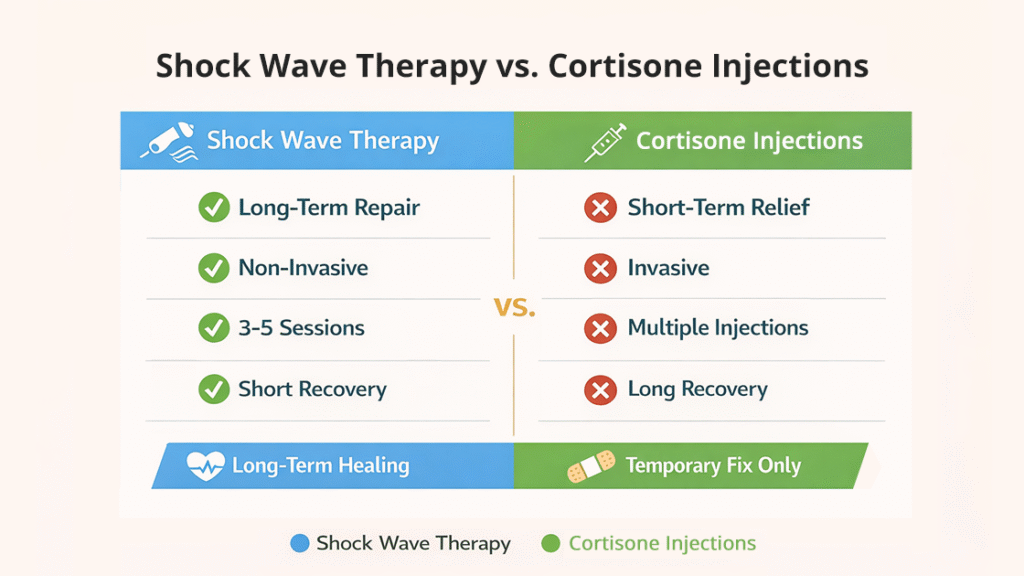
4.1 Short-Term Relief vs Long-Term Healing
Cortisone injections provide rapid, short-term pain relief, but their effects are often temporary, and they do not address the root cause of the pain. Over time, the body can become less responsive to cortisone injections, leading to diminishing returns and the need for more frequent treatments.
In contrast, shockwave therapy promotes long-term healing by stimulating tissue regeneration and improving blood circulation. While it may take a few sessions to achieve optimal results, the effects of this therapy tend to last longer and provide sustainable relief from pain.
4.2 Treatment Frequency and Side Effects
Cortisone injections may require repeated treatments to maintain their effectiveness, and each injection carries the risk of side effects, such as joint weakening and tissue damage. Shockwave therapy, on the other hand, typically requires fewer sessions and carries minimal risk of side effects. The most common side effect is mild soreness or redness in the treated area, which usually resolves within a few hours.
5. What to Expect from Shockwave Therapy
5.1 During the Session
During a shockwave therapy session, a gel is applied to the skin over the treatment area to ensure smooth delivery of the shockwaves. The device is then used to deliver pulses of energy to the affected tissue. The treatment is generally well-tolerated, though patients may experience a mild tingling or discomfort during the procedure, especially in more sensitive areas.
Each session typically lasts between 10 and 20 minutes, depending on the condition being treated and the area involved. Most patients can resume normal activities immediately after the session.
5.2 Recovery and Long-Term Results
One of the benefits of shockwave therapy is that there is little to no downtime required after the treatment. While some mild soreness may occur in the treated area, most patients experience significant pain relief and improved mobility after just a few sessions. Long-term results are usually seen after a series of treatments, with full benefits typically achieved within 3-6 weeks.
6. Who Should Consider Shockwave Therapy?
6.1 Ideal Candidates for Shockwave Therapy
Shockwave therapy is ideal for patients who suffer from chronic pain and have not responded to other treatments, such as cortisone injections, physical methods, or medications. It is particularly beneficial for individuals with tendonitis, plantar fasciitis, shoulder injuries, and other musculoskeletal conditions.
Patients who prefer non-invasive treatments and want to avoid the risks associated with injections or surgery are also good candidates for this therapy.
6.2 Consult with a Healthcare Provider
Before undergoing shockwave therapy, it is essential to consult with a healthcare provider to ensure that the treatment is appropriate for your condition. A healthcare professional can evaluate your medical history, assess your symptoms, and create a personalized treatment plan to maximize the benefits of shockwave therapy.
FAQ
Is Shockwave Therapy safe for chronic pain treatment?
Yes, this therapy is a safe and effective treatment for chronic pain, with minimal side effects.
How many sessions are typically required for significant results?
Most patients require 3-5 sessions to see noticeable improvement, depending on the condition being treated.
Can Shockwave Therapy replace cortisone injections for tendonitis?
Yes, shockwave therapy is an effective alternative to cortisone injections for treating tendonitis and other musculoskeletal conditions.
Does Shockwave Therapy hurt?
The treatment is generally well-tolerated, with mild discomfort reported in some areas, especially during more intense sessions.
How long do the results of Shockwave Therapy last compared to cortisone?
T therapy provides long-term benefits that often last much longer than cortisone injections, which typically offer only short-term relief.
Conclusion
Shockwave therapy provides a highly effective, non-invasive alternative to cortisone injections for treating chronic pain and promoting tissue healing. Whether you suffer from tendonitis, plantar fasciitis, or shoulder pain, shockwave therapy can help you recover without the risks associated with injections. By stimulating natural healing processes, shockwave therapy offers a long-term solution to pain relief and rehabilitation.
Références
Shockwave Machines — Indications for Shockwave Therapy
https://www.shockwavemachines.com/indications
NIH / PubMed on Shockwave Therapy for Tendinopathy
https://pubmed.ncbi.nlm.nih.gov
Sports Medicine / Orthopedic journals