

Introduction
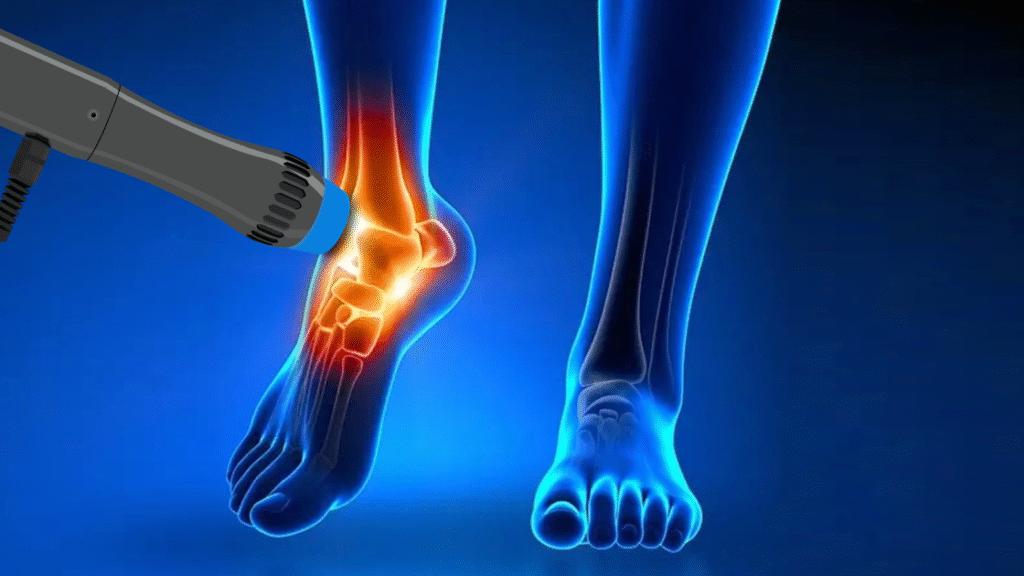
Athletic populations frequently experience chronic ankle instability, a complex musculoskeletal condition that often follows recurrent lateral ankle sprains. It involves persistent joint laxity, impaired proprioceptive feedback, neuromuscular control deficits, and recurrent functional “giving way” during dynamic activities like running, jumping, and rapid directional changes. Over time, these impairments can lead to compensatory biomechanical patterns that raise the risk of secondary injuries in the knee, hip, and lumbar spine. In modern sports medicine, extracorporeal shockwave therapy (ESWT) has gained attention as an adjunctive modality within multimodal treatment frameworks. By delivering controlled acoustic energy to musculoskeletal tissues, shockwave therapy promotes microcirculation, modulates nociceptive signaling, and supports extracellular matrix remodeling—thereby improving functional recovery in chronic ligament disorders when combined with structured rehabilitation programs.
1. Pathophysiology of Chronic Ankle Instability in Athletic Populations
To understand the therapeutic role of shockwave therapy, it is essential first to examine the underlying biological and biomechanical mechanisms of chronic ankle instability. This condition is not solely a structural ligament injury but rather a multifactorial dysfunction involving connective tissue degeneration, sensory-motor impairment, and altered neuromuscular coordination. The following subsections explore these mechanisms in detail and explain why conventional rehabilitation alone may sometimes be insufficient for full functional restoration.
1.1 Ligamentous Degeneration and Structural Laxity After Repeated Injury
Chronic ankle instability commonly develops following repeated injury to the lateral ligament complex, particularly the anterior talofibular ligament (ATFL) and calcaneofibular ligament (CFL). Each sprain event contributes to progressive collagen fiber disruption, reduced cross-linking, and decreased tensile strength of ligamentous tissue. Over time, fibroblast activity becomes dysregulated, leading to incomplete healing and disorganized extracellular matrix formation. This results in mechanical laxity, where the talocrural joint exhibits excessive inversion and anterior translation during weight-bearing activities. Clinically, this structural instability manifests as recurrent sprains, persistent swelling, and reduced confidence during athletic performance, particularly in sports requiring rapid deceleration and directional changes.
1.2 Proprioceptive Dysfunction and Neuromuscular Control Deficits
Beyond structural damage, chronic ankle instability is strongly associated with impaired proprioception due to dysfunction of mechanoreceptors located within the ligamentous and capsular structures. These sensory receptors play a critical role in joint position awareness and reflexive muscular activation. When damaged, the afferent signaling pathway becomes disrupted, resulting in delayed peroneal muscle activation and impaired postural control. This neuromuscular delay increases the likelihood of recurrent inversion injuries, particularly during unanticipated perturbations. Rehabilitation strategies must therefore target not only mechanical stability but also sensory-motor integration to restore functional joint control and prevent reinjury.
As we move from understanding the structural and neuromuscular basis of chronic ankle instability, it becomes necessary to explore how biological modulation techniques such as shockwave therapy may influence tissue behavior and pain processing within this complex condition.
2. Biological Mechanisms of Shockwave Therapy in Ligament Rehabilitation
Shockwave therapy, or extracorporeal shockwave therapy (ESWT), is a non-invasive modality that delivers high-energy acoustic waves into musculoskeletal tissues. Its therapeutic effects are mediated through both mechanical and biological pathways, including mechanotransduction, angiogenesis stimulation, and modulation of inflammatory mediators. These mechanisms are particularly relevant in chronic ligament disorders where tissue degeneration and impaired healing capacity are present.
2.1 Mechanotransduction and Extracellular Matrix Remodeling
Shockwave therapy induces mechanotransduction, a process that converts mechanical acoustic energy into biochemical signals at the cellular level. This stimulation enhances fibroblast proliferation and promotes the synthesis of type I collagen, which plays an essential role in ligament strength and structural integrity. Additionally, shockwave exposure increases expression of growth factors such as vascular endothelial growth factor (VEGF) and transforming growth factor-beta (TGF-β), both of which play important roles in tissue regeneration and angiogenesis. In chronically injured ligaments, these biological responses may contribute to improved extracellular matrix organization and gradual restoration of tensile properties when paired with progressive mechanical loading.
2.2 Pain Modulation and Neurophysiological Effects
In addition to structural effects, shockwave therapy has demonstrated neuromodulatory properties that influence pain perception. It is believed to reduce nociceptive sensitivity through changes in substance P levels and peripheral nerve activity. This is particularly important in chronic ankle instability, where persistent pain often limits participation in rehabilitation exercises. By reducing pain intensity and improving local tissue tolerance, shockwave therapy may indirectly facilitate more effective engagement in functional training programs, including balance exercises and proprioceptive retraining, which are essential for long-term joint stability.
With an understanding of the biological mechanisms involved, clinicians must examine how chronic ankle instability presents in different athletic populations and how they integrate shockwave therapy into sport-specific rehabilitation strategies.
3. Clinical Presentation and Athletic-Specific Applications
Chronic ankle instability manifests differently depending on sport type, training intensity, and movement demands. Athletes in high-impact sports often experience acute reinjury episodes, while endurance athletes may present with subtle but persistent instability and reduced functional efficiency. The following subsections highlight these differences and describe the role of shockwave therapy in targeted rehabilitation protocols.
3.1 High-Impact Sports and Recurrent Instability Patterns
Athletes participating in sports such as basketball, tennis, and volleyball are particularly susceptible to chronic ankle instability due to frequent jumping, landing, and rapid lateral movements. These repetitive high-load activities place significant stress on the lateral ligament complex, often resulting in incomplete healing after initial sprains. Clinically, these athletes report recurrent “giving way” episodes and reduced confidence during competition. In rehabilitation settings, shockwave therapy may be used as an adjunct to support tissue recovery in chronically stressed ligament structures, particularly in cases where conventional strengthening and balance training alone have not fully resolved symptoms.
3.2 Endurance Athletes and Subclinical Functional Instability
Endurance athletes, including long-distance runners and cyclists, may not always experience acute instability episodes but often report subtle functional deficits such as reduced push-off efficiency, mild discomfort during prolonged activity, and intermittent joint fatigue. Cumulative microtrauma and progressive ligamentous laxity over time frequently cause these symptoms. In such cases, clinicians may incorporate shockwave therapy into rehabilitation programs to support soft tissue adaptation and enhance local metabolic activity, while emphasizing long-term load management and neuromuscular control training.
As clinical applications become more refined, modern rehabilitation increasingly emphasizes multimodal integration, combining biological, mechanical, and neuromuscular interventions for optimal outcomes.
4. Integration of Shockwave Therapy in Multimodal Rehabilitation Programs
Effective management of chronic ankle instability requires a comprehensive rehabilitation approach that addresses structural integrity, neuromuscular control, and functional movement patterns. Shockwave therapy is typically not used in isolation but rather integrated into structured rehabilitation protocols to enhance overall treatment effectiveness.
4.1 Combination with Proprioceptive and Strength Training
Proprioceptive training and progressive resistance exercises targeting the peroneal muscles are fundamental components of chronic ankle instability rehabilitation. These interventions aim to restore neuromuscular control and improve dynamic joint stability. Shockwave therapy may be scheduled alongside these exercises to enhance tissue responsiveness and support biological recovery processes. By improving local circulation and reducing pain sensitivity, it may facilitate greater patient engagement in active rehabilitation, ultimately contributing to improved functional outcomes and reduced recurrence risk.
4.2 Role in Long-Term Maintenance and Injury Prevention Strategies
Chronic ankle instability often requires long-term management strategies rather than short-term intervention. Athletes with a history of recurrent sprains may benefit from ongoing maintenance programs designed to preserve joint stability and prevent reinjury. In this context, shockwave therapy can be used intermittently as part of a broader preventive strategy, particularly during periods of increased training load or symptom recurrence. This reflects a growing shift in sports medicine toward continuous care models rather than episodic treatment approaches.
As rehabilitation science continues to evolve, emerging technologies and personalized treatment strategies are expected to further enhance the role of shockwave therapy in musculoskeletal care.
5. Future Directions in Ligament Rehabilitation and Shockwave Technology
The future of sports rehabilitation is moving toward precision-based, technology-integrated care models that combine biomechanical assessment tools with advanced therapeutic modalities. Shockwave therapy is likely to play an increasingly important role in this evolving landscape.
5.1 Personalized Treatment Based on Functional and Imaging Assessment
Advancements in musculoskeletal imaging and movement analysis are enabling more precise identification of ligament pathology and functional deficits. This allows clinicians to tailor shockwave therapy parameters based on individual tissue characteristics, injury severity, and biomechanical patterns. Clinicians expect personalized rehabilitation strategies to improve treatment efficiency and optimize clinical outcomes by targeting specific dysfunctions rather than applying uniform protocols.
5.2 Integration with Digital Rehabilitation and Wearable Technology
Clinicians increasingly use wearable sensors and digital rehabilitation platforms to monitor ankle stability, movement quality, and load distribution in real time. When combined with shockwave therapy, these technologies may provide valuable feedback on treatment effectiveness and rehabilitation progress. This integration allows clinicians to adjust therapy protocols dynamically, ensuring that patients receive optimal and responsive care throughout their recovery journey.
FAQ
What is chronic ankle instability?
It is a condition involving repeated ankle sprains, ligament laxity, and impaired joint stability.
How does shockwave therapy help?
It supports tissue metabolism, pain modulation, and may enhance ligament healing processes.
Is it a standalone treatment?
No, it is typically used alongside physical therapy and strength training.
Who benefits most from this therapy?
Athletes with recurrent ankle sprains or chronic functional instability.
Is it suitable for long-term conditions?
Yes, it is often used in chronic musculoskeletal rehabilitation programs.
Conclusion
Chronic ankle instability is a multifactorial condition involving ligamentous degeneration, proprioceptive deficits, and neuromuscular dysfunction. Shockwave therapy offers a valuable adjunct in modern rehabilitation by promoting biological tissue activity, modulating pain, and supporting functional recovery within a comprehensive treatment framework. While it does not replace mechanical stabilization or neuromuscular training, its integration into multimodal rehabilitation programs reflects a progressive shift in sports medicine toward biologically enhanced, functionally driven care models. As technology and clinical research continue to advance, shockwave therapy is expected to play an increasingly significant role in optimizing long-term outcomes for athletes with chronic ankle instability.
Références
American Academy of Orthopaedic Surgeons. Ankle Sprain and Instability Overview
Journal of Orthopaedic & Sports Physical Therapy. Management of Chronic Ankle Instability
International Society for Medical Shockwave Treatment (ISMST). ESWT Indications and Guidelines
https://www.shockwavetherapy.org
Photomedicine and Laser Surgery Journal. Extracorporeal Shockwave Therapy in Musculoskeletal Disorders
https://www.liebertpub.com/loi/pho
British Journal of Sports Medicine. Rehabilitation Strategies for Ankle Instability