

Introduction
Chronic tendon conditions are common concerns among active individuals and people experiencing repetitive physical stress in daily life. Tendons connect muscles to bones and play an essential role in movement, but repeated loading, overuse, and insufficient recovery time may contribute to long-term tendon discomfort and reduced mobility. Extracorporeal Shockwave Therapy (ESWT) has become an important technology explored in modern rehabilitation and sports medicine settings. By using acoustic pressure waves to stimulate targeted areas, shockwave therapy provides a non-invasive approach that may support tendon recovery processes, improve comfort, and complement existing rehabilitation programs. Research has explored ESWT applications for different tendinopathies, including Achilles tendinopathy, plantar fascia-related conditions, lateral elbow issues, and rotator cuff-related concerns.
1. Understanding Chronic Tendon Conditions and Shockwave Therapy
Chronic tendon conditions often develop gradually and may affect daily movement, athletic performance, and physical activities. Understanding the relationship between tendon problems and shockwave technology helps explain why this approach has become increasingly used in rehabilitation environments.
1.1 What Causes Chronic Tendon Conditions?
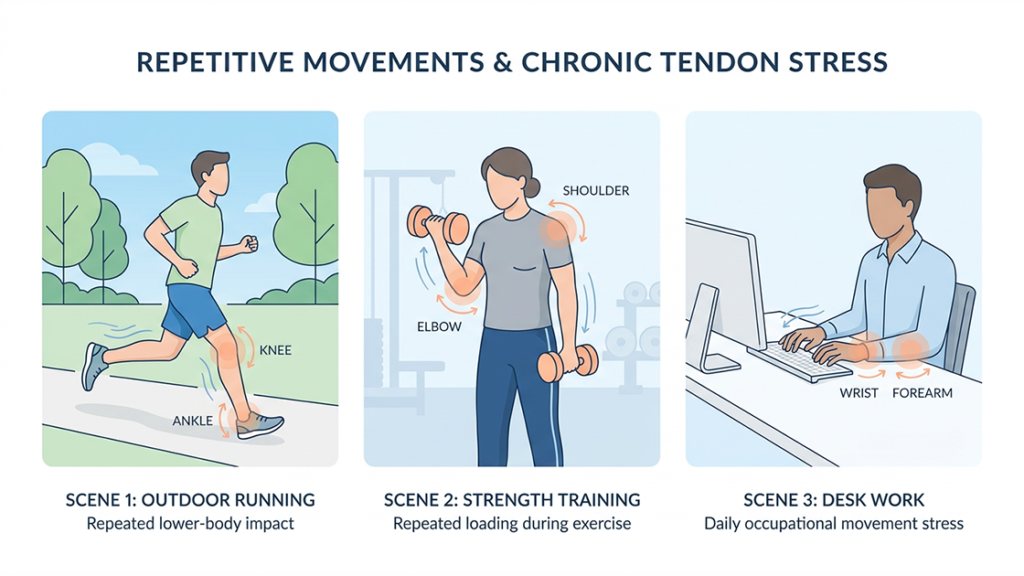
Tendons are strong connective tissues responsible for transferring force between muscles and bones. However, repetitive movements, excessive mechanical stress, aging-related changes, and insufficient recovery periods may contribute to tendon-related discomfort.
Common chronic tendon concerns include:
- Tendinopathie d'Achille
- Patellar tendon discomfort
- Coude de tennis
- Rotator cuff tendon problems
- Plantar fascia-related conditions
Unlike sudden injuries caused by a single event, chronic tendon conditions often develop over time. Repeated stress may affect tendon structure and function, leading to discomfort during movement and reduced physical performance.
For active individuals, athletes, and workers with repetitive motion demands, maintaining tendon health is an important part of long-term mobility management.
1.2 What Is Shockwave Therapy?
Shockwave Therapy, also known as Extracorporeal Shockwave Therapy (ESWT), uses acoustic pressure waves delivered to targeted body areas. These mechanical waves create controlled stimulation within tissues and are commonly used in rehabilitation and musculoskeletal care.
There are two main categories of shockwave technology:
- Thérapie par ondes de choc radiales
- Thérapie par ondes de choc focalisées
Radial shockwaves distribute energy across a broader treatment area, while focused shockwaves can concentrate energy at a more specific depth.
The technology is designed to support natural biological responses within tissues. For chronic tendon concerns, shockwave therapy is often considered as part of a broader recovery program that may include exercise, stretching, and movement management.
1.3 Why Shockwave Therapy Is Considered for Chronic Tendon Support
Traditional approaches for chronic tendon conditions may include activity modification, rehabilitation exercises, and other conservative methods. However, some individuals continue experiencing discomfort despite these approaches.
Shockwave Therapy has gained attention because it provides a different type of mechanical stimulation compared with traditional rehabilitation methods.
Potential benefits of integrating shockwave technology into tendon care programs include:
- Supporting tissue response
- Helping manage discomfort
- Supporting mobility improvement
- Complementing rehabilitation exercises
The goal of this therapy is not to replace comprehensive care but to provide another technology option for professionals managing tendon-related concerns.
2. How Shockwave Therapy Works for Tendon Recovery Support
Understanding the science behind shockwave therapy helps explain why this technology is used in modern rehabilitation environments.
2.1 The Role of Acoustic Waves in Tissue Stimulation
Shockwave Therapy uses high-energy acoustic waves that travel through tissues and create mechanical stimulation in targeted areas.
These pressure waves may influence several biological processes, including:
- Local circulation response
- Cellular activity
- Tissue remodeling processes
The controlled stimulation created by shockwaves allows professionals to apply energy to specific areas related to tendon concerns.
For chronic tendon conditions, this approach focuses on encouraging a supportive environment for natural recovery processes rather than directly replacing the body’s own functions.
2.2 Radial and Focused Shockwave Technology Differences
Different tendon conditions may involve different tissue locations and recovery needs, which is why shockwave systems often include different wave technologies.
Radial Shockwave Therapy is commonly used for broader soft tissue areas because the energy spreads outward from the applicator.
Focused Shockwave Therapy delivers energy into a more concentrated area and may be considered when professionals want a more targeted application.
The choice between radial and focused shockwave approaches depends on factors such as:
- Treatment area
- Tissue depth
- Individual recovery goals
- Professional assessment
Understanding these differences allows rehabilitation providers to create more personalized support programs.
2.3 The Relationship Between Shockwave Therapy and Tendon Health
Chronic tendinopathy involves complex changes within tendon structures. Modern approaches focus not only on managing discomfort but also on supporting healthy movement patterns and functional improvement.
Shockwave Therapy is often combined with other rehabilitation strategies, such as:
- Strength exercises
- Mobility training
- Stretching programs
- Activity adjustments
This combination approach allows professionals to address multiple factors related to tendon health.
Research reviews have explored ESWT applications across different tendinopathies and suggest that shockwave therapy may provide supportive benefits for certain tendon-related conditions, although outcomes can vary depending on the specific condition and treatment approach.
3. Common Chronic Tendon Conditions Where Shockwave Therapy Is Explored
Chronic tendon conditions can affect different areas of the body depending on lifestyle, occupation, and physical activity patterns. This therapy has been widely discussed as a supportive technology for several tendon-related concerns because of its ability to deliver mechanical stimulation to targeted tissues.
3.1 Shockwave Therapy for Achilles Tendon Conditions
The Achilles tendon connects the calf muscles to the heel bone and plays a key role in walking, running, and jumping movements. Because it experiences repeated loading during daily activities and sports, it is one of the tendons commonly affected by long-term stress.
Achilles tendinopathy may involve discomfort around the back of the ankle, stiffness after inactivity, and challenges during physical activities.
It is often explored in Achilles tendon recovery programs because acoustic waves can provide targeted mechanical stimulation around the affected area. When combined with appropriate rehabilitation exercises and movement strategies, shockwave technology may support mobility improvement and comfort management.
3.2 Shockwave Therapy for Tennis Elbow and Lateral Elbow Tendon Issues
Lateral elbow tendon problems, commonly known as tennis elbow, can affect people who perform repetitive wrist and forearm movements. Despite its name, this condition is not limited to tennis players and may occur among office professionals, manual workers, and individuals with repeated arm activities.
It provides a non-invasive option that focuses on targeted stimulation around the tendon area. Many rehabilitation professionals consider ESWT as part of a broader approach that may include strengthening exercises and activity adjustments.
The application of shockwave technology in elbow-related tendon concerns continues to be studied as researchers explore how different energy settings and treatment protocols influence outcomes.
3.3 Shockwave Therapy for Plantar Fascia and Foot-Related Tendon Concerns
Foot-related tendon and soft tissue discomfort can affect standing, walking, and daily movement. Plantar fascia-related conditions are among the common concerns where shockwave technology has been explored.
For individuals experiencing long-term foot discomfort, rehabilitation professionals may consider this therapy as part of a comprehensive management program.
The technology focuses on delivering controlled acoustic energy to targeted areas, which may support tissue response and help individuals participate more comfortably in movement-based recovery plans.
4. Integrating Shockwave Therapy Into Modern Rehabilitation Programs
This herapy is usually considered one part of a complete recovery strategy rather than a standalone approach. Modern rehabilitation programs often combine different methods to support long-term movement quality and physical function.
4.1 Combining Shockwave Therapy With Exercise-Based Rehabilitation
Exercise remains an important component of tendon recovery programs because controlled movement helps support strength, flexibility, and functional improvement.
When combined with exercise-based rehabilitation, Shockwave Therapy may provide additional support for individuals managing chronic tendon concerns.
Common rehabilitation approaches may include:
- Strength training
- Stretching programs
- Mobility exercises
- Gradual activity progression
The combination of mechanical stimulation from shockwave technology and structured exercise allows professionals to create more comprehensive recovery plans. Research has explored combined ESWT and exercise approaches for several tendinopathies, including Achilles, plantar heel pain, lateral elbow, and rotator cuff-related conditions.
4.2 Choosing Between Radial and Focused Shockwave Therapy
Different shockwave technologies provide different energy delivery methods.
Radial Shockwave Therapy generally delivers pressure waves across a wider tissue area, making it commonly considered for broader soft tissue applications.
Focused Shockwave Therapy concentrates energy at a more specific depth, which may be useful when professionals want more targeted stimulation.
Choosing between these approaches depends on several factors, including:
- Target tissue location
- Depth of the affected area
- Individual recovery goals
- Professional assessment
Understanding these differences helps clinics select suitable technology options for different tendon-related programs.
4.3 The Importance of Personalized Shockwave Therapy Programs
Every tendon condition can vary depending on factors such as activity level, symptom duration, body area, and lifestyle demands.
A personalized approach allows professionals to consider:
- Energy intensity
- Treatment frequency
- Combination with other rehabilitation methods
Rather than applying the same approach to every individual, customized programs focus on supporting specific recovery goals.
This personalized model aligns with modern rehabilitation trends, where technology and professional expertise work together to provide more targeted care experiences.
5. The Future Development of Shockwave Therapy for Tendon Care
As rehabilitation technology continues to evolve, this therapy remains an area of interest for professionals looking for advanced non-invasive approaches. Future development will likely focus on improving treatment precision, understanding biological responses, and creating more personalized applications.
5.1 Advances in Shockwave Technology and Tendon Rehabilitation
Modern shockwave systems continue to improve in areas such as energy control, application accuracy, and treatment flexibility.
Advanced systems allow professionals to adjust parameters according to different body areas and recovery requirements.
As research continues, clinicians are gaining a better understanding of how mechanical stimulation interacts with tendon tissues and how shockwave technology can be incorporated into comprehensive rehabilitation programs.
Future innovation may focus on:
- More precise energy delivery
- Improved treatment customization
- Better integration with rehabilitation technology
5.2 Why Shockwave Therapy Continues to Gain Attention in Modern Care
The demand for non-invasive recovery technologies continues to grow as more people seek alternatives that support active lifestyles and long-term mobility.
It offers several features that make it attractive for rehabilitation environments:
- Non-surgical approach
- Targeted acoustic stimulation
- Compatibility with exercise programs
- Flexible clinical applications
For clinics, investing in advanced shockwave technology can help expand rehabilitation options and support a wider range of tendon and soft tissue care programs.
As understanding of tendon health continues to develop, Shockwave Therapy is expected to remain an important technology within modern musculoskeletal care.
FAQ
What is Shockwave Therapy for chronic tendon conditions?
It uses acoustic waves to provide targeted mechanical stimulation and support tendon recovery programs.
Which tendon conditions are commonly associated with Shockwave Therapy?
Common applications include Achilles tendon concerns, tennis elbow, plantar fascia-related conditions, and other chronic tendon issues.
Is Shockwave Therapy invasive?
No. It is a non-invasive technology that uses external acoustic waves.
Can Shockwave Therapy replace exercise rehabilitation?
No. It is generally considered a complementary approach that can be combined with exercise and movement programs.
What is the difference between radial and focused shockwave therapy?
Radial shockwaves spread energy over a wider area, while focused shockwaves deliver energy to a more concentrated depth.
How does Shockwave Therapy support tendon care?
It may support tissue stimulation, comfort management, and rehabilitation programs designed around tendon health.
Conclusion
Chronic tendon conditions can affect movement, physical performance, and daily activities, making effective management strategies an important focus in modern rehabilitation. Shockwave Therapy provides a technology-based option that uses acoustic wave stimulation to support tendon care programs and complement traditional rehabilitation approaches. Through different technologies such as radial and focused shockwave systems, professionals can develop more personalized recovery strategies based on individual needs. As research and clinical applications continue to evolve, Shockwave Therapy will remain an important part of the conversation surrounding non-invasive tendon support and modern musculoskeletal care.
Références
Therapeutic Ultrasound and Shockwave Therapy for Tendinopathy: A Narrative Review
https://pubmed.ncbi.nlm.nih.gov/35859290
Effectiveness of Extracorporeal Shockwave Therapy in Treatment of Upper and Lower Limb Tendinopathies: A Systematic Review and Meta-analysis
https://pubmed.ncbi.nlm.nih.gov/37493215
The Effect of Extracorporeal Shock-Wave Therapy on Pain in Patients With Various Tendinopathies: A Systematic Review and Meta-analysis of Randomized Control Trials
https://pmc.ncbi.nlm.nih.gov/articles/PMC11041007
The Effectiveness of Extracorporeal Shockwave Therapy for Midportion Achilles Tendinopathy: A Systematic Review
https://pubmed.ncbi.nlm.nih.gov/35989757
ESWT for Tendinopathy: Technology and Clinical Implications