

Introduction
Diabetic foot care requires continuous attention because diabetes may influence circulation, nerve function, tissue condition, and overall mobility. As rehabilitation technology continues to develop, healthcare professionals are exploring advanced approaches that can complement traditional foot care strategies. Shockwave Therapy, based on acoustic wave technology and mechanical stimulation principles, has become an increasingly discussed option in rehabilitation environments. By delivering controlled energy to targeted areas, Shockwave Therapy may support tissue wellness, circulation-related functions, and recovery-focused rehabilitation programs. When combined with professional guidance and comprehensive foot management, this technology provides an additional approach for supporting long-term foot health goals and improving rehabilitation flexibility.
1. Understanding Diabetic Foot Concerns and Rehabilitation Challenges
Diabetic foot care involves more than addressing a single physical concern. Instead, it requires a comprehensive understanding of how diabetes-related changes may affect different aspects of foot health. Therefore, modern rehabilitation programs often focus on supporting tissue condition, maintaining mobility, and developing personalized management strategies.
1.1 What Are Diabetic Foot Concerns?
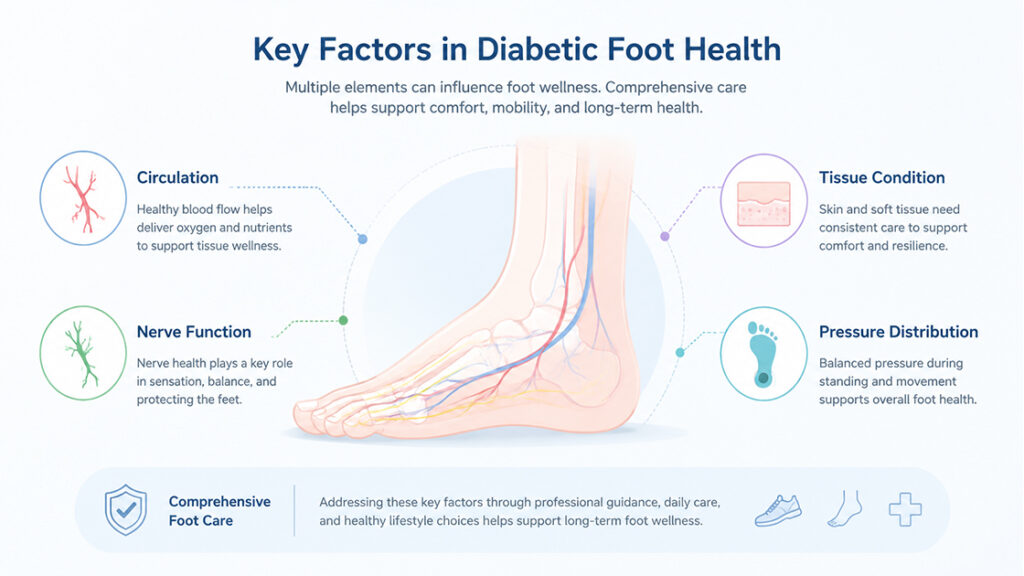
Diabetic foot concerns refer to a range of foot-related challenges that may occur in individuals with diabetes. These concerns are often associated with changes in circulation, sensory response, tissue condition, and pressure distribution during daily activities.
Because the feet carry body weight during standing and movement, maintaining foot wellness is an important part of overall health management. Changes in the condition of skin, soft tissue, or nerve sensitivity may influence comfort and daily mobility. As a result, professional foot care often combines monitoring, lifestyle support, rehabilitation strategies, and technology-based solutions.
Rather than focusing on one individual factor, modern diabetic foot management considers the relationship between vascular function, musculoskeletal balance, movement patterns, and personal health goals.
1.2 Why Comprehensive Rehabilitation Support Matters
Diabetic foot rehabilitation often requires a structured and personalized approach. Each person may have different physical conditions, activity levels, and lifestyle needs, which means a single solution may not be suitable for every situation.
For this reason, rehabilitation professionals usually consider multiple aspects, including movement ability, tissue condition, daily activities, and long-term wellness objectives. Comprehensive support may include exercise-based rehabilitation, professional foot care guidance, mobility strategies, and advanced technologies.
Meanwhile, the development of rehabilitation technology provides professionals with more options to create flexible programs. Shockwave Therapy is one example of a technology that can complement existing approaches by supporting tissue-focused rehabilitation goals.
1.3 The Role of Technology in Modern Diabetic Foot Care
Technology continues to influence the development of modern rehabilitation services. As healthcare providers look for more personalized and efficient approaches, advanced equipment has become an important part of many professional environments.
Shockwave Therapy represents one technology that uses controlled acoustic energy to interact with targeted tissues. Instead of replacing traditional diabetic foot management, it works as a supportive tool within a broader rehabilitation framework.
With the combination of professional expertise and advanced technology, rehabilitation providers can develop more comprehensive strategies focused on mobility support, tissue wellness, and long-term foot care.
2. How Shockwave Therapy Supports Diabetic Foot Rehabilitation
Understanding how Shockwave Therapy works helps explain why this technology is being explored in diabetic foot rehabilitation settings. The treatment principle is based on acoustic wave energy, which creates mechanical stimulation within targeted areas.
2.1 Understanding Acoustic Wave Technology
Shockwave Therapy uses high-energy acoustic waves to deliver mechanical stimulation to specific tissue areas. These pressure waves interact with biological structures and may support natural tissue responses associated with rehabilitation processes.
Modern Shockwave systems generally include different technology approaches, such as radial and focused shockwave. Radial Shockwave Therapy distributes energy over a wider treatment area, while Focused Shockwave Therapy allows professionals to target deeper tissue regions with greater precision.
Because different rehabilitation goals require different approaches, healthcare providers select suitable settings according to professional evaluation and individual needs. This flexibility allows Shockwave Therapy to be incorporated into various rehabilitation programs.
2.2 Supporting Tissue Wellness and Microcirculation
Healthy tissue function depends on several biological processes, including nutrient delivery, cellular activity, and circulation-related support. For individuals managing diabetic foot concerns, maintaining tissue wellness is an important part of long-term rehabilitation planning.
Shockwave Therapy is often discussed in relation to supporting local tissue responses and microcirculation-related processes. Through controlled mechanical stimulation, it may help create a supportive environment for tissue-focused rehabilitation programs.
In addition, this technology can be combined with other rehabilitation methods, allowing professionals to address mobility, tissue condition, and overall foot wellness through a more comprehensive approach.
2.3 Integrating Shockwave Therapy Into Rehabilitation Programs
The effectiveness of a rehabilitation program depends on proper assessment and individualized planning. Therefore, Shockwave Therapy is generally considered as part of a broader strategy rather than a standalone solution.
Professionals may integrate Shockwave Therapy with movement training, mobility exercises, and ongoing foot care management. This combination allows rehabilitation providers to focus on different aspects of physical function while adapting programs to individual requirements.
As rehabilitation models continue evolving, technology-supported approaches like Shockwave Therapy provide additional possibilities for creating personalized and flexible care environments.
3. Applications of Shockwave Therapy in Diabetic Foot Care Support
As diabetic foot rehabilitation continues to develop, professionals are exploring how Shockwave Therapy can support different areas of foot wellness management. The technology may be incorporated into rehabilitation environments that focus on tissue support, mobility, and personalized recovery programs.
3.1 Supporting Soft Tissue Rehabilitation Programs
Soft tissue condition plays an important role in maintaining comfortable movement and daily function. Diabetes-related changes may influence how tissues respond to physical stress, making soft tissue support an important consideration in rehabilitation planning.
Shockwave Therapy provides controlled mechanical stimulation that can be incorporated into soft tissue-focused programs. By supporting professional rehabilitation strategies, this technology may help create additional options for individuals focusing on tissue wellness and mobility maintenance.
Furthermore, when combined with appropriate rehabilitation exercises and professional guidance, Shockwave Therapy can become part of a more complete approach to foot health management.
3.2 Supporting Mobility and Functional Movement
Maintaining mobility is an important goal for many individuals managing diabetic foot concerns. Comfortable movement supports independence and allows people to participate more easily in daily activities.
Rehabilitation professionals often focus on improving movement patterns, maintaining physical function, and supporting overall mobility. Shockwave Therapy may complement these efforts by providing another technology option within functional rehabilitation programs.
Through combining advanced technology with exercise-based approaches, professionals can develop more balanced rehabilitation plans that address both tissue wellness and movement-related goals.
3.3 Applications in Rehabilitation and Podiatry Clinics
Professional clinics are continuously exploring technologies that can expand their rehabilitation services. Shockwave Therapy has gained attention in rehabilitation and podiatry-related environments because of its connection with tissue-focused applications and non-invasive technology.
Clinics may incorporate Shockwave Therapy into programs designed around:
- Foot wellness support
- Mobility-focused rehabilitation
- Tissue condition management
- Recovery-oriented services
By adding advanced technology to their existing services, healthcare providers can offer more diverse rehabilitation options while maintaining a patient-centered approach.
4. Why Healthcare Professionals Are Exploring Shockwave Therapy
As rehabilitation approaches continue to evolve, healthcare professionals are looking for technologies that can support modern foot care programs. Shockwave Therapy provides an additional option for clinics that focus on non-invasive rehabilitation, personalized care, and technology-assisted recovery support.
4.1 Expanding Non-Invasive Rehabilitation Solutions
Non-invasive rehabilitation technologies are becoming increasingly important in modern healthcare environments because they can be integrated into professional programs without major lifestyle disruption.
Shockwave Therapy uses acoustic wave energy instead of surgical methods, making it a technology option that can complement existing rehabilitation approaches. For diabetic foot support programs, professionals may consider this technology as part of broader strategies focused on tissue wellness, mobility support, and recovery management.
In addition, advanced rehabilitation equipment allows clinics to expand their service capabilities while continuing to emphasize professional evaluation and individualized care planning.
4.2 Creating Personalized Care Approaches
Every individual may have different rehabilitation needs depending on physical condition, activity level, lifestyle habits, and overall health goals. Therefore, personalized care has become an important direction in modern rehabilitation.
Shockwave Therapy can be adjusted according to different application requirements. Professionals can consider factors such as treatment areas, energy settings, and rehabilitation objectives when designing supportive programs.
By combining technology with professional knowledge, clinics can create more flexible approaches that focus on individual needs rather than using a single standardized method for every person.
4.3 Combining Technology With Comprehensive Foot Management
Technology works best when it becomes part of a complete health management strategy. Diabetic foot care involves multiple areas, including daily foot protection, mobility maintenance, professional monitoring, and lifestyle management.
Shockwave Therapy can support these comprehensive programs by providing an additional rehabilitation tool. When combined with appropriate foot care practices and professional guidance, it may contribute to a more complete approach focused on long-term foot wellness.
As a result, many healthcare providers view advanced technologies as supportive components within broader rehabilitation systems.
5. The Future of Shockwave Therapy in Diabetic Foot Rehabilitation
The future of diabetic foot rehabilitation is moving toward more personalized, technology-supported, and comprehensive care models. As healthcare providers continue exploring advanced solutions, Shockwave Therapy represents one area of innovation within modern rehabilitation environments.
5.1 The Growth of Technology-Based Rehabilitation
Technology-based rehabilitation continues to develop as clinics seek more efficient and flexible ways to support patient care. Advanced equipment can provide professionals with additional tools for designing personalized rehabilitation programs.
In the future, diabetic foot rehabilitation may continue integrating technologies that support:
- Individualized care planning
- Mobility-focused rehabilitation
- Tissue wellness management
- Professional assessment methods
Shockwave Therapy may become part of this ongoing development by offering a technology-based approach that complements traditional rehabilitation strategies.
5.2 Supporting Long-Term Foot Wellness Strategies
Long-term foot wellness requires continuous attention to daily habits, physical activity, and professional support. For individuals managing diabetes-related foot concerns, maintaining mobility and protecting tissue condition are important parts of overall health management.
Shockwave Therapy can be considered alongside other wellness strategies, including rehabilitation exercises, proper footwear choices, and regular professional evaluations.
Rather than replacing existing approaches, this technology provides an additional option that supports a broader focus on maintaining physical function and quality of life.
5.3 Developing Advanced Rehabilitation Models
Modern rehabilitation is increasingly focused on combining technology, professional expertise, and personalized care. This trend creates opportunities for clinics to develop more comprehensive service models.
Shockwave Therapy offers rehabilitation providers another method for supporting tissue-focused programs and mobility management. As research and technology continue to advance, more healthcare environments may explore how acoustic wave technology can fit into specialized rehabilitation applications.
By combining innovative equipment with evidence-informed practices and professional experience, rehabilitation providers can continue developing advanced solutions for long-term diabetic foot support.
FAQ
Qu'est-ce que la thérapie par ondes de choc ?
Shockwave Therapy is a non-invasive rehabilitation technology that uses acoustic wave energy to provide controlled mechanical stimulation to targeted tissue areas.
Can Shockwave Therapy support diabetic foot care programs?
Shockwave Therapy may be used as part of professional rehabilitation programs to support tissue wellness, mobility goals, and recovery-focused strategies.
Does Shockwave Therapy replace traditional diabetic foot care?
No. It should be considered a complementary technology used together with professional guidance, regular monitoring, and appropriate foot care practices.
How does Shockwave Therapy work?
Shockwave Therapy delivers acoustic waves to targeted areas, creating mechanical stimulation that may support natural tissue responses.
Which professionals may use Shockwave Therapy for diabetic foot rehabilitation?
Rehabilitation specialists, podiatry professionals, and healthcare providers may incorporate Shockwave Therapy into suitable clinical environments based on their professional practice.
Conclusion
Shockwave Therapy is becoming an increasingly discussed technology in diabetic foot rehabilitation because of its connection with acoustic wave stimulation, tissue wellness support, and modern rehabilitation strategies. By delivering controlled energy to targeted areas, this technology provides professionals with an additional option for supporting mobility, tissue-focused programs, and personalized rehabilitation goals. When combined with comprehensive foot care, professional guidance, and healthy lifestyle practices, Shockwave Therapy can contribute to the continued development of advanced rehabilitation approaches for individuals seeking long-term foot wellness support.
Références
Extracorporeal Shock Wave Therapy: Current Evidence and Future Perspectives
https://www.ncbi.nlm.nih.gov/pmc/articles/PMC5579577
Shock Wave Therapy in Medicine and Rehabilitation: Principles and Clinical Applications
https://www.ncbi.nlm.nih.gov/pmc/articles/PMC3601865
Diabetic Foot: From Prevention to Management
https://www.ncbi.nlm.nih.gov/pmc/articles/PMC8390547
Extracorporeal Shock Wave Therapy for Tissue Regeneration and Healing Support
https://www.ncbi.nlm.nih.gov/pmc/articles/PMC7462906
Advanced Rehabilitation Technologies and Their Role in Tissue Recovery
https://www.frontiersin.org/articles/10.3389/fbioe.2021.652516/full