

Introduction
Equestrian sports require a unique combination of strength, balance, coordination, and physical endurance. Although riders work closely with horses, their own bodies experience continuous physical demands during training, competition, and daily riding activities. Repeated movements, maintaining riding posture, and controlling body stability can place stress on different areas of the musculoskeletal system. As sports rehabilitation technology continues to develop, Shockwave Therapy has gained attention as a supportive option within equestrian wellness programs. Using acoustic wave technology, Shockwave Therapy can be incorporated into professional recovery environments to support soft tissue wellness, physical comfort, and overall recovery routines for equestrian riders.
1. Understanding the Physical Demands of Equestrian Sports
Equestrian activities involve more than simply sitting on a horse. Riders require precise body control and constant interaction between their muscles, joints, and nervous system. Understanding these physical demands helps explain why recovery-focused technologies are becoming increasingly relevant in horse sports.
1.1 The Unique Physical Challenges Faced by Equestrian Riders
Equestrian riders rely on continuous coordination between the upper body, core muscles, and lower limbs to maintain balance and communicate with the horse.
During riding activities, common physical demands include:
- Maintaining stable posture
- Repetitive leg positioning
- Core muscle engagement
- Continuous balance adjustment
Unlike some traditional sports, equestrian activities often require long periods of controlled movement rather than short bursts of intense activity. Over time, these repeated physical patterns can influence overall musculoskeletal wellness.
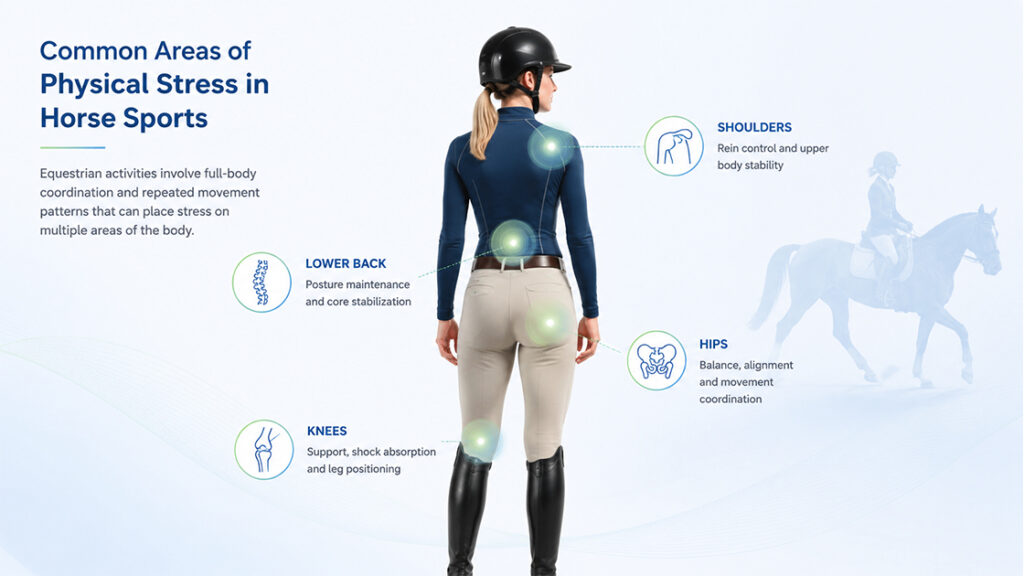
1.2 Common Areas of Physical Stress in Horse Sports
Because riding requires full-body coordination, different areas of the body may experience repeated loading.
Equestrian riders commonly focus on maintaining wellness in areas such as:
- Lower back
- Hips
- Thighs
- Knees
- Shoulders
Professional recovery programs often consider the rider’s entire movement pattern rather than focusing only on one specific body area.
1.3 Why Recovery Management Matters for Equestrian Athletes
Recovery is an important part of maintaining an active lifestyle, especially for individuals participating in regular training or competitions.
Equestrian athletes often combine:
- Riding sessions
- Strength training
- Flexibility exercises
- Competition preparation
A structured recovery routine can help riders maintain physical readiness and continue participating in their sport.
2. Exploring Shockwave Therapy Technology in Equestrian Recovery
As sports rehabilitation continues to evolve, many athletic fields are exploring technology-based approaches that complement traditional recovery strategies. Shockwave Therapy represents one of the technologies used in professional settings to support musculoskeletal wellness.
2.1 How Shockwave Therapy Works
Shockwave Therapy uses acoustic wave technology to deliver mechanical energy to targeted areas of the body.
The process is based on principles related to:
- Acoustic pressure waves
- Mechanical stimulation
- Tissue response
- Cellular activity
This technology is often discussed in rehabilitation and sports wellness environments because of its ability to provide focused energy to specific treatment areas.
2.2 The Role of Mechanotransduction in Shockwave Technology
Mechanotransduction describes how mechanical signals can influence biological responses within tissues.
Shockwave Therapy applies controlled mechanical energy that interacts with targeted areas, supporting natural tissue responses.
This technology concept has made shockwave systems an area of interest for professionals looking for advanced tools within recovery-focused programs.
2.3 Why Equestrian Riders May Consider Shockwave Therapy
Equestrian riders often require ongoing physical maintenance because riding involves repetitive movement patterns and sustained body control.
Shockwave Therapy may be incorporated into professional wellness programs that focus on:
- Soft tissue support
- Physical comfort
- Recovery routines
- Musculoskeletal wellness
It should be considered as part of a broader approach that includes proper training, movement preparation, and professional guidance.
3. Applications of Shockwave Therapy in Horse Sports Recovery
Equestrian recovery involves understanding the relationship between riding techniques, physical demands, and overall body condition. Shockwave Therapy can be integrated into different areas of rider wellness management.
3.1 Supporting Lower Body Recovery for Riders
The lower body plays an essential role in equestrian sports. Riders depend on their hips, thighs, and legs to maintain position and communicate effectively with the horse.
Recovery programs may focus on supporting:
- Hip mobility
- Leg muscle wellness
- Joint comfort
- Movement quality
Shockwave Therapy can be considered as one component of a professional recovery strategy designed around lower body wellness.
3.2 Supporting Core and Back Wellness
A stable core and healthy back function are important for maintaining proper riding posture.
Equestrian riders often spend extended periods maintaining controlled positions, which makes back and core wellness an important part of training preparation.
Recovery-focused programs may include approaches that support:
- Postural balance
- Muscle relaxation
- Mobility maintenance
- Physical comfort
Shockwave technology provides another option for professionals developing comprehensive recovery plans.
3.3 Supporting Upper Body Wellness in Riders
Although riding is primarily associated with lower body movement, the upper body also plays an important role.
Shoulders, arms, and upper back muscles contribute to:
- Rein control
- Balance
- Communication with the horse
Maintaining upper body wellness helps riders support efficient movement patterns during training and competition.
4. Integrating Shockwave Therapy Into Equestrian Wellness Programs
Modern equestrian athletes increasingly recognize the importance of combining training with structured recovery. Technology-based approaches can become part of a complete wellness strategy.
4.1 Combining Shockwave Therapy With Traditional Recovery Methods
Shockwave Therapy works best when combined with established wellness practices.
A comprehensive equestrian recovery plan may include:
- Stretching routines
- Strength conditioning
- Mobility exercises
- Professional assessment
Technology can complement these methods by providing additional support within a structured program.
4.2 The Role of Sports Rehabilitation Professionals
Sports rehabilitation professionals play an important role in helping athletes develop personalized recovery strategies.
For equestrian riders, professionals may evaluate:
- Riding habits
- Movement patterns
- Physical demands
- Training schedules
Shockwave Therapy can be integrated into these professional environments based on individual needs and wellness goals.
4.3 Supporting Long-Term Riding Performance
Many equestrian athletes participate in the sport for years, making long-term physical maintenance an important consideration.
Consistent wellness management can help riders focus on:
- Maintaining mobility
- Supporting physical confidence
- Managing training demands
- Improving recovery routines
Shockwave Therapy represents one technology option within this long-term approach.
5. The Future of Shockwave Therapy in Equestrian Sports
As horse sports continue developing, technology will likely play a larger role in athlete preparation and recovery management. Shockwave Therapy is part of a broader movement toward advanced sports wellness solutions.
5.1 Growing Interest in Sports Rehabilitation Technology
Athletes across different sports are increasingly exploring technology-based recovery options.
In equestrian sports, rehabilitation technology may support:
- Training consistency
- Physical maintenance
- Recovery planning
Advanced tools allow professionals to create more comprehensive athlete care programs.
5.2 Expanding Recovery Support Beyond Traditional Sports
Equestrian sports have unique physical requirements compared with many other athletic activities.
As awareness grows, more specialized recovery approaches are being developed for sports such as:
- Horse riding
- Dressage
- Show jumping
- Eventing
Shockwave Therapy provides another technology option that aligns with the specialized needs of these athletes.
5.3 Building Modern Equestrian Wellness Programs
The future of equestrian wellness may involve greater integration between sports science, rehabilitation knowledge, and advanced technology.
By combining professional expertise with innovative tools, equestrian programs can create more complete approaches to supporting rider wellness.
FAQ
What is Shockwave Therapy for equestrian riders?
It is a technology-based recovery support approach that uses acoustic waves in professional wellness and rehabilitation settings.
Why do equestrian riders need recovery management?
Horse riding involves repetitive movement, posture control, and physical coordination, making recovery an important part of training.
Can Shockwave Therapy replace exercise?
No. It should complement proper training, stretching, and professional wellness guidance.
Which areas may equestrian riders focus on?
Common areas include the lower back, hips, legs, shoulders, and other regions involved in riding movement.
Is Shockwave Therapy only for professional riders?
No. It may be considered by different levels of riders depending on their wellness goals and professional recommendations.
Conclusion
Equestrian sports require continuous physical coordination, balance, and endurance, making rider wellness an important part of long-term participation. Shockwave Therapy provides a modern technology option that can be integrated into equestrian recovery programs by supporting soft tissue wellness, physical comfort, and structured rehabilitation approaches. When combined with proper training, movement preparation, and professional guidance, shockwave technology can contribute to a more comprehensive approach to maintaining rider health and supporting active participation in horse sports.
Références
Extracorporeal Shock Wave Therapy: Current Evidence and Future Directions
https://www.ncbi.nlm.nih.gov/pmc/articles/PMC3601888
Clinical Applications of Extracorporeal Shock Wave Therapy in Musculoskeletal Disorders
https://www.ncbi.nlm.nih.gov/pmc/articles/PMC6028797
Shockwave Therapy in Sports Medicine and Rehabilitation
https://www.ncbi.nlm.nih.gov/pmc/articles/PMC6127080
Mechanotransduction and Cellular Responses to Mechanical Stimulation
https://www.ncbi.nlm.nih.gov/pmc/articles/PMC3063065
The Role of Rehabilitation in Sports Performance and Injury Prevention