

Introduction
A slight head bob at the trot. A shortened stride that was never there before. A hesitation to turn sharply on firm ground. For horse owners, these subtle signs often point to one of the most frustrating and common causes of chronic forelimb lameness: navicular syndrome. This progressive degenerative condition affects the navicular bone and its associated structures within the hoof, turning once-enthusiastic performance horses into reluctant partners. For decades, managing this condition meant a cycle of corrective shoeing, anti-inflammatory medications, and palliative care—approaches that often provide only temporary relief. In recent years, however, a non-invasive treatment has gained significant attention among equine veterinarians. Extracorporeal shock wave therapy (ESWT) delivers focused acoustic pulses to the affected area, reducing inflammation, relieving pain, and promoting tissue repair. For horses with navicular syndrome, this approach offers a meaningful alternative to long-term medication or the despair of a progressive decline.
1. Understanding Navicular Syndrome
Navicular syndrome is not a single disease but a degenerative condition that can encompass injuries to any of the structures within the navicular apparatus. This complex includes the navicular bone itself, the navicular bursa, the deep digital flexor tendon (DDFT), and several key ligaments.
1.1 What Happens in the Navicular Apparatus
The navicular bone acts as a fulcrum, decreasing the work of the deep digital flexor tendon as it passes around the back of the hoof. The DDFT exerts a major compressive force on the distal third of the navicular bone, particularly during the propulsion phase of the stride. Over time, this repetitive loading can lead to degenerative changes. Erosions of the fibrocartilage on the flexor surface of the navicular bone often represent the first changes to occur. These erosions can progress to more serious issues, including bone cysts, medullary sclerosis, adhesions between the flexor surface and the DDFT, and even chip fractures of the distal border. The resulting pain arises from multiple potential sources: increased intraosseous pressure, damage to the bursa or tendon, and inflammation of the surrounding soft tissues.
1.2 Recognizing the Signs
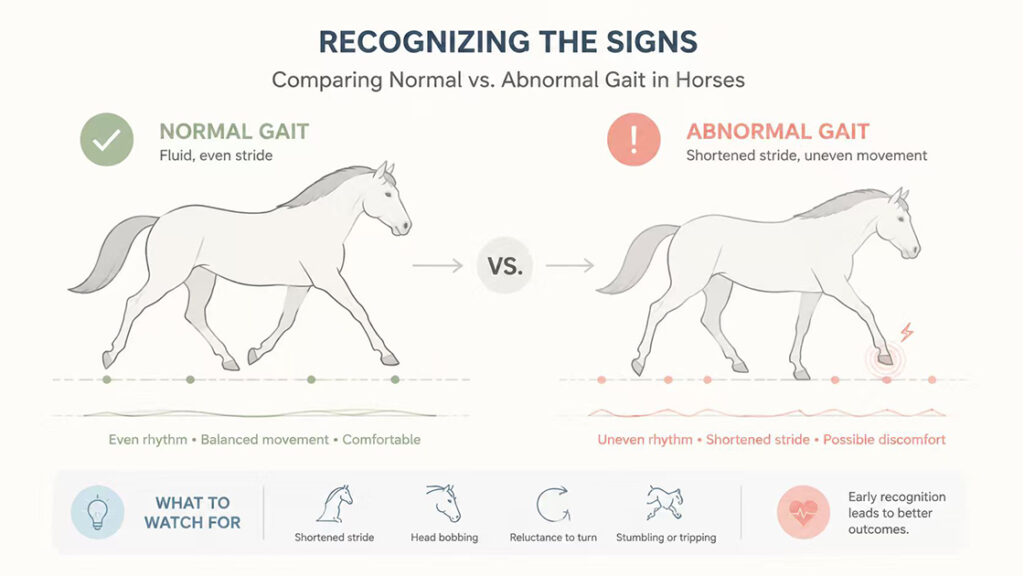
Navicular syndrome is almost always bilateral, meaning it affects both front feet. However, one forelimb usually shows more lameness than the other. Affected horses may demonstrate a shortened stride, overt lameness, a shuffling gait, or stumbling. Many owners mistakenly believe the lameness originates from the shoulder, as the horse often overstresses that joint due to changes in how it advances the limb. A definitive diagnosis typically involves a combination of clinical signs, hoof tester sensitivity in the heel or across the frog, and diagnostic imaging.
2. The Limitations of Traditional Treatment
Historically, the management of navicular syndrome has relied on palliative measures. Corrective farriery aims to address hoof imbalances, such as long toes and low heels, which exacerbate the condition. Non-steroidal anti-inflammatory drugs (NSAIDs) provide pain relief but do not halt the degenerative process. Intrasynovial medications, such as corticosteroids injected into the navicular bursa, can offer more targeted relief, but the effects are often temporary.
2.1 The Challenge of Progressive Decline
Navicular syndrome is a progressive condition. Even with diligent farriery and medication, many horses continue to experience a gradual decline in soundness. The condition can significantly compromise equine quality of life and lead to early retirement from athletic activity. The lack of a curative treatment has long been a source of frustration for horse owners and veterinarians alike.
2.2 The Need for a Different Approach
The limitations of palliative care have driven the search for therapies that can actively promote tissue healing and potentially slow or reverse the degenerative changes. This is where shock wave therapy enters the picture. By stimulating the body‘s own repair mechanisms, ESWT offers a fundamentally different approach to managing navicular syndrome.
3. How Shock Wave Therapy Works
Extracorporeal shock wave therapy delivers mechanical energy waves to targeted tissues via a dedicated generator. The treatment is non-invasive, relatively low cost, and associated with minimal complications.
3.1 The Biological Effects of ESWT
The acoustic pulses from shock wave therapy trigger a cascade of biological effects, including analgesia, anti-inflammation, and autologous repair. The mechanical energy stimulates the release of growth factors and signaling molecules that increase blood flow and promote the formation of new blood vessels, a process known as neovascularization. This enhanced circulation brings oxygen and nutrients to the damaged tissues, supporting the repair process. The therapy also reduces inflammation and provides pain relief, helping to break the cycle of chronic pain and dysfunction. In navicular syndrome, these effects are particularly valuable because the condition involves not just mechanical damage but also chronic inflammation and impaired tissue repair.
3.2 Why It Works for Navicular Syndrome
The anatomical complexity of the navicular apparatus makes it difficult to treat with many conventional therapies. Shock wave therapy‘s ability to penetrate deep into the hoof capsule and reach the navicular bone, bursa, and surrounding soft tissues makes it particularly well-suited for this condition. Clinical experience has demonstrated that ESWT can be effective in managing navicular syndrome, offering a non-invasive option for horses that have not responded well to other treatments. The therapy‘s capacity to address multiple aspects of the condition, including pain relief, inflammation reduction, and tissue stimulation, makes it a comprehensive supportive option.
4. Clinical Evidence and Outcomes
The use of shock wave therapy for navicular syndrome is supported by a growing body of clinical evidence and practical experience in equine veterinary practice.
4.1 Positive Clinical Outcomes
Studies evaluating the effects of shock wave therapy on chronically lame horses with navicular syndrome have shown encouraging results. In cases where horses had not responded to conventional treatment, shock wave therapy produced meaningful improvement. A significant percentage of these horses showed decreased lameness, and many remained sound for an extended period. These findings suggest that shock wave therapy can provide long-lasting improvement, even in cases that have proven resistant to other treatments. The durability of the response is particularly notable, as many horses maintained their improvement for months following the completion of therapy.
4.2 Beyond Pain Relief
The goal of shock wave therapy in navicular syndrome is not merely to mask pain but to stimulate actual tissue healing. By promoting neovascularization and reducing inflammation, the therapy addresses the underlying pathology rather than simply suppressing the symptoms. This distinction is crucial. While NSAIDs can provide temporary relief, they do not halt the degenerative process. Shock wave therapy offers the potential for more durable improvement by supporting the body‘s own repair mechanisms. The therapeutic effects continue to develop over time as the tissues respond to the mechanical stimulation.
5. Clinical Considerations for Navicular Syndrome Management
When considering shockwave therapy for navicular syndrome, several factors help determine whether this approach fits a horse‘s individual situation and how it integrates with other aspects of care.
5.1 Factors That Influence Outcomes
Several factors influence how well a horse may respond to shock wave therapy. The severity of the degenerative changes, the duration of the condition, and the horse‘s age and overall health all play a role. Horses with early to moderate changes often show more favorable responses than those with advanced disease. The presence of concurrent conditions, such as other hoof or joint problems, may also affect outcomes. A thorough veterinary evaluation helps determine whether shock wave therapy is likely to be beneficial for a specific case.
5.2 Integrating with Hoof Management
Shock wave therapy works alongside proper hoof care rather than replacing it. Corrective farriery remains essential for managing the mechanical factors that contribute to navicular syndrome. The therapy does not eliminate the need for appropriate hoof balance and shoeing but can make these measures more effective by reducing pain and inflammation. For optimal results, the therapy should be part of a comprehensive approach that includes regular farriery, appropriate exercise management, and monitoring of the horse‘s response.
5.3 Long-Term Considerations
Navicular syndrome is a chronic condition, so a long-term perspective is important. While shock wave therapy can provide significant improvement, it is not a one-time solution. Some horses may benefit from periodic maintenance sessions to sustain their improvement. Others may respond well to a single course of treatment with lasting benefits. The response varies, and owners should work closely with their veterinarian to develop a plan that addresses their horse‘s specific needs and goals. Regular monitoring helps track progress and adjust the approach as needed.
FAQ
Q1: Is shock wave therapy painful for the horse?
Most horses tolerate the treatment well. The procedure is non-invasive and does not require sedation in most cases.
Q2: How many sessions does a horse need?
The number varies, but many horses respond well to a series of sessions spaced several weeks apart.
Q3: Can shock wave therapy cure navicular syndrome?
Navicular syndrome is a degenerative condition. Shock wave therapy does not cure the condition but can provide significant and long-lasting improvement in lameness and pain.
Q4: What factors affect the success of treatment?
The severity of the condition, the horse‘s age and overall health, and the quality of concurrent hoof care all influence outcomes.
Q5: Is shock wave therapy suitable for all horses with navicular syndrome?
A thorough evaluation by a veterinarian helps determine whether shock wave therapy is appropriate for a specific horse and condition.
Conclusion
Navicular syndrome remains one of the most challenging conditions in equine veterinary medicine. The progressive lameness and chronic pain can compromise a horse‘s quality of life and athletic potential. While traditional treatments offer palliative relief, they often fall short of addressing the underlying pathology. Extracorporeal shock wave therapy provides a new way forward. By delivering focused acoustic pulses to the navicular apparatus, ESWT reduces inflammation, promotes tissue repair, and can provide long-lasting improvement in lameness. Clinical evidence shows that a significant majority of horses with navicular syndrome respond favorably to this non-invasive treatment. When combined with appropriate farriery and hoof management, shock wave therapy can help break the cycle of hoof pain and restore soundness.
Références
Extracorporeal shock wave therapy for equine musculoskeletal disorders: from biological mechanisms to clinical applications
https://pmc.ncbi.nlm.nih.gov/articles/PMC12757233
Shock Wave Therapy for Horses: Treatment Guide and Decision Framework
https://pulsevet.zomedica.com/shock-wave-therapy-horse-owners-guide/
Shock Wave Therapy for Horses: Clinical Evidence for Lameness and Injury Treatment
https://pulsevet.zomedica.com/shock-wave-therapy-horses-lameness-treatment/
Navicular Syndrome in Horses – MSD Veterinary Manual
Navicular syndrome – Large Animal Surgery – Supplemental Notes
https://open.lib.umn.edu/largeanimalsurgery/chapter/navicular-syndrome