

Introduction
Swimming is a highly repetitive sport that requires continuous shoulder movement, strong coordination, and efficient muscle control. From competitive swimmers to recreational athletes, repeated strokes, overhead arm motions, and intensive training schedules can place significant demands on the shoulder complex and surrounding soft tissues. Swimmer’s shoulder is commonly associated with repetitive stress involving the shoulder area, mobility limitations, and changes in performance ability. Shockwave Therapy, also known as Extracorporeal Shock Wave Therapy (ESWT), uses acoustic wave energy to support modern rehabilitation and recovery programs. By focusing on specific areas related to soft tissue and musculoskeletal function, this technology has become an option discussed in sports recovery environments. For swimmers looking to maintain shoulder mobility and manage training-related physical stress, Shockwave Therapy can be considered as part of a comprehensive recovery strategy that includes exercise, mobility training, and professional guidance.
1. Understanding Shoulder Demands in Swimming
Swimming requires thousands of repeated movements during training sessions. Understanding how these movements affect the body helps explain why recovery strategies are important for swimmers at different skill levels.
1.1 Why Swimmers Experience High Shoulder Movement Demands
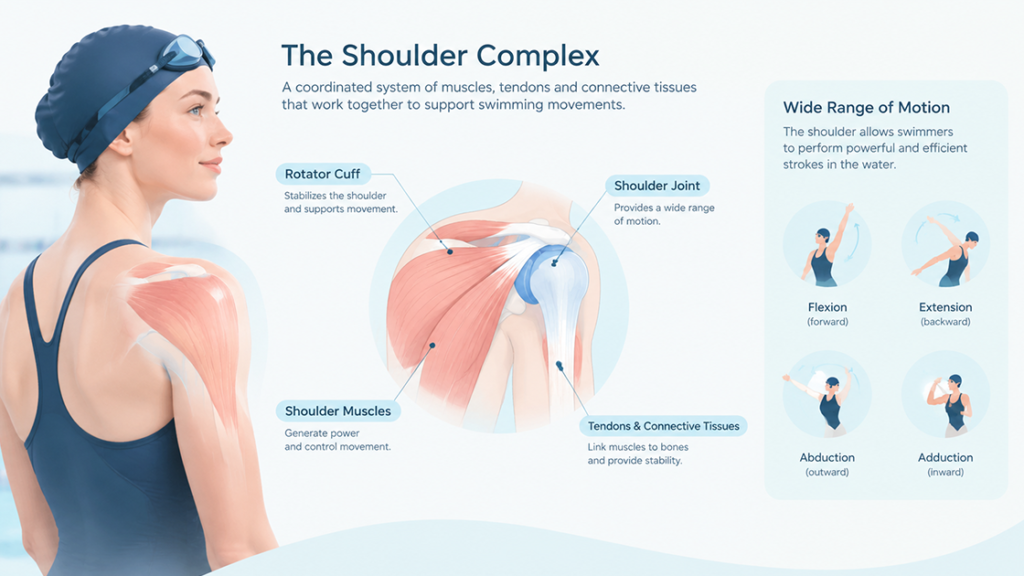
The shoulder joint has one of the greatest ranges of motion in the human body, allowing swimmers to perform powerful and efficient strokes. However, this mobility also requires coordinated support from muscles, tendons, and stabilizing structures.
Swimming techniques such as freestyle, butterfly, and backstroke involve repeated overhead movements that continuously activate the rotator cuff, shoulder muscles, and upper back structures.
Unlike sports with occasional explosive movements, swimming often involves repetitive loading over long periods. This makes shoulder mobility, muscle balance, and recovery habits important considerations for swimmers.
1.2 Common Physical Challenges Associated With Swimming Activities
Swimmers frequently rely on the shoulder complex to generate propulsion in the water. Repetitive movement patterns may create stress around areas such as the rotator cuff, upper arm, shoulder blade, and surrounding soft tissues.
Factors such as training volume, stroke technique, recovery time, and strength balance can influence how the body responds to repeated activity.
For swimmers, recovery approaches often focus on maintaining comfortable movement, supporting soft tissue function, and improving overall training readiness.
1.3 The Importance of Recovery for Long-Term Swimming Performance
Consistent swimming requires more than technical skills and physical endurance. Maintaining healthy movement patterns helps swimmers continue participating in training programs over time.
A complete recovery routine may include mobility exercises, strength conditioning, proper warm-up techniques, and professional recovery technologies.
Shockwave Therapy for swimmers is increasingly discussed within sports recovery settings because acoustic wave technology can be integrated into programs designed around soft tissue support and musculoskeletal wellness.
2. How Shockwave Therapy Works in Sports Recovery
Shockwave Therapy uses mechanical acoustic waves that interact with targeted body areas. Understanding its technology helps explain why it has become part of many rehabilitation and sports performance environments.
2.1 Understanding Extracorporeal Shockwave Therapy (ESWT)
Extracorporeal Shock Wave Therapy (ESWT) is a non-invasive technology that delivers controlled acoustic wave energy to specific treatment areas.
Depending on the application, different systems may use radial or focused shockwave approaches. Radial shockwave technology generally delivers energy across broader tissue areas, while focused shockwave technology concentrates energy at targeted locations.
For swimmers, ESWT is often considered in relation to shoulder recovery programs where soft tissue support and mobility maintenance are important factors. Research has explored ESWT applications involving shoulder-related conditions and rehabilitation settings.
2.2 Supporting Soft Tissue Recovery in Swimmer Shoulder Management
The shoulder contains a complex network of muscles, tendons, and connective tissues that work together during swimming movements.
Repeated strokes can create continuous loading on these structures, especially when training intensity increases.
Shockwave Therapy uses acoustic wave stimulation to support professional recovery programs that focus on tissue comfort, mobility, and functional movement.
For swimmers, this technology may complement traditional approaches such as stretching, strengthening exercises, and movement correction.
2.3 The Role of Acoustic Wave Energy in Recovery Programs
Acoustic wave energy is one of the key features of Shockwave Therapy technology.
When applied by trained professionals, these waves create controlled mechanical stimulation within targeted areas.
This approach is commonly discussed in relation to:
- Soft tissue support
- Muscle relaxation
- Tendon-focused recovery programs
- Mobility improvement strategies
For swimmers who perform repetitive shoulder movements, targeted recovery technologies may provide additional options for maintaining physical readiness.
3. Shockwave Therapy Applications for Different Types of Swimmers
Swimming includes different training environments, from competitive sports to recreational activities. Each group may experience different physical demands.
3.1 Supporting Competitive Swimmers During Intensive Training Cycles
Competitive swimmers often follow demanding schedules that include frequent practices, strength training, and performance-focused workouts.
High training volumes require careful attention to recovery because swimmers repeatedly use the same movement patterns.
Professional recovery programs may incorporate Shockwave Therapy alongside exercise-based strategies to support shoulder function, soft tissue comfort, and training consistency.
3.2 Supporting Masters Swimmers Maintaining Active Lifestyles
Masters swimmers often combine swimming with work, family responsibilities, and other physical activities.
Although their training goals may differ from competitive athletes, maintaining shoulder mobility remains an important consideration.
Shockwave Therapy may be explored as part of a personalized recovery routine for active adults who want to continue swimming comfortably.
3.3 Supporting Swim Coaches and Training Professionals
Swim coaches also experience physical demands because they frequently demonstrate movements, participate in pool activities, and assist athletes during training.
Their responsibilities may include repeated demonstrations and long periods around aquatic environments.
Recovery technologies such as Shockwave Therapy can be considered as part of broader wellness programs for professionals involved in swimming environments.
4. Technology Features Behind Shockwave Therapy for Swimming Recovery
Understanding the technology behind Shockwave Therapy helps swimmers and professionals recognize how acoustic wave-based recovery approaches are integrated into modern sports rehabilitation environments.
4.1 Radial and Focused Shockwave Technology for Different Recovery Needs
Shockwave Therapy systems generally include different energy delivery methods designed for various application requirements.
Radial Shockwave Therapy delivers acoustic wave energy across broader tissue areas, making it commonly considered for larger soft tissue regions. Focused Shockwave Therapy concentrates energy at more specific locations, allowing professionals to target selected areas with greater precision.
For swimmers, these technologies may be considered depending on individual recovery goals, training demands, and the specific areas requiring attention. The shoulder complex involves multiple structures, including muscles, tendons, and connective tissues, so personalized approaches are often important.
4.2 Supporting Shoulder Mobility Through Soft Tissue Stimulation
Shoulder mobility plays an essential role in swimming performance because every stroke requires coordinated movement between the shoulder joint, rotator cuff, and surrounding muscles.
When swimmers experience repeated training stress, maintaining comfortable movement patterns becomes an important part of long-term athletic management.
Shockwave Therapy uses mechanical acoustic stimulation that may support professional recovery programs focused on soft tissue condition, flexibility, and movement quality.
For swimmers, it is usually considered alongside other strategies such as mobility exercises, strength training, and technique adjustments.
4.3 The Connection Between Tendon Loading and Swimming Performance
Swimming places continuous demands on tendons because they transfer force between muscles and bones during repeated movements.
The rotator cuff and other shoulder-related tendons help stabilize the joint during overhead motions. Training volume, stroke technique, and recovery habits can influence how these structures respond to repeated loading.
Shockwave Therapy is often discussed in relation to tendon-focused recovery programs because acoustic wave technology is commonly used in musculoskeletal environments. Some clinical research has explored ESWT applications for shoulder-related tendon conditions, including shoulder function and rehabilitation support.
5. Building a Recovery Strategy for Swimmers with Shockwave Therapy
A successful swimming career requires more than increasing training intensity. Developing a balanced recovery strategy helps swimmers maintain performance consistency and manage the physical demands of repetitive movement.
5.1 Combining Shockwave Therapy With Swimming Training Plans
Shockwave Therapy should be viewed as one component within a broader recovery approach.
Swimmers often combine multiple methods, including:
- Mobility exercises
- Strength conditioning
- Proper warm-up routines
- Swimming technique improvement
- Adequate recovery periods
A comprehensive plan allows swimmers to address different aspects of physical preparation rather than focusing on a single recovery method.
For professionals working with swimmers, Shockwave Therapy may serve as an additional tool within personalized sports recovery programs.
5.2 Choosing Recovery Approaches Based on Individual Swimming Demands
Different swimmers experience different physical requirements depending on their stroke style, training intensity, and competition goals.
For example:
- Freestyle swimmers may perform thousands of repeated arm rotations.
- Butterfly swimmers may experience greater shoulder and upper-body demands.
- Backstroke swimmers rely heavily on continuous overhead movement.
Because of these differences, recovery strategies should consider individual movement patterns and training environments.
Shockwave Therapy for swimmers can be explored as part of a personalized approach designed around mobility maintenance and musculoskeletal support.
5.3 Supporting Long-Term Swimming Participation Through Shockwave Therapy
Swimming is often a lifelong activity, from competitive training to recreational fitness.
Maintaining shoulder mobility and overall physical comfort can help swimmers continue participating in the sport they enjoy.
Modern recovery technologies, including Shockwave Therapy, provide another option for athletes and professionals who want to support long-term movement health while combining technology with traditional training methods.
FAQ About Shockwave Therapy
What is Shockwave Therapy for swimmers?
Shockwave Therapy is a non-invasive technology that uses acoustic wave energy to support recovery programs focused on soft tissue and musculoskeletal function.
Why do swimmers consider Shockwave Therapy?
Swimmers perform repetitive shoulder movements, which creates continuous demands on muscles, tendons, and joints. Shockwave Therapy may be considered as part of a broader recovery plan.
Can Shockwave Therapy improve swimming performance directly?
Shockwave Therapy is not designed to directly improve swimming skills or replace training. It is generally used as a supportive technology within recovery and rehabilitation programs.
Which areas do swimmers commonly focus on during recovery?
Swimmers often focus on areas such as the shoulder, rotator cuff region, upper back, and surrounding soft tissues involved in repetitive swimming movements.
Is Shockwave Therapy only for professional swimmers?
No. Competitive swimmers, masters swimmers, and recreational swimmers may all explore recovery strategies based on their individual activity levels and physical needs.
How does ESWT differ from traditional recovery methods?
ESWT uses acoustic wave energy as a technology-based approach, while traditional recovery methods may include exercise, stretching, mobility training, and rest strategies.
Conclusion
Swimming requires continuous shoulder movement, strong muscle coordination, and consistent physical preparation. Because repetitive strokes place ongoing demands on the musculoskeletal system, swimmers often pay close attention to recovery strategies that support mobility and physical comfort. Shockwave Therapy, based on Extracorporeal Shock Wave Therapy (ESWT) technology, provides an additional option within modern sports recovery environments by using acoustic wave energy to support targeted areas. When combined with proper training methods, mobility exercises, strength conditioning, and professional guidance, Shockwave Therapy can become part of a comprehensive approach for swimmers who want to maintain their active lifestyle and long-term participation in the sport.
Références
Extracorporeal Shock Wave Therapy Combined With Kinesio Taping for Shoulder Function in Long-Head Biceps Tendinopathy
https://pubmed.ncbi.nlm.nih.gov/41881098
Swimmer’s Shoulder: Symptoms, Causes, and Recovery Information
https://my.clevelandclinic.org/health/diseases/17535-swimmers-shoulder
A Novel Rehabilitation Program Using Neuromuscular Electrical Stimulation and Taping for Shoulder Pain in Swimmers
https://pmc.ncbi.nlm.nih.gov/articles/PMC8016416
Radial Extracorporeal Shockwave Therapy Reduces Pain and Promotes Proximal Tendon Healing After Rotator Cuff Repair
https://pubmed.ncbi.nlm.nih.gov/37027927
Swimmer’s Shoulder – StatPearls