

Introduction
Healthcare professionals play an essential role in modern medical systems, but their daily responsibilities often involve demanding physical activities. Nurses, medical assistants, caregivers, and other healthcare workers frequently spend long hours standing, walking, lifting, and performing repetitive movements throughout their shifts. These occupational demands can place continuous stress on muscles, joints, and soft tissues. As workplace wellness becomes increasingly important, many healthcare environments are exploring advanced recovery technologies that support physical comfort and long-term occupational health. Shockwave Therapy has gained attention as a non-invasive technology used in professional rehabilitation and wellness settings. By becoming part of broader recovery strategies, shockwave technology provides healthcare workers with an additional option for managing physical stress associated with demanding work schedules.
1. Understanding the Physical Challenges Faced by Healthcare Workers
Healthcare professionals experience unique physical demands because their work requires both precision and endurance. Unlike many traditional office occupations, healthcare roles often involve continuous movement and physically active responsibilities.
1.1 Why Healthcare Jobs Create Long-Term Physical Stress
Many healthcare workers spend a large portion of their shifts on their feet. Nurses, for example, may walk between patient rooms, assist with daily medical tasks, and remain physically active for extended periods.
Common occupational demands include:
- prolonged standing
- frequent walking
- repetitive hand movements
- patient assistance activities
- maintaining fixed working postures
These activities can contribute to temporary muscle fatigue and physical discomfort over time.
Because healthcare professionals often work long shifts, maintaining effective recovery habits becomes an important part of occupational wellness.
1.2 Common Areas of Physical Stress Among Medical Professionals
Healthcare workers may experience physical challenges in different areas depending on their specific roles and daily responsibilities.
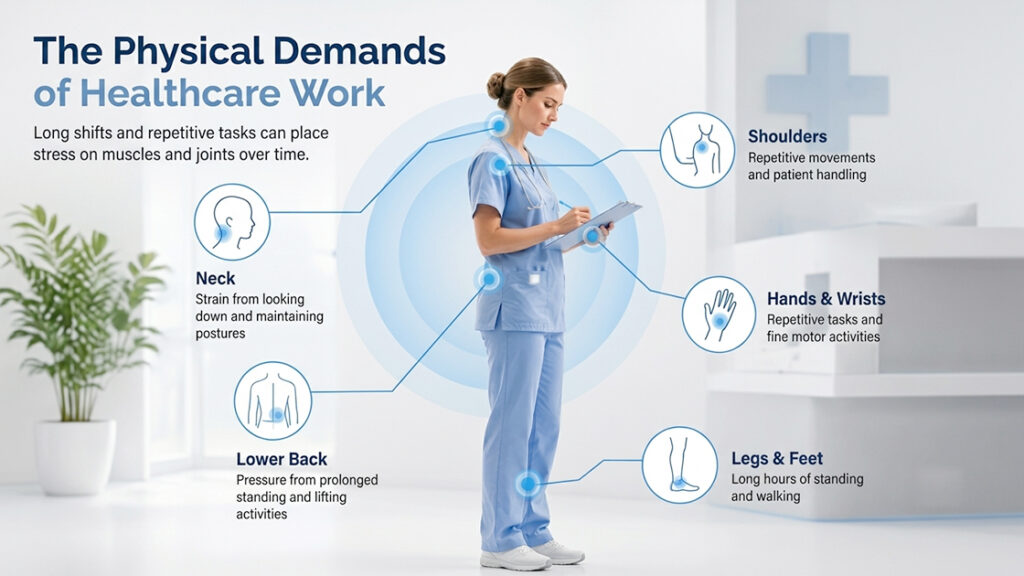
Common areas affected by occupational workload may include:
- lower back from prolonged standing and movement
- shoulders from repetitive lifting activities
- neck areas from maintaining certain positions
- hands and wrists from repeated clinical tasks
- legs and feet from extended periods of standing
Different healthcare positions create different physical demands, meaning recovery approaches often need to consider individual work environments.
Understanding these occupational factors helps professionals develop more suitable wellness strategies.
1.3 The Growing Importance of Healthcare Worker Wellness
Healthcare worker wellness has become an increasingly important topic as medical professionals face physically and mentally demanding work environments.
Modern workplace wellness programs increasingly focus on:
- maintaining employee comfort
- supporting healthy work routines
- encouraging proper recovery habits
- improving occupational quality of life
Technology-based recovery options are becoming part of these broader wellness discussions.
Shockwave Therapy represents one of the technologies used in professional settings to support recovery-focused programs for physically demanding occupations.
2. How Shockwave Therapy Supports Occupational Recovery Programs
Understanding the role of shockwave technology helps explain why it has become increasingly considered in rehabilitation and wellness environments.
2.1 The Basic Principles of Shockwave Therapy Technology
Shockwave Therapy uses acoustic wave energy to target specific areas of the body. In professional rehabilitation settings, practitioners use controlled shockwave applications as part of recovery and wellness programs.
The technology is designed to deliver mechanical stimulation to targeted areas, allowing professionals to customize applications based on individual needs.
For healthcare workers, shockwave technology may be considered as part of recovery strategies related to:
- occupational muscle stress
- repetitive movement demands
- physical workload management
Professional practitioners typically evaluate each individual’s condition and occupational requirements before developing an appropriate approach.
2.2 Why Healthcare Professionals May Explore Advanced Recovery Technology
Healthcare workers often have limited recovery time because of long shifts and demanding schedules. This makes efficient and practical wellness strategies increasingly valuable.
Advanced recovery technologies may provide additional options alongside traditional approaches such as:
- stretching exercises
- mobility activities
- physical conditioning
- proper rest routines
Shockwave Therapy can be integrated into broader occupational wellness plans rather than replacing fundamental health habits.
The goal of modern recovery strategies is to support healthcare professionals in maintaining balanced routines despite demanding work environments.
2.3 The Role of Professional Equipment in Rehabilitation Settings
Modern rehabilitation clinics and wellness facilities use advanced equipment to provide more personalized recovery experiences.
Professional shockwave systems may include features such as:
- adjustable intensity settings
- different applicators for targeted areas
- customizable treatment approaches
These features allow professionals to adjust applications according to specific needs and recovery goals.
For healthcare workers, personalized recovery planning is especially important because different roles create different physical challenges.
3. Shockwave Therapy Applications for Different Healthcare Roles
Healthcare professionals work in diverse environments, and each role creates different physical demands. A nurse working in a hospital, a dental assistant in a clinic, and a caregiver in a long-term care facility may all experience different types of occupational stress. Because of these differences, modern wellness programs often focus on flexible recovery approaches that can be adapted to various healthcare occupations.
3.1 Supporting Nurses During Physically Demanding Shifts
Nurses often perform a wide range of physical tasks throughout their working day. Their responsibilities may include extended periods of standing, assisting patients with movement, and completing repeated clinical activities.
These daily activities can create continuous physical workload, especially during long shifts.
Shockwave Therapy may be considered as part of professional recovery programs that focus on supporting areas affected by occupational demands, such as:
- lower back areas affected by prolonged standing
- shoulder regions involved in repetitive movements
- leg and foot areas exposed to extended activity
By incorporating advanced recovery technology into wellness programs, healthcare facilities can provide additional support options for professionals managing physically demanding schedules.
3.2 Supporting Medical Assistants and Clinical Staff
Medical assistants and clinical support teams often balance administrative responsibilities with hands-on healthcare tasks. Their daily activities may include preparing equipment, assisting medical procedures, and maintaining active movement throughout the workplace.
These responsibilities may involve:
- repeated arm movements
- standing for extended periods
- maintaining specific working positions
Shockwave technology can be included within professional recovery environments to support individuals who experience physical stress related to repetitive occupational activities.
A personalized approach allows professionals to consider workplace demands and individual recovery goals when developing wellness strategies.
3.3 Supporting Caregivers and Long-Term Care Professionals
Caregivers often perform physically intensive tasks that require patience, strength, and consistent movement. Their work may involve assisting individuals with daily activities and maintaining safe movement practices.
The physical requirements of caregiving can include:
- frequent walking
- supporting patient mobility
- repeated lifting movements
- prolonged standing
For these professionals, recovery management plays an important role in maintaining daily work capacity.
Shockwave Therapy may serve as one component of a broader occupational wellness strategy designed to support physical comfort and recovery routines.
4. Why Occupational Wellness Programs Are Exploring Shockwave Technology
As healthcare organizations continue to focus on employee wellness, more attention is being placed on recovery solutions that address the physical challenges associated with healthcare professions.
4.1 The Connection Between Workplace Wellness and Recovery Technology
Traditional workplace wellness programs often focus on education, exercise, and healthy lifestyle habits. However, physically demanding occupations may require additional approaches that consider occupational movement patterns.
Healthcare wellness programs are increasingly exploring technologies that can complement existing strategies.
Shockwave Therapy fits into this trend by offering a professional technology option used in rehabilitation and wellness environments.
It can be incorporated alongside:
- workplace stretching programs
- ergonomic education
- physical activity planning
- recovery routines
This combined approach allows healthcare workers to develop more complete wellness habits.
4.2 How Shockwave Technology Fits Into Modern Rehabilitation Clinics
Rehabilitation clinics continue to adopt advanced technologies that allow professionals to create customized recovery plans.
Shockwave systems are commonly considered in professional settings because they provide:
- controlled acoustic wave delivery
- adjustable application options
- targeted use based on professional assessment
For healthcare workers experiencing occupational physical demands, these characteristics allow professionals to create recovery programs that match specific needs.
The integration of technology into rehabilitation reflects a broader movement toward personalized wellness solutions.
4.3 The Growing Focus on Preventive Occupational Health
Many industries are shifting from reactive approaches toward preventive wellness strategies.
Healthcare organizations are paying more attention to:
- employee physical well-being
- sustainable work practices
- long-term occupational health
Technology-supported recovery approaches represent part of this broader preventive health movement.
For healthcare professionals, maintaining physical readiness is important because their daily responsibilities require consistent energy, movement, and focus.
5. Building a Sustainable Recovery Approach for Healthcare Workers
Healthcare professionals often have demanding schedules, making practical and sustainable recovery habits essential. A balanced recovery strategy should consider both workplace requirements and individual wellness goals.
5.1 Combining Shockwave Therapy With Healthy Recovery Habits
Shockwave Therapy is most effective when considered as part of a complete wellness approach.
Healthcare workers may combine professional recovery technologies with:
- regular stretching routines
- mobility exercises
- proper hydration
- sufficient rest
- balanced physical activity
These habits work together to support overall physical wellness.
Rather than replacing traditional recovery methods, shockwave technology can provide an additional option within a comprehensive occupational health plan.
5.2 The Future of Technology-Based Recovery for Healthcare Professionals
As healthcare continues to evolve, employee wellness is becoming a key area of focus. Advanced recovery technologies may continue to play a role in supporting professionals who work in physically demanding environments.
Future trends may include:
- personalized wellness programs
- technology-assisted rehabilitation
- workplace recovery solutions
- integrated occupational health services
Shockwave Therapy represents one example of how modern technology is being incorporated into professional recovery environments.
For healthcare workers, combining technology, healthy habits, and workplace wellness strategies may help create a more sustainable approach to managing physical demands.
FAQ
What is Shockwave Therapy used for in healthcare worker wellness?
Shockwave Therapy is used in professional settings as part of recovery-focused programs designed to support physical wellness and rehabilitation goals.
Can nurses use Shockwave Therapy as part of recovery routines?
Healthcare professionals may explore shockwave technology as one option within broader wellness and recovery programs.
Does Shockwave Therapy replace exercise and stretching?
No. It is generally considered a complementary approach alongside healthy movement habits, exercise, and proper recovery routines.
Which healthcare workers may benefit from recovery technology?
Professionals with physically demanding roles, including nurses, caregivers, and clinical staff, may consider recovery technologies based on their individual needs.
Where is Shockwave Therapy commonly used?
Shockwave technology is commonly found in rehabilitation clinics, sports recovery facilities, and professional wellness environments.
Conclusion
Healthcare workers perform physically demanding jobs that require long hours of standing, walking, repetitive movement, and continuous attention. As occupational wellness becomes increasingly important, advanced recovery technologies such as Shockwave Therapy are gaining attention as part of professional recovery strategies. By combining shockwave technology with healthy lifestyle habits, workplace wellness programs, and proper recovery routines, healthcare professionals can explore more comprehensive approaches for managing the physical challenges associated with demanding healthcare environments.
Références
Extracorporeal Shock Wave Therapy in Musculoskeletal Disorders: A Review
https://pubmed.ncbi.nlm.nih.gov/27004045
Clinical Applications of Extracorporeal Shock Wave Therapy in Rehabilitation
https://www.ncbi.nlm.nih.gov/pmc/articles/PMC4743666
Shockwave Therapy: Mechanisms and Clinical Applications
https://pubmed.ncbi.nlm.nih.gov/22880582
Extracorporeal Shock Wave Therapy and Tissue Response: Current Perspectives
https://www.ncbi.nlm.nih.gov/pmc/articles/PMC6044211
Workplace Wellness and Occupational Health Strategies for Healthcare Professionals