

Introduction
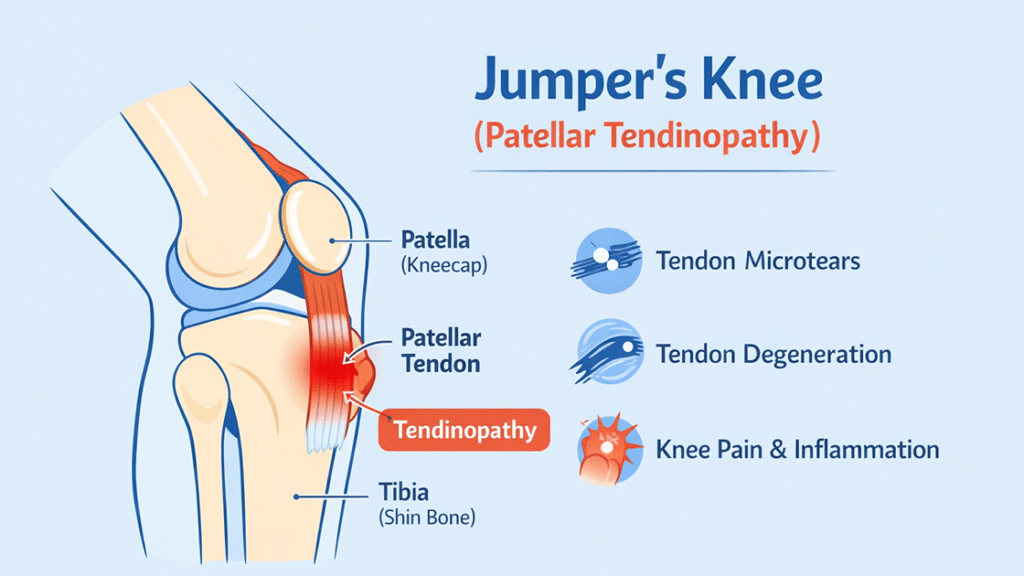
Jumper’s knee, medically known as patellar tendinopathy, is one of the most common overuse injuries among basketball players. The sport involves frequent jumping, rapid acceleration, sudden stops, and repeated landing movements, all of which place significant mechanical stress on the patellar tendon that connects the kneecap (patella) to the tibia. Over time, repetitive stress can lead to micro-tears, tendon degeneration, and chronic pain in the front of the knee. For athletes who depend on explosive leg power, this condition can significantly limit performance and even interrupt an entire season. While rest, physiotherapy, and anti-inflammatory medication are commonly used to manage symptoms, many athletes seek faster and more effective recovery methods. Extracorporeal shockwave therapy (ESWT) has gained attention in sports medicine as a non-invasive treatment that may stimulate tendon healing, reduce pain, and improve functional recovery in athletes suffering from chronic jumper’s knee.
1 Understanding Jumper’s Knee in Basketball Players
Before exploring treatment options such as shockwave therapy, it is essential to understand the nature of jumper’s knee and why basketball players are particularly vulnerable to this type of tendon injury.
1.1 What Is Jumper’s Knee (Patellar Tendinopathy)
Jumper’s knee is a degenerative condition affecting the patellar tendon, the thick band of connective tissue that connects the patella to the tibia. This tendon plays a crucial role in knee extension, enabling movements such as jumping, sprinting, and kicking. In patellar tendinopathy, repetitive mechanical stress leads to microscopic damage within the tendon fibers. Instead of healing properly, the tendon undergoes structural changes characterized by collagen disorganization, increased tendon thickness, and reduced tensile strength. Unlike acute inflammation, chronic tendinopathy involves degenerative changes in tendon tissue, often accompanied by pain and stiffness during movement. Over time, this condition can reduce the efficiency of force transmission from the quadriceps muscle to the lower leg, limiting an athlete’s ability to perform explosive movements such as jumping or quick directional changes.
1.2 Why Basketball Players Are at High Risk
Basketball players face a particularly high risk of developing jumper’s knee due to the physical demands of the sport. The repetitive jumping and landing motions involved in shooting, rebounding, and blocking shots generate substantial forces across the knee joint. Each landing can produce forces several times the athlete’s body weight, placing intense strain on the patellar tendon. Additionally, rapid acceleration and deceleration during defensive and offensive plays require strong eccentric contractions of the quadriceps muscle, which further increases tendon load. Factors such as hard playing surfaces, insufficient recovery time between training sessions, muscle imbalances, and poor landing mechanics can also contribute to the development of patellar tendinopathy. Over time, the cumulative stress placed on the tendon may exceed its capacity for repair, leading to chronic injury.
1.3 Common Symptoms and Diagnosis
The most common symptom of jumper’s knee is pain located just below the kneecap, particularly during physical activities such as jumping, running, or squatting. In the early stages, athletes may notice mild discomfort only after intense exercise. As the condition progresses, pain may appear during activity and persist even during rest. Stiffness around the knee joint, reduced range of motion, and localized tenderness along the patellar tendon are also common signs. In some cases, swelling or thickening of the tendon may be present. Diagnosis typically involves a clinical examination performed by a sports medicine physician or physiotherapist. Imaging techniques such as ultrasound or magnetic resonance imaging (MRI) may be used to assess tendon structure and confirm degenerative changes within the patellar tendon.
2 What Is Shockwave Therapy
As sports medicine continues to evolve, non-invasive therapies have become increasingly important in managing chronic musculoskeletal injuries. Shockwave therapy is one such treatment that has shown promising results in tendon rehabilitation.
2.1 The Science Behind Extracorporeal Shockwave Therapy (ESWT)
Extracorporeal shockwave therapy is a medical treatment that uses high-energy acoustic waves to stimulate biological responses within damaged tissues. During the procedure, a specialized device generates controlled shockwaves that are transmitted through the skin and into the affected tendon. These acoustic waves create mechanical pressure and micro-stimulation within the tissue, which can activate cellular repair processes. The energy delivered during treatment helps stimulate metabolic activity, increase blood circulation, and promote tissue regeneration. Shockwave therapy has been widely used in orthopedics and sports medicine for conditions involving chronic tendon pain and delayed tissue healing.
2.2 Biological Effects on Tendon Healing
One of the key therapeutic effects of shockwave therapy is its ability to stimulate tendon regeneration. Research suggests that shockwaves can activate fibroblasts, the cells responsible for producing collagen fibers that form the structural framework of tendons. By promoting collagen synthesis and improving the organization of collagen fibers, shockwave therapy may help restore the mechanical strength of damaged tendons. In addition, the treatment can stimulate angiogenesis, the formation of new blood vessels in the injured area. Increased vascularization improves oxygen and nutrient delivery to the tendon, supporting cellular repair and tissue regeneration. These biological effects create a more favorable environment for healing in chronic tendon injuries such as patellar tendinopathy.
2.3 Medical Applications in Sports Injuries
Shockwave therapy has become a widely used treatment modality for various sports-related injuries. In addition to patellar tendinopathy, it is commonly applied in conditions such as plantar fasciitis, Achilles tendinopathy, calcific shoulder tendinitis, and lateral epicondylitis, also known as tennis elbow. The therapy is particularly valuable in cases where traditional conservative treatments have failed to provide sufficient relief. Because the procedure is non-invasive and does not require surgery, it offers athletes an alternative option that may shorten recovery time and reduce the need for prolonged medication use.
3 How Shockwave Therapy Helps Treat Jumper’s Knee
Understanding the biological mechanisms behind shockwave therapy provides insight into how this treatment can help basketball players recover from jumper’s knee and return to high-level performance.
3.1 Stimulating Tendon Regeneration
One of the primary benefits of shockwave therapy is its ability to stimulate tendon regeneration at the cellular level. The mechanical energy delivered by the shockwaves triggers a biological response in tendon cells, promoting the production of new collagen fibers. These newly formed fibers help repair microscopic tears within the patellar tendon and improve its structural integrity. Over time, this process can strengthen the tendon and restore its ability to withstand the repetitive stress associated with athletic activities. By promoting tissue regeneration rather than simply masking pain, shockwave therapy addresses the underlying pathology of chronic tendinopathy.
3.2 Reducing Chronic Pain and Inflammation
Chronic pain associated with jumper’s knee is often linked to changes in nerve sensitivity and persistent low-grade inflammation within the tendon. Shockwave therapy can influence pain perception by modulating nerve activity in the affected area. The acoustic waves may reduce the sensitivity of pain receptors and alter the transmission of pain signals to the brain. Additionally, shockwave therapy can stimulate the release of endogenous pain-relieving substances within the body. These combined effects may significantly reduce discomfort, allowing athletes to perform rehabilitation exercises more effectively and progress toward recovery.
3.3 Improving Blood Circulation Around the Patellar Tendon
Adequate blood supply is essential for tissue repair, yet many tendons have relatively limited vascularization. Shockwave therapy can enhance local microcirculation by stimulating the formation of new capillaries in the injured area. Improved blood flow helps deliver oxygen, nutrients, and growth factors necessary for healing. At the same time, increased circulation assists in the removal of metabolic waste products and inflammatory mediators that contribute to pain. By improving the biological environment around the patellar tendon, shockwave therapy supports the natural healing process and may accelerate recovery.
4 What Basketball Players Can Expect During Treatment
For athletes considering shockwave therapy, understanding the treatment process and expected outcomes can help reduce uncertainty and improve compliance with rehabilitation protocols.
4.1 The Shockwave Therapy Procedure
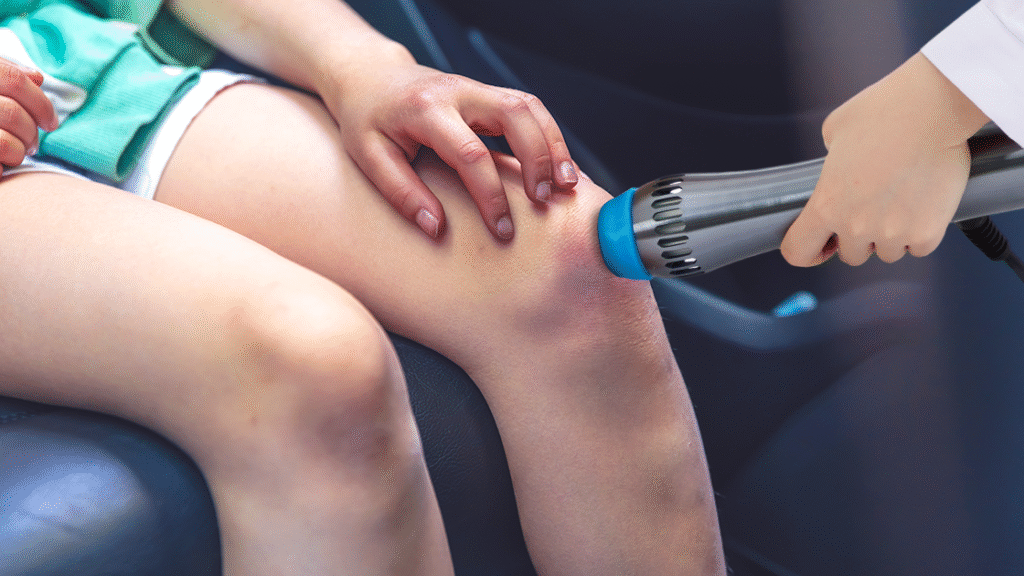
During a shockwave therapy session, the athlete typically sits or lies comfortably while the clinician applies a handheld shockwave device to the affected area of the knee. A conductive gel is applied to the skin to facilitate the transmission of acoustic waves. The device then delivers controlled pulses of mechanical energy to the patellar tendon. Each treatment session usually lasts between 10 and 20 minutes, depending on the treatment protocol. Patients may feel mild discomfort or tapping sensations during the procedure, but the intensity is generally well tolerated.
4.2 Treatment Frequency and Recovery Timeline
The number of treatment sessions required varies depending on the severity and duration of the injury. Many treatment protocols involve three to five sessions spaced one week apart. Some athletes begin to notice pain reduction after the first few sessions, while others experience gradual improvement over several weeks. It is important to note that shockwave therapy stimulates biological repair processes, which means that healing continues even after the treatment sessions are completed. Athletes are typically advised to limit high-impact activities for a short period while the tendon begins to recover.
4.3 Combining Shockwave Therapy with Sports Rehabilitation
Shockwave therapy is most effective when integrated into a comprehensive rehabilitation program. Strengthening exercises for the quadriceps, hamstrings, and gluteal muscles help reduce stress on the patellar tendon. Eccentric loading exercises, in particular, have been shown to improve tendon strength and function. Flexibility training, proper warm-up routines, and improved landing mechanics can also reduce the risk of reinjury. By combining shockwave therapy with targeted physiotherapy, athletes can achieve better long-term outcomes and safely return to their sport.
5 Benefits of Shockwave Therapy for Basketball Players
Compared with traditional treatment methods, shockwave therapy offers several advantages that make it attractive for athletes seeking effective recovery options.
5.1 Non-Surgical Treatment Option
One of the most significant advantages of shockwave therapy is that it is completely non-invasive. Unlike surgical procedures, it does not require incisions, anesthesia, or lengthy hospital stays. This reduces both the risk of complications and the recovery time associated with treatment. For athletes who want to avoid surgery whenever possible, shockwave therapy provides a valuable alternative that focuses on stimulating natural healing mechanisms within the body.
5.2 Faster Return to Sports Activities
Because shockwave therapy promotes tissue repair and reduces pain, many athletes are able to return to training sooner than they might with traditional treatments alone. By improving tendon health and reducing discomfort, the therapy allows athletes to participate more effectively in rehabilitation exercises and gradually resume sport-specific activities. A structured rehabilitation program combined with shockwave therapy can support a safe and progressive return to basketball.
5.3 Long-Term Tendon Health
Beyond short-term pain relief, shockwave therapy may contribute to long-term tendon health. By improving collagen organization and stimulating vascularization, the treatment strengthens the tendon’s structural integrity. This may reduce the likelihood of recurring injuries and help athletes maintain optimal knee function over time. For basketball players who rely heavily on explosive movements and jumping ability, maintaining tendon health is essential for sustaining performance throughout their careers.
FAQ
What causes jumper’s knee in basketball players?
Jumper’s knee is primarily caused by repetitive jumping and landing movements that place excessive stress on the patellar tendon.
Is shockwave therapy safe for athletes?
Yes. When performed by trained medical professionals, shockwave therapy is generally considered safe and widely used in sports medicine.
How many shockwave treatments are needed?
Most patients receive three to five treatment sessions, depending on the severity of the injury.
Does shockwave therapy hurt?
Some patients experience mild discomfort during treatment, but the sensation is usually tolerable and short-lasting.
Can basketball players continue training during treatment?
Athletes may need to temporarily reduce high-impact activities while continuing rehabilitation exercises recommended by their clinician.
Conclusion
Jumper’s knee is a common overuse injury that can significantly affect basketball players’ performance and long-term athletic health. As sports medicine continues to develop innovative treatment methods, shockwave therapy has emerged as a promising non-invasive option for managing patellar tendinopathy. By stimulating tendon regeneration, improving blood circulation, and reducing chronic pain, this therapy addresses the underlying causes of tendon degeneration rather than simply relieving symptoms. When combined with proper rehabilitation exercises and training modifications, shockwave therapy may help basketball players recover more effectively and safely return to the court. For athletes seeking modern, evidence-based treatments for chronic tendon injuries, shockwave therapy represents an important advancement in sports injury management.
Références
Extracorporeal Shockwave Therapy in Sports Medicine
https://www.ncbi.nlm.nih.gov/pmc/articles/PMC3761744
Shockwave Therapy for Patellar Tendinopathy
https://pubmed.ncbi.nlm.nih.gov/21311345
The Role of Extracorporeal Shockwave Therapy in Tendon Disorders
https://www.sciencedirect.com/science/article/pii/S1877056816301406
Current Concepts in the Treatment of Patellar Tendinopathy