

Introduction
Modern wellness and body care industries are continuously exploring new technologies that support muscle relaxation, mobility improvement, and soft tissue management. For massage professionals, recovery centers, and wellness studios, myofascial shockwave has become an important focus because fascia and muscle tension can influence overall movement comfort. Shockwave Therapy, especially radial shockwave technology, uses mechanical acoustic waves to deliver controlled energy into targeted soft tissues and has gained attention as a complementary approach in professional wellness and rehabilitation environments. By combining shockwave technology with manual techniques, stretching programs, and movement-based care, wellness professionals can create more comprehensive strategies for supporting clients with muscle tightness and soft tissue restrictions.
1. Understanding Myofascial Release and Modern Wellness Needs
Fascia is a connective tissue network that surrounds muscles, organs, and other structures throughout the body. Maintaining healthy soft tissue mobility has become an important part of many wellness programs.
1.1 Why Myofascial Care Has Become a Growing Focus
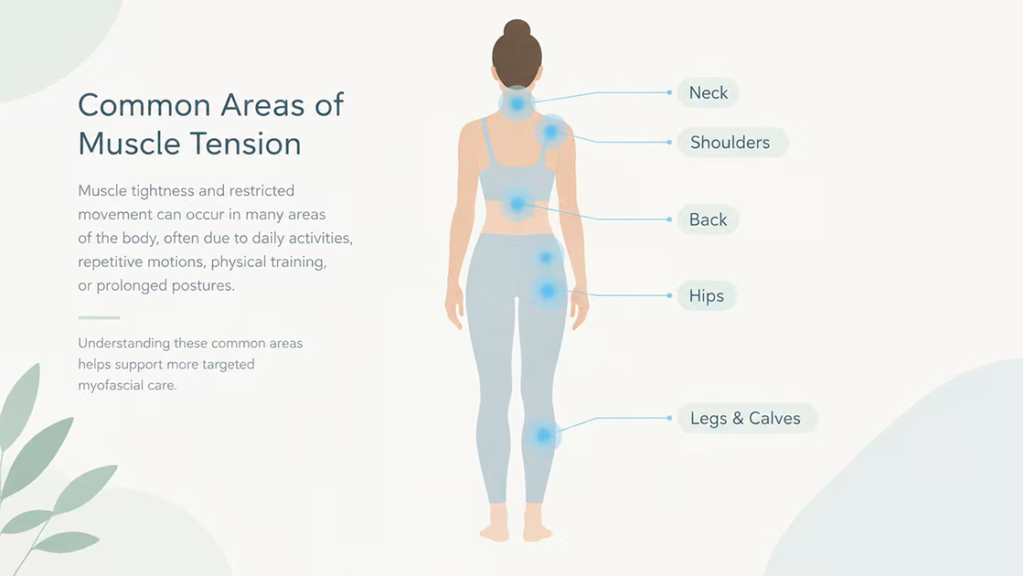
Many people experience muscle tightness and restricted movement due to daily activities, repetitive motions, physical training, or prolonged postures.
Common areas that receive attention in myofascial care include:
- Neck and shoulder muscles
- Upper and lower back
- Hip area
- Legs and calves
- Arms and forearms
Traditional approaches such as massage, stretching, and mobility exercises remain widely used. However, wellness professionals are also exploring technology-assisted methods to support more targeted soft tissue care.
Shockwave Therapy provides mechanical pressure waves that interact with soft tissues and is commonly discussed in relation to muscle tension, connective tissue restrictions, and recovery-focused applications.
1.2 The Relationship Between Fascia, Muscles, and Movement
Fascia plays an important role in connecting different structures within the body. Healthy fascial movement supports flexibility, coordination, and comfortable daily activities.
When muscles and surrounding connective tissues experience repeated stress, people may notice:
- Reduced flexibility
- Muscle stiffness
- Limited movement range
- Areas of persistent tension
Understanding the relationship between muscles and fascia allows wellness professionals to develop more complete approaches rather than focusing only on isolated areas.
1.3 The Evolution of Technology in Wellness Services
Modern wellness centers are increasingly combining hands-on techniques with advanced equipment.
Technology-based solutions can provide additional options for professionals who want to expand their service range while maintaining a personalized approach.
Shockwave Therapy represents one of these emerging technologies, offering controlled acoustic energy that can be adjusted based on professional assessment and application goals.
2. How Shockwave Therapy Supports Myofascial Care
Shockwave Therapy uses acoustic waves generated by specialized devices to deliver mechanical stimulation to targeted areas. Different systems may include radial and focused shockwave technologies, depending on application needs.
2.1 Understanding Radial Shockwave Technology
Radial Shockwave Therapy delivers pressure waves that spread outward from the application point, making it suitable for broader soft tissue areas.
This technology is commonly considered for applications involving:
- Muscle tension
- Soft tissue restrictions
- Myofascial trigger points
- Movement-related discomfort
Unlike traditional manual techniques, shockwave technology allows professionals to introduce controlled mechanical energy into targeted areas as part of a broader wellness strategy.
2.2 The Role of Mechanical Energy in Soft Tissue Support
Shockwave technology works through mechanical stimulation rather than heat or electrical current.
The acoustic waves may influence:
- Local tissue response
- Cellular activity
- Circulation-related processes
- Soft tissue flexibility
For wellness professionals, this creates another option when designing customized programs for clients with muscle tightness or mobility concerns.
2.3 Combining Shockwave Therapy With Myofascial Techniques
Shockwave Therapy is often integrated with other professional approaches rather than used as a standalone method.
A comprehensive myofascial wellness program may include:
- Manual massage techniques
- Exercices d'étirement
- Mobility training
- Movement education
By combining different methods, professionals can create a more balanced approach based on each client’s condition and goals.
3. Applications of Shockwave Therapy in Wellness and Recovery Centers
As demand for advanced wellness services increases, more professionals are exploring how shockwave technology can complement existing care methods.
3.1 Supporting Clients With Muscle Tightness and Soft Tissue Stress
Many clients seek wellness services because of daily physical demands, exercise routines, or lifestyle-related muscle tension.
Shockwave Therapy may be included in professional programs focused on supporting:
- Muscle relaxation
- Body comfort
- Movement quality
Professionals can adjust treatment areas and approaches based on individual assessments.
3.2 Supporting Active Lifestyle Clients
People who participate in fitness, recreational sports, or physically demanding activities often pay attention to recovery and mobility.
Wellness professionals may use shockwave technology as part of recovery-focused services designed around:
- Post-activity muscle care
- Mobility support
- Soft tissue maintenance
This allows wellness centers to serve a wider range of clients with different lifestyle needs.
3.3 Expanding Services in Massage and Wellness Studios
For massage therapists and wellness practitioners, introducing advanced technology can create new opportunities for service development.
Shockwave devices may help professionals expand beyond traditional manual methods and provide technology-assisted soft tissue programs.
However, proper training and professional knowledge remain important when applying any advanced wellness technology.
4. Why Shockwave Technology Is Gaining Attention in Myofascial Care
The growing interest in shockwave technology reflects a broader movement toward combining traditional wellness methods with modern equipment.
4.1 Differences Between Manual Therapy and Shockwave Technology
Manual therapy relies on hands-on techniques to influence muscles and connective tissues.
Shockwave Therapy uses acoustic energy delivered through a specialized applicator.
The two approaches are different but can complement each other within professional wellness programs.
Manual methods may focus on direct physical interaction, while shockwave technology provides controlled mechanical stimulation to selected areas.
4.2 The Importance of Personalized Wellness Programs
Every client has different lifestyle habits, physical conditions, and recovery goals.
A professional assessment helps determine:
- Appropriate application areas
- Suitable technology settings
- Combination methods
Personalized planning allows wellness professionals to create safer and more effective service experiences.
5. Choosing Shockwave Technology for Modern Wellness Services
As clients continue seeking more advanced recovery and wellness options, professionals need to understand how new technologies fit into their service models.
5.1 Selecting the Right Shockwave System
Different shockwave systems may offer different energy delivery methods and application features.
When selecting equipment, wellness professionals may consider:
- Technology type
- Application flexibility
- Training support
- Ease of integration into existing services
Choosing suitable equipment helps clinics and wellness centers provide more customized care options.
5.2 Building a Complete Myofascial Wellness Approach
Technology alone is only one part of a successful wellness strategy.
A complete approach may combine:
- Thérapie par ondes de choc
- Manual techniques
- Exercise guidance
- Lifestyle recommendations
By integrating multiple methods, professionals can create a more comprehensive experience for clients seeking muscle and soft tissue support.
FAQ
What is Shockwave Therapy used for in myofascial care?
Shockwave Therapy uses acoustic waves to provide mechanical stimulation and is commonly explored for soft tissue support, muscle tension management, and recovery-focused applications.
Is radial shockwave different from focused shockwave?
Yes. Radial shockwave spreads energy outward over a broader area, while focused shockwave delivers energy more precisely at deeper target points.
Can massage professionals use Shockwave Therapy?
Shockwave technology may be incorporated into wellness and recovery services by qualified professionals with appropriate training.
Can Shockwave Therapy replace massage?
No. Shockwave Therapy is a technology-based approach that can complement traditional massage and manual techniques.
What areas are commonly considered for myofascial shockwave applications?
Common areas include the back, shoulders, hips, legs, and other regions where soft tissue tension may occur.
Conclusion
Myofascial care continues to evolve as wellness professionals explore new ways to support muscle comfort, mobility, and soft tissue health. Shockwave Therapy provides a modern technology option that uses controlled acoustic energy to complement traditional wellness methods. For massage professionals, recovery centers, and wellness studios, integrating shockwave technology with manual techniques, movement programs, and personalized care strategies can create a more diverse approach to modern soft tissue management. As interest in technology-assisted wellness continues to grow, Shockwave Therapy offers professionals another tool for developing advanced and customized client experiences.
Références
Radial Shockwave Therapy: Mechanical Stimulation for Soft Tissue Recovery
https://fasciala.com/shockwave-therapy/
Shockwave Therapy (Radial and Focused Shockwave) – Clinical Applications and Differences
https://www.drjacklidc.com/shockwavetherapy.html
Extracorporeal Shock Wave Therapy and Its Role in Musculoskeletal Applications
https://pubmed.ncbi.nlm.nih.gov/24875668
Radial Pressure Wave Therapy Patient Guide
https://www.tuakauphysio.com/uploads/A_Shockwave_patient_guide_%28HR_no_Crops%29.pdf
Shockwave Therapy for Trigger Points and Myofascial Pain