

Introduction
Jump-based sports require repeated explosive movements, including jumping, landing, acceleration, and rapid changes in direction. These activities place continuous demand on the patellar tendon, which connects the kneecap to the shin bone and plays an important role in transferring force during lower-body movement. Athletes involved in volleyball, basketball, track and field, and other high-impact sports may experience increased stress around the patellar tendon due to repetitive loading patterns. Shockwave Therapy has become a widely discussed technology in sports rehabilitation because it uses acoustic energy to target specific soft tissue areas and support recovery programs. By combining mechanical stimulation with personalized rehabilitation strategies, shockwave therapy can provide additional support for athletes focusing on mobility, tendon function, and long-term performance maintenance.
1. Understanding Patellar Tendon Stress in Jump Athletes
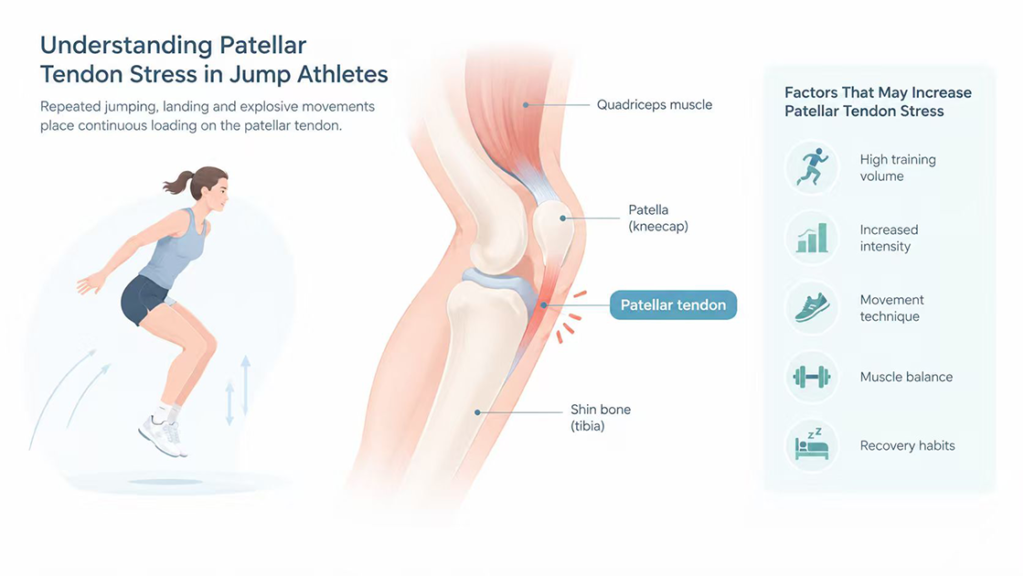
Jump athletes depend heavily on the strength and flexibility of the lower extremities. The patellar tendon works together with the quadriceps muscle group to create powerful knee extension during jumping and landing movements. Understanding how repeated stress affects this area helps explain why targeted recovery approaches are often considered in sports rehabilitation programs.
1.1 Why Jumping Movements Place Stress on the Patellar Tendon
Jumping activities create repeated force transmission through the knee joint. During takeoff, the quadriceps generate strong contraction, while the patellar tendon helps transfer this force to produce upward movement. During landing, the tendon also helps control impact by absorbing mechanical stress.
Sports that involve frequent jumping, such as volleyball and basketball, require athletes to repeat these movements many times during training and competition. Without appropriate recovery strategies, continuous loading may contribute to discomfort, stiffness, and reduced movement confidence around the knee area.
Patellar tendon stress is not only related to the amount of training but also depends on factors such as movement technique, training intensity, muscle balance, and recovery habits.
1.2 Common Challenges Faced by Jump Athletes
Jump athletes often need to maintain a balance between performance demands and recovery needs. High-intensity training schedules may create repeated stress on tendons, especially when athletes increase training volume too quickly or reduce recovery time.
Common concerns may include reduced knee comfort during jumping, stiffness after activity, or difficulty maintaining previous movement patterns. These challenges can influence training consistency and may require a structured approach that combines physical conditioning, mobility exercises, and supportive recovery technologies.
2. The Role of Shockwave Therapy in Patellar Tendon Support
Shockwave Therapy uses acoustic waves to deliver mechanical energy into targeted tissue areas. In rehabilitation settings, this technology is often explored as part of supportive programs for tendon and soft tissue conditions. Different shockwave systems, including radial and focused approaches, allow professionals to select treatment methods based on individual needs and targeted areas.
2.1 How Shockwave Therapy Works With Tendon Recovery Programs
Shockwave Therapy creates controlled mechanical stimulation within targeted tissues. This stimulation may influence local biological responses, circulation, and tissue activity associated with the recovery process.
For patellar tendon support, shockwave therapy focuses on the affected tendon area while working alongside other rehabilitation methods. The goal is to support a healthier tissue environment and improve comfort during movement rather than replace exercise-based rehabilitation.
Professionals often combine shockwave therapy with strength training, flexibility exercises, and movement adjustments to create a more complete recovery plan.
2.2 Why Shockwave Therapy Is Considered for Tendon-Related Concerns
Tendons have different characteristics compared with muscles because they contain less blood supply and respond differently to physical stress. This makes tendon recovery an important focus within sports rehabilitation.
Shockwave Therapy has been studied in relation to various tendon conditions because mechanical stimulation may support tissue remodeling processes. Research has explored extracorporeal shockwave therapy applications for chronic tendon-related concerns, including patellar tendon conditions.
The technology provides professionals with another option when developing individualized rehabilitation strategies for athletes with repeated tendon loading.
3. Shockwave Therapy Applications for Different Jump Sports
Although all jump athletes place stress on the patellar tendon, different sports create unique movement patterns. Understanding these differences helps rehabilitation professionals develop more specific recovery approaches.
3.1 Supporting Volleyball Players With Repeated Jumping Demands
Volleyball requires frequent vertical jumps, quick landings, and explosive lower-body movements. Players may perform dozens of jumping actions during training sessions and competitions, creating repeated demand on the knee extensor system.
Shockwave Therapy may be incorporated into volleyball recovery programs that focus on supporting tendon comfort, maintaining mobility, and managing training-related stress. Combined with proper strength development and movement techniques, it can become part of a broader strategy for maintaining athletic readiness.
3.2 Supporting Basketball Players With Explosive Movement Patterns
Basketball players experience different types of lower-body stress because the sport combines jumping with sprinting, sudden stops, and rapid direction changes. These movements require continuous coordination between muscles, tendons, and joints.
Recovery programs using Shockwave Therapy may focus on supporting areas exposed to repeated impact, including the patellar tendon region. By addressing soft tissue needs within a complete rehabilitation approach, athletes can better manage the physical demands associated with high-intensity basketball activities.
4. Integrating Shockwave Therapy Into Patellar Tendon Recovery Programs
Patellar tendon recovery requires a structured approach that considers training demands, movement patterns, and individual physical conditions. For jump athletes, recovery programs often combine strength development, flexibility training, load management, and supportive technologies. Shockwave Therapy can be incorporated into these programs as a non-invasive approach that focuses on targeted tendon areas and supports the overall rehabilitation process.
4.1 Supporting Tendon Function During High-Intensity Training Periods
Jump athletes frequently experience changes in training intensity throughout a season. Pre-season conditioning, competition schedules, and increased practice frequency can place additional stress on the patellar tendon.
Shockwave Therapy may help support tendon-focused recovery programs by delivering controlled acoustic waves to targeted areas. This mechanical stimulation is designed to encourage local tissue responses and support a healthier environment for recovery. It is commonly used alongside exercise-based rehabilitation rather than replacing strength and conditioning programs.
For athletes managing repeated jumping demands, maintaining tendon function requires a balance between performance training and appropriate recovery strategies.
4.2 The Role of Radial and Focused Shockwave Technology
Different types of shockwave systems provide different energy delivery methods. Radial Shockwave Therapy delivers pressure waves outward from the applicator, making it suitable for broader soft tissue areas. Focused Shockwave Therapy directs energy toward specific deeper tissue targets.
For patellar tendon support, rehabilitation professionals may consider factors such as tendon location, tissue condition, and individual recovery goals when selecting an appropriate approach. The ability to adjust treatment parameters allows shockwave technology to be incorporated into personalized rehabilitation programs.
Current research continues to explore extracorporeal shockwave therapy applications for patellar tendinopathy, with studies examining its potential role in supporting pain management and functional improvement within tendon recovery strategies.
5. Improving Long-Term Knee Performance Through Comprehensive Recovery Strategies
Patellar tendon health depends on more than one recovery method. Athletes need consistent attention to movement quality, muscle strength, flexibility, and training balance. Shockwave Therapy can become one component of a complete approach designed to support long-term knee function.
5.1 Combining Shockwave Therapy With Strength and Mobility Training
Strength training plays an important role in maintaining tendon capacity. Exercises that improve quadriceps strength, lower-body control, and movement coordination can help athletes better handle the physical demands of jumping sports.
When combined with exercise programs, Shockwave Therapy may provide additional support for athletes focusing on tendon recovery and mobility. A complete rehabilitation plan usually considers training volume, recovery periods, movement techniques, and individual goals.
For jump athletes, the combination of technology-based support and active rehabilitation can help create a more balanced approach to managing repetitive tendon stress.
5.2 Supporting Athletic Performance Through Preventive Recovery
Recovery strategies are not only important when athletes experience discomfort. Many sports professionals also focus on preventive approaches that help maintain physical readiness throughout demanding seasons.
Regular mobility work, proper warm-up routines, strength development, and recovery technologies such as Shockwave Therapy may support athletes in managing the physical challenges associated with repeated jumping movements.
By paying attention to early signs of stiffness or reduced movement quality, athletes and rehabilitation professionals can develop better strategies for maintaining consistent performance.
FAQ
What is Shockwave Therapy for patellar tendon support?
Shockwave Therapy uses acoustic waves to provide targeted mechanical stimulation to soft tissue areas and is commonly used in rehabilitation programs.
Why do jump athletes experience patellar tendon stress?
Repeated jumping, landing, and explosive movements place continuous loading demands on the patellar tendon.
Is Shockwave Therapy only for professional athletes?
No. It can be used in rehabilitation and sports recovery programs for different activity levels.
Can Shockwave Therapy replace exercise training?
No. It is generally used as a supportive method combined with exercise, mobility work, and professional guidance.
Which sports commonly involve patellar tendon stress?
Sports involving frequent jumping, such as basketball, volleyball, and track and field, often place higher demands on the patellar tendon.
Conclusion
Jump athletes rely on strong and flexible lower-body structures to perform explosive movements efficiently. Because the patellar tendon experiences repeated loading during jumping and landing activities, maintaining tendon health requires a balanced approach that includes training management, mobility exercises, and recovery support. Shockwave Therapy provides an additional option within sports rehabilitation programs by using acoustic wave technology to target specific tissue areas and support recovery strategies. When combined with professional assessment and appropriate exercise routines, it can help athletes focus on maintaining mobility, comfort, and long-term performance.
Références
The Effectiveness of Shockwave Therapy on Patellar Tendinopathy, Achilles Tendinopathy, and Plantar Fasciitis: A Systematic Review and Meta-Analysis
https://pubmed.ncbi.nlm.nih.gov/37662911
Treatment of Jumper’s Knee with Extracorporeal Shockwave Therapy: A Systematic Review and Meta-Analysis
https://pubmed.ncbi.nlm.nih.gov/36457482
Management of Patellar Tendinopathy: A Systematic Review and Network Meta-Analysis of Randomised Studies
https://pubmed.ncbi.nlm.nih.gov/34900334
Treatment Options for Patellar Tendinopathy: A Systematic Review
https://pubmed.ncbi.nlm.nih.gov/28110807
Extracorporeal Shockwave Therapy for Musculoskeletal Disorders: Clinical Applications and Evidence Review