

Introduction
Strength training has become an important part of many fitness routines, with weightlifters constantly challenging their muscles, tendons, and connective tissues through progressive loading. While structured training can support physical performance and strength development, repeated high-intensity movements may place additional stress on tendons and soft tissues. As a result, many athletes and fitness professionals are exploring recovery technologies that can complement exercise programs. Shockwave Therapy, also known as Extracorporeal Shockwave Therapy (ESWT), uses acoustic wave technology to deliver mechanical energy to targeted areas and is commonly explored in sports rehabilitation settings. By supporting tissue response, circulation, and recovery processes, Shockwave Therapy provides another option for weightlifters who want to maintain mobility and support long-term training consistency.
1. Understanding Shockwave Therapy in Strength Training Recovery
Weightlifting places unique demands on the musculoskeletal system. Unlike many recreational activities, strength training involves repeated resistance loading that requires coordination between muscles, tendons, joints, and connective tissues. Understanding how Shockwave Therapy fits into recovery programs can help athletes and professionals make informed decisions.
1.1 How Shockwave Therapy Works Through Acoustic Wave Technology
Shockwave Therapy uses high-energy acoustic waves to deliver mechanical stimulation to targeted tissue areas. During Extracorporeal Shockwave Therapy (ESWT), these pressure waves interact with biological structures and may influence cellular responses through a process known as mechanotransduction.
Mechanotransduction refers to how cells respond to mechanical signals and convert them into biological activity. In tendon-related applications, this process is associated with supporting circulation, tissue remodeling, and the body’s natural recovery response. Shockwave devices may use radial or focused wave technologies, allowing professionals to select different energy delivery approaches based on specific application needs.
1.2 Why Weightlifters Pay Attention to Tendon Health
Muscles often receive the most attention in strength training, but tendons play an equally important role by connecting muscles to bones and transferring force during movement. Heavy lifting exercises such as squats, deadlifts, bench presses, and Olympic lifts require repeated tendon loading.
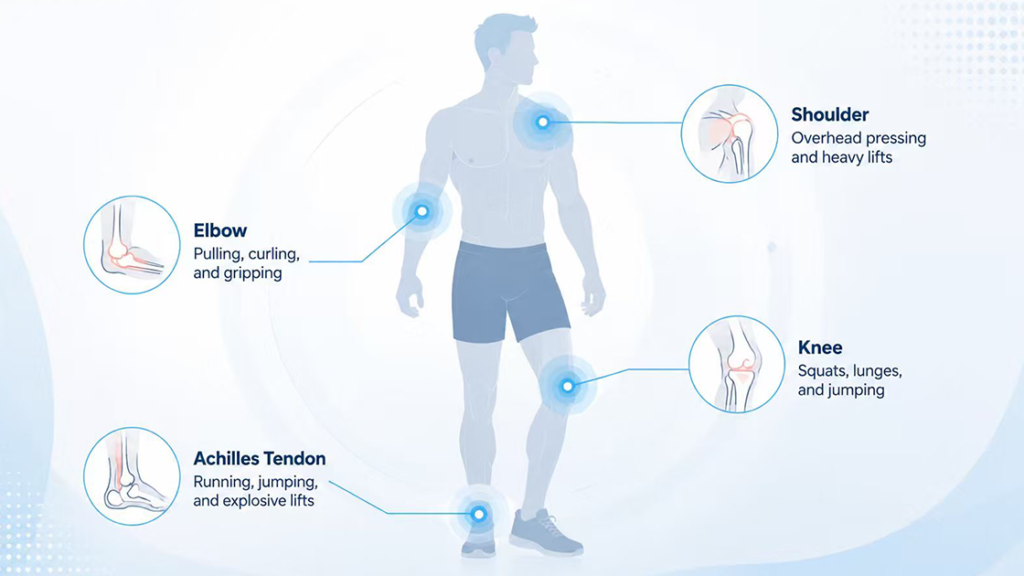
When training intensity increases too quickly or recovery is insufficient, tendons may experience continuous stress. Conditions related to tendon overload, commonly described as tendinopathy, can affect areas such as the elbow, shoulder, knee, and Achilles tendon. Shockwave Therapy is often considered as part of a broader rehabilitation strategy that includes exercise, mobility training, and professional guidance.
1.3 The Role of Shockwave Therapy in Modern Strength Training Recovery
Modern strength training programs increasingly focus on performance maintenance rather than only short-term results. Recovery management has become an important part of helping athletes continue training while maintaining movement quality.
It can be integrated into professional recovery programs alongside strength exercises, stretching routines, and rehabilitation strategies. Instead of replacing training principles, it serves as a complementary technology that supports tissue-focused recovery approaches.
2. Common Areas Where Weightlifters Explore Shockwave Therapy
Different weightlifting movements create different physical demands. Understanding common stress areas helps athletes and rehabilitation professionals consider how Shockwave Therapy may support targeted recovery programs.
2.1 Supporting Elbow Tendon Comfort During Upper Body Training
Upper body strength exercises often involve repeated gripping, pulling, and pressing movements. Exercises such as pull-ups, rows, curls, and presses can place continuous stress on the elbow tendons.
Weightlifters experiencing elbow-related discomfort may explore this therapy as part of a comprehensive recovery approach. Acoustic wave stimulation may help support tissue response and improve comfort during rehabilitation programs while athletes gradually return to their preferred training routines.
2.2 Supporting Shoulder Recovery During Heavy Training
The shoulder is a highly mobile joint that depends on coordinated movement between muscles, tendons, and surrounding tissues. Weightlifters frequently perform overhead presses, bench presses, and other movements that require shoulder stability.
Shockwave Therapy may be considered within shoulder recovery programs because of its ability to deliver targeted mechanical stimulation. When combined with appropriate exercise management, mobility training, and professional assessment, it can support strategies focused on maintaining shoulder function and training readiness.
2.3 Supporting Knee and Patellar Tendon Management
Lower-body strength exercises place significant demands on the knee structure, especially during movements that involve repeated bending and force production. Squats, lunges, and jumping exercises require strong coordination between the quadriceps, patellar tendon, and surrounding tissues.
Patellar tendon-related concerns are common among physically active individuals. Shockwave Therapy is one technology used in sports rehabilitation environments to support tendon-focused recovery programs. Research has explored ESWT applications across different tendinopathies, including patellar and Achilles tendon conditions.
3. Combining Shockwave Therapy With Strength Training Programs
Shockwave Therapy works best when considered as part of a complete recovery strategy. For weightlifters, maintaining proper training structure, movement quality, and recovery habits remains essential.
3.1 Integrating Shockwave Therapy With Exercise-Based Recovery
Exercise remains a key component of strength development and rehabilitation. Progressive loading, mobility exercises, and movement adjustments help athletes maintain physical function while managing training demands.
Some rehabilitation approaches combine Shockwave Therapy with specific exercise programs because both methods address different aspects of recovery. While exercise focuses on controlled mechanical loading, this therapy provides additional mechanical stimulation through acoustic waves.
3.2 Supporting Long-Term Training Consistency
For many weightlifters, consistency is one of the most important factors in achieving fitness goals. Unexpected discomfort or movement limitations may affect training schedules and performance confidence.
Recovery technologies such as Shockwave Therapy are increasingly explored because they can become part of a structured approach focused on maintaining comfort, supporting mobility, and helping athletes continue their training plans with professional guidance.
3.3 Choosing Between Radial and Focused Shockwave Technology
Modern systems may include different wave technologies, including Radial Shockwave Therapy and Focused Shockwave Therapy. These approaches differ in how acoustic energy is delivered and how deeply energy concentrates within tissues.
Radial systems generally distribute pressure waves outward from the applicator area, while focused systems concentrate energy at specific depths. Professional providers may select different settings depending on the targeted area, tissue characteristics, and recovery goals.
4. Optimizing Shockwave Therapy Applications for Weightlifting Recovery
As strength training continues to develop, recovery strategies are becoming an essential part of athletic performance management. Weightlifters are not only focused on increasing strength but also on maintaining movement quality and reducing interruptions caused by physical stress. This therapy provides a technology-based option that can be incorporated into professional recovery programs, especially when combined with exercise planning, mobility training, and appropriate rehabilitation guidance. Research has explored the role of Extracorporeal Shockwave Therapy in different tendon-related conditions, although results may vary depending on the specific condition, treatment approach, and individual factors.
4.1 Supporting Tendon Remodeling and Connective Tissue Recovery
Tendons adapt to mechanical stress through continuous remodeling processes. During strength training, controlled loading can help improve tendon capacity, but excessive or repetitive stress may affect tissue balance.
It is often discussed in relation to tendon remodeling because acoustic wave stimulation may influence cellular responses and local biological processes. The mechanical energy delivered through shockwaves is associated with mechanisms such as increased local circulation, cellular communication, and collagen-related activity. These effects are considered supportive components within broader tendon recovery strategies.
For weightlifters, this approach may be valuable when combined with progressive exercise management, allowing professionals to address both training demands and tissue recovery needs.
4.2 Supporting Recovery Programs for Different Training Styles
Not all weightlifters follow the same training pattern. Powerlifters, Olympic weightlifters, and recreational strength athletes often experience different physical demands based on exercise selection, lifting frequency, and intensity levels.
Powerlifters may place significant stress on areas involved in heavy compound movements, while Olympic lifters often require explosive movements that involve rapid force production. Recreational lifters may experience stress from increasing training volume or changing workout routines.
Shockwave Therapy programs can be adjusted based on individual goals and targeted areas. Devices with adjustable energy levels and different applicators allow professionals to customize sessions according to tissue location and recovery requirements.
4.3 The Importance of Professional Assessment Before Shockwave Therapy
Although Shockwave Therapy is widely used in rehabilitation environments, proper assessment remains an important part of any recovery program. Factors such as training history, movement patterns, tissue condition, and overall health should be considered before selecting an appropriate approach.
Professional evaluation helps determine whether shockwave technology fits into an individual’s recovery plan. Combining clinical assessment with exercise modification and recovery strategies creates a more complete approach for weightlifters who want to maintain long-term training performance.
5. The Future of Shockwave Therapy in Strength Training and Sports Recovery
The fitness industry continues to move toward more comprehensive recovery solutions. As athletes become more aware of the importance of injury prevention, mobility, and long-term performance, technologies such as Shockwave Therapy are gaining attention among rehabilitation professionals and fitness communities.
5.1 Growing Demand for Advanced Recovery Technologies
Strength training is no longer focused only on lifting heavier weights. Modern athletes increasingly understand that recovery quality influences training consistency and physical development.
It represents one of the technologies being explored in sports rehabilitation because it provides mechanical stimulation without surgical procedures. By combining acoustic wave technology with professional recovery programs, clinics and training facilities can offer additional support options for physically active individuals.
5.2 The Role of Shockwave Therapy Equipment in Rehabilitation Facilities
Rehabilitation centers, sports clinics, and performance facilities often look for equipment that can support different applications. Modern shockwave systems may include radial and focused technologies, adjustable intensity settings, and multiple applicators designed for different treatment areas.
These features allow professionals to create more flexible recovery programs. Whether supporting tendon-focused rehabilitation or addressing soft tissue recovery goals, shockwave equipment can become part of a broader professional service system.
5.3 Supporting the Future of Weightlifting Recovery
As strength training continues to grow globally, recovery management will remain an important topic for athletes and professionals. Weightlifters need approaches that support both performance goals and physical sustainability.
It is expected to remain an area of interest within sports rehabilitation because it combines mechanical stimulation technology with modern recovery concepts. When used alongside proper training, exercise planning, and professional guidance, it can provide another option for supporting tendon health and overall movement quality.
FAQ
What is Shockwave Therapy for weightlifters?
Shockwave Therapy for weightlifters is a recovery technology that uses acoustic waves to support tissue response, mobility, and rehabilitation programs.
Can Shockwave Therapy replace strength training?
No. It is designed to complement exercise programs rather than replace proper strength training and recovery methods.
What areas do weightlifters commonly explore Shockwave Therapy for?
Common areas include the elbow, shoulder, knee, Achilles tendon, and other soft tissue areas affected by repetitive loading.
What is the difference between radial and focused Shockwave Therapy?
Radial Shockwave Therapy distributes energy outward from the applicator, while focused Shockwave Therapy concentrates energy at specific tissue depths.
Is Shockwave Therapy suitable for every weightlifter?
Suitability depends on individual conditions, training history, and professional assessment.
Conclusion
Shockwave Therapy for weightlifters represents a growing area of interest within sports rehabilitation and strength training recovery. By using acoustic wave technology and principles such as mechanotransduction, this approach provides another option for supporting tendon health, soft tissue recovery, and movement comfort. When combined with structured training programs, mobility exercises, and professional guidance, Shockwave Therapy can become part of a comprehensive recovery strategy for individuals involved in strength training. As the fitness industry continues to develop, advanced recovery technologies may play an increasingly important role in helping athletes maintain consistent and sustainable training routines.
Références
Extracorporeal Shockwave Therapy for Tendinopathy: A Systematic Review and Meta-analysis
https://pubmed.ncbi.nlm.nih.gov/41651897
Efficacy of Extracorporeal Shock Wave Therapy for Lower-Limb Tendinopathy: A Meta-analysis of Randomized Controlled Trials
https://pubmed.ncbi.nlm.nih.gov/29557811
The Effectiveness of Shockwave Therapy on Patellar Tendinopathy, Achilles Tendinopathy, and Plantar Fasciitis: A Systematic Review and Meta-analysis
https://pubmed.ncbi.nlm.nih.gov/37662911
Shockwave or Ultrasound Therapy for Tendinopathy? A Systematic Review and Meta-analysis
https://pubmed.ncbi.nlm.nih.gov/41827423
Tendinopathy: Current Concepts and Clinical Management Strategies