

Introduction
Shoulder impingement syndrome is one of the most common injuries among rock climbers, resulting from repetitive overhead movements, dynamic pulling, and high-intensity shoulder loading. Over time, climbers may experience chronic pain, reduced range of motion, and impaired performance, which can significantly affect their training and climbing goals. Shockwave therapy has emerged as a non-invasive treatment that promotes tissue healing, improves blood circulation, and reduces inflammation in affected tendons and muscles. By targeting the specific anatomical and biomechanical demands of climbers, shockwave therapy offers an innovative approach to managing shoulder impingement, helping athletes return to peak performance while minimizing downtime.
1. Understanding Shoulder Impingement Syndrome in Climbers
1.1 What is Shoulder Impingement Syndrome?
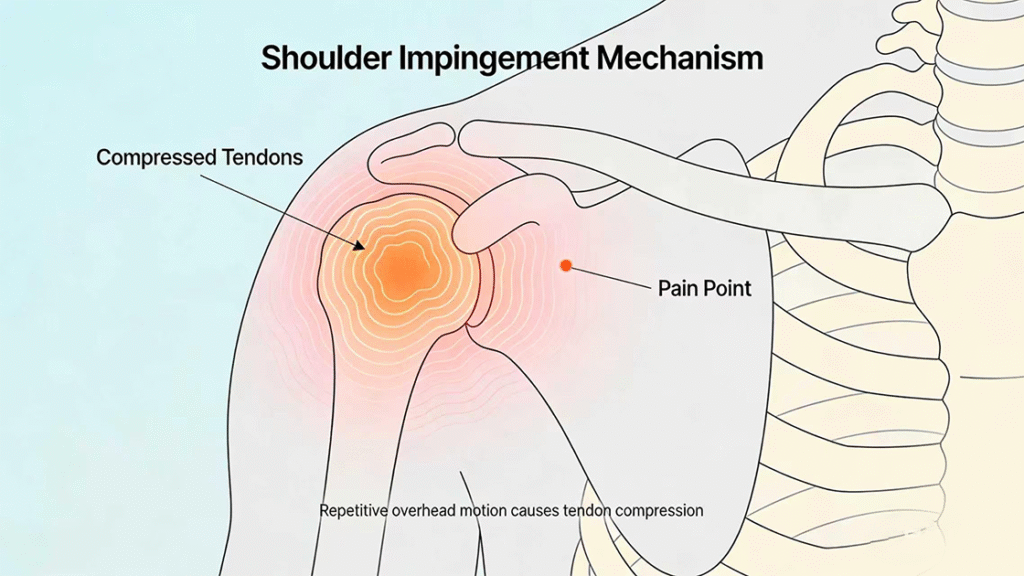
Shoulder impingement syndrome occurs when the rotator cuff tendons and subacromial bursa are compressed between the humeral head and the acromion during arm elevation. In climbers, repeated overhead movements such as reaching for holds, dynamic pulls, and high-intensity lock-offs can exacerbate this compression. This results in pain during lifting or swinging the arm, weakness, and restricted shoulder mobility. Understanding the mechanics of impingement is crucial for selecting effective interventions that restore function without aggravating the injury.
1.2 Why Climbers Are at Risk
Climbers often place their shoulders in extreme ranges of motion, combining abduction, external rotation, and overhead loading. This repetitive stress, especially during intense bouldering sessions or long climbs, increases the risk of subacromial impingement. Unlike other athletes, climbers rely heavily on both dynamic pulling strength and static stabilization, meaning that both the rotator cuff and scapular stabilizers are continually challenged. Over time, microtrauma can accumulate, leading to inflammation, tendon degeneration, and chronic impingement symptoms.
2. How Shockwave Therapy Works
2.1 Mechanism of Action
Shockwave therapy delivers high-energy acoustic waves to affected tissues, stimulating cellular metabolism, promoting angiogenesis, and enhancing tissue regeneration. In shoulder impingement syndrome, these waves target inflamed tendons, subacromial bursa, and surrounding connective tissue. The mechanical stimulation helps break down calcifications, reduce fibrosis, and improve the elasticity of tendons and ligaments. Additionally, shockwave therapy increases local blood flow, providing essential nutrients for tissue repair and facilitating the removal of inflammatory mediators.
2.2 Benefits for Shoulder Recovery in Climbers
For climbers with shoulder impingement, shockwave therapy can significantly reduce pain and inflammation, enhance tendon flexibility, and accelerate recovery. Unlike invasive procedures, it allows athletes to maintain mobility during treatment. By improving tissue health and reducing discomfort, climbers can resume training earlier, maintain shoulder stability, and optimize climbing performance without the risks associated with surgery or prolonged immobilization.
3. Identifying Symptoms Early
3.1 Common Signs in Climbers
Climbers with shoulder impingement often notice pain during overhead reaches, difficulty performing dynamic pulls, and tenderness along the anterior or lateral shoulder. Other symptoms may include clicking, weakness, or a sensation of catching during movement. Pain often worsens at night or after long climbing sessions, indicating ongoing tendon or bursal inflammation. Early recognition of these signs is critical to prevent chronic degeneration and loss of climbing performance.
3.2 Assessing Severity
Severity can be assessed through clinical tests, including the Neer, Hawkins-Kennedy, and Jobe’s test, combined with imaging modalities such as ultrasound or MRI. These evaluations help differentiate subacromial impingement from rotator cuff tears or labral injuries. Accurate assessment ensures that shockwave therapy is applied appropriately, targeting the exact site of tissue compromise and maximizing recovery outcomes.
4. Integrating Shockwave Therapy with Climbing Rehabilitation
4.1 Complementary Exercises
While shockwave therapy addresses tissue repair, integrating targeted exercises enhances outcomes. Scapular stabilization, rotator cuff strengthening, and mobility drills improve shoulder biomechanics, reducing the risk of recurrent impingement. Climbers benefit from a structured program that gradually increases load, focusing on eccentric strengthening of the rotator cuff and controlled overhead movement.
4.2 Timing and Frequency
Typically, a shockwave therapy protocol for shoulder impingement involves multiple sessions over several weeks, with each session lasting approximately 15–20 minutes. The frequency and intensity are tailored to the severity of symptoms and individual recovery response. Combining therapy sessions with appropriate rest and rehabilitation exercises allows climbers to maintain performance while ensuring optimal tissue healing.
5. Long-Term Prevention Strategies
5.1 Proper Climbing Technique
Maintaining correct shoulder positioning, engaging scapular stabilizers, and avoiding excessive overhead strain can reduce impingement risk. Climbers should focus on smooth, controlled movements and proper load distribution during dynamic sequences.
5.2 Strength and Flexibility Training
Regular rotator cuff and shoulder girdle strengthening, along with posterior capsule and thoracic mobility exercises, help maintain optimal shoulder mechanics. Flexibility in the lats, pecs, and posterior shoulder muscles further reduces compression during overhead movements.
5.3 Periodic Recovery Interventions
Incorporating periodic shockwave therapy, soft tissue massage, or cryotherapy sessions can help manage microtrauma before it becomes chronic. Early intervention ensures sustained climbing performance and minimizes downtime from injury.
FAQ
Q1 : La thérapie par ondes de choc est-elle douloureuse ?
A1: Most climbers experience mild discomfort during treatment, often described as tingling or pressure. Discomfort typically subsides quickly.
Q2: How soon can I climb after a session?
A2: Light climbing may be resumed within a day or two, but high-intensity training should follow a gradual rehabilitation plan guided by a clinician.
Q3: Are there side effects?
A3: Temporary redness, mild swelling, or minor bruising may occur at the treatment site. Serious complications are rare.
Q4: How many sessions are needed?
A4: Most climbers benefit from 3–6 sessions over 2–4 weeks, depending on symptom severity and response to therapy.
Conclusion
For rock climbers, shoulder impingement syndrome can significantly impact performance and daily function. Shockwave therapy provides a non-invasive, effective solution to reduce pain, enhance tissue repair, and accelerate recovery. When combined with targeted rehabilitation, proper climbing technique, and preventive strategies, climbers can maintain peak performance while minimizing the risk of recurrence. By integrating shockwave therapy into a comprehensive shoulder care plan, athletes can safely return to climbing with improved shoulder health and stability.
Références
Rompe JD, Furia JP, Maffulli N. Efficacy of shockwave therapy for chronic shoulder pain: A systematic review. J Shoulder Elbow Surg. 2009;18(5):668–676.
https://www.sciencedirect.com/science/article/pii/S105827460900154X
Speed CA. Extracorporeal shock-wave therapy in the treatment of soft-tissue conditions. BMJ. 2004;328(7448):1433–1436.
https://www.bmj.com/content/328/7448/1433
Gerdesmeyer L, et al. Extracorporeal shock wave therapy for the treatment of tendinopathies. Am J Sports Med. 2008;36(11):2126–2134.
https://journals.sagepub.com/doi/10.1177/0363546508324170
Ioppolo F, et al. Shockwave therapy for musculoskeletal disorders: Clinical evidence. Phys Ther Sport. 2014;15(1):16–26.
https://www.sciencedirect.com/science/article/pii/S1466853X13000661