

Introduction
Rehabilitation is a gradual process that focuses on restoring movement, improving physical function, and supporting overall recovery goals. As modern rehabilitation continues to develop, healthcare professionals are exploring advanced technologies that can complement traditional approaches. Shockwave Therapy has become a commonly discussed option in rehabilitation environments because it uses acoustic wave energy to support soft tissue recovery processes and improve treatment flexibility. Understanding when this therapy may be incorporated into a rehabilitation plan can help patients and professionals better recognize its role at different recovery stages. This article explains the timing of this therapy during rehabilitation, how it works with professional recovery programs, and why treatment planning is an important part of modern care.
1. Understanding the Role of Shockwave Therapy in Rehabilitation
Rehabilitation programs usually involve multiple stages based on individual conditions, recovery goals, and functional needs. This therapy is considered a supportive technology that professionals may integrate into different phases of rehabilitation.
1.1 What Is Shockwave Therapy?
Shockwave Therapy is a non-invasive technology that uses acoustic wave energy to target specific areas of the body. These mechanical waves can reach soft tissues and create physical stimulation within the treatment area.
In rehabilitation settings, professionals often use this therapy as part of a broader recovery approach that may include exercise programs, movement training, and other therapeutic methods.
1.2 Why Timing Matters in Rehabilitation Programs
The timing of any rehabilitation technology can influence how it fits into an overall recovery plan. Different stages of recovery may involve different priorities, such as improving mobility, supporting tissue flexibility, or preparing for physical activities.
Healthcare professionals consider factors such as injury type, tissue condition, activity level, and rehabilitation goals when deciding how this therapy may support a recovery program.
1.3 Shockwave Therapy as a Complementary Rehabilitation Tool
It is not designed to replace professional evaluation or rehabilitation exercises. Instead, it works as a complementary option that can be combined with other approaches.
By integrating this therapy into personalized rehabilitation plans, professionals can provide more diverse support options based on individual recovery needs.
2. Shockwave Therapy During Different Rehabilitation Stages
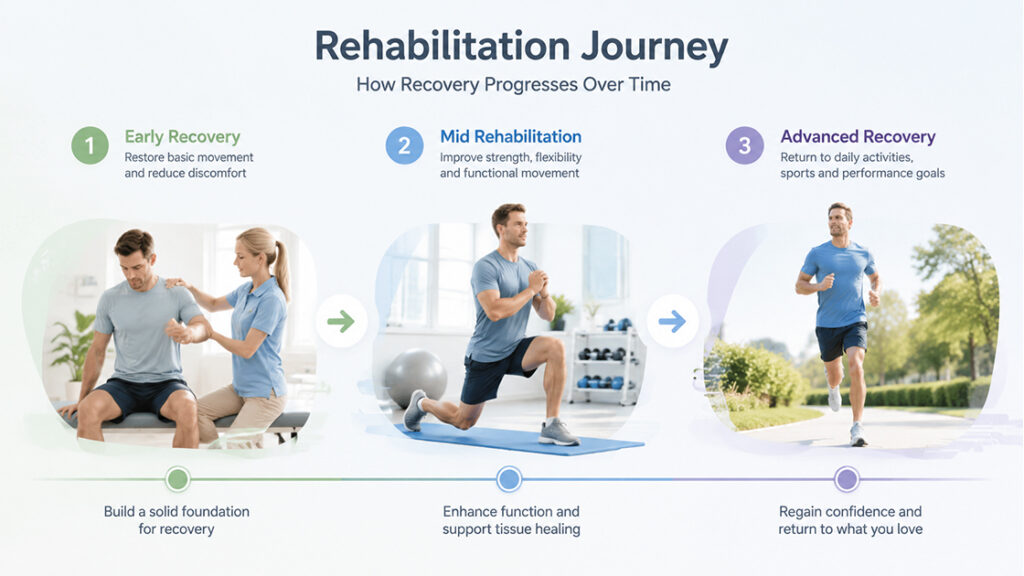
Rehabilitation is not a single-step process. It usually includes different phases, and each phase has specific objectives. Understanding the role of this therapy at different stages helps explain how professionals incorporate this technology.
2.1 Early Rehabilitation: Supporting Comfort and Tissue Preparation
The early stage of rehabilitation often focuses on restoring basic movement and creating a suitable foundation for future progress.
During this stage, professionals may consider this therapy as a supportive option to help improve the condition of targeted soft tissues and support the preparation process for movement-based rehabilitation.
2.2 Mid-Stage Rehabilitation: Supporting Mobility and Functional Progress
As recovery progresses, rehabilitation often focuses on improving strength, flexibility, and movement patterns.
Shockwave Therapy may be included during this stage as part of a comprehensive program designed to support tissue function while individuals participate in guided exercises and physical activities.
2.3 Advanced Rehabilitation: Supporting Return to Activity Goals
The later stage of rehabilitation often focuses on helping individuals gradually return to daily activities, sports, or physical performance goals.
Professionals may use this therapy alongside functional training to support ongoing recovery management and help individuals maintain progress during their rehabilitation journey.
3. Factors That Influence When Shockwave Therapy May Be Used
The appropriate timing of this therapy depends on multiple factors. Rehabilitation professionals typically evaluate each situation individually rather than following a single approach for everyone.
3.1 Type of Condition and Targeted Tissue Area
Different conditions involve different tissues, including tendons, muscles, and connective structures. The treatment approach may vary depending on the specific area involved.
For example, soft tissue concerns around the shoulder, knee, foot, or elbow may require different rehabilitation strategies and timing considerations.
3.2 Activity Level and Recovery Goals
An individual’s lifestyle and activity goals can influence rehabilitation planning. A professional athlete, active adult, and person returning to daily activities may have different recovery priorities.
Shockwave Therapy can be considered within different rehabilitation goals, depending on the desired level of movement, performance, and physical function.
3.3 Professional Assessment and Treatment Planning
Professional evaluation plays an important role in determining when supportive technologies should be introduced.
Healthcare providers consider physical condition, rehabilitation progress, and individual response when developing appropriate recovery strategies.
4. Combining Shockwave Therapy With Modern Rehabilitation Approaches
Modern rehabilitation increasingly focuses on combining multiple methods to create more complete recovery programs. It is often considered alongside other professional approaches.
4.1 Shockwave Therapy and Exercise-Based Rehabilitation
Exercise remains an important part of many rehabilitation programs because it helps improve strength, coordination, and movement ability.
When combined with exercise-based rehabilitation, it can become part of a broader strategy that supports progressive recovery goals.
4.2 Shockwave Therapy and Manual Therapy Techniques
Manual therapy techniques are commonly used in rehabilitation settings to support movement quality and physical comfort.
Shockwave Therapy may complement these approaches by providing another form of targeted stimulation within a professional treatment plan.
4.3 Shockwave Therapy in Sports Rehabilitation Programs
Sports rehabilitation often requires structured recovery plans designed around performance goals.
Athletes may use Shockwave Therapy as part of a comprehensive program that includes strength training, mobility exercises, and professional monitoring.
5. Choosing the Right Rehabilitation Approach With Shockwave Therapy
Successful rehabilitation depends on personalized planning, professional guidance, and suitable technology selection. Understanding how this therapy fits into a recovery program can help clinics provide more effective service options.
5.1 Creating Personalized Rehabilitation Plans
Every recovery process is different. Factors such as age, activity level, physical condition, and rehabilitation goals can affect treatment planning.
Personalized programs allow professionals to determine where Shockwave Therapy may provide supportive value within the overall recovery process.
5.2 The Importance of Professional Shockwave Therapy Technology
For rehabilitation clinics, selecting appropriate this equipment is an important consideration.
Professional systems often focus on adjustable settings, treatment flexibility, and reliable performance to support different rehabilitation environments.
5.3 The Future of Shockwave Therapy in Rehabilitation
As rehabilitation technology continues to evolve, it is expected to remain an important supportive option for many professional settings.
The combination of advanced technology, professional expertise, and personalized rehabilitation planning creates new opportunities for improving modern recovery experiences.
FAQ
When is Shockwave Therapy usually used during rehabilitation?
Shockwave Therapy may be incorporated during different rehabilitation stages depending on individual conditions and professional assessment.
Can Shockwave Therapy be used with exercise programs?
Yes. Many rehabilitation programs combine it with exercise and movement-based approaches.
Does Shockwave Therapy replace physical therapy?
No. Shockwave Therapy is a complementary technology and does not replace professional rehabilitation programs.
How do professionals decide when to use Shockwave Therapy?
Professionals consider factors such as condition type, recovery progress, tissue area, and individual goals.
Is Shockwave Therapy suitable for every rehabilitation plan?
Not every rehabilitation plan requires this therapy. Professional evaluation helps determine whether it may be appropriate as part of recovery support.
Conclusion
Shockwave Therapy timing plays an important role in how this technology fits into modern rehabilitation programs. From early recovery support to advanced return-to-activity preparation, professionals may consider this therapy as a complementary approach within personalized rehabilitation plans. By combining acoustic wave technology with exercise programs, movement training, and professional assessment, rehabilitation providers can create more flexible recovery strategies. As demand for advanced rehabilitation solutions continues to grow, understanding when and how this therapy may be used will remain valuable for both professionals and individuals seeking modern recovery support.
Références
Extracorporeal Shock Wave Therapy in Musculoskeletal Disorders: A Review of Mechanisms and Clinical Applications
https://www.ncbi.nlm.nih.gov/pmc/articles/PMC6028896
Clinical Applications of Extracorporeal Shock Wave Therapy in Orthopedics and Rehabilitation
https://www.ncbi.nlm.nih.gov/pmc/articles/PMC4240181
Shockwave Therapy: Mechanisms of Action and Therapeutic Applications
https://www.ncbi.nlm.nih.gov/pmc/articles/PMC7843017
Extracorporeal Shock Wave Therapy for Tendinopathies and Soft Tissue Conditions
https://www.ncbi.nlm.nih.gov/pmc/articles/PMC5861118
The Role of Rehabilitation Technology in Modern Physical Therapy