

はじめに
Equestrian riders often face unique physical challenges due to the repetitive motions, postural demands, and high-impact forces inherent in horseback riding. Back strain is one of the most common musculoskeletal complaints among riders, manifesting as muscle tension, localized pain, or chronic discomfort. Traditional therapies such as massage, physiotherapy, and anti-inflammatory medications provide temporary relief but may not address deeper tissue damage. Shockwave therapy has emerged as a promising non-invasive treatment option for riders, offering targeted stimulation to affected muscles, improved circulation, and accelerated tissue repair. This article explores the causes of equestrian back strain, the mechanisms of shockwave therapy, its applications, and expected outcomes for riders seeking long-term relief.
1. Understanding Back Strain in Equestrian Riders
1.1 Anatomy of the Rider’s Back
The human back consists of complex structures, including the paraspinal muscles, erector spinae, multifidus, intervertebral discs, and spinal ligaments. Equestrian activity requires significant engagement of the core and back muscles to maintain balance and posture while controlling the horse. Prolonged riding, sudden movements, or uneven terrain can overload these structures, leading to muscular fatigue and strain.
1.2 Common Causes of Back Strain in Riders
Back strain often arises from repetitive motion, improper posture, uneven saddle fit, or insufficient core strength. Riders who frequently jump, trot, or engage in competitive disciplines such as dressage or show jumping are particularly susceptible. Secondary factors, including tight hamstrings, weak glutes, or prior injuries, can exacerbate discomfort and prolong recovery.
1.3 Symptoms to Recognize
Riders experiencing back strain may report stiffness, aching between the shoulder blades, localized lumbar pain, or muscle spasms. Chronic cases can lead to reduced mobility, fatigue during riding sessions, and compensatory movements that increase the risk of further injury. Early recognition is critical to prevent worsening conditions and long-term musculoskeletal damage.
2. Traditional Management Approaches
2.1 Physiotherapy and Exercise
Physiotherapy aims to restore flexibility, strengthen supporting musculature, and correct postural imbalances. Common exercises include core stabilization, spinal mobilization, and targeted stretching. While effective for mild strain, recovery can be slow and requires consistent adherence.
2.2 Massage Therapy and Manual Techniques
Massage reduces muscle tension, improves blood flow, and provides short-term pain relief. Techniques such as deep tissue massage or myofascial release can help riders recover from acute discomfort but often do not address deeper tissue microtrauma.
2.3 Medication and Anti-inflammatory Strategies
Nonsteroidal anti-inflammatory drugs (NSAIDs) may temporarily alleviate pain and inflammation. However, long-term reliance can have adverse effects and does not promote structural healing. Therefore, many riders seek alternative interventions like shockwave therapy to complement traditional treatments.
3. Shockwave Therapy Explained
3.1 Mechanism of Action
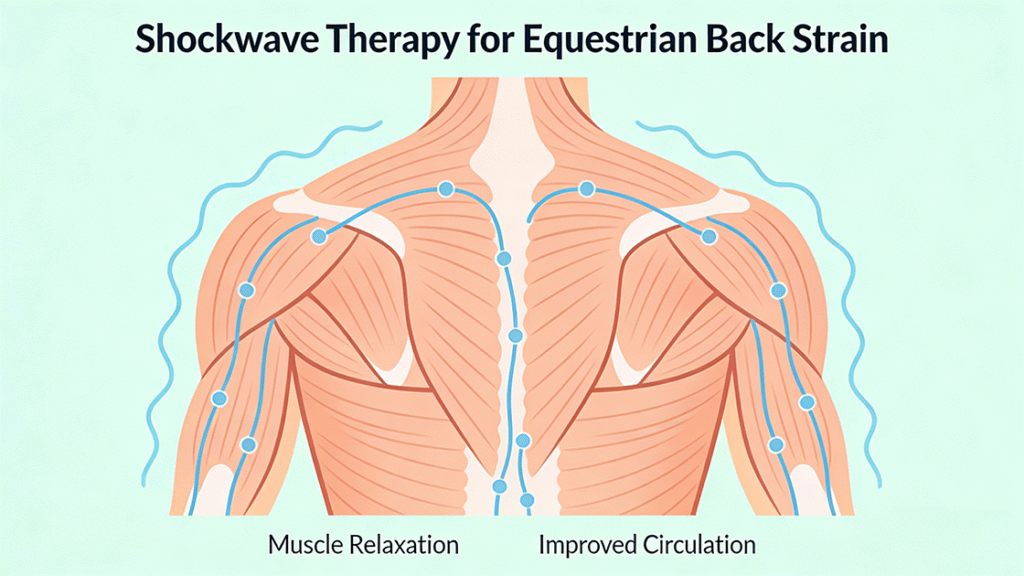
Shockwave therapy uses high-energy acoustic waves to stimulate tissue repair and reduce pain. The waves penetrate deep into muscle and connective tissue, enhancing cellular metabolism, increasing local blood flow, and promoting collagen synthesis. This process accelerates the healing of microtraumas that often underlie chronic back strain.
3.2 Benefits for Equestrian Riders
Riders may experience decreased pain, improved spinal mobility, and faster recovery compared to conventional therapy alone. Shockwave therapy can target specific muscle groups affected by riding, such as the erector spinae and multifidus, and address localized areas of muscle tightness and trigger points.
3.3 Cellular and Physiological Effects
At the cellular level, shockwave therapy stimulates fibroblast activity, promotes angiogenesis, and modulates inflammatory mediators. Enhanced microcirculation improves oxygen and nutrient delivery to damaged tissues, facilitating faster regeneration. Over time, these effects reduce muscular fatigue, restore function, and support long-term back health.
4. Application Protocol for Riders
4.1 Treatment Planning
Therapists typically design individualized protocols based on the severity and location of back strain. Sessions may occur once or twice weekly, with 4–6 sessions recommended for moderate to severe strain. Proper assessment ensures that energy levels, duration, and targeted areas are optimized for efficacy and safety.
4.2 Targeted Muscle Groups
Shockwave therapy for riders focuses on the lumbar paraspinal muscles, thoracic erector spinae, gluteal muscles, and associated fascia. By addressing the primary muscles involved in posture and horse control, therapy helps alleviate strain from repetitive riding motions.
4.3 Expected Outcomes
Riders often report noticeable pain reduction and improved range of motion after the first few sessions. Over the full course, therapy promotes deeper tissue healing, reduces muscular stiffness, and supports postural alignment. Combined with physiotherapy and proper saddle adjustment, riders can achieve long-term relief and enhanced performance.
5. Integrating Shockwave Therapy into Rider Wellness
5.1 Complementary Approaches
Shockwave therapy is most effective when combined with exercise, stretching, and core strengthening. Riders should maintain a holistic routine that includes warm-up, cooldown, and ergonomic evaluation of saddle and riding posture.
5.2 Monitoring and Safety
Treatment should be administered by trained professionals to avoid tissue overexposure. Protective protocols ensure safety, including avoiding areas with acute inflammation, spinal fractures, or infections. Ongoing evaluation allows therapists to adjust treatment parameters for optimal outcomes.
5.3 Preventive Strategies
Riders are encouraged to incorporate core stability exercises, posture correction drills, and muscle conditioning to minimize the risk of recurrent back strain. Shockwave therapy can serve as both a therapeutic and preventive modality when integrated into routine wellness programs.
FAQ
Q1: Is shockwave therapy painful for riders?
A: Most riders feel slight tingling or pressure during sessions, but it is generally well-tolerated and non-invasive.
Q2: How many sessions are needed for effective relief?
A: Typically 4–6 sessions are sufficient, depending on severity, muscle condition, and adherence to complementary exercises.
Q3: Can shockwave therapy prevent future back strain?
A: Yes, when combined with proper posture, saddle fit, and core conditioning, therapy can reduce recurrence risk.
Q4: Are there any side effects?
A: Temporary redness or mild soreness may occur, but serious side effects are rare when administered by trained professionals.
Q5: Can all riders benefit from shockwave therapy?
A: Most riders with muscular back strain can benefit, but those with acute fractures, infections, or specific medical conditions should consult a physician first.
結論
Shockwave therapy provides equestrian riders with a safe, non-invasive, and effective solution for chronic back strain. By stimulating deep tissue repair, reducing inflammation, and improving mobility, riders can recover faster, enhance posture, and enjoy longer, more comfortable riding sessions. When integrated with physiotherapy, core strengthening, and proper ergonomic evaluation, shockwave therapy offers a modern approach to maintaining long-term spinal health and optimal equestrian performance.
参考文献
Gerdesmeyer, L., et al. (2008). Extracorporeal Shock Wave Therapy in Musculoskeletal Disorders. Journal of Bone and Joint Surgery, 90(11), 2247–2256.
https://doi.org/10.2106/JBJS.G.01505
Wang, C.J. (2012). An overview of shockwave therapy in musculoskeletal disorders. Chang Gung Medical Journal, 35(2), 119–129.
https://www.cgmj.org/article/view/119
Shockwave Therapy for Equestrian Riders: Applications and Outcomes. SmartLaserTherapy.