

はじめに
Walking is a fundamental activity in daily life, yet for many older adults, it becomes uncomfortable or even painful due to age-related changes in muscles, tendons, joints, and blood flow. This gradual decline in musculoskeletal and vascular function can lead to reduced mobility, increased fall risk, and a decline in overall quality of life. Traditional treatments—including medications, physical therapy, and lifestyle interventions—can help, but many older adults seek options that are non-invasive, low-risk, and effective over the long term. Shockwave therapy, a form of low-intensity mechanical stimulation delivered to soft tissue and bone, has emerged as a promising clinical option. It promotes tissue regeneration, reduces chronic inflammation, and improves circulation—factors critical to maintaining walking comfort for older adults. This article explores the mechanisms, applications, and benefits of shockwave therapy specifically for improving walking comfort in aging individuals.
1. Why Walking Becomes Uncomfortable with Age
With advancing age, the body undergoes structural and functional changes that can negatively impact walking ability. Understanding these changes helps clarify why interventions like shockwave therapy can be valuable.
1.1 Age-Related Changes in Muscles and Tendons
As people age, there is a well-documented loss of muscle mass (sarcopenia) and a decrease in tendon elasticity, particularly in lower limb structures. These changes reduce the capacity of muscles and tendons to absorb mechanical loading during gait, often leading to fatigue, stiffness, and microtears. The fibers that comprise tendons and muscle attachments can become disorganized and less responsive to repair signals, making recovery from everyday loads slower and more painful. Such degenerative processes compromise the efficiency of force transmission from muscle to bone, leading to less stable and more effortful walking patterns. Shockwave therapy can target these degenerated tissues and stimulate a regenerative response by enhancing local cell metabolism and encouraging proper collagen formation.
1.2 Reduced Blood Circulation and Tissue Oxygenation
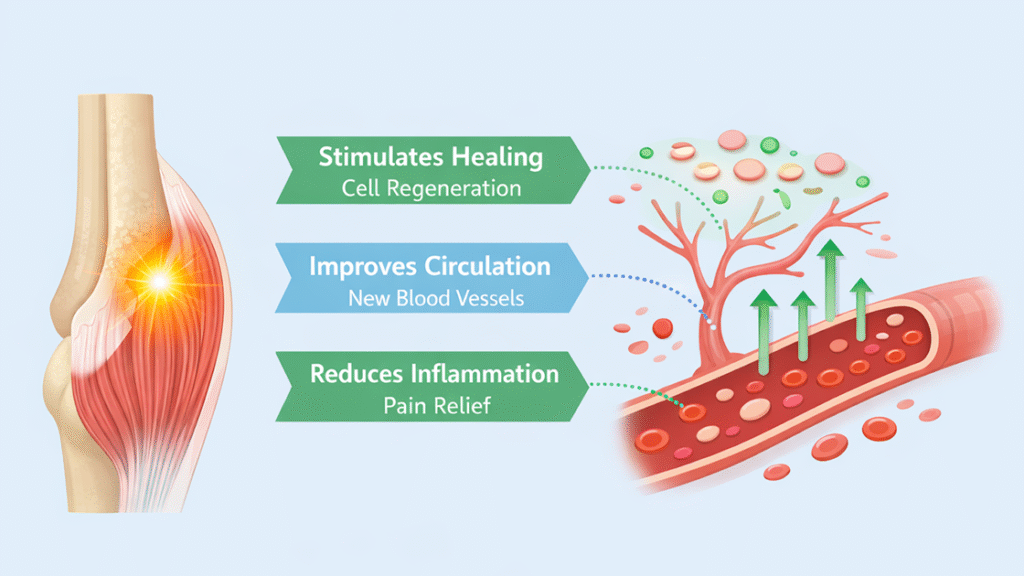
With aging, peripheral blood flow often diminishes due to changes in vascular elasticity and microcirculation. Reduced blood flow means less oxygen and nutrient delivery to muscles and tendons during and after activity, which can impair tissue repair and contribute to persistent discomfort. In addition, atherosclerotic changes and reduced capillary density can exacerbate this problem. Limited circulation can also prolong inflammation, creating a cycle of chronic pain and impaired healing. Shockwave therapy’s mechanical impulses can help dilate microvessels and promote neovascularization, improving oxygen delivery and waste removal in affected tissues.
1.3 Common Walking-Related Pain Areas in Older Adults
Older adults commonly experience pain in the feet, heels, knees, and hips—areas that bear the highest mechanical loads during walking. For example, plantar fasciitis (inflammation of the thick band of tissue on the bottom of the foot) can make each step painful. Knee pain may arise from chronic tendon degeneration or osteoarthritis, whereas hip discomfort can stem from bursitis or tendon strain. These pain patterns not only reduce gait efficiency but also lead to compensatory mechanisms such as shorter steps, slower pace, and increased double-support time, which in turn elevate fall risk and reduce functional independence. By addressing underlying tissue dysfunction in these regions, shockwave therapy can improve walking comfort and performance.
2. How Shockwave Therapy Works in Aging Soft Tissues
衝撃波治療 applies controlled mechanical energy to soft tissues and can modulate biological processes key to tissue repair and pain reduction. Before discussing specific treatment areas, it’s important to understand the basic biological effects.
2.1 Mechanical Stimulation and Cellular Response
Shockwave therapy delivers high-pressure acoustic waves to targeted tissues, inducing mechanical stress at the cellular level. This mechanical stimulation is translated into a biochemical cascade called mechanotransduction. Cells exposed to this stimulus increase mitochondrial activity, leading to elevated production of adenosine triphosphate (ATP), which provides the energy necessary for healing processes. Additionally, shockwave can stimulate local fibroblasts—cells critical for collagen production—which supports tissue structure and resilience. These cellular responses help tissues recover from chronic strain and microdamage, which are particularly prevalent in older adults due to reduced baseline repair capacity.
2.2 Improving Microcirculation in Degenerated Tissues
Shockwave therapy has been shown to enhance microcirculation by promoting vasodilation and stimulating the formation of new blood vessels (neovascularization). Improved blood flow results in better oxygen and nutrient delivery to aging muscles and tendons, facilitating metabolic activity and reducing the accumulation of inflammatory metabolites. For older adults whose microvascular function may be impaired, this effect can be especially beneficial. Improved circulation also supports lymphatic drainage, reducing local swelling and discomfort—all contributing to enhanced walking comfort.
2.3 Supporting Tissue Regeneration Despite Reduced Healing Capacity
Aging tissues have a diminished capacity for repair due to less responsive progenitor cells and slower metabolic rates. Shockwave therapy can partly counteract this by activating stem cells and promoting the release of growth factors such as vascular endothelial growth factor (VEGF) and transforming growth factor-beta (TGF-β), which are involved in tissue regeneration. The result is accelerated healing of microtears and degeneration, and less chronic inflammation. Importantly, this regenerative effect doesn’t rely on surgical intervention, making shockwave therapy a practical option for older individuals.
3. Shockwave Therapy for Foot and Heel Discomfort in Seniors
Foot and heel pain are among the most common complaints that interfere with walking comfort in older adults. These conditions are often multifactorial but share underlying degenerative tissue changes that are amenable to shockwave therapy.
3.1 Plantar Fascia Degeneration and Walking Pain
Plantar fasciitis, characterized by degeneration and inflammation of the plantar fascia, leads to sharp heel pain—especially noticeable with the first steps in the morning or after prolonged sitting. In older adults, the plantar fascia’s collagen organization deteriorates over time, reducing its shock-absorbing capacity. This degeneration can cause microtears that elicit chronic pain. Shockwave therapy helps by stimulating fibroblast activity and enhancing collagen realignment, which improves tissue integrity and reduces pain during weight-bearing activity. Over multiple sessions, relief in plantar fascia discomfort can significantly improve daily walking tolerance.
3.2 Heel Pain and Fat Pad Atrophy
Aging is associated with thinning of the heel’s subcutaneous fat pad, which normally acts as a cushion during gait. As this fat layer diminishes, the heel bone experiences greater mechanical pressure with each step, often resulting in bursitis or deep heel pain. Shockwave therapy’s mechanical pulses can enhance local blood flow, reduce inflammation, and encourage soft tissue adaptation, making the heel better able to tolerate repetitive loading. Improved cushioning response and reduced pain contribute to smoother, more comfortable walking.
3.3 Clinical Benefits for Daily Walking Comfort
When applied consistently over a series of treatments, shockwave therapy has been shown to reduce pain severity and improve functional outcomes. Older adults often report decreased reliance on pain medications, less morning stiffness, and improved ability to walk longer distances or complete daily errands. The therapy’s focus on both structural improvement and symptomatic relief makes it a particularly compelling option for seniors aiming to maintain independence and mobility.
4. Improving Knee Comfort and Stability While Walking
Knee discomfort is another leading cause of reduced mobility in older adults, often stemming from tendon degeneration, mild osteoarthritis, or chronic strain patterns.
4.1 Soft Tissue Involvement Around the Knee Joint
The knee is supported by a complex network of tendons, ligaments, and muscles, including the quadriceps tendon, patellar tendon, and iliotibial band. Age-related changes to these soft tissues can reduce their ability to absorb forces, leading to irritation and pain. Chronic overuse in everyday activities such as stair climbing or prolonged walking can exacerbate degeneration. Shockwave therapy targets these soft tissues to stimulate cellular repair and decrease inflammatory markers, helping restore a more balanced mechanical environment around the knee.
4.2 Shockwave Therapy for Tendon and Ligament Pain
Degenerative tendon conditions, such as patellar tendinopathy, often involve persistent inflammation and collagen disorganization. Shockwave therapy helps by enhancing tenocyte activity and promoting collagen realignment, which improves tendon quality and function. The therapy also reduces nociceptor sensitivity, leading to decreased pain perception. For ligaments experiencing chronic strain, shockwave can support remodeling and reduce stiffness, contributing to greater joint stability during gait.
4.3 Supporting Functional Mobility Without Surgery
Many older adults with knee discomfort are hesitant to undergo surgical interventions due to risks associated with anesthesia and recovery time. Shockwave therapy presents a non-surgical alternative that can be integrated into a comprehensive rehabilitation plan. Alongside appropriate physical therapy and gait training, shockwave therapy can improve knee comfort enough to increase walking distance and confidence without invasive procedures.
5. Addressing Hip and Lower Limb Discomfort During Gait
Discomfort in the hips and surrounding musculature also frequently interferes with walking comfort, particularly in older adults who have accumulated years of mechanical stress.
5.1 Hip Tendinopathy and Age-Related Stiffness
Hip tendinopathies—such as gluteal tendinopathy—are characterized by pain on lateral or anterior aspects of the hip, often aggravated by prolonged walking or standing. Age-related collagen deterioration and reduced tendon elasticity contribute to these symptoms. Shockwave therapy enhances cellular repair mechanisms in the tendon sheath and surrounding tissues, improving elasticity and reducing pain. This can help older adults maintain hip extension and flexion with less discomfort, promoting smoother gait mechanics.
5.2 Shockwave Therapy and Gait Efficiency
When hip pain is reduced, gait efficiency often improves. Pain-induced compensatory patterns—such as shorter steps or limping—tend to place additional stress on adjacent joints like the knee or lower back. By addressing the source of discomfort with shockwave therapy, older adults can adopt a more natural walking pattern, reducing overall energy expenditure and minimizing secondary strain. Improved gait mechanics translate into greater endurance and reduced fear of movement.
5.3 Enhancing Confidence in Daily Movement
Beyond physical improvements, reducing hip and lower limb discomfort can have a significant psychological impact. Pain can create fear-avoidance behaviors, where individuals limit their movement to prevent exacerbation, paradoxically leading to weaker muscles and increased pain over time. By alleviating the underlying discomfort, shockwave therapy can help break this cycle, enhancing older adults’ confidence in their ability to walk, socialize, and engage in daily activities independently.
6. Shockwave Therapy vs Traditional Pain Management for Seniors
Comparing shockwave therapy with traditional approaches highlights its unique benefits for older adults.
6.1 Limitations of Long-Term Medication Use
Pain medications, including NSAIDs and acetaminophen, are commonly used to manage chronic discomfort; however, long-term use can lead to gastrointestinal, renal, or cardiovascular side effects, especially in older adults with comorbidities. These drugs mainly mask symptoms without promoting tissue healing. In contrast, shockwave therapy targets the source of pain and supports biological repair processes, offering a more sustainable strategy with fewer systemic risks.
6.2 Physical Therapy and Its Complementary Role
Physical therapy plays an essential role in improving strength, flexibility, and joint function. Shockwave therapy can be complementary, enhancing tissue quality and reducing pain to make physical therapy more effective. This combined approach often leads to better functional outcomes than either intervention alone, especially for older adults struggling with chronic tissue degeneration.
6.3 A Non-Invasive Option for Long-Term Mobility Support
For many older adults, surgical interventions bear significant risk, and long recovery times are undesirable. Shockwave therapy, being non-invasive, offers an alternative that fits well into a long-term pain management and mobility support plan. When integrated with lifestyle interventions—such as strength training, weight management, and gait retraining—shockwave therapy can help maintain independence and quality of life.
7. What Older Adults Can Expect from Shockwave Therapy
Understanding what to expect helps reduce anxiety and improve treatment adherence.
7.1 Typical Treatment Sessions and Duration
A typical shockwave therapy session lasts between 20 and 40 minutes and involves applying mechanical pulses to targeted tissue areas. Most clinicians recommend 8–12 sessions spread over several weeks to achieve optimal results. The number and frequency of treatments may vary depending on the severity of discomfort and the specific region being treated. Initial assessments include evaluating pain severity, functional limitations, and any contraindications to ensure personalized planning.
7.2 Safety Considerations for Aging Patients
Shockwave therapy is generally safe for older adults when administered by trained professionals. Common mild side effects may include temporary redness, slight swelling, or tingling at the treatment site, typically resolving within 24–48 hours. Individuals with certain conditions—such as active malignancy, blood disorders, or severe vascular disease—should consult their physician before treatment. Proper clinical screening and monitoring enhance safety and efficacy.
7.3 Gradual Improvement in Walking Comfort
Unlike painkillers, whose effects are often immediate but short-lived, improvements from shockwave therapy are typically incremental. Many patients report a noticeable reduction in pain within a few sessions, with continued benefits as tissue healing progresses. Older adults are encouraged to pair therapy with appropriate walking exercises, hydration, and nutrition to support overall musculoskeletal health.
FAQ
Is shockwave therapy painful for older adults?
Most patients experience only mild tingling or warmth during treatment. The sensation is typically well-tolerated and temporary.
How long does it take to feel improvement in walking comfort?
Some older adults notice relief after the first few sessions, with fuller benefits usually appearing after 4–6 treatments.
How many sessions are recommended?
A typical course includes 8–12 sessions, spaced 2–4 weeks apart depending on severity.
Is shockwave therapy suitable for people over 70?
Yes, when properly screened and administered by trained clinicians; safety is high even in older populations.
Can shockwave therapy replace surgery?
For many chronic soft tissue and tendon conditions, it can reduce or delay the need for surgery, especially when combined with physical therapy and lifestyle modifications.
結論
Walking comfort is essential for independence and quality of life in older adults, yet age-related changes in muscles, tendons, and circulation often impede mobility. Shockwave therapy offers a scientifically grounded, non-invasive approach to reduce inflammation, promote tissue regeneration, and improve microcirculation in affected areas such as the feet, knees, and hips. When combined with physical therapy, proper walking mechanics, and lifestyle interventions, shockwave therapy can significantly enhance walking comfort, functional mobility, and overall well-being in the aging population. Professional evaluation and personalized treatment planning ensure safety and maximize benefits, making shockwave therapy a compelling option for long-term mobility support.
参考文献
Speed, C. A. “A systematic review of shockwave therapies in soft tissue conditions: focusing on the evidence.” British Journal of Sports Medicine, 2004.
https://bjsm.bmj.com/content/38/4/390
Wang, C. J. “An overview of shock wave therapy in musculoskeletal disorders.” Chang Gung Medical Journal, 2003.
https://www.cgmj.cgu.edu.tw/281/28.pdf
Zwerver, J., et al. “Effectiveness of extracorporeal shockwave therapy for patellar tendinopathy: A randomized controlled trial.” The American Journal of Sports Medicine, 2011.