

はじめに
Achilles tendinopathy is a prevalent injury among volleyball players due to the sport’s frequent jumping, quick directional changes, and high-impact landings. Chronic inflammation of the Achilles tendon can significantly impair training, reduce performance, and increase the risk of further injury. Traditional interventions such as rest, ice, or anti-inflammatory medications often provide temporary relief but fail to address the underlying tendon degeneration. Extracorporeal Shockwave Therapy (ESWT), commonly known as shockwave therapy, has emerged as a non-invasive treatment option with substantial evidence supporting its effectiveness in managing chronic tendinopathies. By promoting tissue repair, reducing inflammation, and stimulating blood flow, shockwave therapy offers volleyball athletes a pathway to faster recovery and improved tendon health. This article explores the mechanism, clinical applications, treatment protocols, and benefits of shockwave therapy for Achilles tendinopathy in volleyball players.
1. Understanding Achilles Tendinopathy in Volleyball Players
Volleyball places repeated stress on the lower extremities, particularly the Achilles tendon, which connects the calf muscles to the heel bone. Over time, microtrauma accumulates, causing degeneration and chronic pain. Understanding the pathology and contributing factors is essential for targeted interventions.
1.1 What is Achilles Tendinopathy?
Achilles tendinopathy is a degenerative condition of the Achilles tendon characterized by collagen fiber disruption, neovascularization, and localized inflammation. Unlike acute tendon injuries, tendinopathy develops gradually due to repetitive overload. Volleyball athletes are particularly susceptible because jumping and landing exert high tensile forces on the tendon. The pathology often presents with thickened tendon fibers, pain during activity, and impaired ankle dorsiflexion. Recognizing the difference between tendonitis and tendinopathy is critical, as traditional anti-inflammatory treatments alone are insufficient for chronic degeneration.
1.2 Symptoms and Early Signs
Early signs of Achilles tendinopathy include localized pain above the heel, swelling, stiffness, and tenderness during palpation. Pain typically worsens with activity and may improve with rest but returns upon resumption of training. Morning stiffness and difficulty performing single-leg hops are common early indicators. If untreated, chronic tendinopathy can progress to persistent pain, reduced jump height, and compromised performance. Athletes may also experience crepitus, or a sensation of tendon thickening during ankle movement, highlighting the importance of early detection and intervention.
1.3 Risk Factors in Volleyball Players
Multiple factors increase the risk of Achilles tendinopathy in volleyball athletes. High-frequency training and repetitive jumping induce microtrauma. Biomechanical issues, including high or low foot arches, leg length discrepancies, and improper landing techniques, exacerbate tendon stress. Inadequate warm-up, insufficient calf flexibility, and sudden increases in training intensity further contribute to tendon overload. Equipment, such as worn-out shoes or inappropriate court surfaces, can also influence tendon stress patterns. Understanding these risk factors allows practitioners to implement preventive measures alongside shockwave therapy for long-term tendon health.
2. Traditional Treatments and Their Limitations
Before discussing shockwave therapy, it is important to review conventional treatment strategies and their shortcomings, particularly for high-demand athletes.
2.1 Rest, Ice, and NSAIDs
Rest, icing, and nonsteroidal anti-inflammatory drugs (NSAIDs) are commonly prescribed for tendon pain. While they reduce inflammation and temporarily alleviate pain, they do not repair tendon degeneration or stimulate collagen remodeling. Long-term reliance on NSAIDs may also pose gastrointestinal or cardiovascular risks. Additionally, rest alone can lead to muscle atrophy, reduced ankle strength, and prolonged recovery periods, limiting athletic performance. Hence, a more targeted therapy that addresses tendon pathology is often necessary for volleyball players seeking a return to high-intensity activity.
2.2 Physical Therapy and Strengthening Exercises
Physical therapy, including eccentric calf exercises, stretching, and progressive loading, is a cornerstone in tendinopathy management. These exercises promote tendon remodeling and improve calf muscle strength. However, the results are gradual and require strict adherence over weeks to months. Volleyball athletes often struggle with compliance due to busy training schedules, and in chronic cases, exercises alone may not fully restore tendon integrity or eliminate pain. Combining therapy with adjunct modalities such as shockwave therapy can accelerate recovery.
2.3 Surgery: Last Resort
Surgical intervention is generally reserved for severe or recalcitrant cases of Achilles tendinopathy that do not respond to conservative treatments. Surgery involves tendon debridement, repair, or tendon augmentation and requires extended recovery periods of 3–6 months. While effective in some cases, surgery carries risks such as infection, nerve injury, or scar tissue formation, making it less desirable for professional or competitive athletes. Non-invasive alternatives like shockwave therapy offer significant advantages by reducing recovery time and preserving tendon function.
3. Shockwave Therapy: 仕組み
Shockwave therapy utilizes high-energy acoustic waves to stimulate healing in musculoskeletal tissues. Understanding the mechanism helps athletes and clinicians appreciate its therapeutic value.
3.1 Mechanism of Action
Extracorporeal shockwaves deliver mechanical energy that penetrates the tendon, inducing microtrauma at a controlled level. This controlled stimulus promotes angiogenesis, collagen synthesis, and fibroblast activation. Additionally, shockwave therapy modulates nociceptor activity, reducing pain signaling. The therapy enhances local microcirculation, increasing oxygen and nutrient delivery to the tendon. Collectively, these effects accelerate tendon repair, improve structural integrity, and reduce chronic inflammation, addressing the root causes of tendinopathy rather than merely masking symptoms.
3.2 Pain Reduction and Tissue Healing
Shockwave therapy reduces pain by inhibiting pain receptor transmission and stimulating endorphin release. Simultaneously, mechanical stress stimulates cellular regeneration within the tendon matrix, promoting the deposition of well-organized collagen fibers. Enhanced blood flow and neovascularization further facilitate tissue repair. Clinical studies report significant pain reduction and improved function after 3–6 sessions, allowing athletes to resume training earlier compared to conventional conservative therapy alone.
3.3 Advantages Over Traditional Treatments
Shockwave therapy offers multiple advantages over rest, medication, or surgery. It is non-invasive, requires minimal downtime, and has a low risk of side effects. Unlike NSAIDs, it does not pose systemic risks, and unlike surgery, it preserves tendon structure and function. Its efficacy in chronic tendinopathy allows athletes to maintain training schedules and prevents long-term deterioration of tendon quality. Consequently, shockwave therapy is increasingly considered a first-line adjunctive treatment for high-demand athletes like volleyball players.
4. Clinical Applications in Volleyball
Applying shockwave therapy specifically to volleyball athletes requires attention to the unique demands of the sport, including jumping, sprinting, and rapid directional changes.
4.1 Pre-Season Maintenance
Shockwave therapy can be used proactively to maintain tendon health before the competitive season. Pre-season sessions improve microcirculation, enhance collagen alignment, and reduce subclinical inflammation. Athletes often experience reduced soreness during intensive training and decreased injury incidence. Incorporating therapy into pre-season conditioning ensures tendons are resilient, lowering the risk of overuse injuries during tournaments or high-volume practice.
4.2 Acute vs Chronic Tendinopathy
Treatment protocols differ between acute and chronic cases. Acute tendinopathy may require lower-intensity shockwave therapy focused on pain modulation and edema reduction. Chronic cases typically involve higher energy sessions targeting tissue remodeling and neovascularization. Volleyball athletes presenting with chronic symptoms benefit from a structured regimen of 3–6 sessions, spaced weekly, to restore tendon function and minimize recurrent pain episodes.
4.3 Integration with Physical Therapy
Shockwave therapy is most effective when combined with physical therapy. Eccentric calf exercises, stretching, and strengthening protocols complement the regenerative effects of shockwaves. Integration ensures enhanced collagen synthesis, optimized tendon load capacity, and functional improvements in jumping and landing mechanics. A combined approach addresses both the structural integrity of the tendon and the biomechanical demands of volleyball, reducing the risk of reinjury.
5. Treatment Protocols
Optimizing treatment outcomes requires adherence to established shockwave therapy protocols tailored to individual needs.
5.1 Session Duration and Frequency
Typical sessions last 5–15 minutes, focusing on the mid-portion or insertion of the Achilles tendon. Most athletes require 3–6 sessions, spaced once per week. Energy levels and session duration are adjusted based on symptom severity and tissue response. Adhering to a structured protocol ensures adequate tendon stimulation while minimizing discomfort or overstimulation.
5.2 Target Area and Techniques
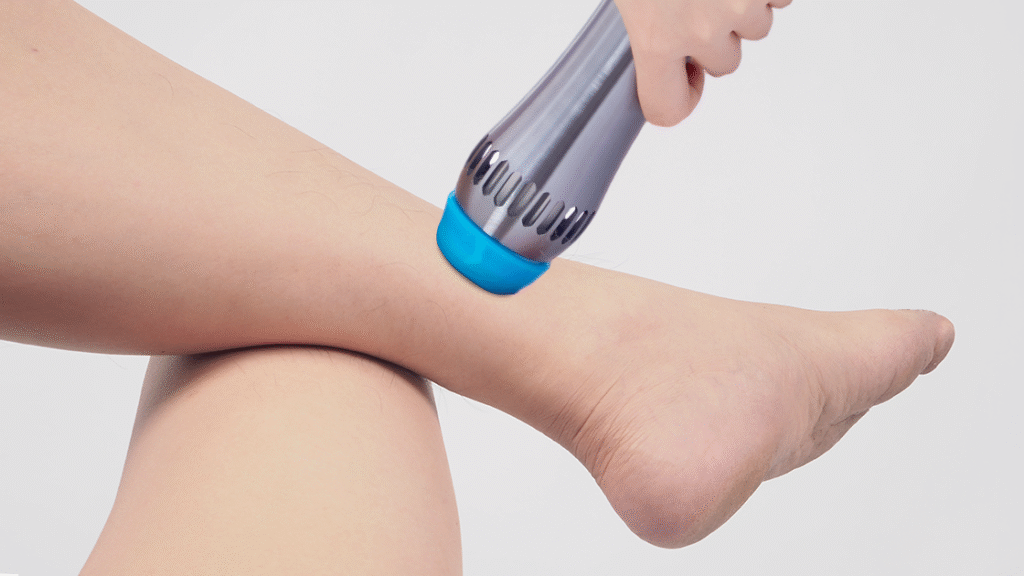
The target areas include the mid-portion of the tendon and the insertion at the calcaneus. Therapists may use radial or focused shockwave devices, depending on tendon depth and patient tolerance. Careful positioning and gel coupling ensure optimal energy delivery to the pathological tissue while protecting surrounding structures. Precise targeting improves efficacy and accelerates the healing process.
5.3 Expected Recovery Timeline
Pain reduction is often noticeable after 2–3 sessions, while functional recovery, including the ability to perform jumping and sprinting drills, may take 4–6 weeks. Chronic tendinopathy may require longer follow-up. Athletes should gradually resume high-intensity training while continuing complementary physical therapy exercises to ensure sustainable tendon health.
6. Benefits for Volleyball Players
Shockwave therapy provides volleyball athletes with numerous advantages beyond pain relief.
6.1 Non-Invasive and Safe
The therapy is non-surgical and does not require anesthesia, minimizing complications. Athletes can undergo treatment without significant interruption to training or competition schedules. Side effects are minimal, usually limited to mild soreness or transient redness.
6.2 Rapid Pain Relief and Improved Function
Many athletes report significant pain reduction after just a few sessions. Improved tendon elasticity and muscle coordination allow for better jumping performance, agility, and overall on-court effectiveness. Rapid relief helps prevent lost training time and supports continuous skill development.
6.3 Long-Term Tendon Health
Shockwave therapy promotes structural tendon repair, enhancing collagen alignment and vascularization. Regular treatment and integration with preventive conditioning reduce the risk of recurrent tendinopathy. Long-term tendon health enables athletes to maintain peak performance over multiple seasons and minimizes career-impacting injuries.
FAQ
Q1: 衝撃波治療は痛いですか?
A: Mild discomfort may occur during treatment, often described as tingling or pressure, but it is generally well-tolerated.
Q2: How many sessions are needed for volleyball players?
A: Typically 3–6 sessions, with frequency and energy adjusted based on severity.
Q3: Can it be used during the season?
A: Yes, it is safe to perform during the season without significant downtime.
Q4: Are there any side effects or risks?
A: Side effects are minimal, including mild soreness or redness at the treatment site. Serious complications are rare.
Q5: Is it covered by insurance or sports rehab programs?
A: Coverage varies; many sports medicine and physiotherapy clinics include shockwave therapy as part of rehabilitation packages.
結論
Shockwave therapy is a safe, non-invasive, and effective treatment for Achilles tendinopathy in volleyball players. By promoting tissue repair, reducing inflammation, and enhancing tendon function, it enables athletes to return to full performance more quickly than traditional conservative measures alone. When integrated with physical therapy and preventive conditioning, shockwave therapy supports long-term tendon health, reduces recurrence, and enhances athletic longevity. For volleyball players facing chronic Achilles tendon pain, ESWT offers a reliable, evidence-based solution to optimize recovery and maintain competitive performance.
参考文献
Malliaras, P. et al. Achilles Tendinopathy in Athletes: Current Concepts. Sports Med. 2013;43: 267–287.
https://pubmed.ncbi.nlm.nih.gov/23379629/
Gerdesmeyer, L. et al. Extracorporeal Shock Wave Therapy for Tendinopathies. Am J Sports Med. 2008;36: 1040–1047.
https://pubmed.ncbi.nlm.nih.gov/18426760/
Shockwave Therapy Centers. Achilles Tendinopathy in Athletes.