

Introduction
Some individuals experience pain even during normal daily movements such as walking, sitting, or light household activity. This condition is often linked to low pain threshold states, where the musculoskeletal system becomes overly sensitive and responds excessively to routine mechanical load. Rather than being tied to a single injury, this type of discomfort often reflects a broader functional imbalance involving soft tissues, nerves, and local circulation. Shockwave therapy is increasingly used in clinical rehabilitation settings to support tissue responsiveness, improve local blood flow, and help reduce chronic sensitivity patterns in musculoskeletal structures.
1. Understanding Low Threshold Pain Conditions
1.1 Heightened Sensitivity in Musculoskeletal Tissues
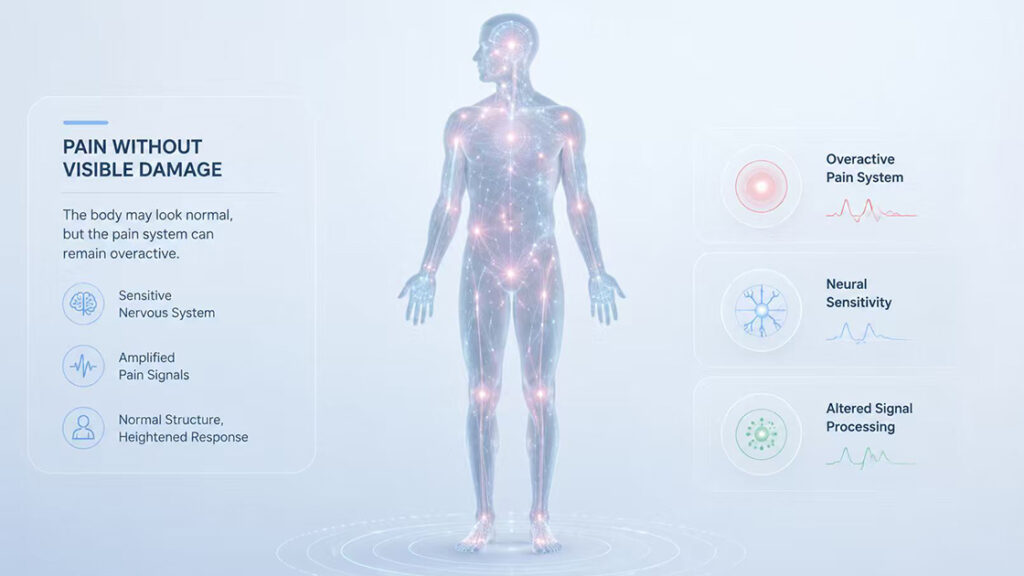
Low threshold pain conditions occur when muscles, tendons, or fascia react strongly to minimal physical stress. In these cases, normal mechanical forces that should feel neutral may trigger discomfort. This altered sensitivity often develops gradually and may persist even after the original trigger has resolved.
1.2 Functional Rather Than Structural Damage
In many cases, imaging tests do not show significant structural injury. Instead, the issue lies in how tissues process mechanical and neural signals. This functional nature makes the condition complex, as pain intensity does not always match visible tissue changes.
1.3 Nervous System Involvement
The peripheral and central nervous systems can amplify pain signals over time. This amplification can create a cycle where light movement is interpreted as discomfort, reinforcing avoidance patterns and further increasing sensitivity.
2. How Shockwave Therapy Interacts with Sensitive Pain States
2.1 Mechanical Stimulation of Soft Tissues
Shockwave therapy delivers controlled acoustic energy into affected tissues. This mechanical stimulation helps promote localized biological responses, which may support improved tissue adaptability and reduce hypersensitive responses over time.
2.2 Circulatory and Metabolic Activation
One key effect of shockwave application is improved microcirculation in targeted areas. Better blood flow can support tissue metabolism and assist in the gradual normalization of local pain signaling environments.
2.3 Neuromodulation Effects
Shockwave energy may also influence nerve signal activity in painful regions. By interacting with peripheral nerve endings, it may help modulate excessive pain signaling and support a more balanced sensory response.
3. Common Presentations of Low Threshold Pain Conditions
3.1 Pain During Routine Walking or Standing
Some individuals report discomfort during simple weight-bearing activities. This can occur even without recent injury and may fluctuate depending on daily activity levels and tissue sensitivity.
3.2 Discomfort from Light Muscle Use
Activities such as lifting light objects, bending, or prolonged sitting can trigger disproportionate discomfort. This response reflects altered load tolerance in soft tissue structures rather than acute damage.
3.3 Persistent Aches Without Clear Cause
In some cases, pain persists despite rest and absence of identifiable injury. This ongoing discomfort often reflects a sensitized pain system rather than localized structural pathology.
4. Role of Shockwave Therapy in Functional Pain Management
4.1 Supporting Tissue Load Adaptation
Shockwave therapy can assist tissues in gradually improving their tolerance to mechanical stress. This is important in low threshold pain states where normal loading feels uncomfortable.
4.2 Encouraging Local Tissue Recovery Processes
The controlled energy delivery may stimulate cellular activity in tendons and surrounding soft tissues. This can support gradual improvements in tissue responsiveness and function.
4.3 Integration with Rehabilitation Strategies
Shockwave therapy is often used alongside movement-based rehabilitation approaches. This combined strategy focuses on restoring functional capacity and reducing over-sensitivity in daily activities.
5. Clinical Considerations in Chronic Sensitivity Conditions
5.1 Individual Variability in Pain Response
Each individual presents a different sensitivity profile. Treatment approaches are often adjusted based on pain duration, location, and response to mechanical stimuli.
5.2 Gradual Progression Approach
Low threshold pain conditions typically require a gradual approach. Sudden increases in load can intensify symptoms, so controlled progression is important in overall management strategies.
5.3 Focus on Functional Improvement
The main goal is not only pain reduction but also restoration of normal movement tolerance. Improving functional capacity in daily activities is a key outcome in long-term management.
FAQ
Why does normal activity cause pain?
This can occur when the pain system becomes overly sensitive, causing normal movement to be interpreted as discomfort.
Does this mean there is structural damage?
Not always. Many cases involve functional sensitivity rather than clear structural injury.
Can shockwave therapy help with this type of pain?
Shockwave therapy may help by supporting tissue responsiveness and modulating pain signaling in affected areas.
Is this condition permanent?
In many cases, symptoms can change over time, especially with appropriate rehabilitation and load management.
Why does pain persist even without injury?
The nervous system can maintain heightened sensitivity even after tissues have recovered, leading to persistent discomfort.
Conclusion
Low threshold chronic pain conditions reflect a complex interaction between tissue sensitivity, nervous system signaling, and functional load tolerance. When normal daily activities become painful, the issue often extends beyond structural damage and involves altered pain processing mechanisms. Shockwave therapy offers a non-invasive supportive approach that may help improve tissue responsiveness and contribute to more balanced pain perception over time when integrated into a broader rehabilitation strategy.
References
Low Threshold Pain and Central Sensitization in Chronic Pain
https://www.ncbi.nlm.nih.gov/pmc/articles/PMC3268359/
Mechanisms of Musculoskeletal Pain and Sensory Processing
https://www.ncbi.nlm.nih.gov/pmc/articles/PMC6517878/
Extracorporeal Shockwave Therapy in Chronic Musculoskeletal Disorders
https://www.ncbi.nlm.nih.gov/pmc/articles/PMC6110221/
Neuroplasticity and Chronic Pain Sensitization Mechanisms
https://pubmed.ncbi.nlm.nih.gov/31855644/
Shockwave Therapy and Soft Tissue Regeneration Effects
https://www.sciencedirect.com/science/article/pii/S2405452619300725/