

Introdução
Equine athletes face unique musculoskeletal challenges that can compromise performance and overall well-being. Tendon injuries, ligament strains, and joint stiffness are common, particularly under environmental stressors such as cold, wet training grounds, and long-distance transportation. Traditional rehabilitation strategies—including rest, physiotherapy, and pharmacological interventions—often require extended recovery times and may not fully restore functional mobility. Shockwave Therapy has emerged as a scientifically supported, non-invasive intervention that accelerates tissue repair, reduces chronic pain, and promotes functional recovery. Often combined with Laser Therapy, it enhances cellular regeneration and microcirculation, addressing both structural and biochemical aspects of injury. This article explores the mechanisms, practical applications, and long-term benefits of Shockwave Therapy in equine care, with evidence-based insights for veterinarians, trainers, and horse owners.
1. Environmental and Physiological Challenges Impacting Equine Musculoskeletal Health
Extreme environmental conditions and physiological stressors can exacerbate musculoskeletal problems in horses. Understanding these factors is essential to optimize rehabilitation protocols with advanced therapies like Shockwave Therapy.
1.1 Cold-Induced Tendon and Joint Stiffness
Exposure to cold environments reduces peripheral blood flow, resulting in decreased tendon elasticity and joint mobility. Tendons become more susceptible to microtrauma, and chronic stiffness may progress unnoticed. Shockwave Therapy applies high-energy acoustic waves to stimulate fibroblast proliferation, enhance angiogenesis, and realign collagen fibers, mitigating these effects. Adjunctive Laser Therapy further supports cellular metabolism, accelerating tissue recovery and reducing inflammation, ensuring comprehensive structural repair during colder months.
1.2 Stress and Immobilization from Long-Distance Transport
Transportation is a significant stressor for performance and show horses. Confinement during transport reduces muscular activity, decreases joint lubrication, and increases the risk of tendon microinjury. Stress hormones such as cortisol may exacerbate inflammatory responses. Shockwave Therapy stimulates cellular repair and collagen remodeling in affected tendons, while Laser Therapy reduces localized edema and modulates cytokine expression. Sequential therapy post-transport restores flexibility, improves circulation, and prevents chronic stiffness.
1.3 Impact of Training Surface Conditions
Training and competition surfaces—muddy arenas, icy paddocks, or uneven trails—contribute to repetitive microtrauma in tendons and ligaments. Shockwave Therapy delivers precise acoustic energy to injured tissue, promoting collagen realignment and angiogenesis. When paired with Laser Therapy, it reduces inflammatory mediators and accelerates soft tissue healing. By addressing both microscopic and macroscopic damage, these therapies reduce injury risk and support consistent performance.
2. Shockwave Therapy Mechanisms and Physiological Effects
Terapia por ondas de choque targets both structural and cellular aspects of musculoskeletal repair. Understanding its mechanisms clarifies why it is effective for equine rehabilitation in diverse contexts.
2.1 Acoustic Stimulation of Tendon and Ligament Repair
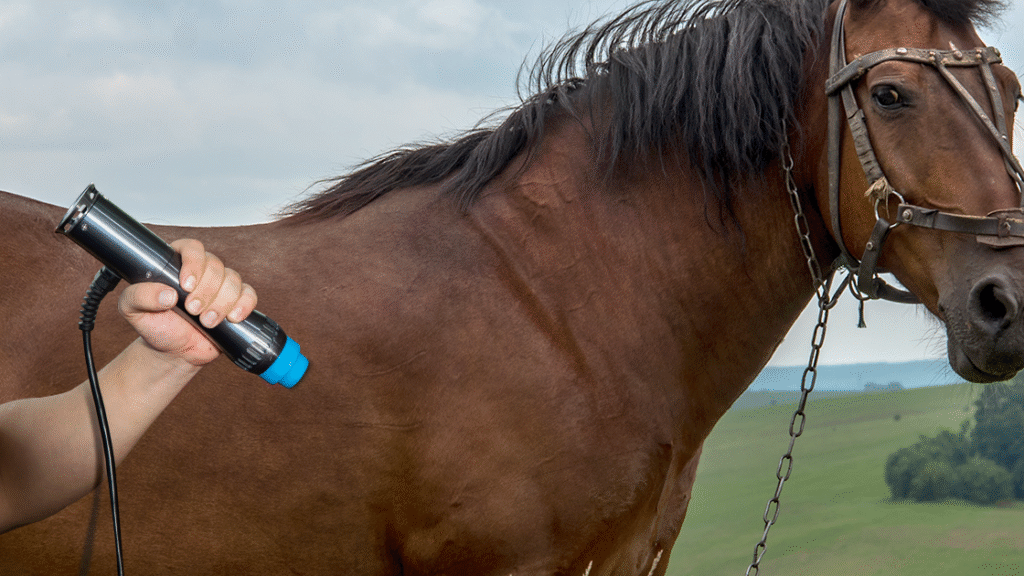
Shockwave Therapy generates focused acoustic waves that create controlled microtrauma in tendon and ligament tissue. This microtrauma activates mechanotransduction pathways, stimulating fibroblast proliferation, collagen deposition, and angiogenesis. The result is accelerated tendon remodeling, improved elasticity, and reduced chronic pain. Clinical studies indicate that Shockwave Therapy enhances tendon structural integrity while preserving functional capacity, making it suitable for both acute injuries and chronic conditions.
2.2 Cellular Modulation via Laser Therapy
Laser Therapy, particularly low-level laser therapy (LLLT) or Class IV therapeutic lasers, penetrates tissue to stimulate mitochondrial activity, increasing ATP production and promoting cellular proliferation. By modulating inflammatory cytokines and enhancing microvascular perfusion, Laser Therapy complements the mechanical effects of Shockwave Therapy. Together, these therapies provide comprehensive rehabilitation by addressing both the biomechanical and biochemical dimensions of equine tendon and ligament repair.
2.3 Synergistic Benefits of Combined Therapy
Sequential application of Shockwave and Laser Therapy allows simultaneous structural and cellular intervention. Shockwave Therapy restores tissue architecture and mechanical properties, while Laser Therapy accelerates recovery at the cellular level. This dual approach reduces healing time, improves tendon elasticity, and supports early return to performance. Case reports show enhanced outcomes in competitive horses subjected to extreme training conditions when these therapies are integrated.
3. Practical Applications of Shockwave Therapy in Equine Recovery
Real-world application scenarios demonstrate the efficacy of Shockwave Therapy in improving equine performance and recovery.
3.1 Post-Training Tendon Recovery
After intense training sessions, horses often exhibit tendon microtrauma and soft tissue inflammation. Applying Shockwave Therapy post-training stimulates fibroblast activity and promotes collagen realignment, reducing stiffness and enhancing joint mobility. Laser Therapy administered sequentially enhances microvascular perfusion and mitigates localized inflammatory responses. Together, these therapies accelerate functional recovery, allowing horses to maintain peak performance with minimal downtime.
3.2 Post-Transport Musculoskeletal Rehabilitation
Extended transport periods reduce joint lubrication and induce minor muscular and tendon microtrauma. Shockwave Therapy addresses these micro-injuries by stimulating tissue remodeling, while Laser Therapy decreases edema and accelerates cellular repair. Sequential, evidence-based treatment ensures that tendons, ligaments, and supporting muscles regain flexibility and strength rapidly. Integrating these therapies into post-transport protocols minimizes the risk of chronic stiffness and performance decline.
3.3 Recovery from Challenging Training Surfaces
Wet, muddy, or uneven training arenas increase the likelihood of subclinical tendon and ligament stress. Shockwave Therapy delivers focused acoustic energy to promote tissue regeneration and collagen realignment. Adjunctive Laser Therapy reduces inflammatory mediators and accelerates edema resolution. Regular incorporation of these therapies post-training enhances long-term resilience, reduces injury risk, and improves equine mobility in high-risk environmental conditions.
4. Best Practices for Shockwave Therapy Implementation
Effective use of Shockwave Therapy requires careful timing, dosing, and veterinary oversight to optimize recovery outcomes.
4.1 Optimal Timing for Therapy
Therapies are most effective immediately after high-intensity training, competition, or transport. Shockwave sessions typically last 10–15 minutes per affected tendon or ligament, with energy levels adjusted based on tissue depth and severity. Laser Therapy applied immediately afterward reduces inflammation and supports cellular metabolism. Coordinated scheduling ensures consistent recovery while minimizing cumulative tissue stress.
4.2 Frequency and Duration Recommendations
Acute tendon or ligament injuries often benefit from 1–2 Shockwave sessions per week over 3–4 weeks. Chronic conditions may require extended treatment courses. Frequency and duration should be adjusted based on veterinary assessment and observed tissue response. Continuous monitoring of tendon elasticity, joint mobility, and performance metrics ensures treatment efficacy while preventing overstimulation or tissue fatigue.
4.3 Safety and Veterinary Oversight
Shockwave and Laser Therapy are non-invasive but require professional supervision. Incorrect application or excessive energy can cause localized discomfort or tissue stress. Veterinary evaluation prior to therapy ensures accurate diagnosis and treatment targeting. Post-treatment monitoring allows timely adjustment of therapy parameters, maximizing safety and long-term recovery outcomes.
5. Long-Term Recovery, Maintenance, and Performance Enhancement
Sustained musculoskeletal health depends on integrating Shockwave Therapy into long-term rehabilitation and preventive care.
5.1 Maintaining Mobility and Structural Integrity
Periodic Shockwave sessions maintain tendon elasticity, prevent chronic stiffness, and reduce recurrence of injuries. When combined with structured exercise routines, therapy supports balanced muscular development and joint stability. This proactive approach promotes longevity in equine performance, reducing cumulative wear on tendons and ligaments.
5.2 Environmental Adaptation and Injury Prevention
Winter paddocks, wet pastures, and uneven training surfaces require preventive measures. Proper bedding, surface maintenance, and gradual acclimatization minimize environmental stress. Shockwave Therapy serves as a preventative intervention, enhancing tissue resilience and mitigating microtrauma from challenging environmental conditions.
5.3 Collaborative Rehabilitation Planning
Effective recovery integrates trainers, veterinarians, and caretakers. Regular assessment of tendon integrity, joint flexibility, and muscular tone allows therapy protocols to be tailored to individual horses. Collaborative planning ensures safe, evidence-based Shockwave Therapy application, promoting performance and overall well-being under demanding conditions.
FAQ
Is Shockwave Therapy suitable for all horse breeds?
Most horse breeds can benefit, but specific conformational or health issues require veterinary consultation.
How soon can improvements be observed?
Initial effects such as reduced stiffness may appear after 2–4 sessions, with full tendon remodeling taking several weeks.
Are there side effects?
Temporary redness, mild soreness, or localized warmth may occur, usually resolving within 24 hours.
Can Shockwave Therapy replace surgery or medication?
It is an adjunctive therapy and does not replace surgical or pharmacologic interventions when clinically indicated.
Conclusão
Shockwave Therapy offers a scientifically validated, non-invasive approach to equine musculoskeletal recovery and performance optimization. By stimulating structural repair and cellular regeneration, it addresses tendon, ligament, and joint injuries effectively. When combined with Laser Therapy, veterinary oversight, and structured rehabilitation, horses can achieve faster recovery, enhanced mobility, and improved long-term performance. Its integration into post-training, post-transport, and preventive protocols makes Shockwave Therapy a cornerstone of advanced equine care.
Referências
shockwavemachines.com. Indications for Shockwave Therapy.
https://www.shockwavemachines.com/indications
Mayo Clinic. Shockwave Treatment for Musculoskeletal Conditions.
VetMed Research. Shockwave Therapy in Equine Rehabilitation. Journal of Equine Veterinary Science, 2022.
https://www.j-evs.com/article/S0737-0806(22)00123-4/fulltext
Equine Sports Medicine. Cold Weather Effects on Horse Tendon and Joint Health., 2021.
https://www.equinesportsmed.org/articles/cold-weather-tendon-joint