

Introdução
Exercise and fitness training provide immense physical and mental benefits, yet they often come with a hidden cost: post-workout muscle soreness and occasional injuries. Delayed Onset Muscle Soreness (DOMS) is a common phenomenon experienced by weightlifters, runners, and CrossFit enthusiasts, typically manifesting 24–72 hours after intense activity. While stretching, massage, and cold therapy are traditionally used to alleviate soreness, they may not fully address deeper tissue microtrauma or chronic tendon issues. Emerging rehabilitative modalities, such as Shockwave Therapy (SWT), offer non-invasive, evidence-based options for enhancing recovery. This article explores the causes of post-workout soreness, the scientific mechanisms behind SWT, its application in fitness-related injuries, and strategies for integrating SWT into a comprehensive recovery routine.
1. Understanding Post-Workout Muscle Pain
Post-exercise soreness is more than mere fatigue—it involves physiological and biochemical changes in muscles and tendons. Understanding these mechanisms provides insight into why therapies like SWT are effective.
1.1 Causes of Muscle Soreness
Muscle soreness after intense exercise results primarily from microscopic damage to muscle fibers, also known as microtrauma. Weightlifting and resistance training produce eccentric contractions, which are particularly prone to inducing small tears in myofibrils. Running, especially downhill or on uneven surfaces, can strain lower limb muscles and connective tissues. CrossFit and high-intensity functional training impose compounded mechanical stress on multiple muscle groups simultaneously. Microtrauma triggers an inflammatory cascade, attracting immune cells and leading to localized edema, stiffness, and discomfort. Accumulated metabolic byproducts, such as lactate, further contribute to the sensation of soreness. Understanding these mechanisms highlights why targeted therapies are necessary to facilitate recovery and prevent progression to chronic musculoskeletal issues.
1.2 Impact on Fitness Progress
Persistent post-workout soreness can interfere with exercise adherence, compromise performance, and increase the risk of secondary injuries. Athletes and fitness enthusiasts experiencing DOMS may modify their movement patterns subconsciously, placing additional stress on adjacent muscles and joints. Chronic overload without proper recovery can lead to tendinopathy, fascial inflammation, or overuse injuries, all of which may require extended rest periods. Consequently, delayed recovery negatively affects training frequency, strength gains, and cardiovascular performance. Integrating evidence-based interventions, such as SWT, can accelerate tissue repair, reduce inflammation, and support the maintenance of an optimal training schedule, allowing for consistent progression while minimizing injury risk.
2. What is Shockwave Therapy?
Terapia por ondas de choque is an innovative therapeutic modality that utilizes acoustic waves to stimulate tissue healing. Its mechanism, treatment types, and clinical rationale make it particularly suitable for fitness-related musculoskeletal conditions.
2.1 Mechanism of Action
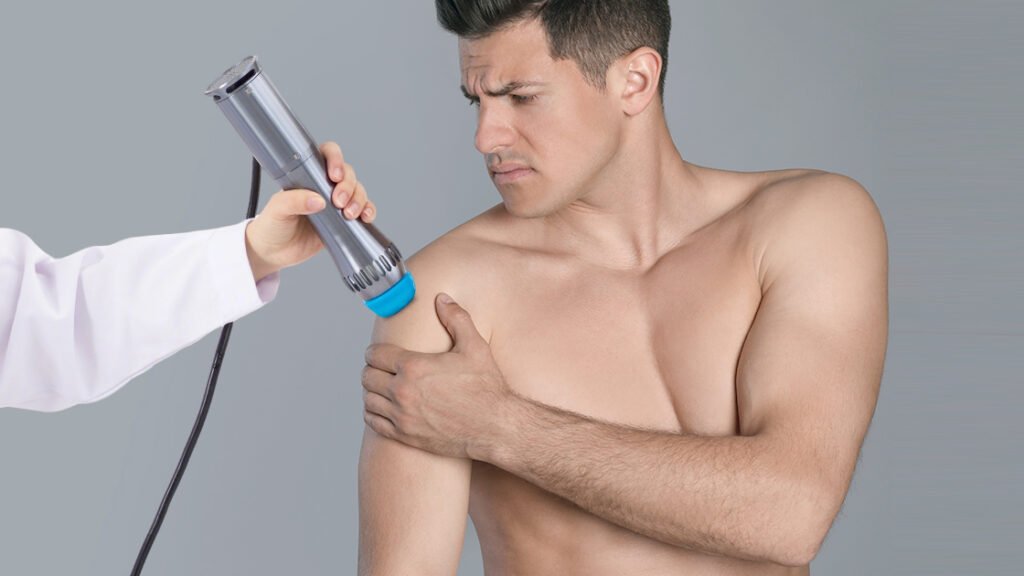
Shockwave Therapy delivers high-energy acoustic pulses to targeted tissues, including muscle, tendon, and fascia. These pulses create micro-vibrations that promote neovascularization, increase blood flow, and stimulate fibroblast activity, which enhances collagen synthesis. Additionally, mechanotransduction induced by SWT modulates inflammatory mediators, reducing local cytokine concentrations and pain perception. The therapy also triggers the release of endogenous growth factors, which accelerate tissue remodeling. Clinically, SWT has been shown to reduce pain, improve flexibility, and restore function in both acute and chronic musculoskeletal conditions. For fitness enthusiasts, this translates to faster recovery, less downtime, and enhanced readiness for subsequent training sessions.
2.2 Types of Shockwave Therapy
There are two primary types of SWT: focused and radial. Focused Shockwave Therapy delivers high-energy waves to precise anatomical locations, allowing deep penetration suitable for tendon insertion points or severe muscle lesions. Radial Shockwave Therapy disperses energy over a broader area, ideal for superficial soft tissue injuries or myofascial trigger points. Selection of the appropriate type depends on the target tissue depth, injury severity, and clinical objectives. Proper calibration of energy flux density, pulse frequency, and session duration by trained clinicians ensures both efficacy and safety, making SWT a versatile modality for fitness-related recovery and rehabilitation.
3. Shockwave Therapy for Common Fitness-Related Injuries
SWT is particularly effective for injuries frequently encountered by athletes and fitness enthusiasts. Its clinical application targets both muscle and tendon injuries to promote faster recovery.
3.1 Muscle Strains
Muscle strains commonly affect the hamstrings, quadriceps, and shoulder muscles in individuals engaged in high-intensity training. Eccentric overload, rapid acceleration/deceleration movements, and improper form increase susceptibility to microtears. SWT promotes angiogenesis and fibroblast proliferation in the affected area, accelerating repair of damaged myofibrils. The therapy also reduces local edema and modulates nociceptor activity, which alleviates pain. Integrating SWT with guided stretching and progressive strength exercises facilitates safe return to full activity while minimizing the risk of re-injury. Clinical observations suggest that combining SWT with conventional rehabilitation reduces recovery time by approximately 20–30% compared to traditional methods alone.
3.2 Tendon Injuries
Tendinopathy of the rotator cuff, elbow extensors, or patellar tendon is a frequent consequence of repetitive lifting and high-intensity workouts. Chronic inflammation and microtears compromise tendon structure, causing pain and functional limitations. SWT induces microtrauma that paradoxically stimulates healing, enhances collagen fiber alignment, and improves tensile strength. Increased local circulation accelerates nutrient delivery and waste removal, promoting tissue regeneration. Patients undergoing SWT often report decreased pain, improved range of motion, and enhanced performance capacity. This approach provides a non-surgical alternative for persistent tendon injuries, particularly for athletes and fitness enthusiasts aiming to maintain their training routines without interruption.
3.3 Plantar Fasciitis and Foot Pain
Runners and CrossFit athletes frequently develop plantar fasciitis, characterized by heel pain and fascia inflammation. Repetitive impact on the foot causes microtears, triggering chronic discomfort that hinders training. Radial SWT applied to the plantar fascia stimulates fibroblast activity and neovascularization, improving tissue elasticity and reducing pain. Studies indicate that SWT leads to long-term symptom relief and functional improvement without the need for pharmacological interventions. Incorporating SWT into post-run or post-workout recovery routines allows athletes to continue training while addressing the underlying pathology effectively.
4. Integrating Shockwave Therapy into Fitness Recovery
Optimizing recovery requires combining SWT with complementary interventions that address flexibility, mobility, and tissue health.
4.1 Combining with Stretching and Mobility
Stretching and mobility exercises remain foundational components of recovery. SWT enhances the effectiveness of these routines by pre-conditioning tissue and reducing stiffness. For example, after SWT application to the quadriceps or hamstrings, subsequent static or dynamic stretching can achieve greater elongation and reduce risk of re-injury. Mobility work, such as hip and shoulder rotations, benefits from decreased nociceptive signaling, allowing for safer joint movement. This synergy between SWT and conventional recovery strategies accelerates restoration of optimal range of motion, enhances muscle elasticity, and improves readiness for subsequent high-intensity training sessions.
4.2 Frequency and Treatment Guidelines
Clinical protocols for SWT typically involve one to two sessions per week over a period of three to six weeks, depending on the severity and location of the injury. Each session may last between 10 to 20 minutes, with energy flux density tailored to tissue type and depth. Focused therapy is preferred for deep tendinous lesions, while radial therapy is effective for superficial myofascial pain. Adherence to established treatment guidelines ensures that SWT remains both effective and safe. Combining these sessions with conventional recovery practices maximizes therapeutic outcomes, promoting faster functional recovery and consistent training performance.
4.3 Safety Considerations
Although SWT is non-invasive and generally well-tolerated, certain precautions are necessary. Contraindications include acute fractures, malignant tumors, blood clotting disorders, and pregnancy. Patients may experience transient discomfort, redness, or mild swelling at the treatment site, which typically resolves within 24–48 hours. Professional supervision by trained clinicians is essential to calibrate energy settings, target appropriate anatomical sites, and monitor patient response. When applied correctly, SWT offers a safe, effective modality for accelerating recovery in fitness enthusiasts and minimizing downtime associated with muscular and tendinous injuries.
5. Lifestyle and Preventive Strategies
SWT is most effective when integrated into a holistic recovery and injury-prevention plan that includes nutrition, hydration, sleep, and stress management.
5.1 Nutrition and Hydration
Adequate protein intake supports myofibril repair and collagen synthesis, essential for recovery from both muscular and tendon microtrauma. Anti-inflammatory nutrients, such as omega-3 fatty acids, polyphenols, and antioxidants, reduce localized inflammation and oxidative stress induced by exercise. Hydration is critical for maintaining tissue perfusion and facilitating metabolic waste removal. Dehydration slows enzymatic reactions required for tissue repair and increases the risk of cramps or strains. Combining SWT with proper nutrition and hydration optimizes the physiological environment, enhancing the therapy’s efficacy and shortening recovery periods.
5.2 Sleep and Stress Management
Sleep is a critical period for tissue repair, growth hormone release, and consolidation of neuromuscular adaptations. Inadequate sleep prolongs recovery and increases susceptibility to injury. Similarly, chronic psychological stress elevates cortisol, which can impair collagen synthesis and exacerbate inflammation. Integrating mindfulness practices, stress-reduction techniques, and maintaining regular sleep schedules complements SWT by creating favorable systemic conditions for healing. Together, these lifestyle measures enhance muscle and tendon repair, improve performance capacity, and reduce the likelihood of recurrent post-workout injuries.
FAQ
Q1: Is Shockwave Therapy painful?
A1: Most patients experience mild discomfort during the session, often described as tingling or pressure. Pain is usually temporary and resolves within 24 hours.
Q2: When should I receive treatment after a workout?
A2: SWT can be applied once acute soreness subsides. Typically, sessions are scheduled 24–72 hours post-exercise, depending on injury type and severity.
Q3: Can SWT replace stretching or massage?
A3: No. SWT complements conventional recovery strategies such as stretching, massage, and mobility exercises. Integration provides optimal recovery.
Q4: Is SWT suitable for all fitness levels?
A4: SWT is generally safe for most healthy adults. Professional evaluation is recommended to determine suitability, especially for individuals with underlying medical conditions.
Conclusão
Shockwave Therapy offers an evidence-based, non-invasive solution for post-workout muscle soreness, tendon injuries, and connective tissue microtrauma. By stimulating angiogenesis, collagen synthesis, and tissue remodeling, SWT accelerates recovery while reducing pain. Fitness enthusiasts benefit most when SWT is integrated with stretching, mobility work, nutrition, hydration, and sleep optimization. This holistic approach not only shortens downtime but also promotes long-term musculoskeletal health, enabling athletes and fitness enthusiasts to maintain consistent training and prevent chronic injuries.
Referências
Wang CJ. Extracorporeal shockwave therapy in musculoskeletal disorders. J Orthop Surg Res. 2012.
https://josr-online.biomedcentral.com/articles/10.1186/1749-799X-7-11
Gerdesmeyer L, et al. Radial shock wave therapy for chronic plantar fasciitis. J Bone Joint Surg Am. 2008.
Speed C. Shockwave therapy in musculoskeletal conditions: review. Br J Sports Med. 2014.
https://bjsm.bmj.com/content/48/21/1538
Rompe JD, et al. Efficacy of shockwave therapy for tendinopathies. Clin Orthop Relat Res. 2007.